Goat’s milk kefir does not require a specialist culture. The very same live kefir grains that ferment cow’s milk also thrive in goat’s milk – they simply work a little slower, and the resulting drink has a thinner consistency. Anyone following the timings from a cow’s milk guide will either end up with an overly sour kefir or give up far too soon. This guide explains why this happens and how to make goat milk kefir successfully from your very first batch.
Why Goat’s Milk Behaves Differently from Cow’s Milk
Two distinct characteristics of goat’s milk determine the outcome of your ferment.
A lower lactose content means less food for the culture. The lactic acid bacteria and yeasts in live kefir grains feed on milk sugars. Because goat’s milk contains slightly less sugar than cow’s milk, the fermentation time is longer. In practice, where cow’s milk is typically ready after 12 to 24 hours, goat’s milk usually requires between 24 and 48 hours at the same room temperature with the same quantity of grains.
Lower levels of alpha-s1 casein create a softer curd. Goat’s milk does not form as firm a structure during acidification as cow’s milk. The finished kefir remains more liquid – closer in texture to a drinking yoghurt than a set yoghurt. This is by no means a sign of a weak culture, but an inherent property of the milk itself. Furthermore, goat’s milk naturally contains smaller, more evenly dispersed fat globules, meaning a separate cream layer does not form on top.
Research confirms that the type of milk directly influences the grains themselves: a study published in the Journal of Dairy Science demonstrated that milk composition shapes both the microbial dynamics and the structural matrix of kefir grains. Grains cultivated continuously in goat’s milk adapt differently to those kept in cow’s milk – typically growing at a somewhat slower rate.
Is Goat Kefir Healthier Than Cow Kefir? Goat Milk Kefir Benefits
Scientific research into goat’s milk kefir is considerably newer than that into cow’s milk kefir, but initial comparative studies offer valuable insights.
A 2026 peptidomic investigation in the Journal of Agricultural and Food Chemistry compared goat’s milk and cow’s milk kefir before and after simulated digestion. Researchers examined which peptide fragments are released during fermentation and survive digestion – a method that provides tangible insight into the functional differences and specific goat milk kefir benefits compared to traditional dairy.
A second study in Food Chemistry: X evaluated three products made from the exact same goat’s milk – kefir, yoghurt and cheese – measuring their antioxidant activity in the laboratory. While such in vitro findings do not directly reflect effects in the human body, they demonstrate that the processing method makes a measurable difference even with identical raw ingredients.
Regarding proven health properties, the broader kefir literature – which is largely based on cow’s milk – remains relevant. A systematic review of randomised controlled trials in Nutrition Reviews summarised this evidence base, and a 2026 overview in Healthcare re-examined the human clinical trials. If you would like to know what is scientifically established regarding the gut microbiome and digestive health, read our article on kefir for gut health.
Lactose: Why Many People Tolerate Kefir Better
In cases of lactose intolerance, the body lacks sufficient levels of the enzyme lactase to break down milk sugars. During fermentation, probiotic cultures perform part of this digestive work right inside the jar: they break down lactose before you even drink the milk.
This is well documented. A randomised controlled trial in the Journal of the American Dietetic Association demonstrated as early as 2003 that kefir significantly improves lactose digestion and tolerance in adults with lactose malabsorption.
However, two caveats apply. Firstly, a residual lactose content always remains – considerably less than in the starting milk, but not zero. The longer the fermentation time, the lower the remaining sugar. Secondly, goat’s milk is not automatically suitable for everyone: it still contains lactose, just slightly less than cow’s milk. Furthermore, anyone with a genuine cow’s milk protein allergy should not consume goat’s milk without professional medical advice, as the proteins share a similar structure.
In practice, it is sensible to start with a modest portion – a small glass or less – and only increase the amount once you know you tolerate it well.
Equipment and Ingredients: What You Need to Make Goat Kefir
- Active milk kefir grains, 1 to 2 tablespoons. Do not confuse these with water kefir grains: water kefir cultures cannot metabolise lactose, while milk kefir grains will starve without it. The two are not interchangeable; read more in our guide to water kefir.
- 250 to 500 ml goat’s milk, preferably whole milk.
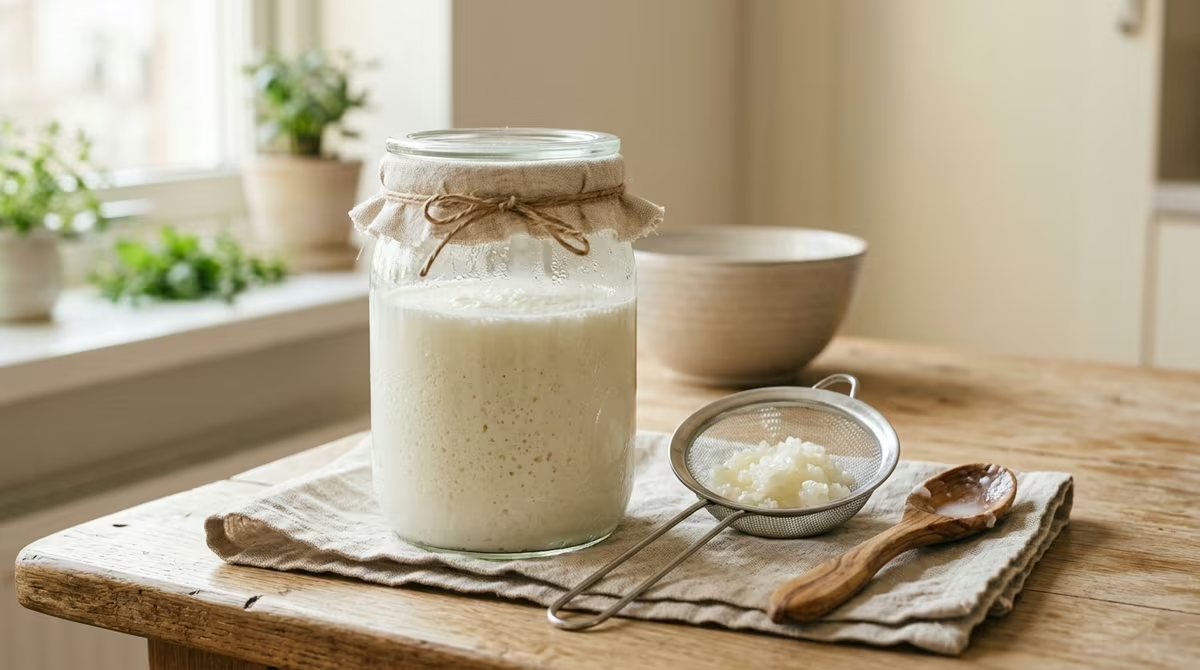
- A wide-mouthed glass jar, roughly 500 to 1000 ml capacity.
- A sieve or non-metal strainer (a fine mesh is best for small grains). Food-grade plastic is ideal, though stainless steel is perfectly safe for the few seconds it takes to strain. Fermentation itself must only take place in glass, never in metal.
- A wooden or silicone spoon or spatula.
- A breathable cloth with an elastic band or a loose-fitting lid to cover the jar.
Which Goat’s Milk Works Best?
Both raw milk and standard pasteurised goat milk work exceptionally well. The only type unsuitable for kefir is UHT (ultra-heat treated) milk: the high temperatures alter the milk sugars and proteins, making it difficult for the probiotic cultures to thrive. Lactose-free milk is also unsuitable, as the grains require milk sugar to survive. Skimmed milk produces a thinner texture; whole milk delivers the richest, best-tasting result.
How to Make Goat Milk Kefir: Step-by-Step Goat Milk Kefir Recipe
1. Setting up the jar
Rinse your glass jar thoroughly with hot water and dry it, ensuring no washing-up liquid residue remains. Place the live kefir grains into the jar, pour in the goat’s milk, and leave about 5 cm of headspace at the top to allow for carbon dioxide development. It makes no difference whether the milk comes straight from the fridge or is at room temperature. Give it a gentle stir so the grains do not settle on the bottom.
2. Choosing the right ratio
When you first make goat kefir, a higher grain-to-milk ratio is recommended: 2 tablespoons of grains to 500 ml of milk. This gets the culture fermenting vigorously. Once the fermentation runs reliably, you can increase the milk volume – experienced fermenters often use one tablespoon for up to one litre. The principle of this goat milk kefir recipe is straightforward: more milk per grain extends the fermentation time; less milk speeds it up.
3. Covering the jar – choosing still or fizzy
This simple step determines the final texture and carbonation. Covering the jar with a breathable cloth or a loose lid allows fermentation gases to escape, resulting in a smooth, mild kefir. Using a tightly sealed lid traps the carbon dioxide inside, yielding a lightly effervescent drink. Over a 24-hour period, pressure will not compromise a sturdy jar. A cloth cover also keeps out fruit flies – a genuine benefit during the warmer summer months.
4. Leaving it to ferment
Keep the jar away from direct sunlight at room temperature. While fermentation works between 10°C and 35°C, the ideal range is 20°C to 24°C. When learning how to make goat milk kefir, inspect the jar for the first time after 24 hours, then check every few hours thereafter.
Ambient temperature is the single biggest variable in fermentation: the exact same batch can take just 8 hours in summer and up to 30 hours in winter. In colder kitchens, wrapping the jar in a tea towel helps maintain warmth.
5. Spotting when it is ready
The kefir progresses through distinct stages:
- Initially, it tastes and looks just like fresh milk.
- A noticeably thicker, cultured layer then forms at the top.
- Next, small pockets of clear whey become visible through the glass – tiny separations scattered within the curd.
This third stage is the perfect moment to stop fermentation. Catching the ferment when whey separation is just beginning yields the most balanced, pleasant flavour. As an additional check, gently tilt the jar – if the liquid moves with a thicker consistency than milk, the culture has done its job. The aroma should be pleasantly tangy and slightly yeasty.
6. Straining
Pour the entire contents through your non-metal strainer into a clean bowl or jug. The thinner liquid will flow through easily; gently guide the curds through the mesh with your spatula. This is easier with goat’s milk than cow’s milk because the curds are naturally softer. Do not worry about damaging the grains – they are remarkably resilient and rubbery.
7. Reusing your grains
Transfer the strained grains straight back into your clean jar, add fresh pasteurised goat milk, and start your next batch. Do not rinse the grains – the reasons for this are explained below.
8. Storing your kefir
Your finished goat’s milk kefir can be stored in a sealed bottle or jar in the fridge for two to three weeks. It will continue to ferment very slowly in the cold, becoming slightly more acidic over time.
Why You Should Discard the Very First Batch
When working with newly bought or freshly reactivated grains, always discard the first batch of kefir. This is not superstition: you cannot be sure how vigorous a new culture is, and leaving fresh milk at room temperature carries a small risk until the beneficial lactic acid bacteria have fully established dominance. By the second or third batch, the culture is fully balanced and safe to drink.
If you are rehydrating dried grains or reviving frozen ones, this reactivation process typically takes between 7 and 14 days. During this initial period, the kefir will remain relatively thin and mild – this is entirely normal.
Why Kefir Grains Should Never Be Rinsed
The micro-organisms within the grains produce a soluble polysaccharide known as kefiran. This acts as a protective matrix – a natural biofilm that shields the beneficial colony from unwanted environmental bacteria. Rinsing the grains under tap water washes away this natural protective barrier. While not fatal, it weakens the culture and slows down future ferments.
Slimy, gel-like grains are therefore a sign of robust health, not poor quality. Kefiran itself is widely researched as a multifunctional biopolymer with promising applications in nutrient encapsulation and biomaterials.
The only exception: rinse your grains briefly with non-chlorinated water before drying or freezing them for long-term storage.
Pausing, Holidays and Long-Term Storage
Up to four weeks: Place the grains in a small jar of fresh milk and keep them in the fridge. They will continue to ferment at a fraction of their normal rate. Change the milk periodically – at the very least whenever clear whey begins to separate. Four weeks is the practical limit for fridge storage.
Longer periods: Dry or freeze your grains. To dry them, rinse gently, pat dry, and dehydrate at no more than 35°C in a well-ventilated area before sealing in an airtight container. To freeze, rinse, dab dry with kitchen paper, and store in an airtight freezer bag or container.
A practical note: not every culture recovers equally well from freezing, and some fail to regain their original vitality. If you choose this method, freeze only a backup portion and keep your main culture active in milk. Regular brewing remains the most dependable way to maintain healthy grains.
After any extended pause, expect the first two to three batches to be milder and thinner than usual.
Troubleshooting: When Things Go Wrong
Heavy whey separation has occurred. The kefir is over-fermented, but not spoiled. It will taste significantly sharper and more effervescent. Note that leaving it to ferment longer does not increase the probiotic count; pronounced separation simply means the bacteria have consumed all available lactose. Once split, the layers only recombine temporarily with vigorous shaking. Over-fermented batches are ideal for making soft kefir cheese (labneh), and the drained kefir whey can be used in baking and smoothies.
The kefir remains too thin. This is completely normal when you make goat kefir. If you prefer a thicker texture, simply strain off a portion of the whey through a cheesecloth until you achieve your desired drinking yoghurt or spoonable consistency.
The grains are not growing. Live kefir grains naturally multiply more slowly in goat’s milk. If there is no growth at all, the volume of milk may be too large for the grain quantity: reduce to 2 tablespoons of grains per 500 ml of milk until batches complete within 24 hours. In optimal conditions, grain volume should double every one to two weeks.
The grains turn pink, grey, black or green. The culture has become contaminated. Discard the batch and grains immediately and start fresh. Healthy grains should be creamy white to pale ivory in colour.
The jar smells unpleasant or putrid. Discard the batch. By contrast, a purely sour or yeasty aroma is entirely normal – it simply indicates a temporary shift in the ratio of yeasts to lactic acid bacteria.
Mould appears on the surface. This can happen if a ferment is left out unchilled for multiple days. Two days at room temperature is the recommended maximum; if you are not ready to strain your kefir by then, move the entire jar to the fridge. For further guidance, consult our overview of the 10 most common kefir mistakes.
Second Fermentation
If you prefer a milder, naturally sparkling drink, you can give your kefir a second fermentation. Strain the kefir, discard or reuse the grains, and pour the liquid into a swing-top bottle. Add your choice of flavouring – lemon peel, vanilla pod, a handful of berries, or a slice of fresh ginger – and leave at room temperature for a further 6 to 24 hours. Open the bottle cautiously once a day to release any excess pressure. For step-by-step instructions, see our complete second fermentation guide.
Sealing the bottle tightly creates mild effervescence and a trace amount of alcohol. If you prefer an alcohol-free drink, cover the bottle with a cloth instead: exposure to oxygen encourages organic acid production rather than alcohol.
How to Serve Goat’s Milk Kefir
Goat’s milk kefir has a distinct, subtly tangy character. While delicious unflavoured, here are several popular ways to enjoy it:
- Blended into a smoothie with frozen berries, which naturally softens the tartness
- Stirred with a little honey or maple syrup for children
- Used as a cultured substitute for soured cream in salad dressings and dips
- Poured over porridge oats, wholemeal muesli, or granola as part of a balanced kefir breakfast
Never heat your kefir, as high temperatures destroy the beneficial live cultures. To explore where kefir fits into a broader gut-friendly diet, take a look at our guide to fermented foods.
The Daily Routine: How to Make Goat Milk Kefir
Once you get into the swing of things, the daily rhythm is straightforward: strain your kefir in the morning, pour the finished drink into a fresh bottle and pop it in the fridge, place the live kefir grains into fresh goat’s milk, cover the jar, and leave it at room temperature to ferment.
Because goat’s milk takes slightly longer to culture, running two jars on alternate days works brilliantly – that way, one batch is always ready to drink whilst the other is still fermenting.
Frequently Asked Questions
Do you need special kefir grains for goat’s milk?
No. There are no distinct “goat kefir grains”. Traditional milk kefir grains containing live lactic acid bacteria and probiotic cultures will ferment any mammal’s milk that contains lactose – cow, goat, sheep, and buffalo. Only water kefir grains are completely different and unsuitable for dairy milk.
What is the fermentation time for goat milk kefir?
At room temperature (around 20 to 24°C), the fermentation time is usually 24 to 48 hours, which is longer than cow’s milk. The main reason is the lower lactose content in goat’s milk. Cooler room temperatures can extend this timeframe considerably, whilst warm summer weather will shorten it.
Why is my goat milk kefir not thickening?
Goat’s milk contains less alpha-s1-casein than cow’s milk, which naturally produces a much softer, more delicate curd. This is entirely normal and not a mistake in how you make goat kefir. If you prefer a thicker consistency, simply pour off some of the liquid during whey separation.
Can I use UHT goat’s milk?
It is best avoided. The ultra-heat treatment alters the milk proteins and sugars, making it difficult for the live cultures to thrive. Standard pasteurised goat milk and fresh raw milk both work exceptionally well.
Can people with lactose intolerance drink goat milk kefir?
Frequently, yes, because the beneficial lactic acid bacteria and yeasts break down a substantial portion of the milk sugar during fermentation, supporting the gut microbiome. A randomised trial in 2003 demonstrated that kefir significantly improves lactose digestion and tolerance in individuals with maldigestion. However, residual lactose remains, so it is wise to start with small amounts.
Can I use a metal sieve, or do I need a non-metal strainer?
For the few seconds it takes to strain your kefir, food-grade stainless steel is completely harmless. What you must avoid is prolonged contact – such as fermenting inside metal containers – and reactive metals like aluminium, which is why many prefer a plastic or nylon non-metal strainer.
Do I need to rinse the grains between batches?
No, and you really shouldn’t. Kefir grains are coated in kefiran, a protective polysaccharide matrix produced by the probiotic cultures. Rinsing them under water washes this layer away and stresses the culture. Grains should only ever be rinsed if you are preparing them for drying or freezing.
Why shouldn’t I drink the very first batch?
When working with new or freshly reactivated grains, the microbial balance takes a couple of rounds to settle. By the second or third batch, the culture will be fully active, robust, and producing reliable, delicious goat milk kefir.
References
- Fijan S et al. (2026). Kefir Consumption and Health Effects Based on Human Clinical Trials: An Overview of Literature. Healthcare (Basel). PubMed
- Kairey L et al. (2023). The effects of kefir consumption on human health: a systematic review of randomized controlled trials. Nutrition Reviews. PubMed
- Rosa DD et al. (2017). Milk kefir: nutritional, microbiological and health benefits. Nutrition Research Reviews. PubMed
- Hertzler SR et al. (2003). Kefir improves lactose digestion and tolerance in adults with lactose maldigestion. Journal of the American Dietetic Association. PubMed
- Lima RC et al. (2026). Peptidomic Characterization and Functional Properties of Goat and Cow Milk Kefir before and after In Vitro Digestion. Journal of Agricultural and Food Chemistry. PubMed
- Uzkuç H et al. (2026). Comparison of in vitro antioxidant activities of kefir, yogurt, and cheese produced from goat milk. Food Chemistry: X. PubMed
- Wang SY et al. (2026). Milk composition shapes structural and microbial dynamics of kefir grain formation. Journal of Dairy Science. PubMed
- Lim JJL et al. (2026). Review on kefir beverages from milk and water: health benefits, processing and applications. Food Science of Animal Resources. PubMed
- Bui G et al. (2026). Impact of Fermented Dairy on Gastrointestinal Health and Associated Biomarkers. Nutrition Reviews. PubMed
- Bakırhan H et al. (2026). Effects of Kefir Consumption on Gastrointestinal Health, Biochemical Parameters, Sleep, and Mental Well-Being in Healthy Young Adults: a Randomized Controlled Trial. The Journal of Nutrition. PubMed