Fatty liver: what should you eat to help the fat in your liver reduce again? The honest answer is that there’s no single food that de-fats the liver, but there is an eating pattern that works, time and again, in studies. A fatty liver diet built around Mediterranean-style eating lowers the liver’s fat content even when weight stays the same. Add a five to ten per cent weight loss on top, and the tissue itself improves for many people affected.
This article draws on review papers from major professional bodies, on position statements on exercise therapy, and on controlled trials in which liver fat was measured directly. Where the evidence is thin – and it is, for some popular recommendations – that’s stated explicitly.
Fatty liver diet: the short answer in numbers
If you’re short on time, there are four figures worth remembering. First: a Mediterranean diet is the only eating pattern explicitly recommended in review papers from major professional bodies. Second: weight loss of more than five per cent measurably improves signs of liver inflammation, and from around ten per cent, the inflammatory form resolves in almost everyone affected. Third: 150 to 240 minutes of moderate exercise a week lowers the liver fat percentage by two to four percentage points – regardless of whether weight drops at all. Fourth: sugar-sweetened drinks and heavily processed products are the items that make the biggest difference when cut out.
These numbers sound unremarkable, but they’re not. Non-alcoholic fatty liver disease – also known as hepatic steatosis, and renamed metabolic dysfunction-associated steatotic liver disease (MASLD) in recent years – affects, depending on the survey, 25 to 38 per cent of adults worldwide, and up to 80 per cent of people with severe obesity. In children and adolescents, prevalence is around ten per cent, which makes it the most common chronic liver disease of all.
And to this day, there is no medication that’s been widely approved and used for the advanced, inflammatory form. A major review paper from 2023 puts it plainly: the treatment is lifestyle. That’s bad news for anyone hoping for a pill – and good news for anyone willing to do something about it. Because unlike many chronic conditions, what’s on your plate genuinely makes a difference here.
The order of these levers matters. Food choices change the metabolism even at a stable weight, weight loss has the strongest effect on the tissue itself, and exercise works via its own separate pathway on top. These three levers don’t replace one another – they add up.
Mediterranean diet for fatty liver: the only pattern with a clear recommendation
The Mediterranean diet isn’t recommended for fatty liver because it happens to be fashionable, but because it’s the only eating pattern that has repeatedly been shown to lower liver fat. A widely cited 2017 review paper by European liver specialists confirms that a Mediterranean diet reduces liver fat – even without accompanying weight loss. That’s the crucial point: even if the scales don’t move, the liver’s metabolism still changes.
The composition is interesting, because it contradicts the instinct to eat as little fat as possible with a fatty liver. In the Mediterranean version, around 40 per cent of calories come from fat, mainly from monounsaturated fatty acids and omega-3 fats. The classic low-fat diet sits at up to 30 per cent. Conversely, carbohydrate intake drops from the usual 50 to 60 per cent to around 40 per cent, with sugar and refined starch being the main things cut.
This is no small detail – it’s a shift in perspective. For decades, the advice for liver problems was “eat low-fat”. The data show something different: it’s not the amount of fat that matters, but the type of fat and the amount of rapidly available carbohydrate. Olive oil, nuts and oily fish are part of the solution, not the problem.
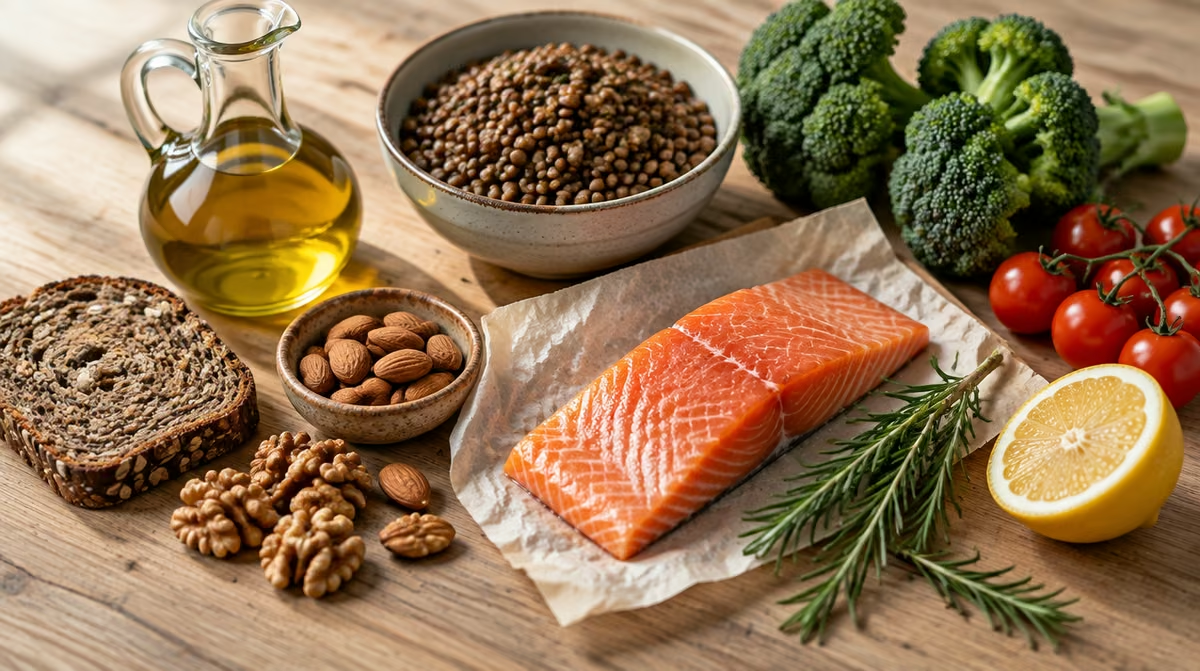
In practice, that means olive oil instead of spreads, fish instead of processed meat, vegetables and pulses as the base, nuts as a snack – and noticeably less white flour and sweet food. A more recent study from 2026 also found more favourable markers of oxidative stress and inflammation in people with good adherence to a Mediterranean diet, which fits the established picture, even though this kind of cross-sectional data can’t prove cause and effect.
Anyone interested in the role of fatty acids will find the measurements behind it in the article on the omega-3 index.
Foods to eat for fatty liver disease
The 2023 review paper spells out the building blocks of a fatty liver diet in reassuringly concrete terms: plenty of fruit, nuts and seeds, wholegrain cereals, plus fish and poultry as protein sources. It’s not an exotic list – at its core, it’s everyday, plant-forward cooking with good fats.
The role of fibre from wholegrains, pulses and vegetables is especially well evidenced. Fibre slows the rise in blood sugar and so takes some of the strain off insulin metabolism, which is affected in almost every case of fatty liver disease. This is really the heart of the problem: the liver converts surplus carbohydrate into fat, and the more disrupted insulin resistance becomes, the more of that fat stays put. For a deeper dive, the connections are covered in detail in the article on diet for insulin resistance.
Oily fish such as salmon, mackerel or herring supplies the omega-3 fatty acids that make up part of the calories in the Mediterranean version. Two portions a week is the usual benchmark. Nuts and seeds work well as a snack or scattered over salad; a handful a day is the amount used in studies of this eating pattern.
It’s also worth looking at anti-inflammatory foods, since the advanced form of fatty liver disease is essentially an inflammatory process. An overview of the best-studied candidates is available in the article on anti-inflammatory foods. One caveat is worth keeping in mind: no single food replaces the overall pattern, and the effects of individual ingredients tend to be modest.
Foods to avoid with fatty liver: the four biggest offenders
The list of foods to cut back on is just as clear as the list of foods to eat. The 2023 review paper names four groups that should be avoided in excess: heavily processed foods, red meat, sugar-sweetened drinks, and food cooked at very high temperatures.
The single biggest offender is sugary drinks. Fructose is metabolised largely in the liver and preferentially converted into fat there – fizzy drinks, juice and sweetened iced tea deliver it in a concentrated, liquid form with no satiating effect whatsoever. Half a litre of fizzy drink contains around 50 grams of sugar depending on the brand, roughly half of it fructose, and it won’t fill anyone up. The article on fruit and fructose shows just how much fructose lurks even in seemingly harmless portions.
Heavily processed products work through a second route: they pack a lot of calories into a small volume, are easy to eat, and often contain the combination of sugar, refined starch and cheap fat that puts the greatest strain on liver metabolism. The reference to food “cooked at very high temperatures” targets fried and deep-fried food, where inflammatory compounds form as an added burden.
Alcohol also belongs on this list, even though the name “non-alcoholic fatty liver disease” suggests otherwise. The name simply distinguishes the cause; it isn’t a licence to drink. The 2023 review paper explicitly recommends abstaining from alcohol and smoking, because both place additional strain on an already damaged liver.
A day on a plate: what this looks like day to day
Eating patterns sound abstract until someone spells out what actually goes in the bowl in the morning. Translated into an ordinary day, a fatty liver diet might look like this: porridge oats with nuts and berries instead of bread and jam for breakfast, pulses or fish with vegetables and olive oil for lunch, wholemeal bread with vegetables and cheese in moderation for dinner. Water or unsweetened tea instead of juice and fizzy drinks to go with it.
The biggest lever usually isn’t lunch, but drinks and snacks. Swapping the daily juice, fizzy drink and chocolate bar for water, fruit and a handful of nuts changes the day’s sugar load considerably without overhauling a single meal. It’s the starting point with the best ratio of effort to effect.
When it comes to carbohydrates, it’s not about cutting them out but swapping them: wholemeal bread instead of white, pulses instead of a side of polished rice, whole fruit instead of juice. That alone brings the proportion of rapidly available carbohydrate down towards the range described in studies of the Mediterranean version.
And portion sizes? There’s no liver-specific guidance on that. Anyone who needs to lose weight needs a calorie deficit – how that deficit is achieved is, according to the evidence, of secondary importance. That’s exactly why intermittent fasting works too, though no better than other routes.
Why weight loss achieves more than any single food
Useful as food choices are, the most solidly evidenced lever remains body weight. The 2017 European review paper puts figures on it in stages: more than five per cent weight loss already improves markers of liver disease significantly, such as liver enzyme levels. From around ten per cent, the inflammatory form regresses in almost everyone affected, and tissue scarring improves by at least one stage.
This staged effect matters more in practice than it sounds. Ten per cent weight loss is a big hurdle for many people, whereas five per cent is realistic – at 90 kilograms, that’s four and a half kilos. And even that amount produces a measurable change in blood test results. So it’s worth starting small rather than not trying at all.
A US professional body set out how this weight loss should be achieved in a 2021 practice update, and reached the same conclusion: lifestyle change remains the first-line treatment. That’s also because fatty liver disease is closely linked to diabetes, cardiovascular disease and certain cancers – so the same changes work on several fronts at once.
One caveat belongs here: almost all of this data comes from studies where participants received intensive support. The hard part isn’t losing the weight, but keeping it off. Professional bodies therefore stress that relapse-prevention strategies should be planned in from the start – weight that returns after four months leaves no lasting benefit in the liver either.
Exercise: 150 to 240 minutes that lower liver fat
Exercise works on fatty liver through its own separate pathway – even when weight stays constant. A 2023 position statement from Australian exercise scientists summarises the evidence: 150 to 240 minutes of moderate endurance exercise a week lowers the liver fat percentage by roughly two to four percentage points. Even 135 minutes a week showed an effect in studies.
As a measure of “moderate”, the 2023 review paper offers a handy rule of thumb: an intensity at which you can still talk but can no longer sing. Brisk walking, everyday cycling or swimming all qualify. You don’t need a gym, and you don’t need a sport you’ve never enjoyed before.
What the position statement says about intensity is notable: high-intensity interval training produces comparable results, but nothing beyond that. Total volume appears to be what matters, not how hard any single session is. Anyone who’d rather walk briskly than sprint loses nothing by doing so – the article on how much exercise a day is healthy offers a sense of how much everyday activity is realistic.
Strength training is explicitly recommended as an addition, not a replacement for the endurance quota. It improves muscle mass and insulin sensitivity but doesn’t substitute for aerobic exercise where liver fat is concerned. Also worth noting: the exercise amounts described improve fitness and cardiovascular risk regardless of whether weight changes at all.
The third factor is sitting. The 2017 review paper describes an interplay between a sedentary lifestyle, low physical activity and poor diet that reinforces itself. Long sitting times are a risk factor in their own right – someone who exercises daily but sits for the rest of the day has only solved part of the problem.
Intermittent fasting for fatty liver: what the evidence really shows
Intermittent fasting is often recommended for a fatty liver diet, and one of the field’s most compelling studies looked at exactly this. In a controlled trial from 2023, 80 adults with obesity and fatty liver disease were split into four groups for three months: alternate-day fasting combined with aerobic exercise, fasting alone, exercise alone, or no intervention at all. On fasting days, around 600 kilocalories were allowed; on the remaining days, participants ate without restriction.
The combination group’s results were striking: liver fat content fell by 5.5 percentage points, compared with 1.3 points under exercise alone and virtually zero in the control group. Weight, fat mass, waist circumference and the liver enzyme ALT also declined, while insulin sensitivity improved.
The honest caveat sits in the same paper: compared with fasting alone, the combination wasn’t statistically superior. And measures such as the degree of liver scarring, long-term blood sugar, blood pressure and blood fats didn’t differ between the groups. Three months is also a short time for tissue changes to show up.
Intermittent fasting is therefore a workable way to cut calorie intake – but not a mechanism of its own that beats other methods. Anyone who finds this pattern easy to fit into daily life will benefit. Anyone who struggles with it and ends up eating more in the evening gains nothing. For people with diabetes on blood-sugar-lowering medication, an attempt like this should be medically supervised.
Liver enzymes and diagnosis: what gets measured
Fatty liver disease causes no symptoms for a long time. It’s usually picked up by chance – through raised liver enzymes on a blood test or an ultrasound scan done for another reason. That’s exactly why many people with the condition don’t know they have it.
The best-known lab marker is ALT, an enzyme that leaks into the blood in greater amounts when liver cells are damaged. In the 2023 fasting study, this value fell measurably under the intervention – so it does respond to lifestyle changes. As a standalone screening test, though, it’s not reliable: fatty liver disease can be present even with normal values.
What matters for prognosis isn’t the amount of fat, but whether scarring of the tissue has already set in. There are calculated scores from routine lab parameters and specialised ultrasound techniques for measuring tissue stiffness. Which test makes sense in an individual case is a matter for clinical judgement – not least because other causes of raised liver enzymes need to be ruled out.
For monitoring progress: liver fat and lab values respond within weeks to months, while tissue changes take considerably longer. Anyone making changes shouldn’t write off the check-up as a failure after just four weeks.
What a fatty liver disease diet can’t do – and when to see a doctor
For everything that food and exercise can achieve, fatty liver disease isn’t purely a dietary issue. It’s closely intertwined with insulin resistance, high blood pressure and blood fat disorders, and it raises mortality not just through liver complications but above all through cardiovascular disease and certain cancers. Anyone who gets their liver enzymes under control should keep the other risk factors in view too.
There are also forms where diet alone isn’t enough: scarring that’s already advanced, poorly controlled type 2 diabetes, or medications that affect the liver directly. In these cases, dietary change remains the right approach, but it doesn’t replace medical care.
And a word on supplements: for products marketed as liver-protective, the evidence is considerably weaker than for diet and exercise. What’s known about one of the most widely discussed of these is covered in the article on TUDCA and its effects. None of them are a substitute for changing everyday habits.
That leaves the question of where to start. Based on the evidence, in this order: first cut out liquid sugar sources, then build up to at least 150 minutes of exercise a week, then shift the diet step by step towards the Mediterranean pattern. Trying to force all three at once rarely lasts – and sticking with it is the real active ingredient in this condition.
Frequently asked questions
Which fruits are allowed on a fatty liver diet?
Fruit is explicitly on the recommended list in the review studies, so there’s no reason to avoid it. The difference lies in the form: whole fruit provides fibre and fills you up, while juice and smoothies deliver the same amount of fructose in seconds and without any feeling of fullness. The problem isn’t the apple, it’s the liquid sugar. Two to three portions of whole fruit a day are safe on a fatty liver diet and also provide fibre that slows the rise in blood sugar.
Can you drink coffee with a fatty liver?
Yes. Coffee is one of the few everyday indulgences that observational studies tend to link with better liver enzyme readings. That data comes mostly from observational studies rather than controlled trials, though, so it doesn’t translate into a dosage recommendation, let alone a treatment. What matters more is what goes into it: sugar, syrup and cream turn coffee into a sugary drink and cancel out any possible benefit.
How quickly does a fatty liver improve?
Liver fat responds faster than you might expect. In controlled trials it had already fallen measurably after three months – in the 2023 fasting study, by more than five percentage points. Reversing inflammation and scarring, however, takes longer and requires more substantial weight loss, in the region of ten per cent. So realistically it takes months, not weeks – and the values climb back up as soon as old habits return.
Is bread allowed on a fatty liver diet?
It depends on the type. The Mediterranean approach brings carbohydrate intake down to around 40% of calories and cuts out sugar and refined starch above all. White bread and rolls fall into that category, whereas wholemeal bread, as a wholegrain, is explicitly on the recommended list. No study supports cutting out bread altogether – but swapping white bread for dark, fibre-rich wholemeal bread is well supported.
Does alcohol matter with non-alcoholic fatty liver disease?
Yes, despite the name. The term only means that alcohol isn’t the cause of the fat build-up – it doesn’t mean alcohol is harmless. The 2023 review explicitly recommends avoiding alcohol and smoking, because both put extra strain on an already burdened liver and can encourage the condition to progress. How much is acceptable in an individual case is something to discuss with a doctor.
Does intermittent fasting help with fatty liver?
It helps, but no more than other ways of cutting calories. In the controlled 2023 study, alternate-day fasting combined with aerobic exercise significantly reduced liver fat – but compared with fasting alone, the combination wasn’t superior, and the degree of scarring, long-term blood sugar and blood fats didn’t change differently between the groups. Intermittent fasting is therefore an option for anyone who finds this pattern easier to stick to day-to-day, not a superior method.
Which supplements help with fatty liver?
No supplement has evidence as strong as dietary change and exercise. Omega-3 fatty acids are already part of the pattern through the Mediterranean diet’s oily fish, and for liver-specific supplements the evidence is weak and inconsistent. Anyone considering supplements should check with a doctor first – especially if liver enzymes are already raised, since some products can put extra strain on the liver.
How do you know if your liver is fatty?
Usually, you don’t. Fatty liver disease tends to run symptom-free for a long time and is often found by chance, for example through raised liver enzymes on a blood test or on an ultrasound scan. Non-specific signs such as tiredness or a feeling of pressure in the upper right abdomen can occur, but they’re not reliable enough for self-diagnosis. Anyone with risk factors such as being overweight, type 2 diabetes or raised blood fats should have their liver enzymes checked regularly rather than waiting for symptoms.
Sources
- Lindstad TM, Pourteymour S, Lee-Ødegård S et al.: Structured Exercise Interventions and Hepatic-Metabolic Outcomes in Adults with MASLD: A Narrative Review of Randomized Controlled Trials. 2026. PubMed 41977131. DOI: 10.3390/ijms27072941.
- Kazdal SM, Arpa M, Keklikkiran Ç et al.: The Relationship Between Adherence to the Mediterranean Diet, Oxidative Stress, Trimethylamine N-Oxide, and Inflammatory Markers in Patients with Metabolic Dysfunction-Associated Steatotic Liver Disease. 2026. PubMed 42514300. DOI: 10.3390/nu18142231.
- Ciurea NA, Shanmugam H, Pantea CM et al.: Metabolic and Lifestyle Profiles of Metabolic Dysfunction-Associated Steatotic Liver Disease in Romanian and Italian Adults. 2026. PubMed 42512945. DOI: 10.3390/medicina62071403.
- Sheikh MY, Younus MF, Shergill A et al.: Diet and Lifestyle Interventions in Metabolic Dysfunction-Associated Fatty Liver Disease: A Comprehensive Review. International journal of molecular sciences 2025. PubMed 41096891. DOI: 10.3390/ijms26199625.
- Younossi ZM, Zelber-Sagi S, Henry L et al.: Lifestyle interventions in nonalcoholic fatty liver disease. Nature reviews. Gastroenterology & hepatology 2023. PubMed 37402873. DOI: 10.1038/s41575-023-00800-4.
- Ezpeleta M, Gabel K, Cienfuegos S et al.: Effect of alternate day fasting combined with aerobic exercise on non-alcoholic fatty liver disease: A randomized controlled trial. Cell metabolism 2023. PubMed 36549296. DOI: 10.1016/j.cmet.2022.12.001.
- Keating SE, Sabag A, Hallsworth K et al.: Exercise in the Management of Metabolic-Associated Fatty Liver Disease (MAFLD) in Adults: A Position Statement from Exercise and Sport Science Australia. Sports medicine (Auckland, N.Z.) 2023. PubMed 37695493. DOI: 10.1007/s40279-023-01918-w.
- Younossi ZM, Corey KE, Lim JK et al.: AGA Clinical Practice Update on Lifestyle Modification Using Diet and Exercise to Achieve Weight Loss in the Management of Nonalcoholic Fatty Liver Disease: Expert Review. Gastroenterology 2021. PubMed 33307021. DOI: 10.1053/j.gastro.2020.11.051.
- Romero-Gómez M, Zelber-Sagi S, Trenell M et al.: Treatment of NAFLD with diet, physical activity and exercise. Journal of hepatology 2017. PubMed 28545937. DOI: 10.1016/j.jhep.2017.05.016.
Cover image: stock image, AI-generated (Gemini)