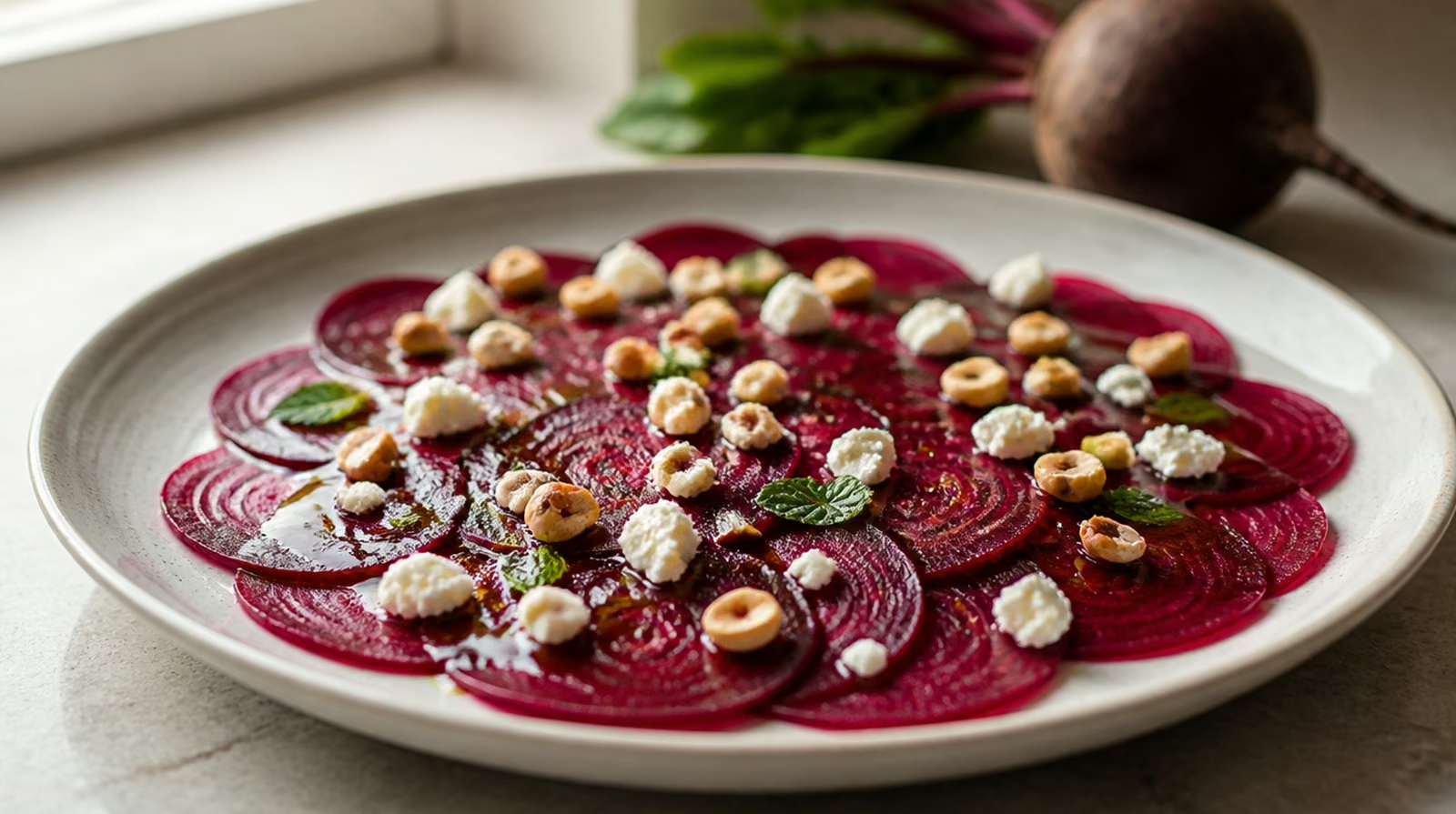
Ten minutes to make a beetroot salad – that only works with one staple from the chiller aisle: pre-cooked vacuum packed beetroot.
The question everyone asks is: is vacuum packed beetroot good for you, or is it merely convenience food? The answer is more nuanced than either camp suggests – and it comes down entirely to which product you pick off the shelf.
Three Types of Cooked Beetroot That Are Often Confused
In supermarkets, three completely different products sit side by side, and the differences between them are far greater than simply fresh versus pre-cooked vegetables.
1. Vacuum-sealed cooked beetroot (chiller aisle, vacuum pouch) Whole or halved roots, cooked, peeled, and vacuum-sealed. Ingredients list: beetroot. Occasionally an acidity regulator such as ascorbic acid. Shelf life: several weeks under refrigeration (whether premium organic brands or the everyday vacuum packed beetroot Aldi stocks).
2. Pickled beetroot in a jar (ambient aisle, vinegar infusion) Preserved in a sweetened vinegar solution, usually sliced. Ingredients list: beetroot, water, added sugars, spirit vinegar, salt, and occasionally flavourings or preservatives.
3. Frozen diced beetroot Blanched and flash-frozen. Ingredients list: beetroot.
The decisive difference lies right in the middle:
| Sugar per 100 g | Salt per 100 g | |
|---|---|---|
| Fresh, home-cooked | 7 g (naturally occurring) | 0.1 g |
| Vacuum-packed cooked | 7–8 g | 0.1–0.4 g |
| Pickled in a jar | 10–16 g | 0.8–1.5 g |
| Frozen | 7 g | 0.1 g |
Pickled beetroot can contain twice as much sugar as fresh – the vinegar infusion is loaded with added sugars. If you use it in a salad, you also introduce excess salt and a sharp acidity that overpowers any homemade dressing.
That is the genuine pitfall to watch out for, not the pre-cooking itself.
Nutrient Retention: What Vacuum Packed Beetroot Actually Loses
Focusing on Product 1 – the pouch from the chiller aisle – nutrient losses are modest, but present.
Folate and vitamin C: Both are sensitive to heat. The degree of nutrient loss depends on the manufacturer’s cooking method – which is never stated on the packet. Steamed beets retain significantly more nutrients than those boiled in water. A realistic reduction is 30 to 50 percent compared to raw roots. The raw alternative is explored in our carpaccio article.
Nitrate: This is where the most meaningful difference lies. Nitrate is water-soluble and leaches into cooking water during boiling. If cooked unpeeled, the majority is retained; if peeled prior to boiling, a substantial portion is lost. Because pre-packaged beets are peeled, the order of processing is decisive – yet never declared.
Betalains: These protective pigments are largely preserved with moderate cooking times, minimising betalain loss. Vacuum packaging provides additional protection against oxidation.
Fibre, potassium, and magnesium: Virtually unchanged. Dietary fibre is heat-stable, whilst minerals only leach into cooking water rather than breaking down.
Is Vacuum Packed Beetroot Good for You? The Verdict
Vacuum packed beetroot loses a portion of heat-sensitive vitamins and potentially some nitrate. However, it preserves fibre, potassium, colour compounds, and the vast majority of its nutritional profile.
The honest assessment: The difference between freshly roasted and vacuum-sealed is far smaller than the difference between eating beetroot and eating no beetroot at all. If the pre-cooked pouch makes the difference between preparing a healthy salad and skipping it, it is unequivocally the right choice.
If you are specifically targeting the blood pressure benefits, however, roasting raw beets yourself is preferable – this effect depends heavily on nitrate content, where commercial ready-to-eat products carry the greatest variability. Learn how to do this in our foundational guide.
What to Look for When Buying Cooked Beetroot
Check the ingredients list. It should simply state: “Beetroot”. Anything beyond that – added sugars, salt, flavourings, or preservatives – belongs to product category 2 and not in a salad you intend to dress yourself.
Look for “steamed”. Some producers declare their cooking method. Steamed beets or roots cooked in their own juices retain far more nutrients than water-boiled alternatives.
Opt for a tight vacuum seal over excess liquid. If substantial liquid has pooled in the pouch, water-soluble nutrients have leached out of the root. Whilst you can consume this liquid, it is rarely pleasant in flavour.
Use the sniff test. Any vacuum pouch that smells sour or yeasty upon opening should be discarded immediately. The sealed pack creates an anaerobic environment; if the cold chain was interrupted during refrigeration, spoilage becomes apparent quickly.
The 10-Minute Recipe
Serves 2
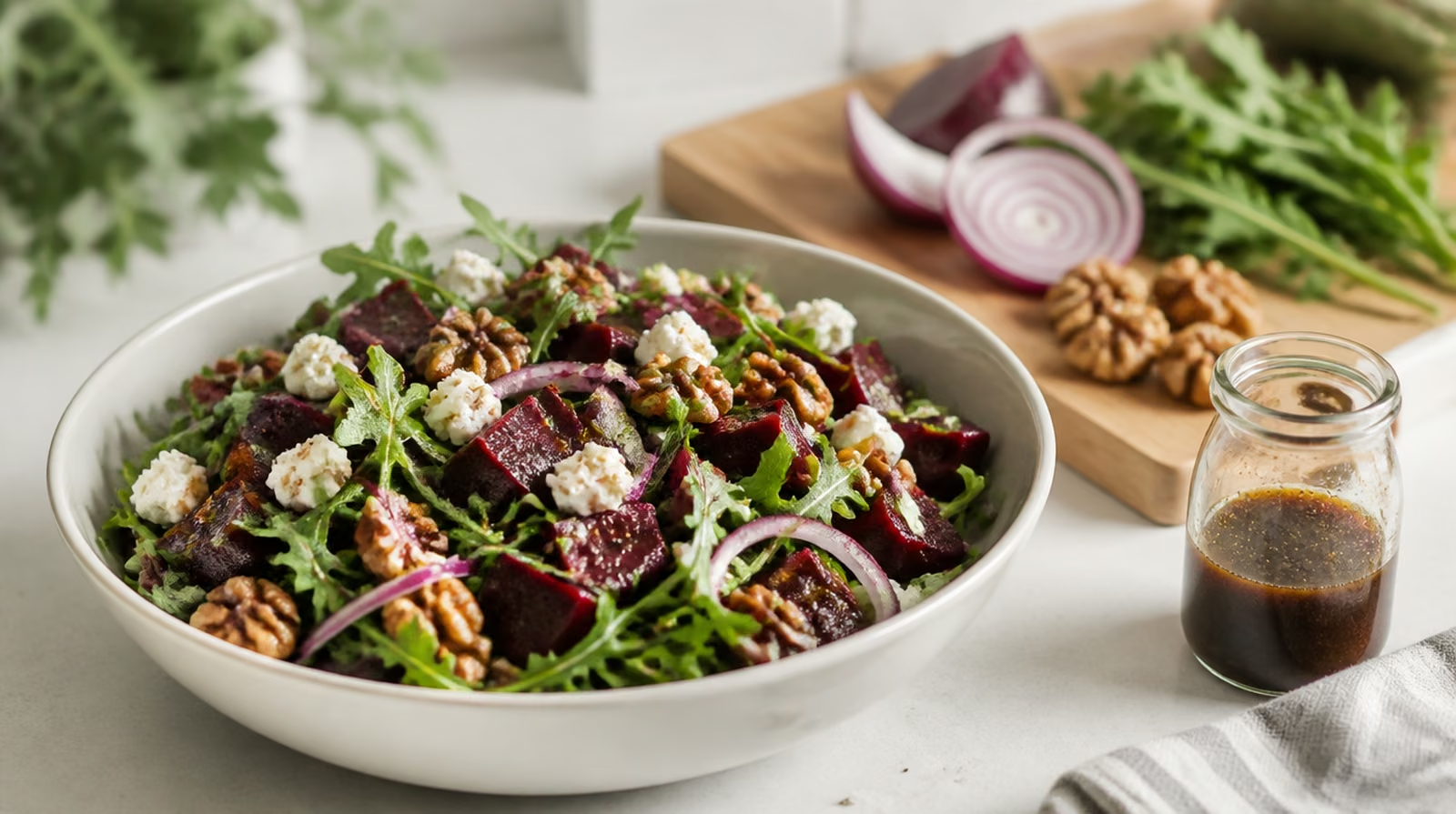
- 250 g cooked beetroot (from a vacuum pouch)
- 100 g feta
- 1 handful of rocket
- 30 g toasted walnuts
- 1/2 red onion
- 2 tbsp olive oil
- 1 tbsp balsamic vinegar
- 1 tsp mustard
- Pepper
Pat the beetroot dry and dice into cubes, slice the red onion into rings, shake the dressing ingredients together, toss everything, and finish with rocket and crumbled feta. Done.
Patting dry is crucial: Residual moisture from the pouch will otherwise dilute your dressing.
How Long Does Vacuum-Packed Beetroot Last Once Opened?
For those with a little more time: batch-roast fresh beetroot at the weekend. Place four to six unpeeled bulbs in the oven at once, allow them to cool, and store them in an airtight container in the fridge. They keep well for four to five days, enabling the same rapid ten-minute weekday salads with optimal nutrient retention.
For detailed guidance on shelf life and storage, read our storage article.
Estimated Nutritional Values per Serving
| Per serving | |
|---|---|
| Energy | approx. 370 kcal |
| Protein | approx. 11 g |
| Fat | approx. 28 g |
| Carbohydrates | approx. 14 g |
| Fibre | approx. 5 g |
| Salt | approx. 1.4 g |
Sources
- Mahmud MM, Mia MS, Nabi MHB et al.: Mechanistic Insights Into Color and Texture Stability of Frozen Tropical Vegetables: Processing, Modeling, and Preservation Strategies. 2026. PubMed 42255710. DOI: 10.1002/fsn3.71895.
- Miletić N, Lukyanov A, Petković M. et al.: Nonthermal Pretreatment Technologies to Improve Drying Efficiency and Quality in Fresh-Cut Fruits and Vegetables: A Comprehensive Review. 2026. PubMed 41683154. DOI: 10.3390/foods15030568.
- Reid-Fitten ML, Cotton CP, Min BR et al.: Effects of Thermal Pre-Treatments and Drying Processes on the Retention of Phytonutrients, Vitamins, and Antioxidant Activity in Dried Okra (Abelmoschus esculentus L.). 2026. PubMed 41596910. DOI: 10.3390/foods15020311.
- Almosa I, Bashir S, Sneddon AA. et al.: Scottish Seaweeds as Sustainable Sources of Micronutrients: Mineral Composition, Vitamin B<sub>12</sub> Content, and Safety Assessment. 2026. PubMed 42255698. DOI: 10.1002/fsn3.71988.
- Walker C, Pfister S.: Dataset of nutrient content and regionalized climate change impacts of food items per consumer country and life cycle stage based on supply location. 2026. PubMed 41659974. DOI: 10.1016/j.dib.2025.112309.
- Markowska J, Drabent A, Grzybowska N. et al.: Quality Assessment and Physicochemical Characteristics of Commercial Frozen Vegetable Blends Available on the Polish Market. 2026. PubMed 41596823. DOI: 10.3390/foods15020224.
- Sletta MS, Wirenfeldt CB, Sæther M et al.: Blanching of Two Commercial Norwegian Brown Algae for Reduction of Iodine and Other Compounds of Importance for Food Safety and Quality. 2025. PubMed 41376050. DOI: 10.3390/foods14234113.
- Mladěnka P, Macáková K, Kujovská Krčmová L et al.: Vitamin K – sources, physiological role, kinetics, deficiency, detection, therapeutic use, and toxicity. Nutrition reviews 2022. PubMed 34472618. DOI: 10.1093/nutrit/nuab061.
- Song M, Garrett WS, Chan AT et al.: Nutrients, foods, and colorectal cancer prevention. Gastroenterology 2015. PubMed 25575572. DOI: 10.1053/j.gastro.2014.12.035.