A great deal is written about salt and hypertension. Far less attention is paid to the mineral on the other side of the scale, even though it represents the real dietary bottleneck for most people. When considering dietary potassium, blood pressure regulation is often the missing piece of the puzzle.
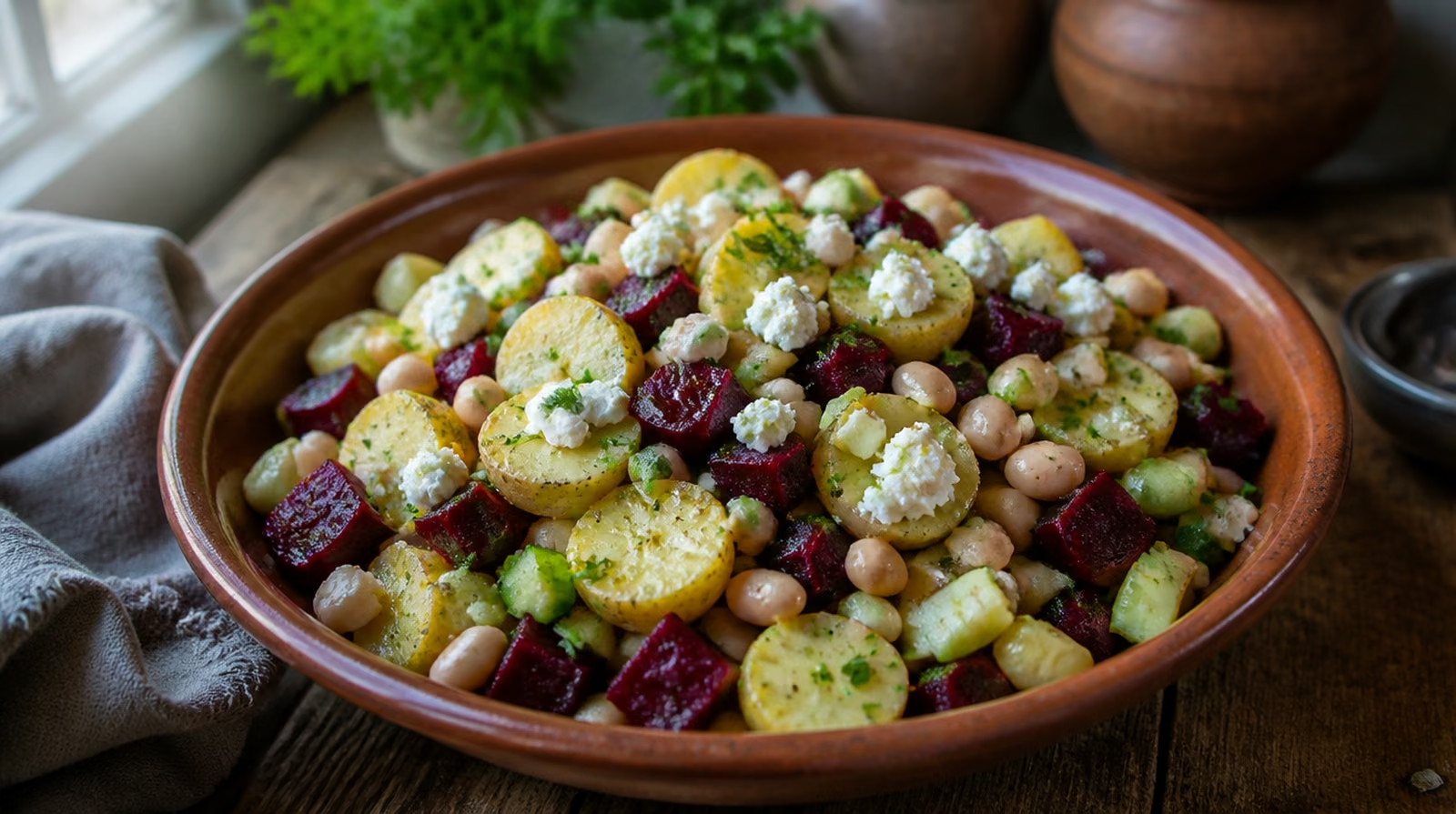
This Italian potato salad with beetroot, white beans, and feta happens to be one of the most potassium-dense combinations you can prepare from everyday ingredients.
How Does Potassium Affect Your Blood Pressure? Sodium and Potassium in Opposition
Every cell in the body maintains an essential imbalance: high sodium outside, high potassium inside. This cellular fluid balance and electrolyte balance is maintained by the sodium-potassium pump in the cell membrane, and this electrochemical gradient forms the foundation of nerve transmission, muscle contraction, and fluid distribution.
When it comes to blood pressure regulation, kidney function is the deciding factor. As potassium intake rises, the kidneys excrete more sodium. This reduces overall blood volume and promotes vasodilation, easing tension in the blood vessel walls.
That is why total dietary sodium is not the only meaningful metric; what matters most is the ratio of sodium to potassium. The WHO recommends at least 3,500 milligrams of potassium daily and no more than 2,000 milligrams of sodium (equivalent to 5 grams of salt). That represents a ratio of roughly 1:1.75 in favour of potassium.
Everyday reality is quite the opposite. In typical Western diets, this ratio is reversed because ultra-processed foods are high in sodium and low in potassium. Potassium is found almost exclusively in unprocessed, plant-based whole foods.
Why This Explains the DASH Diet
The DASH eating plan is one of the few dietary patterns backed by robust clinical evidence for managing hypertension. Original clinical trials demonstrated a significant blood pressure reduction of up to 11 mmHg systolic—substantially greater than the effect of beetroot juice alone. Organisations such as the British Heart Foundation and the NHS frequently highlight DASH principles for cardiovascular health.
At its core, DASH consists of: plenty of vegetables, fruit, pulses, wholemeal grains, low-fat dairy, minimal red meat, and reduced salt. What underpins this entire framework is precisely this targeted shift in the sodium-to-potassium ratio.
Potassium-Rich Foods: The Numbers Behind This Salad
| Ingredient | Potassium per 100 g |
|---|---|
| White beans (cooked) | 560 mg |
| Potatoes (cooked, skin-on) | 420 mg |
| Beetroot | 330 mg |
| Feta | 60 mg |
| Cucumber | 140 mg |
Among everyday staples, potatoes boast one of the highest potassium densities available—higher even than bananas, which usually claim the spotlight. A medium jacket potato with skin provides around 750 milligrams.
The catch is identical to that of dietary nitrates: potassium is water-soluble. Peeling, dicing, and boiling potatoes in large volumes of water leaches a substantial portion of the mineral into the cooking water. To preserve maximum potassium content, steam them or boil them whole in their skins.
The exact same principle applies to beetroot—see our foundational article.
The Recipe
Serves 4
- 500 g waxy salad potatoes
- 300 g cooked beetroot
- 1 tin white beans (240 g drained weight)
- 150 g feta
- 1 cucumber, deseeded
- 1 red onion
- 1 bunch fresh flat-leaf parsley
Dressing:
- 4 tbsp olive oil
- 2 tbsp white wine vinegar
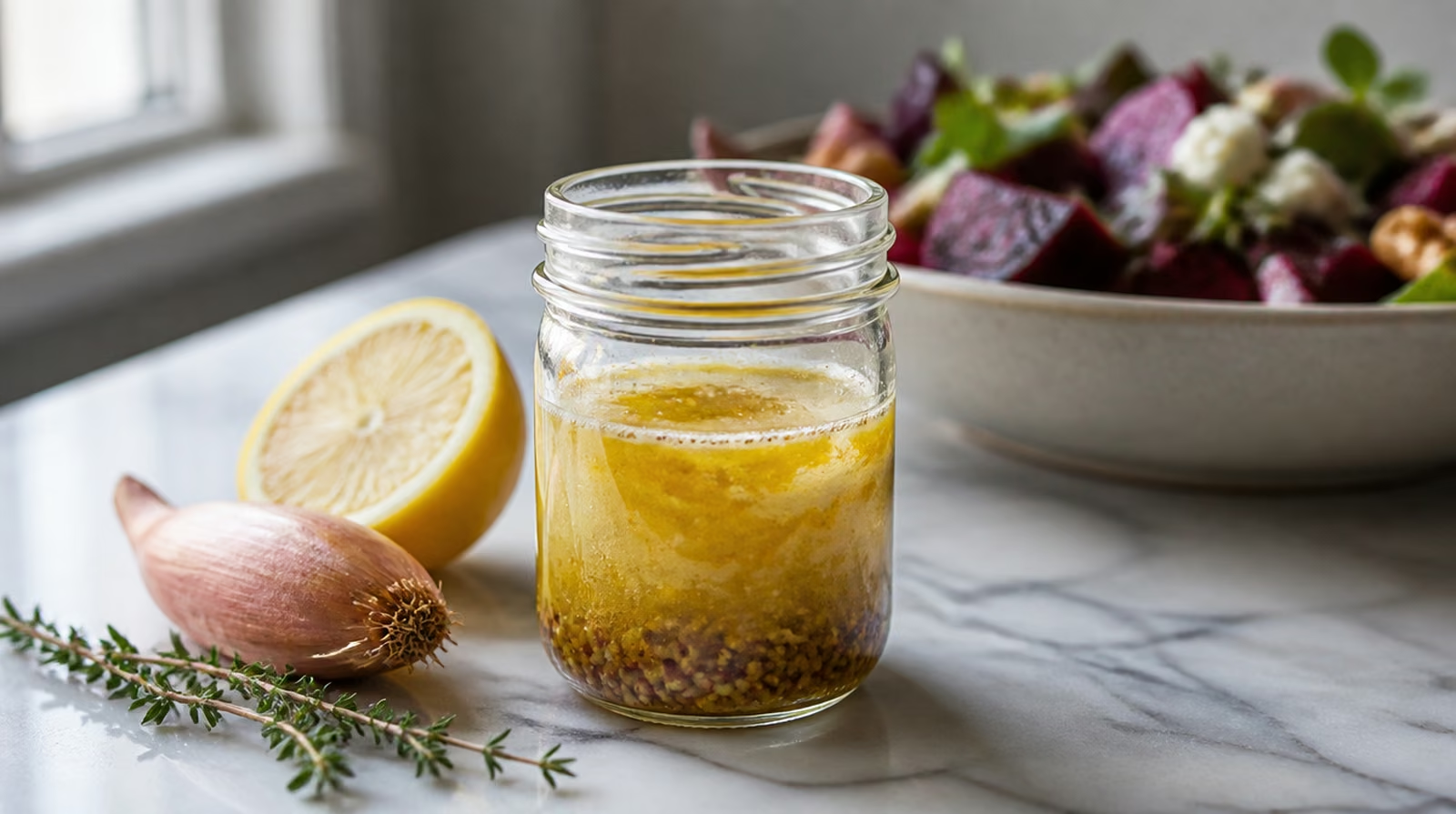
- 1 tsp mustard
- Freshly ground black pepper, minimal salt
Method:
- Cook the potatoes whole in their skins in a small amount of water or steam them for roughly 20 minutes. Peel while still warm and slice into rounds.
- Pour the dressing over the warm potatoes immediately. Warm potatoes absorb the vinaigrette thoroughly, whereas cold potatoes repel it. This is what separates a well-seasoned potato salad from one where the dressing pools at the bottom of the bowl.
- Rinse and drain the white beans thoroughly.
- Dice the beetroot, cucumber, and red onion.
- Gently combine all ingredients in a bowl, folding through the crumbled feta and chopped parsley last.
Rinse the Beans, Always
Tinned pulses are packed in salted brine. Rinsing them thoroughly under cold water removes up to 40 per cent of the sodium—in a recipe that already features feta, this is the simplest way to reduce unnecessary salt.
Dried white beans soaked overnight and cooked from scratch contain virtually no sodium, though they require advance preparation.
Potassium, Blood Pressure, and Kidney Health: Who Needs to Take Care?
An essential clinical caveat must accompany all dietary potassium advice: for individuals with impaired kidney function, the opposite rules apply. If the kidneys can no longer excrete potassium efficiently, it can accumulate in the bloodstream. Hyperkalaemia is a serious medical condition capable of triggering cardiac arrhythmias.
Anyone living with chronic kidney disease, or taking potassium-sparing diuretics, ACE inhibitors, or angiotensin receptor blockers (ARBs), will typically receive tailored potassium targets from their GP or nephrologist—targets that may fall well below the WHO baseline of 3,500 milligrams. In such cases, a meal combining potatoes, white beans, and beetroot is not advisable.
For individuals with healthy kidney function, an excess of potassium from whole foods poses virtually no risk of toxicity, as any surplus is safely excreted by the kidneys.
Estimated Nutritional Values per Serving
| Per serving | |
|---|---|
| Energy | approx. 420 kcal |
| Protein | approx. 14 g |
| Fat | approx. 20 g |
| Carbohydrates | approx. 40 g |
| Fibre | approx. 9 g |
| Potassium | approx. 1,100 mg (31% of daily target) |
| Salt | approx. 1.4 g |
This provides a ratio of approximately 1,100 milligrams of potassium to 560 milligrams of sodium—a 2:1 balance in favour of potassium, reflecting the exact principles recommended by health guidelines.
To learn how to lower sodium levels further without sacrificing cheese, explore our cheese comparison guide.
Quellen
- Torres A, Sanchez Redroban JD, Trujillo G et al.: Sodium, potassium, and blood pressure regulation in Latin American populations: a critical narrative review of multifactorial determinants. 2026. PubMed 42039362. DOI: 10.3389/fcvm.2026.1770880.
- Filippini T, Naska A, Kasdagli MI et al.: Potassium Intake and Blood Pressure: A Dose-Response Meta-Analysis of Randomized Controlled Trials. Journal of the American Heart Association 2020. PubMed 32500831. DOI: 10.1161/JAHA.119.015719.
- Hoorn EJ, Subramanya AR, Boyd-Shiwarski CR et al.: Potassium and the kidney. Nature reviews. Nephrology 2026. PubMed 41611896. DOI: 10.1038/s41581-026-01053-5.
- Fang C, Ma B, Xiao N et al.: Spironolactone therapy in resistant hypertension comorbid with mild obstructive sleep apnea: A retrospective cohort study. 2026. PubMed 42152359. DOI: 10.1097/md.0000000000048755.
- Falodia R, Alokozay E, Idrees M et al.: Efficacy and Safety of Baxdrostat for Hypertension: A Systematic Review and Meta-Analysis of Three Phase 2/3 Randomized Controlled Trials. 2026. PubMed 42334050. DOI: 10.1002/clc.70391.
- Otay Lule N, Savcilioglu MD, Lule KO et al.: Association Between DASH Diet Quality and 24 h Ambulatory Blood Pressure in Treatment-Naive Adults Referred for Diagnostic Monitoring: A Cross-Sectional Study. 2026. PubMed 42195227. DOI: 10.3390/medicina62050974.
- Regalla DKR, Ahmed I.: Secondary Hypertension. 2026. PubMed 31335025.
- Katsuya T, Kario K, Ohishi M et al.: Effect of Body Mass Index on the Efficacy and Safety of Esaxerenone Versus Trichlormethiazide for the Treatment of Japanese Patients with Uncontrolled Essential Hypertension: A Subanalysis of the Excite-HT Study. 2026. PubMed 42316368. DOI: 10.1111/jch.70314.
- Aye N, Velegraki E, Mohiaddin RH. et al.: Case report: CMR work-up for a case of long QT syndrome, dilated left ventricle, and hypertension-when incidental findings unmasked the fundamental issue. 2026. PubMed 42211815. DOI: 10.1093/ehjcr/ytag354.
- Lee CJ, Ihm SH, Shin DH et al.: Spironolactone vs Amiloride for Resistant Hypertension: A Randomized Clinical Trial. JAMA 2025. PubMed 40366680. DOI: 10.1001/jama.2025.5129.
- Desai NB, Hoenig MP: Potassium Homeostasis. Advances in kidney disease and health 2024. PubMed 39577884. DOI: 10.1053/j.akdh.2024.08.001.
- Wang JG, Zhang W, Li Y et al.: Hypertension in China: epidemiology and treatment initiatives. Nature reviews. Cardiology 2023. PubMed 36631532. DOI: 10.1038/s41569-022-00829-z.
- Carey RM, Moran AE, Whelton PK et al.: Treatment of Hypertension: A Review. JAMA 2022. PubMed 36346411. DOI: 10.1001/jama.2022.19590.
- Mu L, Yu P, Xu H et al.: Effect of sodium reduction based on the DASH diet on blood pressure in hypertensive patients with type 2 diabetes. Nutricion hospitalaria 2022. PubMed 35388704. DOI: 10.20960/nh.04039.
- Fu J, Liu Y, Zhang L et al.: Nonpharmacologic Interventions for Reducing Blood Pressure in Adults With Prehypertension to Established Hypertension. Journal of the American Heart Association 2020. PubMed 32975166. DOI: 10.1161/JAHA.120.016804.
- Carey RM, Muntner P, Bosworth HB et al.: Prevention and Control of Hypertension: JACC Health Promotion Series. Journal of the American College of Cardiology 2018. PubMed 30190007. DOI: 10.1016/j.jacc.2018.07.008.
- Rust P, Ekmekcioglu C: Impact of Salt Intake on the Pathogenesis and Treatment of Hypertension. Advances in experimental medicine and biology 2017. PubMed 27757935. DOI: 10.1007/5584_2016_147.
- Samadian F, Dalili N, Jamalian A et al.: Lifestyle Modifications to Prevent and Control Hypertension. Iranian journal of kidney diseases 2016. PubMed 27721223.
- Palmer BF: Regulation of Potassium Homeostasis. Clinical journal of the American Society of Nephrology : CJASN 2015. PubMed 24721891. DOI: 10.2215/CJN.08580813.