A healthy gut is the cornerstone of a robust immune system, clear skin, and a healthy, stable weight. When your digestion stalls, bloating becomes frequent, or the scales refuse to budge, the underlying cause is often dysbiosis—an imbalance in the gut flora. Exploring kefir benefits reveals why natural health practitioners and modern microbiome researchers regard this fermented drink as one of the most potent natural synbiotics available: it gets sluggish bowels moving, provides gentle constipation relief, and supports natural fat burning at the same time.
In this evidence-based guide, you will discover how kefir works within the digestive tract, why it aids sustainable weight loss, and how to successfully carry out a 7-day kefir gut reset.
1. Why Kefir Probiotics Revolutionise the Gut Microbiome: 30+ Strains
Unlike conventional yoghurt, which typically contains only two or three commercial bacterial strains, authentic kefir is a highly complex symbiosis of over 30 distinct lactic acid bacteria and beneficial yeasts (including Lactobacillus kefiri, Lactobacillus acidophilus, Bifidobacteria, and Kluyveromyces marxianus).
These microorganisms have a remarkable property: they are exceptionally acid-resistant. Whilst many synthetic probiotic capsules are destroyed by strong stomach acid, the vast majority of kefir cultures survive the passage through stomach acid and bile to actively colonise the intestinal villi. Once established in the digestive tract, they displace pathogenic organisms (such as Escherichia coli or Candida albicans) and restore a healthy microbial balance to your gut microbiome.
2. Kefir Benefits for Constipation Relief: The Gentle Peristalsis Booster
- Production of short-chain fatty acids (SCFAs): Lactic acid bacteria ferment dietary fibre into acetic acid, propionic acid, and butyrate. These acids lower the luminal pH, stimulating smooth intestinal muscles and promoting propulsive peristalsis (the forward movement of stool through the bowel).
- Increased stool hydration: The osmotic action of organic acids draws water into the intestinal lumen, making stools softer, bulkier, and easier to pass.
- Natural carbonation and gentle fermentation gases: Traditional kefir contains fine, naturally occurring carbonation that creates mild mechanical stimulation against the bowel wall, prompting the natural evacuation reflex.
3. How Kefir Supports Weight Loss: The 4 Biochemical Mechanisms
- Shifting the Firmicutes/Bacteroidetes ratio: Regular consumption of kefir encourages lean-associated Bacteroidetes bacteria, which help reduce the net extraction of calories from food.
- Release of satiety hormones (GLP-1 & PYY): The butyrate produced during fermentation stimulates L-cells in the gut wall to release the appetite-suppressing hormones GLP-1 and peptide YY.
- Reduction of low-grade inflammation: By reinforcing the intestinal lining (tight junctions), kefir prevents bacterial endotoxins (LPS) from leaking into the bloodstream. This improves insulin sensitivity in fat cells and supports metabolic fat burning.
- High-quality casein and whey protein: A 250 ml glass of kefir delivers around 8–9 g of protein, helping preserve lean muscle mass whilst maintaining a calorie deficit.
4. The Power Combination: Kefir with Psyllium Husks & Flaxseed
The 3-Minute Gut Express Drink:
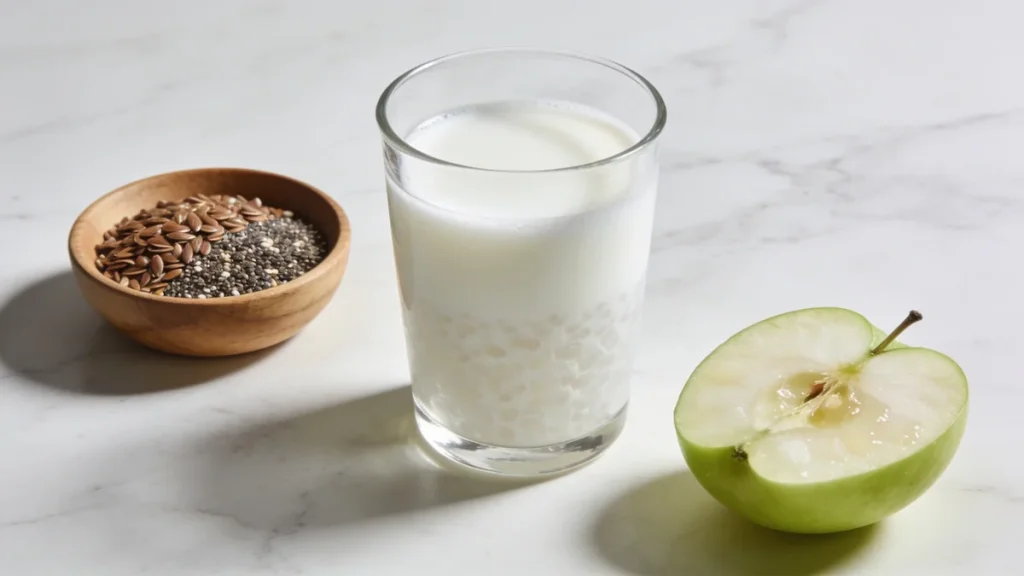
- Ingredients: 200 ml fresh milk kefir, 1 tsp milled organic golden flaxseed (linseed), 1/2 tsp psyllium husks (Plantago ovata), 1 pinch Ceylon cinnamon.
- Method: Stir all ingredients thoroughly in a glass, leave to swell for 5 minutes, and drink.
- Crucial practical tip: Drink a large glass of lukewarm water (at least 250 ml) immediately afterwards. The seeds expand significantly in the stomach, creating long-lasting satiety whilst gently sweeping through the digestive tract like a soft sponge.
5. Balancing Blood Sugar & Stopping Cravings: Kefir with Cinnamon & Tart Fruit
Intense sugar cravings are almost always triggered by rapid blood glucose dips. Combining kefir with specific bioactive plant compounds helps keep energy levels steady:
- Cinnamon as a natural insulin sensitiser: The polyphenols in genuine Ceylon cinnamon mimic the action of insulin, encouraging glucose to be channelled swiftly into muscle cells rather than stored as fat.
- Green apples & berries: Rich in pectin and anthocyanins. In the small intestine, pectin forms a gel-like barrier that slows down carbohydrate absorption.
- Recipe idea: Mix 150 ml of kefir with 1/2 a diced Granny Smith apple, 1/2 tsp of cinnamon, and 3 chopped walnuts for the ideal 4 pm snack to beat the afternoon slump.
6. Cutting Calorie Traps: Kefir as a Healthy Swap for Mayonnaise & Cream
| Ingredient / Dressing | Calories per 100 g | Fat Content | Probiotic Benefit |
|---|---|---|---|
| Classic mayonnaise | approx. 680 kcal | approx. 75 g | None (high in omega-6) |
| Double cream (liquid) | approx. 345 kcal | approx. 30 g | None |
| Crème fraîche | approx. 290 kcal | approx. 30 g | Low |
| Creamy whole milk kefir (3.5%) | approx. 62 kcal | approx. 3.5 g | Maximum (>30 strains) |
Quick Probiotic Herb Dressing:
Whisk together 4 tbsp kefir, 1 tsp Dijon mustard, a squeeze of fresh lemon juice, 1 tsp extra virgin olive oil, finely chopped chives, sea salt, and freshly ground black pepper. Delicious drizzled over cucumber, tomato, or crisp salad leaves.
7. What Happens If You Drink Kefir Everyday? Timing: Morning vs Before Bed
Morning on an empty stomach
Primary focus: Maximum bacterial colonisation and kickstarting your metabolism. The live cultures pass through an empty stomach within 15 minutes—ideal if your main goal is easing constipation and stimulating a sluggish gut.
Evening around 1 hour before sleep
Primary focus: Tissue repair, overnight fat burning, and sleep quality. Kefir’s slow-digesting casein protein supplies amino acids throughout the night, whilst L-tryptophan supports melatonin synthesis. Additionally, stable overnight insulin levels prevent midnight hypoglycaemia.
8. Tolerance, Lactose and Potential Dangers of Kefir: Why It Suits Most Stomachs
- Lactose breakdown during fermentation: Lactic acid bacteria feed on milk sugars, converting up to 99% of the lactose into lactate.
- Natural lactase enzyme support: The live bacteria in kefir produce the enzyme beta-galactosidase (lactase). Once in the small intestine, this helps break down any residual traces of lactose.
- Secondary fermentation for virtually zero lactose: If you strain out the grains and leave the finished kefir in a sealed bottle at room temperature for an additional 12–24 hours, the lactose content drops to an absolute trace level. True dangers of kefir are rare for healthy adults, though anyone severely immunocompromised or managing a severe dairy allergy should consult their GP before introducing unpasteurised ferments.
9. How Much Kefir Per Day? Dosage & Preventing Initial Bloating
- Week 1: Start with 50 to 100 ml (about half a small glass) daily, taken with breakfast or lunch.
- Week 2: Increase to 150 to 200 ml per day.
- From Week 3: Maintain the optimal target dose of 200 to 250 ml daily to sustain maximum kefir benefits.
- Golden rule: Drink plenty of still water throughout the day (at least 2 litres, in line with NHS hydration guidance) to help fibre move smoothly through the bowel.
10. 7-Day Gut Reset Plan with Kefir
| Day | Breakfast | Lunch | Dinner |
|---|---|---|---|
| Day 1 | 1 glass of plain kefir (100 ml) | Mixed garden salad with kefir herb dressing | Steamed Mediterranean vegetables |
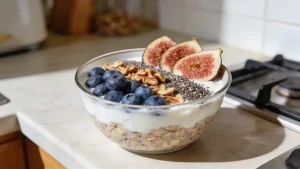
| Day 2 | Overnight porridge oats with kefir & berries | Wholemeal grain bowl with avocado | 1 small glass of kefir with cinnamon |
| Day 3 | Kefir smoothie with baby spinach & fresh ginger | Jacket potato or tofu with herbed kefir dip | Steamed seasonal greens |
| Day 4 | 1 glass of kefir with 1 tsp milled flaxseed | Large salad bowl with creamy kefir dressing | Baked salmon fillet with broccoli |
| Day 5 | Kefir oat pancake with herby quark or cottage cheese | Quinoa and roasted vegetable stir-fry | 1 glass of kefir with psyllium husks |
| Day 6 | Warm porridge oats with kefir & crushed walnuts | Chilled kefir and cucumber soup | Scrambled eggs with tomatoes & spinach |
| Day 7 | Kefir berry smoothie bowl with chia seeds | Roasted traybake vegetables with kefir tzatziki | 1 small glass of kefir before bed |
11. Frequently Asked Questions (FAQ)
Does kefir help with a bloated stomach?
Yes, over the medium and long term. Acute bloating is frequently driven by bacterial putrefaction in the colon. Kefir lowers the intestinal pH and suppresses gas-producing microbes. During the first 3–4 days, you may notice a temporary increase in bowel activity as your microbiome adapts, but this settles quickly.
How quickly does kefir provide constipation relief?
When combining 200 ml of kefir with 1 tsp of milled flaxseed and ample water, most people notice meaningful bowel regularity and relief within 24 to 48 hours.
Is shop-bought kefir from the supermarket just as effective?
Look for bottles explicitly labelled “Traditional Kefir” or organic kefir in the chilled dairy aisle. Products marketed as “mild kefir-style drinks” are frequently made with standard yoghurt cultures and lack traditional kefir yeasts—they taste gentler but offer significantly less microbial diversity.
12. Conclusion: A Healthy Gut Microbiome Is Key to Your Ideal Weight
The remarkable kefir benefits make it a true powerhouse for digestive wellness: it helps nourish the gut lining, encourages gentle constipation relief, and biochemically supports healthy fat metabolism. By replacing expensive probiotic capsules with genuine, live kefir and pairing it with prebiotic fibre such as porridge oats or flaxseed, you give your digestive tract the highest level of daily care.
Start your routine today with the 3-minute gut drink and restore your digestive balance naturally!