
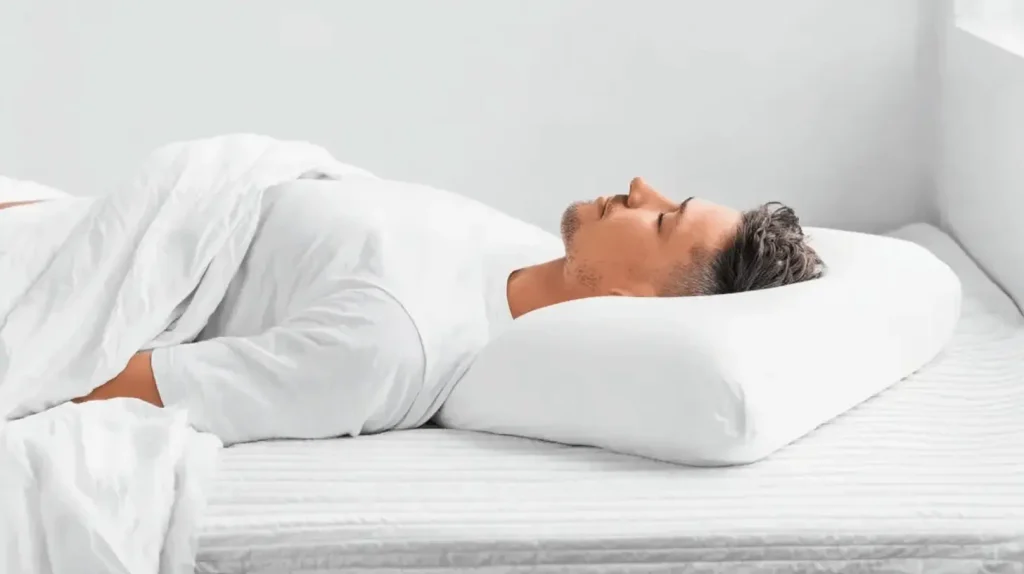
Choosing the right sleeping posture can have far-reaching consequences for your health – extending well beyond a restful night’s rest. Whilst we spend around a third of our lives asleep, our brain works flat out to cleanse and regenerate itself. Recent scientific findings reveal that finding the best sleeping position not only supports proper spinal alignment, but also plays a vital role in brain detoxification and could even contribute towards dementia prevention. In this evidence-based guide, you will discover what is the healthiest sleeping position and how to adjust your nocturnal resting posture for optimal brain health.
Table of Contents
- Key Takeaways
- The Glymphatic System: Brain Cleansing During Sleep
- The Three Main Sleeping Positions: A Scientific Comparison
- Sleeping on Your Side: The Most Natural Sleep Posture
- Sleeping on Your Back: Anatomically Correct, but Not Always Ideal
- Sleep Position and Alzheimer’s: What the Research Shows
- Blood Flow from the Brain: Why Side Sleeping Matters
- Sleep Duration and Dementia Risk: The Complex Relationship
- Practical Tips: How to Optimise Your Sleeping Posture
- Frequently Asked Questions About Sleeping Positions
- Scientific References
Key Takeaways
- Sleeping on your side is evolutionarily optimal: Rodent studies demonstrate that the natural lateral sleeping position supports glymphatic transport in the brain far better than supine or prone postures.
- Humans naturally favour the right side: Most people instinctively sleep on their side, particularly the right, which may maximise venous drainage and cerebral blood outflow.
- Alzheimer’s patients adopt different sleep habits: Individuals with neurodegenerative conditions spend significantly more time sleeping on your back (in the supine position) – 72% spend at least two hours per night on their back compared to just 37% of cognitively healthy adults.
- The glymphatic system cleanses your brain: Discovered only in 2012, this waste clearance pathway operates at peak capacity during sleep, flushing out neurotoxic proteins such as beta-amyloid.
- Physical exercise promotes brain detoxification: Voluntary physical activity enhances glymphatic clearance in ageing mice and reduces amyloid plaque deposition in the brain.
- The jugular vein plays a pivotal role: When resting in a right lateral sleeping position, the right internal jugular vein remains wide open whilst the left partially collapses – and the right vein is anatomically dominant in most people.
- Excessive sleep can be problematic: Longer sleep durations (over 8–9 hours) show a stronger correlation with Alzheimer’s disease and dementia than sleeping too little (under 5–6 hours).
- Inflammatory markers rise with prolonged sleep: Regularly clocking over 8 hours of sleep per night is associated with elevated levels of C-reactive protein and interleukin-6 – both inflammatory biomarkers linked to increased dementia risk.
- Self-reported sleeping positions are frequently inaccurate: Research shows that individuals struggle to accurately assess their actual sleep posture – overnight polysomnography in a sleep laboratory yields far more reliable data.
- Changing positions during the night is normal and necessary: Sleepers shift posture an average of 1.6 times per hour to alleviate pressure points and maintain healthy blood circulation.
The Glymphatic System: Brain Cleansing During Sleep
The glymphatic system represents one of the most remarkable discoveries in modern neuroscience. First characterised in 2012 by Maiken Nedergaard and her team, it functions as the brain’s specialised waste clearance network, operating predominantly while we sleep. Much like the lymphatic system throughout the rest of the body, the glymphatic system flushes away metabolic waste products – but with one crucial distinction: it relies on cerebrospinal fluid (CSF) circulating through the perivascular spaces lining the cerebral blood vessels.
What is the glymphatic system and how does it relate to your sleeping posture?
The glymphatic system is an intricate network of perivascular channels that pumps cerebrospinal fluid through brain tissue, filtering out metabolic by-products. Its name derives from the glial cells that facilitate this vital process. During slow-wave sleep, the interstitial space between brain cells expands by roughly 60%, drastically accelerating the influx and flow of cleansing fluid.
Its direct link to sleep posture emerged through pioneering rodent research: rats resting in their natural lateral sleeping position exhibited significantly more efficient glymphatic transport compared to animals placed in supine or prone positions. These findings raise a fundamental question: does our chosen sleeping posture similarly govern nocturnal brain detoxification and waste clearance in humans?
Why is your sleeping posture crucial for brain health and dementia prevention?
Your nocturnal posture may directly dictate the clearance of neurotoxic proteins closely linked to Alzheimer’s disease and other neurodegenerative disorders. Beta-amyloid plaques and hyperphosphorylated tau proteins – key hallmarks of Alzheimer’s – require continuous elimination from brain tissue. Impaired or inefficient glymphatic clearance may accelerate the toxic accumulation of these compounds over time.
Extensive clinical evidence confirms an established link between disturbed sleep patterns and elevated dementia risk. Meta-analyses demonstrate that both insufficient sleep duration and fragmented sleep correlate with accelerated cognitive decline. In this context, identifying the best sleeping position represents an overlooked yet potentially critical modifiable lifestyle factor for dementia prevention.
Which sleep posture best supports brain detoxification?
Drawing from animal research, the lateral sleeping position emerges as the most promising posture for optimal glymphatic clearance. In the landmark 2015 study by Lee and colleagues published in the Journal of Neuroscience, rats sleeping on their side demonstrated the most rapid and comprehensive clearance of beta-amyloid and other waste metabolites. Tellingly, this also represents the animals’ natural, spontaneous sleeping posture.
In humans, glymphatic flow was directly visualised for the first time in 2019 using advanced neuroimaging techniques. While the direct translation of animal models to human physiology remains an active area of clinical investigation, mounting epidemiological data suggests that adopting the best sleeping position carries profound clinical relevance for long-term neurological health.
The Three Main Sleeping Positions: Finding the Best Sleeping Position
Fundamentally, nocturnal posture falls into three primary categories: sleeping on your side, sleeping on your back, and sleeping on your front (prone). Each option carries distinct pros and cons for spinal alignment, respiratory mechanics, and – as recent neurological research indicates – long-term brain health. However, choosing between these sleeping positions is never one-size-fits-all; it depends heavily on individual health conditions, musculoskeletal anatomy, and personal comfort.
What is the healthiest sleeping position for restorative rest?
From a scientific standpoint, there is no single universal solution. However, clinical studies consistently indicate that sleeping on your side represents the most natural and beneficial posture for the vast majority of people. Around 80% of adults naturally prefer to sleep on their side, a preference that appears evolutionarily conserved given that our closest mammalian relatives instinctively adopt the lateral sleeping position as well.
Sleeping on your side offers numerous clinical benefits: it maintains open upper airways, fosters neutral spinal alignment when paired with a supportive pillow, delivers reliable back pain relief, and – as animal models demonstrate – may optimise nocturnal glymphatic clearance. Many individuals instinctively favour the right side, a tendency that closely aligns with the underlying vascular anatomy of cerebral venous drainage.
How does your sleeping position affect your health?
Your chosen posture influences multiple physiological systems simultaneously: it determines spinal alignment, joint pressure distribution, respiratory function, venous blood return, and the clearance of metabolic waste from the central nervous system. An unsuitable sleep posture can trigger chronic back pain, neck strain, loud snoring, and obstructive sleep apnoea, ultimately fostering long-term musculoskeletal imbalances.
Emerging research also indicates that sleep posture alters key metabolic and fluid dynamics. Reorienting the body in space shifts hydrostatic pressure gradients, which in turn regulates the flow of cerebrospinal fluid and cerebral venous blood. These subtle mechanical forces explain why certain sleeping positions correlate with enhanced neurological preservation whilst others may exacerbate neurodegenerative processes.
How often do people shift position during the night?
Studies employing infrared video monitoring and positional sensors show that adults shift their sleeping posture an average of 1.6 times per hour. Over a typical 7-to-8-hour night, this equates to roughly 10 to 12 nocturnal repositioning events. The vast majority of these micro-movements occur subconsciously, serving as an essential protective mechanism to alleviate sustained tissue pressure, prevent neck strain, and maintain uninterrupted microvascular circulation.
Interestingly, the frequency of these postural shifts declines with advancing age. Older adults turn significantly less often during the night, which partly accounts for the heightened prevalence of pressure ulcers among bedridden individuals. Furthermore, patients diagnosed with neurodegenerative disorders display markedly altered nocturnal movement patterns, frequently remaining locked in a single posture – most notably sleeping on their back – for extended intervals.
Sleeping on Your Side: The Most Natural Sleep Posture
Sleeping on your side is not only the most widespread sleep habit but arguably the healthiest sleeping position for most adults. In this lateral sleeping position, the body rests on one side with the hips and knees slightly flexed, akin to a relaxed fetal posture. This allows the spine to preserve its natural neutral curvature whilst a correctly contoured pillow supports proper cervical spinal alignment and relieves neck strain.
What are the health benefits of sleeping on your side?
Adopting a lateral sleeping position offers substantial physiological advantages. By preventing the tongue and soft palate from collapsing backward into the throat, it keeps the airway clear and significantly curtails snoring and obstructive sleep apnoea episodes. The spine retains its neutral alignment, offering dependable back pain relief and minimising morning stiffness. Moreover, preclinical research indicates that side sleeping facilitates the most efficient glymphatic clearance, ensuring the brain’s internal waste management operates at peak performance.
Side sleeping also provides targeted relief for specific health concerns. Expectant mothers are strongly advised to adopt a left lateral posture, as it optimises placental blood circulation and renal perfusion. Furthermore, individuals troubled by nocturnal heartburn and acid reflux benefit markedly from side sleeping – particularly on the left – because the stomach sits anatomically below the gastro-oesophageal junction.
Best position to sleep left or right: what does the science say?
The scientific debate surrounding the best position to sleep left or right reveals intriguing physiological nuances. Clinical observations show that people instinctively gravitate towards right-side sleeping. This preference appears linked to the vascular anatomy of the internal jugular veins – the primary drainage vessels returning deoxygenated blood from the cranium to the heart.
When resting on your right side, the right internal jugular vein remains fully patent and dilated, whereas the left vein partially compresses. Given that the right jugular vein is anatomically dominant in the majority of the population, right-side sleeping may maximise venous outflow from the brain. This mechanical advantage has led researchers to hypothesise that right lateral sleeping could further streamline the clearance of amyloid and tau proteins.
Conversely, there are compelling clinical reasons to choose the left side: for anyone managing gastro-oesophageal reflux disease (GORD) or chronic acid reflux, sleeping on the left is decisively superior. On the other hand, individuals with certain cardiac conditions occasionally report greater comfort resting on their right side to avoid mechanical pressure on the mediastinum. Ultimately, the best position to sleep left or right depends on your unique medical profile and comfort needs.
Which sleeping position helps with heartburn and acid reflux?
If you suffer from nocturnal heartburn, indigestion, or gastro-oesophageal reflux disease, sleeping on your left side is by far the most effective choice. The anatomical rationale is straightforward: the junction between the oesophagus and the stomach enters from the right. When you sleep on your left side, the gastric reservoir remains positioned below the lower oesophageal sphincter, creating a natural gravity barrier against acid reflux.
Clinical trials confirm this therapeutic effect: patients experiencing nighttime reflux report significantly fewer episodes and shorter acid clearance times when resting on their left side compared to right-sided or supine positions. This simple postural adjustment can deliver relief comparable to standard acid-suppressing medications for mild-to-moderate symptoms, entirely free from pharmacological side effects.
Sleeping on your back: Anatomically sound, but not always optimal
From an orthopaedic perspective, sleeping on your back (the supine position) is considered anatomically sound, as the head, neck and spine remain in neutral spinal alignment. Body weight is distributed evenly, and there is no spinal rotation. Nevertheless, it is not the best sleeping position for everyone and can prove problematic in certain health conditions.
Why is sleeping on your back problematic for sleep apnoea?
The supine position is the least favourable posture for individuals with obstructive sleep apnoea. When sleeping on your back, gravity causes the tongue to slide backwards, narrowing the upper airway. The soft tissues in the throat also collapse more readily, leading to characteristic pauses in breathing.
Studies show that in many patients with sleep apnoea, apnoeic episodes occur exclusively or predominantly when sleeping on their back – a condition known as positional sleep apnoea. Avoiding the supine position can significantly reduce the frequency of breathing pauses in these patients. Positional therapies, such as the “tennis ball technique”, are therefore frequently recommended as a supportive treatment.
What are the drawbacks of sleeping on your front for the spine?
From an orthopaedic standpoint, sleeping on your front is the most problematic of all sleeping positions. It forces an extreme rotation of the cervical spine, as the head must be turned to one side to allow breathing. This posture places sustained stress on the neck musculature and can lead to chronic neck strain and stiffness.
Additionally, lying on your front exacerbates lumbar lordosis (an exaggerated inward curve in the lower back), overextending the lumbar spine. The natural S-curve of the spine is compromised, which can lead to structural changes and persistent discomfort in the long term. Respiration is also restricted when lying prone, as the chest is pressed firmly against the mattress.
How do sleeping positions affect spinal alignment?
Your sleeping position has a direct bearing on spinal alignment and the mechanical load placed on the spine over many hours each night. A healthy spine features a natural S-curve: a gentle forward curve in the neck (cervical lordosis), a backward curve in the upper back (thoracic kyphosis), and a forward curve in the lower back (lumbar lordosis).
The optimal sleeping position preserves this natural curvature: sleeping on your side (the lateral sleeping position) achieves this when supported by an appropriate pillow, as does sleeping on your back with a low-profile pillow. Sleeping on your front, by contrast, works against the spine’s natural S-shape. Long-term postural misalignment can lead to disc problems, muscular tension and chronic pain.
Sleeping positions and Alzheimer’s: What the research shows
One of the most intriguing medical discoveries in recent years is the link between sleeping positions and neurodegenerative conditions. Individuals living with Alzheimer’s disease and mild cognitive impairment exhibit noticeably altered sleeping postures compared to cognitively healthy peers of the same age.
How are sleeping positions linked to Alzheimer’s disease?
A landmark study by Levendowski and colleagues (2019) published in the Journal of Alzheimer’s Disease examined the sleep postures of individuals with and without neurodegenerative conditions. The findings were striking: patients with Alzheimer’s disease or mild cognitive impairment spent significantly more time sleeping on their back than cognitively healthy control participants.
The figures are remarkable: 72% of participants with neurodegenerative diseases spent at least two hours per night on their back, compared to just 37% of cognitively healthy participants. This raises the compelling question of whether sleeping on your back is a contributing risk factor for cognitive decline, or whether the underlying condition itself alters sleep architecture.
Can sleeping positions influence dementia prevention and risk?
The direction of causality has not yet been definitively established. There are three plausible explanations: first, the supine position may hinder glymphatic clearance, thereby contributing to the accumulation of neurotoxic proteins and impairing brain detoxification. Second, early, undiagnosed neurodegenerative changes could disrupt sleep regulation, prompting more time spent on the back. Third, both factors might interact in a compounding vicious cycle.
The plausible biological mechanism for a direct effect centres on the glymphatic system: if the lateral sleeping position is indeed the most efficient posture for brain detoxification and waste clearance, chronic back sleeping over decades could result in suboptimal clearance of beta-amyloid and tau proteins. The gradual accumulation of these proteins is a defining hallmark of Alzheimer’s disease and relevant to dementia prevention.
However, reverse causation is also highly probable: Alzheimer’s pathology typically begins in the brain 10 to 20 years before the onset of overt clinical symptoms. These early changes may alter sleep architecture and nocturnal motor control, leading to shifts in habitual posture. Spending more time sleeping on your back may therefore represent an early warning sign rather than the root cause.
Blood flow from the brain: Why sleeping on your side matters
Venous drainage from the brain is an often overlooked yet vital component of neurological health. The internal jugular vein – the primary vein in the neck – carries deoxygenated blood and metabolic waste products from the brain back towards the heart. The efficiency of this drainage pathway can be directly influenced by your sleeping posture.
What is the healthiest sleeping position?
Based on current clinical evidence, sleeping on your side appears to be the healthiest sleeping position for the majority of people. It combines multiple therapeutic benefits: optimal glymphatic clearance (supported by animal models), efficient venous drainage from the cranium, preservation of natural spinal alignment, open airways, and a reduction in snoring and sleep apnoea.
Nevertheless, there is no universal “one-size-fits-all” posture. Individuals with specific medical conditions benefit from different approaches: those with congestive heart failure may benefit from sleeping slightly propped up with pillows. When managing unilateral shoulder pain, resting with the affected joint facing upwards is advisable. When considering the best position to sleep left or right, pregnancy and acid reflux make the left lateral position the preferred clinical choice.
The scientific consensus is clear: while sleeping on your side is likely optimal for most, the best sleeping position for you depends on individual health factors. It is also important that natural postural shifts occur throughout the night – remaining rigidly fixed in one position for hours is unphysiological.
Sleep duration and dementia risk: A complex relationship
The relationship between sleep patterns and Alzheimer’s disease is intricate, aptly described in a neurology review as “complicated”. Both insufficient and excessive sleep duration are associated with an elevated risk of dementia, and causality may operate in both directions.
How does sleep duration affect your health?
Meta-analyses reveal a U-shaped association between sleep duration and dementia risk: individuals sleeping fewer than 7 hours per night have an increased risk. Surprisingly, however, the risk is even higher for those sleeping more than 8 to 9 hours. Prolonged sleep duration (over 8 hours) demonstrates a stronger correlation with Alzheimer’s disease and all-cause dementia than short sleep duration (under 5 to 6 hours).
This correlation may be driven by several factors: first, excessive sleep could represent an early prodromal symptom of neurodegeneration – underlying cerebral changes may increase sleep need years prior to formal diagnosis. Second, extended time in bed may serve as a marker for other co-morbidities, such as depression, which are themselves recognised dementia risk factors.
Third, there is a plausible direct biological pathway: prolonged sleep duration is associated with elevated markers of systemic inflammation. Individuals who regularly sleep more than 8 hours exhibit higher serum levels of C-reactive protein and interleukin-6. Both inflammatory markers are independently linked to heightened dementia risk, providing a biologically credible causal mechanism.
Practical tips: How to find your best sleeping position
Theoretical knowledge about the best sleeping position is only valuable when applied in practice. The good news is that with targeted, evidence-based techniques, you can consciously retrain your sleeping habits and maintain a healthier posture over time.
How can I change my sleeping position?
Adjusting your habitual sleeping posture requires patience and consistent practice. Sleep specialists recommend the following approach: begin by consciously settling into your chosen posture when going to sleep. Whilst your body will naturally move during the night, your initial settling position strongly influences the total proportion of time spent in that alignment.
Utilise supportive sleep aids, such as contoured side-sleeper pillows or wedge pillows, to stabilise your body. When transitioning from your back to sleeping on your side, hugging a full-length body pillow provides lateral support and enhances comfort. If transitioning from your stomach to your side, placing a firm pillow between your knees helps relieve pelvic rotation and makes the new posture far more comfortable.
What is the tennis ball technique for positional sleep training?
The tennis ball technique is an established behavioural method designed to prevent sleeping on your back – particularly beneficial for positional sleep apnoea. The method is straightforward: sew a tennis ball (or similar firm object) into the breast pocket of an old t-shirt, and wear the garment backwards so the pocket sits against your spine.
If you roll onto your back during the night, the localized pressure will gently awaken you or prompt an unconscious shift back onto your side. Clinical studies confirm that this simple technique significantly reduces apnoeic events in individuals with positional sleep apnoea. Modern alternatives include gentle vibrotactile positional trainers, which provide a less intrusive alternative to the traditional tennis ball.
Which pillow is right for your sleeping positions?
Selecting the correct pillow is crucial for maintaining spinal alignment. For side sleepers, a firmer, higher-profile pillow is recommended to fill the gap between the head and the mattress, keeping the cervical spine in a neutral plane. As a rule of thumb: your head and spine should form a straight, horizontal line without tilting up or down.
Back sleepers require a flatter pillow to prevent the cervical spine from being forced into flexion. Some back sleepers manage comfortably without a head pillow, choosing instead to place a small cushion or rolled blanket beneath their knees for lower back pain relief. Front sleepers – although this posture is discouraged – should opt for an ultra-thin pillow or sleep without one to minimise cervical hyperextension and neck strain.
How do I find the best sleeping position for my needs?
Determining the best sleeping position for your body depends on several key variables: your anatomy, existing musculoskeletal discomfort, underlying health conditions, and personal comfort. A structured approach is recommended: maintain a sleep diary for 2 to 4 weeks, recording morning energy levels, comfort, and any localised pain or stiffness.
Systematically test different positions and pillow configurations to evaluate their effects. For specific concerns such as snoring, lower back discomfort, or acid reflux, targeted positional changes frequently yield substantial improvements. If symptoms persist, a diagnostic overnight sleep study with video polysomnography can provide objective data on your actual sleeping postures, which often differ significantly from subjective perception.
Which sleeping position offers the best back pain relief?
For back pain relief, effective positioning depends largely on where the discomfort originates. For lower back pain, sleeping on your side with a pillow between your knees is often optimal – this aligns the pelvis and prevents lumbar twisting. Alternatively, sleeping on your back with a pillow positioned under your knees relieves tension across the lumbar spine.
Individuals with lumbar disc herniations frequently find relief in the foetal position – a gently curled side-sleeping posture that opens the intervertebral spaces and reduces compressive load on the spinal discs. For acute episodes of back pain, the psoas rest position (lying on your back with lower legs elevated on a cushioned box or chair at a 90-degree angle) can offer immediate relief.
Frequently Asked Questions About the Best Sleeping Position
What is the healthiest sleeping position for restorative sleep?
Sleeping on your side (the lateral sleeping position) is widely considered the healthiest sleeping position for most people. It facilitates brain detoxification via the glymphatic system, keeps the airways open, preserves natural spinal alignment, and reduces snoring. Around 80% of people instinctively favour this position.
Is sleeping on your back unhealthy?
Sleeping on your back (the supine position) is not inherently unhealthy, but it is disadvantageous for individuals with sleep apnoea and snoring. People with neurodegenerative conditions spend more time in the supine position, though it remains unclear whether this is a cause or a consequence. For spinal alignment and back pain relief, sleeping on your back with a low-profile pillow is generally beneficial.
Why do I wake up with neck pain?
Waking up with neck pain in the morning typically points to an unsuitable pillow or a poor sleeping posture causing neck strain. Side sleepers require a higher, firmer pillow, whilst back sleepers need a flatter one. Sleeping on your front places substantial strain on the neck through extreme cervical rotation and should be avoided.
Can I really change my sleeping position?
Yes, with patience and consistent retraining, changing your sleeping positions is entirely possible. Use positioning aids such as a side-sleeper body pillow or the tennis ball technique. Begin by falling asleep in your chosen position – even if you shift during the night, this gradually increases your total time in the best sleeping position.
What role does a pillow play in finding the best sleeping position?
A pillow is crucial for maintaining proper cervical spinal alignment. Side sleepers require a thicker pillow to fill the space between the head and the mattress, whereas back sleepers need a relatively flat pillow. The head and spine should always form a neutral, straight line.
When managing acid reflux, is the best position to sleep left or right?
When managing acid reflux, sleeping on your side on the left is proven to be the most effective choice. Because the junction between the stomach and the oesophagus is anatomically situated on the right, lying on your left uses gravity to prevent gastric acid from travelling back up into the oesophagus. Clinical studies confirm significantly fewer reflux symptoms in this position.
Are position shifts during sleep normal?
Yes, shifting posture during the night is completely normal and essential. People change position on average 1.6 times per hour to relieve pressure points and maintain healthy circulation. With advancing age, the frequency of these nocturnal shifts naturally decreases.
What is the glymphatic system?
The glymphatic system is the brain’s waste clearance network, which is particularly active during sleep. It utilises cerebrospinal fluid to remove metabolic waste products and neurotoxic proteins, such as amyloid-beta, promoting brain detoxification. Your sleeping posture may directly influence how efficiently this process operates.
Do people with Alzheimer’s disease sleep differently?
Yes, people living with Alzheimer’s disease and mild cognitive impairment spend significantly more time in the supine position. In studies, 72% spent at least two hours per night sleeping on their back, compared with 37% of cognitively healthy individuals. Whilst the exact causality is still being explored, this has notable implications for dementia prevention research.
Is too much sleep harmful?
A long sleep duration (exceeding 8–9 hours) is more strongly associated with dementia risk than sleeping too little. This may represent an early symptom of developing neurodegeneration or be mediated by elevated inflammatory markers. The optimal sleep duration for most adults remains 7–8 hours per night.
Scientific Sources
- Fan L, Xu W, Cai Y, Hu Y, Wu C. Sleep duration and the risk of dementia: a systematic review and meta-analysis of prospective cohort studies. J Am Med Dir Assoc. 2019;20(12):1480-1487.e5.
- Lucey BP. It’s complicated: The relationship between sleep and Alzheimer’s disease in humans. Neurobiol Dis. 2020;144:105031.
- Xu W, Tan CC, Zou JJ, Cao XP, Tan L. Sleep problems and risk of all-cause cognitive decline or dementia: an updated systematic review and meta-analysis. J Neurol Neurosurg Psychiatry. 2020;91(3):236-244.
- Reddy OC, van der Werf YD. The sleeping brain: harnessing the power of the glymphatic system through lifestyle choices. Brain Sci. 2020;10(11):868.
- Meng Y, Abrahao A, Heyn CC, et al. Glymphatics visualization after focused ultrasound-induced blood-brain barrier opening in humans. Ann Neurol. 2019;86(6):975-980.
- Smith AJ, Verkman AS. The “glymphatic” mechanism for solute clearance in Alzheimer’s disease: game changer or unproven speculation? FASEB J. 2018;32(2):543-551.
- Lee H, Xie L, Yu M, et al. The effect of body posture on brain glymphatic transport. J Neurosci. 2015;35(31):11034-11044.
- Levendowski DJ, Gamaldo C, St Louis EK, et al. Head position during sleep: potential implications for patients with neurodegenerative disease. J Alzheimers Dis. 2019;67(2):631-638.
- De Koninck J, Gagnon P, Lallier S. Sleep positions in the young adult and their relationship with the subjective quality of sleep. Sleep. 1983;6(1):52-59.
- Lorrain D, De Koninck J, Dionne H, Goupil G. Sleep positions and postural shifts in elderly persons. Percept Mot Skills. 1986;63(2 Pt 1):352-354.
- Simka M, Czaja J, Kowalczyk D. Collapsibility of the internal jugular veins in the lateral decubitus body position: A potential protective role of the cerebral venous outflow against neurodegeneration. Med Hypotheses. 2019;133:109397.
- He XF, Liu DX, Zhang Q, et al. Voluntary exercise promotes glymphatic clearance of amyloid beta and reduces the activation of astrocytes and microglia in aged mice. Front Mol Neurosci. 2017;10:144.
- de Luca F, Hinde A. Effectiveness of the “Back-to-Sleep” campaigns among healthcare professionals in the past 20 years: a systematic review. BMJ Open. 2016;6(9):e011435.
- Eijsvogel MM, Ubbink R, Dekker J, et al. Sleep position trainer versus tennis ball technique in positional obstructive sleep apnea syndrome. J Clin Sleep Med. 2015;11(2):139-147.
- Westwood AJ, Beiser A, Jain N, et al. Prolonged sleep duration as a marker of early neurodegeneration predicting incident dementia. Neurology. 2017;88(12):1172-1179.
- Zhai L, Zhang H, Zhang D. Sleep duration and depression among adults: a meta-analysis of prospective studies. Depress Anxiety. 2015;32(9):664-670.
- Diniz BS, Butters MA, Albert SM, Dew MA, Reynolds CF. Late-life depression and risk of vascular dementia and Alzheimer’s disease: systematic review and meta-analysis of community-based cohort studies. Br J Psychiatry. 2013;202(5):329-335.
- Darweesh SKL, Wolters FJ, Ikram MA, de Wolf F, Bos D, Hofman A. Inflammatory markers and the risk of dementia and Alzheimer’s disease: A meta-analysis. Alzheimers Dement. 2018;14(11):1450-1459.
- Krueger G. Meaning-making in the aftermath of sudden infant death syndrome. Nurs Inq. 2006;13(3):163-171.
- Irwin MR, Olmstead R, Carroll JE. Sleep disturbance, sleep duration, and inflammation: a systematic review and meta-analysis of cohort studies and experimental sleep deprivation. Biol Psychiatry. 2016;80(1):40-52.
References and Sources
Review articles, meta-analyses and controlled trials relating to the topic of this article. Every link was verified for accessibility on 16 August 2026.
- De la Herrán-Arita AK: When sleep fails, brain clearance suffers: the role of glymphatic impairment in clinical neurology. Acta neurologica Belgica 2026. PubMed 41315137. DOI: 10.1007/s13760-025-02959-w.
- Sun H, Fan H, Zhou Y et al.: The Glymphatic System and Meningeal Lymphatics: Current Understandings and Future Perspectives. 2026. PubMed 41930354. DOI: 10.1002/mco2.70691.
- Kipnis J, Benveniste H, Eichmann A et al.: Resolving the mysteries of brain clearance and immune surveillance. Neuron 2025. PubMed 41289996. DOI: 10.1016/j.neuron.2025.10.036.
- van Hattem T, Verkaar L, Krugliakova E et al.: Targeting Sleep Physiology to Modulate Glymphatic Brain Clearance. Physiology (Bethesda, Md.) 2025. PubMed 39601891. DOI: 10.1152/physiol.00019.2024.
- Astara K, Pournara C, de Natale ER et al.: A novel conceptual framework for the functionality of the glymphatic system. Journal of neurophysiology 2023. PubMed 37073982. DOI: 10.1152/jn.00360.2022.
- Nycz B, Mandera M: The features of the glymphatic system. Autonomic neuroscience : basic & clinical 2021. PubMed 33610009. DOI: 10.1016/j.autneu.2021.102774.
- Yankova G, Bogomyakova O, Tulupov A et al.: The glymphatic system and meningeal lymphatics of the brain: new understanding of brain clearance. Reviews in the neurosciences 2021. PubMed 33618444. DOI: 10.1515/revneuro-2020-0106.