A breast cancer recurrence can appear ten or even twenty years after treatment, because individual cancer cells survive in the body and lie dormant. New studies in mice show that inflammation can wake these cells, even when the inflammation arises far away, in the gut or the lungs. This has not yet been proven in humans. What is better established is what you can do yourself and where to be cautious with supplements.
This article puts the research in context using original studies, randomised trials and meta-analyses. It is not a substitute for talking to your treatment team. Sources as of November 2026.
Key points at a glance
- In hormone-sensitive breast cancer, distant metastases keep appearing at a steady rate from 5 to 20 years after diagnosis, in 10 to 41 per cent of women depending on tumour characteristics [1].
- In 30.6 per cent of patients, individual tumour cells are already found in the bone marrow at diagnosis [3].
- In mouse studies, gut inflammation (2026), flu and COVID-19 (2025) and cigarette smoke (2018) woke dormant breast cancer cells [6][7][8].
- In humans this is not proven. Exercise has the best evidence against relapse: a 28 per cent lower risk of relapse, new cancer or death in a randomised trial after bowel cancer [10].
- Aspirin did not reduce relapses in breast cancer [11]. Omega-3, black seed oil and probiotics only lower inflammation markers; their benefit against relapse has not been studied.
Breast cancer recurrence after 5, 10 or 20 years: when is the risk highest?
Breast cancer most often comes back in the first few years after diagnosis, but in hormone-sensitive, that is hormone receptor-positive, breast cancer it can also return after decades. In a long-term study of 4,105 patients followed for 24 years, the annual risk of relapse was highest in the second year. In oestrogen receptor-negative breast cancer, which includes triple-negative disease, relapses occurred mainly in the first five years. In oestrogen receptor-positive breast cancer, the annual risk in years 10 to 20 was still just under 3 per cent, and 1.3 per cent after that [2].
An analysis of 88 studies with 62,923 women confirms this: after five years of endocrine therapy, distant metastases kept appearing at a steady rate up to year 20, in 10 to 41 per cent of women depending on tumour size and lymph node involvement [1].
The reason for a late recurrence is that individual cells may already have broken away from the tumour at the time of diagnosis. In 30.6 per cent of 4,703 patients, such disseminated tumour cells were found in the bone marrow. Those who had them were about twice as likely to relapse in the following ten years [3]. Many of these cells hardly divide for years, which experts call dormancy. Because chemotherapy mainly attacks dividing cells, dormant cells can survive treatment. They cannot be seen on scans.
Does everyone have cancer cells in their body?
No, not in the sense of sleeping tumour cells. What is true is that healthy tissue accumulates mutations with age. In one study of sun-aged, healthy skin, more than a quarter of the cells carried changes typical of cancer [4]. In the vast majority of cases, however, these never turn into cancer. Dormant, spread tumour cells, by contrast, come from a cancer that has already existed. This article is therefore relevant for people who have had cancer; for everyone else, the question is more about general cancer risk.
Can inflammation lead to cancer?
Yes, chronic inflammation lasting for years can promote the development of cancer. Many types of cancer arise at sites of chronic infection, irritation or inflammation [5]. A cold or a healed wound does not belong in this category. What is new in the studies below is something different: they show that inflammation can also wake existing, sleeping cancer cells.
New study: gut inflammation wakes cancer cells in the bone
In mice, inflammation in the gut can push dormant breast cancer cells in the bone to divide. This is shown by a study from the Francis Crick Institute in London, published in Cell Reports in October 2026 [6].
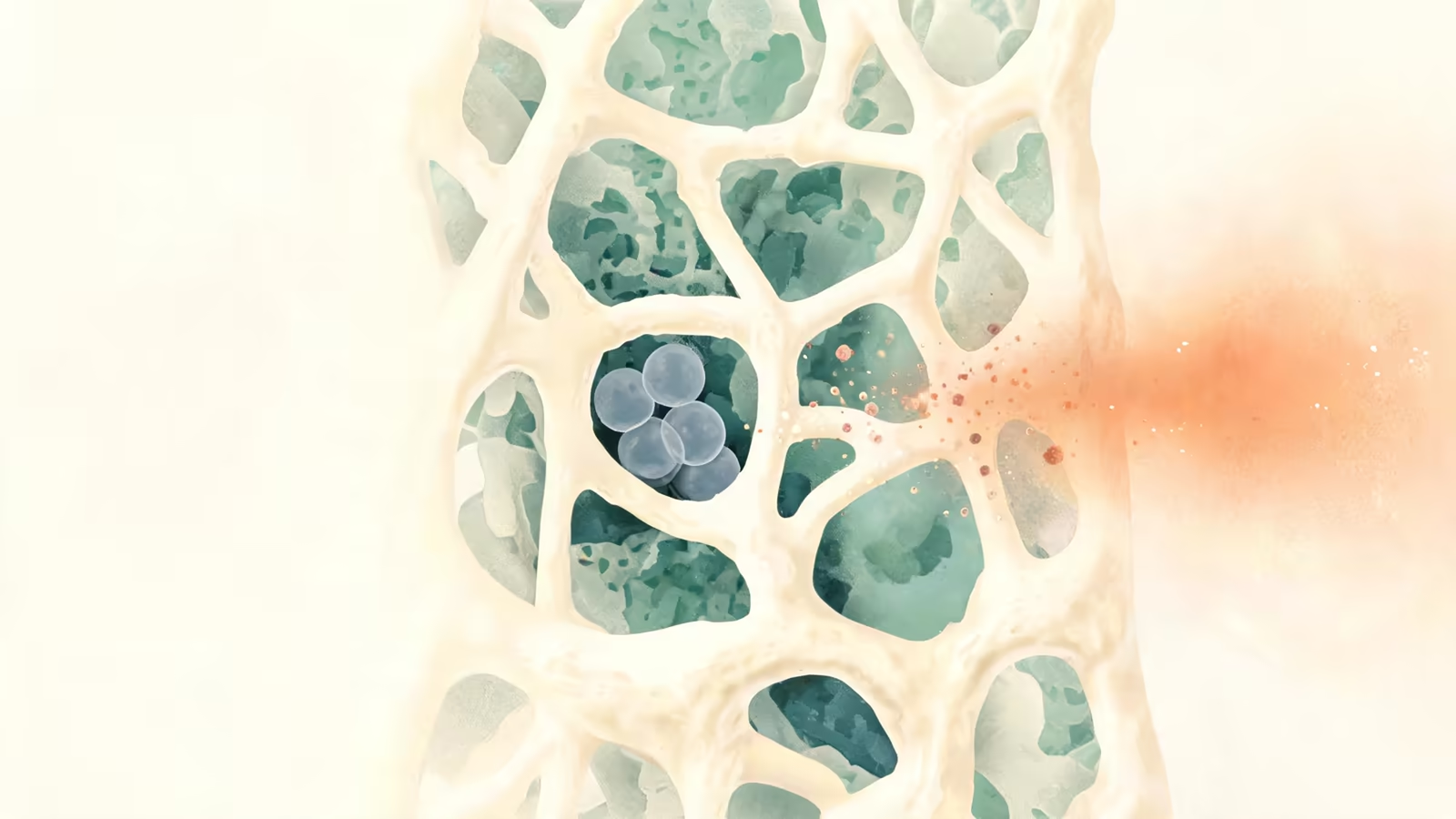
The researchers built an artificial piece of bone under the skin of the animals, connected to the bloodstream and behaving like real bone marrow. Breast cancer cells there mostly went into a resting state and only occasionally divided briefly. The researchers then triggered gut inflammation, a colitis. It did not reach the cancer cells directly, but it prompted the bone marrow to produce more immune cells and so changed the environment around the dormant cells. The proportion of dividing cancer cells rose, and metastases also appeared more often in the animals’ real bone. An earlier version of the study describes this as a step-by-step model: each wave of inflammation enlarges the reservoir of tumour cells in the bone a little and so, over time, raises the likelihood of metastases [31].
The researchers also found the protein HMGB2, which makes metastases grow. It was also present in bone metastases from patients [6]. This supports the lead, but does not yet prove a mechanism in humans.
COVID, flu and cancer: how interleukin 6 wakes dormant cancer cells
A respiratory infection can also wake dormant breast cancer cells in the lungs of mice. After flu or a COVID-19 infection, the cells in a 2025 Nature study began to divide within a few days. After two weeks, metastases had formed. The trigger was the inflammatory messenger interleukin 6 (IL-6). Without it, the surge largely did not occur [7].
The researchers also analysed data from people. In the UK Biobank, cancer survivors of all cancer types had a higher risk of dying from their cancer after a COVID-19 infection. In a US breast cancer database, lung metastases occurred more often after COVID-19 [7]. Such observational data show an association, but do not prove a cause.
Cigarette smoke and surgery as inflammatory triggers
Older mouse studies fit the picture. Persistent lung inflammation caused by cigarette smoke woke dormant cancer cells: white blood cells released web-like structures, known as NETs, whose enzymes remodelled the tissue around the cells [8]. Wound healing after surgery also made tumours grow elsewhere, and an anti-inflammatory drug given around the time of the operation curbed this [9]. This is no reason to avoid necessary surgery: it removes the tumour and saves lives.

</>Show this graphic on your website for free
For blogs, clinics and support groups: copy the code, paste it, done.Get the code ▾
You are welcome to use this graphic freely with attribution. To do so, copy this code:
<a href="https://gesundefakten.com/en/womens-health/breast-cancer-recurrence/"><img src="https://gesundefakten.com/wp-content/uploads/2026/11/rezidiv-entzuendung-ablauf-v2-en.webp" alt="How inflammation wakes dormant cancer cells" width="1200" height="803"></a><br>Source: <a href="https://gesundefakten.com/en/womens-health/breast-cancer-recurrence/">How inflammation wakes dormant cancer cells, gesundefakten.com</a>Study overview: inflammation and dormant cancer cells
| Study | Model | Trigger | Result |
|---|---|---|---|
| Di Blasio et al., Cell Reports 2026 [6] | Mouse, artificial bone | Gut inflammation (colitis) | More dividing cancer cells in the bone, more bone metastases |
| Chia et al., Nature 2025 [7] | Mouse, plus data from humans | Flu, COVID-19 | Waking in the lungs within days, dependent on IL-6; in humans, more lung metastases after COVID-19 (observational) |
| Albrengues et al., Science 2018 [8] | Mouse | Cigarette smoke, bacterial components | Waking via NETs and remodelled tissue |
| Krall et al., Sci Transl Med 2018 [9] | Mouse | Surgery, wound healing | Growth of previously controlled tumours, curbed by anti-inflammatory drugs |
| DeMichele et al., Nature Medicine 2025 [26] | Human, 51 breast cancer survivors | Drugs targeting dormant cells | 78 to 87 per cent fewer tumour cells in the bone marrow, small phase 2 trial |
What this means for you: a cold will not bring your cancer back. The experiments were done in mice, mostly with strong, deliberately induced inflammation. The researchers suspect a gradual process, in which each stronger bout of inflammation raises the likelihood a little. A study in humans showing that less inflammation means fewer relapses is still lacking.
Does stress wake dormant cancer cells?
There is no proof that stress triggers a relapse. A large meta-analysis did find associations between stress factors and shorter survival after a cancer diagnosis, but itself warned of biased results [22]. If stress drove relapses via stress hormones, women taking beta blockers, which dampen these hormones, should have fewer relapses. A meta-analysis of 24 studies found no evidence of this [23]. Help with stress is worthwhile anyway, because it makes life easier. And anyone who has a relapse despite a healthy lifestyle has done nothing wrong.
Preventing a recurrence: what is proven in humans
The strongest evidence against relapse is not for a supplement but for exercise. In the randomised CHALLENGE trial of 889 people after bowel cancer, a three-year supervised exercise programme lowered the risk of relapse, new cancer or death by 28 per cent and the risk of death by 37 per cent. After five years, 80.3 rather than 73.9 per cent were disease-free. Muscle and joint problems occurred somewhat more often [10]. For breast cancer, no such trial exists yet. Exercise still makes sense, including for bones, heart and mood during endocrine therapy.
For aspirin the picture is mixed. In high-risk breast cancer, 300 mg daily did not reduce relapses. The trial of 3,020 participants was stopped early, and there was even a tendency towards more relapses in the aspirin group [11]. In bowel cancer with certain gene changes in the PI3K signalling pathway, low-dose aspirin (160 mg), by contrast, roughly halved relapses after three years: 7.7 rather than 14.1 per cent. Serious side effects were more common with aspirin [12]. Do not take aspirin on your own initiative, as it raises the risk of bleeding. If your treatment team prescribes it for another reason, follow their recommendation.

</>Show this graphic on your website for free
For blogs, clinics and support groups: copy the code, paste it, done.Get the code ▾
You are welcome to use this graphic freely with attribution. To do so, copy this code:
<a href="https://gesundefakten.com/en/womens-health/breast-cancer-recurrence/"><img src="https://gesundefakten.com/wp-content/uploads/2026/11/rezidiv-entzuendung-belege-v2-en.webp" alt="Preventing relapse: what is proven" width="1200" height="874"></a><br>Source: <a href="https://gesundefakten.com/en/womens-health/breast-cancer-recurrence/">Preventing relapse: what is proven, gesundefakten.com</a>Reducing inflammation in the body: what you can do in everyday life
The most reliable way to lower chronic inflammation in the body is to get the basics right: exercise, a weight in the healthy range, not smoking, enough sleep, and plenty of vegetables, fruit, pulses and wholegrains. You can read which foods have been shown to help in the article on anti-inflammatory foods. How much exercise makes sense is covered in the article How much exercise a day is healthy? Small steps that you stick to achieve more than a strict plan that you abandon after three weeks.
A prescribed anti-hormone therapy is especially important. It has been shown to lower the risk of breast cancer recurrence in hormone-sensitive breast cancer [1]. If side effects push you to stop, talk to your treatment team about alternatives first. You should let infections clear up fully, have a fever or breathlessness checked by a doctor, and ask about the vaccinations recommended for you.
Silent inflammation: omega-3, black seed oil and probiotics fact-checked
Three supplements measurably lower inflammation markers in the blood in studies. No study has examined whether they also prevent relapses.
- Omega-3 fatty acids (EPA and DHA): An overview of 32 meta-analyses found lower levels of CRP, TNF-alpha and IL-6 [13]. They did not protect against cancer, however: in the VITAL trial of 25,871 adults, just as many cancers occurred with 1 g of omega-3 a day as with placebo [14]. Omega-3 capsules also raise the risk of atrial fibrillation, in one meta-analysis by 12 per cent at up to 1 g a day and by 49 per cent at more than 1 g [15]. What matters is the EPA and DHA content, not the amount of oil stated on the packaging. You can read more in the article on polyunsaturated fatty acids.
- Black seed oil: An overview of seven meta-analyses found lower CRP and TNF-alpha levels [16]. In a study of 90 women with obesity, meaning considerably overweight, CRP fell by 54.5 per cent with 3 g of oil daily plus a diet, and by 21.4 per cent with placebo plus a diet [17].
- Probiotics: A meta-analysis of 42 randomised trials found lower levels of CRP, TNF-alpha and IL-6 [18]. A second analysis of 26 trials showed a tighter gut barrier, with fewer bacterial components in the blood [19]. The strains and amounts differed widely, however.
During chemotherapy or radiotherapy you should not start any of these on your own. In a study of 1,134 women with breast cancer, there were indications that antioxidants such as vitamins A, C and E, carotenoids and coenzyme Q10 taken before and during chemotherapy raise the risk of relapse by 41 per cent. The result fell just short of statistical significance. For iron and vitamin B12 the association was clear, while an ordinary multivitamin showed no effect [20]. The German Cancer Information Service (Krebsinformationsdienst) advises people with cancer not to take any additional products without first discussing it with their treating doctors [21]. You can read more about cancer and nutrition in the articles Sugar and cancer and Vitamin D and cancer.
Fear of recurrence: you are not alone
Fear of a relapse is the rule after cancer, not the exception. In a meta-analysis of over 9,000 cancer survivors from 13 countries, 58.8 per cent had noticeable and 19.2 per cent had strong fear of recurrence, regardless of how long ago the diagnosis was [24]. Studies like those presented here can intensify this fear. If your thoughts constantly revolve around a relapse, raise it at your follow-up appointment: psycho-oncological support and cancer counselling services exist for exactly this [28].
The hope: targeting dormant cancer cells
For the first time, drugs in a study in humans clearly reduced dormant breast cancer cells in the bone marrow. In the CLEVER trial, 51 breast cancer survivors with detectable tumour cells in the bone marrow received hydroxychloroquine, everolimus or both. The number of tumour cells fell by an estimated 78 to 87 per cent, and after three years 92 to 100 per cent were relapse-free [26]. The study was small and had no randomised control group without medication. It mainly tested feasibility and safety and is not a treatment for everyday use. Other teams are looking for ways to disrupt the epigenetic adaptation of resting cells [25].
Frequently asked questions about breast cancer recurrence and inflammation
Can a cold or flu bring cancer back?
This is not proven. In mouse studies, flu and coronavirus woke dormant breast cancer cells in the lung. In humans there are only observational data on coronavirus, which show an association but do not prove a cause.
I have had constant colds since my treatment. Is that dangerous?
Many people report more frequent or more persistent infections after cancer treatment. That they wake cancer cells has not been shown in humans. Let infections clear up thoroughly, and raise fever, frequent infections or abnormal blood results at your follow-up appointment.
Breast cancer recurrence after 10 years: can the cancer come back that late?
Yes, especially hormone-sensitive breast cancer. Here the risk of distant metastases between year 5 and year 20 was 10 to 41 per cent, depending on tumour characteristics. With triple-negative breast cancer, such late relapses are rare. Your treatment team can tell you your personal risk.
What are the symptoms of breast cancer recurrence, for example with bone metastases?
That depends on where the cancer returns. A local relapse often looks like the first illness, for example as a new lump or a change in the skin of the breast, scar or armpit. With metastases in other organs, symptoms can include bone pain with bone metastases, cough, breathlessness, weight loss, pain in the upper abdomen, jaundice or a swollen arm [30]. These symptoms usually have harmless causes. If they persist, have them checked promptly as part of your breast cancer follow-up.
Is there a calculator for the risk of breast cancer recurrence?
Yes, doctors use validated prognostic tools such as PREDICT Breast from the University of Cambridge [29]. The results are averages for many women with similar findings. Discuss them with your treatment team.
Breast cancer follow-up: why are there no routine scans?
Because they do not prolong survival. In randomised trials of 2,563 women, patients with intensive follow-up including X-ray and laboratory tests did not live longer than those with doctor visits and mammography [27]. Further imaging follows if symptoms arise [28]. Report new, persistent symptoms promptly for that reason. How screening works before a diagnosis is explained in the article Breast cancer screening: from what age?
High inflammation markers: do they point to cancer?
Not necessarily. A raised CRP level is far more often caused by infections, injuries or inflammatory diseases. In cancer it can be raised, but it is non-specific. Persistently raised levels with no obvious reason should be checked by a doctor.
Does aspirin help against breast cancer relapse?
No. In a large randomised trial, 300 mg of aspirin daily did not reduce relapses in breast cancer. A benefit has been shown only in bowel cancer with certain genetic changes.
May I take omega-3 or probiotics during chemotherapy?
Only after agreeing it with your treatment team. Some products can interact with the treatment, and with a severely weakened immune system, caution is also needed with the live bacteria in probiotics.
Conclusion: inflammation is a lead, not a fate
A breast cancer recurrence after years is probably caused by cells that have slept for a long time. Mouse studies show that inflammation can wake them, even in the gut or the lung. That is no reason to fear every infection. It is, however, a good reason for doing what works anyway: exercise, a weight in the healthy range, not smoking, sticking with anti-hormone therapy and letting infections clear up. Supplements lower inflammation markers, but their benefit against relapse is open. During treatment they belong in a conversation with your treatment team, as do your worries.
How to cite this article: gesundefakten.com (2026): Breast cancer recurrence after years: how inflammation wakes dormant cancer cells. As of November 2026. https://gesundefakten.com/en/womens-health/breast-cancer-recurrence/
Sources
- Pan H, Gray R, Braybrooke J et al.: 20-Year Risks of Breast-Cancer Recurrence after Stopping Endocrine Therapy at 5 Years. N Engl J Med 2017. PubMed 29117498. DOI: 10.1056/NEJMoa1701830.
- Colleoni M, Sun Z, Price KN et al.: Annual Hazard Rates of Recurrence for Breast Cancer During 24 Years of Follow-Up: Results From the International Breast Cancer Study Group Trials I to V. J Clin Oncol 2016. PubMed 26786933. DOI: 10.1200/JCO.2015.62.3504.
- Braun S, Vogl FD, Naume B et al.: A pooled analysis of bone marrow micrometastasis in breast cancer. N Engl J Med 2005. PubMed 16120859. DOI: 10.1056/NEJMoa050434.
- Martincorena I, Roshan A, Gerstung M et al.: High burden and pervasive positive selection of somatic mutations in normal human skin. Science 2015. PubMed 25999502. DOI: 10.1126/science.aaa6806.
- Coussens LM, Werb Z: Inflammation and cancer. Nature 2002. PubMed 12490959. DOI: 10.1038/nature01322.
- Di Blasio S, Rizou T, Gay LJ et al.: An extramedullary bone model of metastatic dormancy reveals an increased rate of metastatic reactivation upon distant insults. Cell Rep 2026. PubMed 42822459. DOI: 10.1016/j.celrep.2026.118088.
- Chia SB, Johnson BJ, Hu J et al.: Respiratory viral infections awaken metastatic breast cancer cells in lungs. Nature 2025. PubMed 40739350. DOI: 10.1038/s41586-025-09332-0.
- Albrengues J, Shields MA, Ng D et al.: Neutrophil extracellular traps produced during inflammation awaken dormant cancer cells in mice. Science 2018. PubMed 30262472. DOI: 10.1126/science.aao4227.
- Krall JA, Reinhardt F, Mercury OA et al.: The systemic response to surgery triggers the outgrowth of distant immune-controlled tumors in mouse models of dormancy. Sci Transl Med 2018. PubMed 29643230. DOI: 10.1126/scitranslmed.aan3464.
- Courneya KS, Vardy JL, O’Callaghan CJ et al.: Structured Exercise after Adjuvant Chemotherapy for Colon Cancer. N Engl J Med 2025. PubMed 40450658. DOI: 10.1056/NEJMoa2502760.
- Chen WY, Ballman KV, Partridge AH et al.: Aspirin vs Placebo as Adjuvant Therapy for Breast Cancer: The Alliance A011502 Randomized Trial. JAMA 2024. PubMed 38683596. DOI: 10.1001/jama.2024.4840.
- Martling A, Hed Myrberg I, Nilbert M et al.: Low-Dose Aspirin for PI3K-Altered Localized Colorectal Cancer. N Engl J Med 2025. PubMed 40961426. DOI: 10.1056/NEJMoa2504650.
- Kavyani Z, Musazadeh V, Fathi S et al.: Efficacy of the omega-3 fatty acids supplementation on inflammatory biomarkers: An umbrella meta-analysis. Int Immunopharmacol 2022. PubMed 35914448. DOI: 10.1016/j.intimp.2022.109104.
- Manson JE, Cook NR, Lee IM et al.: Marine n-3 Fatty Acids and Prevention of Cardiovascular Disease and Cancer. N Engl J Med 2019. PubMed 30415637. DOI: 10.1056/NEJMoa1811403.
- Gencer B, Djousse L, Al-Ramady OT et al.: Effect of Long-Term Marine Omega-3 Fatty Acids Supplementation on the Risk of Atrial Fibrillation in Randomized Controlled Trials of Cardiovascular Outcomes. Circulation 2021. PubMed 34612056. DOI: 10.1161/CIRCULATIONAHA.121.055654.
- Lan X, Xia Y et al.: Alleviating effects of Nigella sativa supplements on biomarkers of inflammation and oxidative stress: Results from an umbrella meta-analysis. Prostaglandins Other Lipid Mediat 2025. PubMed 39709091. DOI: 10.1016/j.prostaglandins.2024.106945.
- Mahdavi R, Namazi N, Alizadeh M, Farajnia S: Nigella sativa oil with a calorie-restricted diet can improve biomarkers of systemic inflammation in obese women. J Clin Lipidol 2016. PubMed 27678438. DOI: 10.1016/j.jacl.2015.11.019.
- Milajerdi A, Mousavi SM, Sadeghi A et al.: The effect of probiotics on inflammatory biomarkers: a meta-analysis of randomized clinical trials. Eur J Nutr 2020. PubMed 30854594. DOI: 10.1007/s00394-019-01931-8.
- Zheng Y, Zhang Z, Tang P et al.: Probiotics fortify intestinal barrier function: a systematic review and meta-analysis of randomized trials. Front Immunol 2023. PubMed 37168869. DOI: 10.3389/fimmu.2023.1143548.
- Ambrosone CB, Zirpoli GR, Hutson AD et al.: Dietary Supplement Use During Chemotherapy and Survival Outcomes of Patients With Breast Cancer Enrolled in a Cooperative Group Clinical Trial (SWOG S0221). J Clin Oncol 2020. PubMed 31855498. DOI: 10.1200/JCO.19.01203.
- Krebsinformationsdienst, Deutsches Krebsforschungszentrum: Nahrungsergänzungsmittel bei Krebs. krebsinformationsdienst.de.
- Chida Y, Hamer M, Wardle J et al.: Do stress-related psychosocial factors contribute to cancer incidence and survival? Nat Clin Pract Oncol 2008. PubMed 18493231. DOI: 10.1038/ncponc1134.
- Scott OW, TinTin S, Cavadino A et al.: Beta-blocker use and breast cancer outcomes: a meta-analysis. Breast Cancer Res Treat 2024. PubMed 38837086. DOI: 10.1007/s10549-024-07263-4.
- Luigjes-Huizer YL, Tauber NM, Humphris G et al.: What is the prevalence of fear of cancer recurrence in cancer survivors and patients? A systematic review and individual participant data meta-analysis. Psychooncology 2022. PubMed 35388525. DOI: 10.1002/pon.5921.
- Rosano D, Sofyali E, Dhiman H et al.: Long-term Multimodal Recording Reveals Epigenetic Adaptation Routes in Dormant Breast Cancer Cells. Cancer Discov 2024. PubMed 38527495. DOI: 10.1158/2159-8290.CD-23-1161.
- DeMichele A, Clark AS, Shea E et al.: Targeting dormant tumor cells to prevent recurrent breast cancer: a randomized phase 2 trial. Nat Med 2025. PubMed 40897974. DOI: 10.1038/s41591-025-03877-3.
- Moschetti I, Cinquini M, Lambertini M et al.: Follow-up strategies for women treated for early breast cancer. Cochrane Database Syst Rev 2016. PubMed 27230946. DOI: 10.1002/14651858.CD001768.pub3.
- Krebsinformationsdienst, Deutsches Krebsforschungszentrum: Brustkrebs: Nachsorge. krebsinformationsdienst.de.
- University of Cambridge, NHS: Predict Breast. breast.predict.cam.
- Krebsinformationsdienst, Deutsches Krebsforschungszentrum: Brustkrebs: Symptome. krebsinformationsdienst.de.
- Di Blasio S, Rizou T, Gay LJ et al.: An extramedullary bone model to study metastatic dormancy reveals a piecemeal model for metastatic reactivation. Preprint, Research Square 2023. DOI: 10.21203/rs.3.rs-3173228/v1.
Cover image: symbolic image, created with AI