Cakes and pastries are often treated as an absolute forbidden zone when it comes to healthy eating: too much white refined sugar, heavy wheat flour, and copious amounts of hydrogenated fats spike blood sugar levels, burden the liver, and fuel low-grade inflammation.
Yet there is a much better way: using natural milk kefir as a wholesome dairy substitute, baking with kefir allows you to completely revolutionise traditional home baking.
Kefir gives a sponge cake, pie, or layered gateau an incomparably moist, elastic crumb, acts as an ideal butter substitute to replace most of the oil or butter, and combines natural lactic acid with bicarbonate of soda to create a cake batter that rises feather-light in the oven with a delightfully fluffy texture – entirely free from artificial raising agents.
1. Can you use kefir in baking? Why baking with kefir is an absolute game-changer
- Natural freshness & moisture: Peptides and lactic acid bind moisture in the cake batter, ensuring your cake stays as moist as the day it was baked for days on end.
- Significantly less fat required: Butter or oil can be reduced by 40 to 50% without the bake turning dry.
- Subtle flavour balance: The delicate tang harmoniously balances natural sweeteners such as xylitol or erythritol.
2. Does baking with kefir kill the probiotics?
At an oven temperature above 50–60 °C, live bacterial strains in the batter do die off. However, the remarkable health benefits are far from lost:
- Valuable postbiotics: Cell wall components, short-chain fatty acids, and the unique polysaccharide kefiran remain completely heat-stable.
- Pre-digested proteins: The acidity enzymatically breaks down cereal starches and dairy proteins, making the cake exceptionally gentle on digestion.
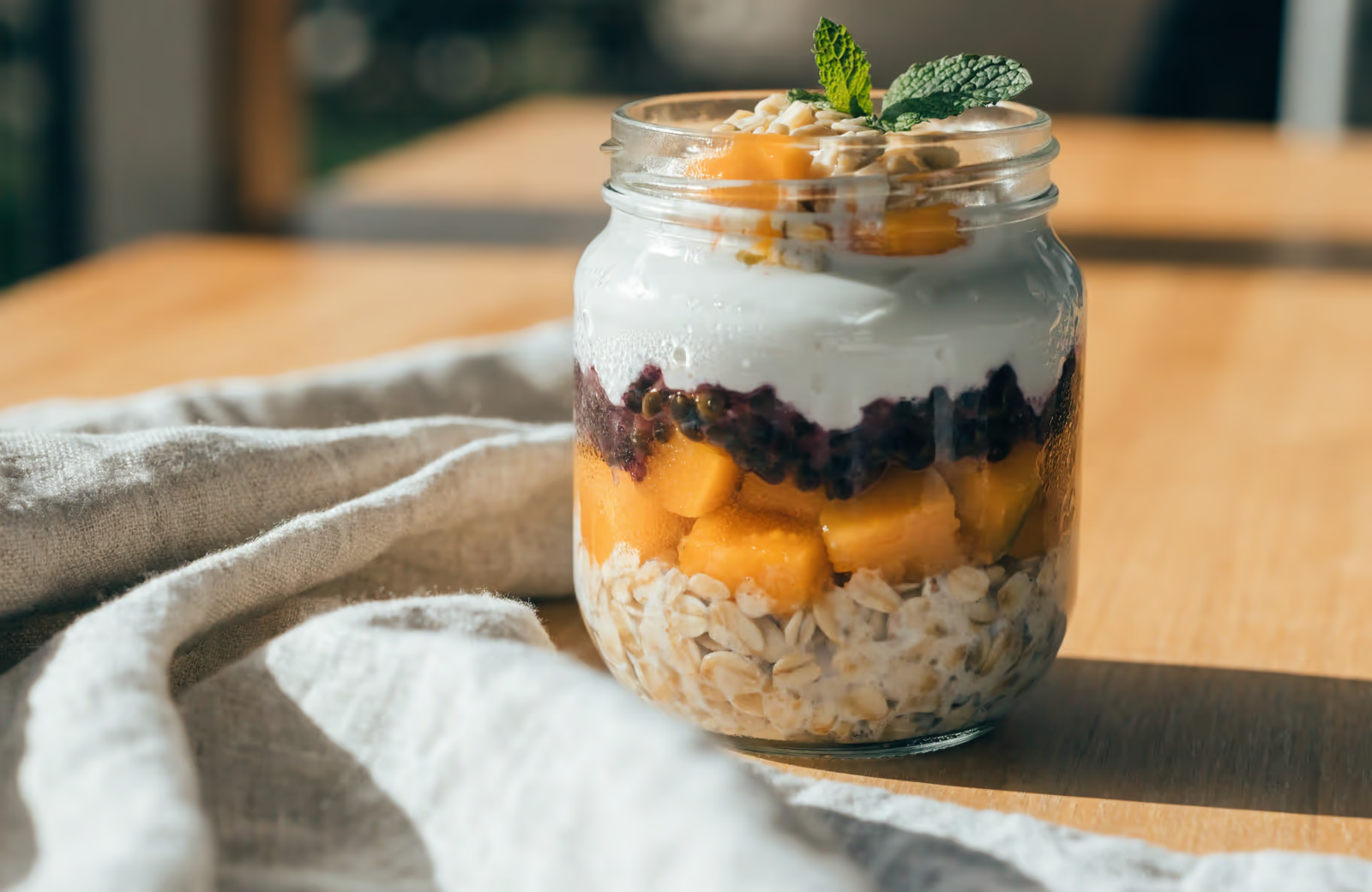
- Tip for 100% live cultures: Prepare layered celebration cakes with an unbaked kefir curd cream!
3. Healthy butter and sugar substitutes: the formula for moist cake batters
- Replacing sugar: Use erythritol (0 kcal, zero insulin impact) or xylitol 1:1 instead of granulated sugar.
- Reducing fat: As a healthy butter substitute, replace 100 g of butter with 60 ml milk kefir + 40 ml virgin coconut oil.
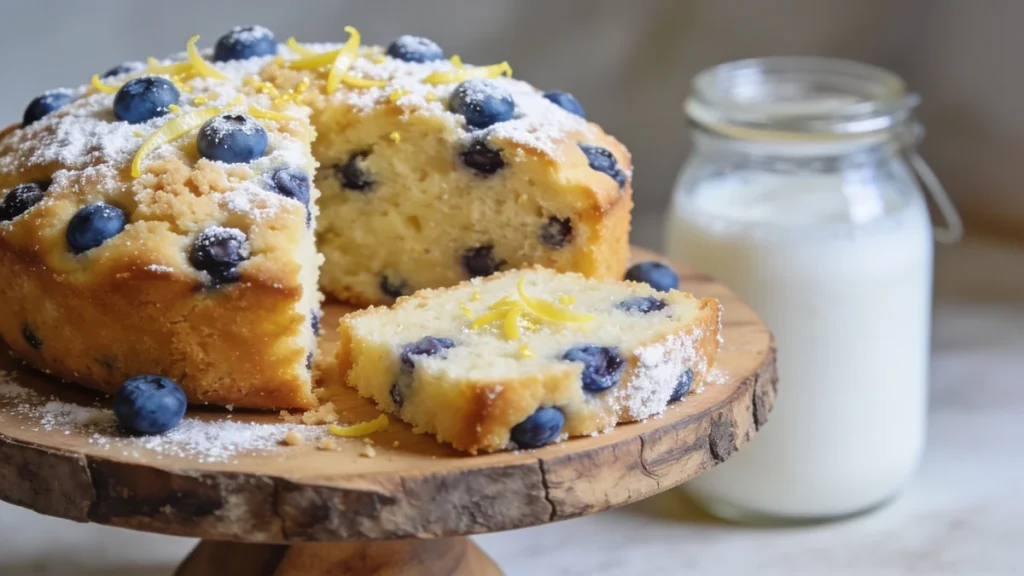
4. Easy baking recipes with kefir – Recipe 1: Simple kefir cake recipe with lemon & cinnamon (the moist classic)
A wonderfully moist sponge cake for any occasion:
- 250 g spelt flour (white spelt or wholemeal)
- 200 ml fresh milk kefir (at room temperature)
- 3 organic eggs & 100 g erythritol or birch sugar (xylitol)
- 50 ml virgin olive oil or melted coconut oil
- Zest and juice of 1 organic lemon & 1 tsp Ceylon cinnamon
- 1 tsp bicarbonate of soda, 1 tsp cream of tartar baking powder, 1 pinch of salt
Whisk eggs with the sweetener and oil until frothy, stir in the kefir and lemon juice, briefly fold in the dry ingredients, and bake at 180 °C for approx. 35–40 minutes.
5. Recipe 2: Refined sugar-free banana and oat kefir pie (flourless)
Combine 200 g rolled porridge oats with 200 ml kefir, 2 mashed ripe bananas, 2 eggs, 1 tsp vanilla extract, and baking powder. Leave to swell for 10 minutes, fold in walnuts and 100 g fresh blueberries, and bake at 175 °C for 30 minutes.
6. Recipe 3: Super-fluffy almond and vanilla kefir cake
Prepare using 150 g spelt flour, 100 g ground almonds, 250 ml kefir, 3 separated eggs (whisk whites to stiff peaks and fold in), 90 g xylitol, and 1 tsp bicarbonate of soda for a light, fluffy texture. Scatter with flaked almonds and bake at 170 °C for approx. 35 minutes.
7. Recipe 4: Probiotic berry layer cake (with 100% live cultures!)
Blind bake a nutty shortcrust pastry base. For the topping, spread 300 g strained kefir curd (labneh) blended with 150 g puréed raspberries, 3 tbsp erythritol, and dissolved gelatine or agar-agar cold onto the base, then chill for 4 hours – delivering the full power of live probiotics!
8. Recipe 5: Dark low-carb chocolate kefir cake
150 g almond flour, 40 g dark cocoa powder, 200 ml milk kefir, 3 eggs, 80 g erythritol, and 50 g chopped dark chocolate (85% cocoa solids). Moist, dark, and rich in polyphenols.
9. The baking chemistry: why bicarbonate of soda + kefir are the perfect duo
When baking with kefir, the natural lactic acid reacts immediately with alkaline sodium bicarbonate (bicarbonate of soda). This generates microscopic carbon dioxide bubbles (CO2) that allow the cake batter to rise evenly and feather-light – without any yeasty aftertaste or chemical raising agents.
10. Nutritional comparison: classic cake vs healthy kefir cake
| Nutritional value (per 100 g slice) | Classic cake (sugar & white flour) | Healthy lemon kefir cake |
|---|---|---|
| Calories | approx. 390 kcal | approx. 185 kcal (> 50% fewer!) |
| Sugar | approx. 32 g (8 sugar cubes) | under 2 g |
| Fat | approx. 22 g | approx. 7 g |
| Fibre | approx. 1.2 g | approx. 4.8 g |
| Satiety | Short-lived sugar crash | Long-lasting & gut-friendly |
11. 5 professional tips for the perfect kefir cake crumb structure & texture
- Use room temperature ingredients: Take kefir and eggs out of the fridge in good time.
- Do not overmix: As soon as the flour and bicarbonate of soda are moistened, get the cake batter into the oven immediately.
- Skewer test: When a wooden skewer comes out with a few moist crumbs, the cake is done.
- Allow to cool before slicing: The delicate crumb structure stabilises as the bake cools down.
- Storage: Stays moist and fresh for 4 to 5 days when covered.
12. Frequently asked questions about kefir cakes & bakes (FAQ)
Does the cake taste sour?
Not at all! The bicarbonate of soda almost completely neutralises the acid. The cake tastes delightfully fresh and mild, reminiscent of a delicate baked cheesecake.
13. Conclusion: guilt-free cake enjoyment without blood sugar spikes
By baking with kefir, you can effortlessly transform traditional cakes into nutrient-dense, lower-calorie, and deliciously moist treats: over 50% fewer calories, completely refined sugar free, and bursting with flavour for the whole family! For low-calorie mousses and ice creams made with kefir, discover our healthy desserts with kefir.