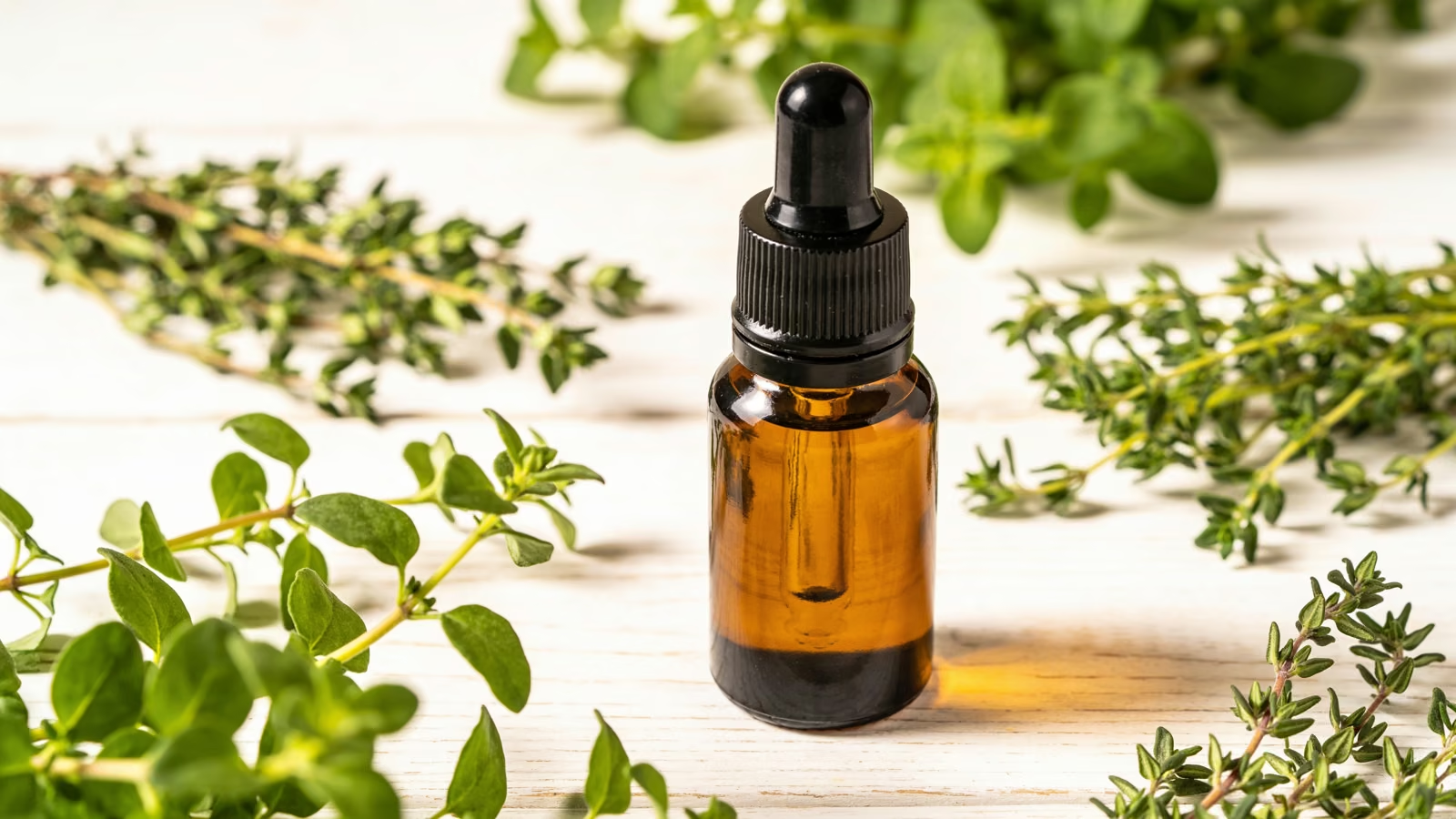
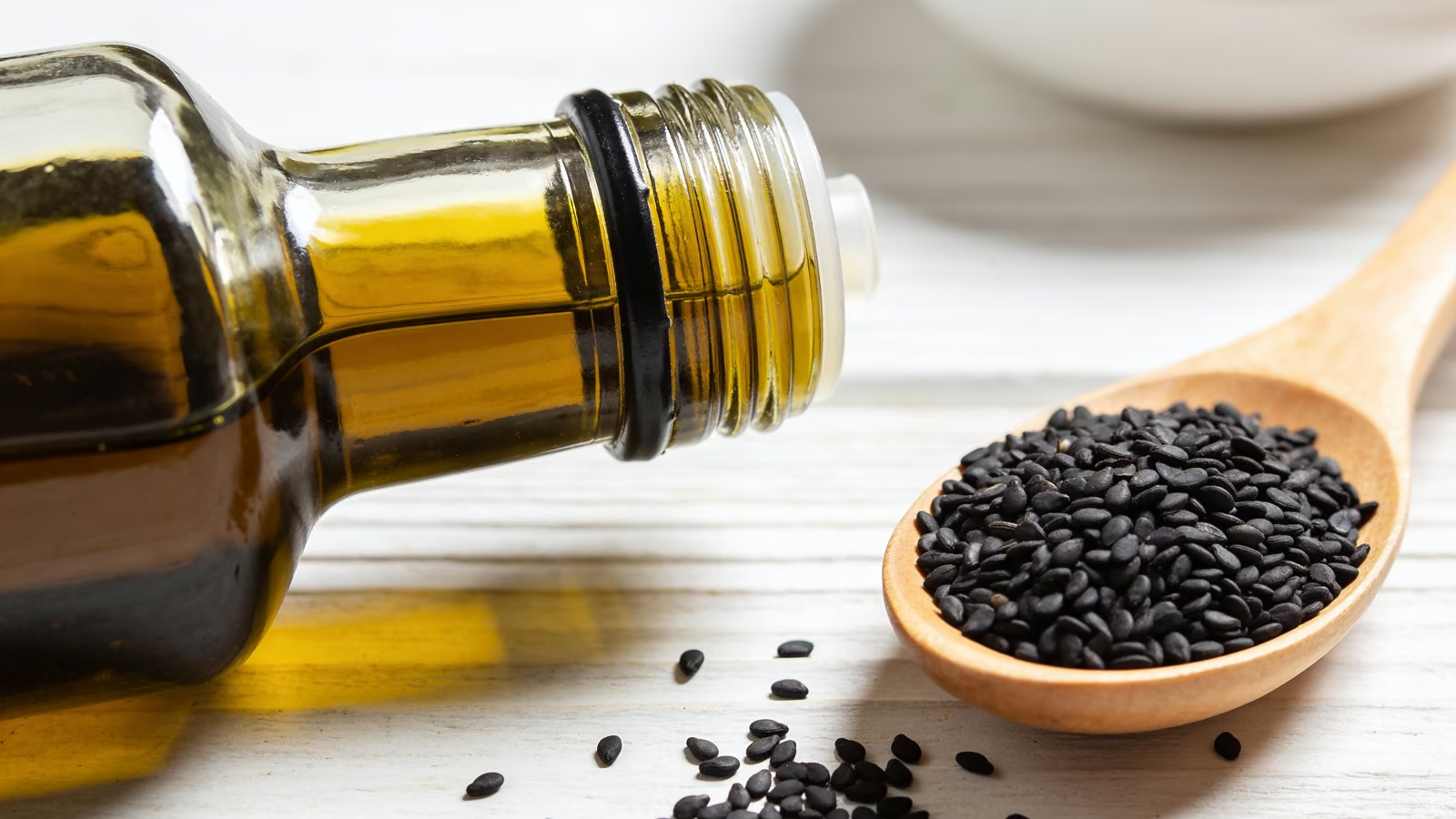
Some natural remedies come and go, but black seed oil (Nigella sativa) continues to stand out, having been investigated for a remarkable range of health conditions: from blood pressure and kidney stones to autoimmune disorders. Few botanical oils demonstrate such consistent effects across clinical research. Here is an objective, evidence-based overview of the proven black seed oil benefits and how to identify high-grade quality.
Key Takeaways: Black Seed Benefits at a Glance
- Black seed oil significantly lowered blood pressure, cholesterol levels, blood sugar regulation markers and inflammatory indicators in clinical trials.
- The primary active constituent, thymoquinone, provides powerful antioxidant activity and anti-inflammatory properties.
- For kidney stones, a clinical study showed it reduced stone volume and facilitated natural stone clearance.
- In autoimmune disorders such as Hashimoto’s thyroiditis, thyroid function markers improved and thyroid autoantibodies were halved.
- Look for certified quality: deep black, cold-pressed oil with a high, laboratory-verified thymoquinone content.
Black Seed Oil Benefits for Blood Pressure and Cholesterol
Elevated blood pressure places substantial strain on both the heart and kidneys: the heart is forced to pump against narrowed blood vessels and thickens over time, whilst delicate renal filtration units suffer progressive damage. In a randomised, placebo-controlled trial involving individuals with mild hypertension, participants received black seed oil extract (100 or 200 milligrams) twice daily for eight weeks. Blood pressure fell in a significant, dose-dependent manner—a higher dose produced a greater reduction. Simultaneously, total cholesterol and LDL cholesterol levels declined, without any adverse reactions.
In further trials, both systolic and diastolic blood pressure dropped by roughly ten points within eight weeks—a marked reduction that helps relieve strain on the kidneys.
Effects on Kidney Health and Kidney Stones
The single most common renal condition is nephrolithiasis (kidney stones). In a clinical trial, a significant reduction in stone volume and an increased rate of stone clearance were observed exclusively in the black seed group:
- 45 per cent successfully passed stones (placebo: 21 per cent)
- For stones larger than 7 millimetres: 41 per cent clearance in the black seed group, compared to zero in the placebo group
- The renal function marker serum creatinine fell more substantially than under placebo
Black Seed Oil Benefits for Women and Autoimmune Health
In autoimmune conditions, the body’s immune system erroneously attacks its own healthy tissues. In a study on rheumatoid arthritis (1,000 milligrams daily for 8 weeks), levels of the anti-inflammatory signalling molecule interleukin-10 increased, whilst markers of oxidative stress declined.
Particularly noteworthy were the findings in Hashimoto’s thyroiditis, an autoimmune thyroid condition disproportionately affecting women: daily supplementation with 2 grams of black seed oil over eight weeks improved TSH values, elevated active thyroid hormone T3, and halved circulating anti-TPO autoantibodies. In an allergy trial, elevated IgE antibody concentrations also normalised.
Impact on Inflammation and Blood Sugar Regulation
In a trial involving 45 participants, the three key systemic inflammatory markers—TNF-alpha, interleukin-6 and CRP—all decreased significantly, highlighting the oil’s potent anti-inflammatory properties. Blood sugar regulation also benefited: in a trial on non-alcoholic fatty liver disease, fasting blood glucose dropped by nearly 10 per cent and fasting insulin levels decreased by roughly 30 per cent.
A systematic meta-analysis of 17 studies confirmed that black seed oil can lower fasting blood glucose and long-term HbA1c levels. In addition, hepatic fat accumulation was noticeably reduced. A necessary caveat: many published studies involve modest sample sizes, and black seed oil does not replace medical treatment—diagnoses such as hypertension or Hashimoto’s thyroiditis must always be managed in consultation with a doctor or NHS specialist.
Taking Black Seed Oil or Capsules: What to Look For
- Colour: genuine, high-grade oil is deep black.
- Thymoquinone concentration: as high as possible, quantified by independent laboratory analysis.
- Lab-tested: screened for contaminants such as heavy metals and mineral oil residues, as the oil is a potent concentrate.
- Cold-pressed oil and fresh: the bioactive fatty acids and volatile oils are sensitive to heat and oxidation.
Summary: Maximising Black Seed Oil Benefits
Black seed oil offers an impressive scope of researched applications—from blood pressure and kidney stones to blood sugar regulation, inflammation and autoimmune conditions such as Hashimoto’s thyroiditis. Its primary active compound, thymoquinone, exerts proven antioxidant activity and immune-modulating effects. Promising though the research is, many clinical trials are small, and botanical oils cannot substitute for prescription therapies. As an adjunct lifestyle measure, however, it remains well worth exploring—ideally choosing a deep black, cold-pressed oil with high, laboratory-tested thymoquinone purity.
Frequently Asked Questions
What is the active compound in black seed oil?
The primary bioactive constituent is thymoquinone, which is responsible for the vast majority of the oil’s documented antioxidant activity and anti-inflammatory properties.
Does black seed oil lower blood pressure?
In clinical trials, black seed oil reduced blood pressure in a dose-dependent fashion by approximately ten points across eight weeks. However, it should never replace prescribed antihypertensive medication without medical guidance.
Can black seed oil help with Hashimoto’s thyroiditis?
In a clinical study, 2 grams daily improved TSH levels and active T3 concentrations whilst cutting thyroid autoantibodies in half. Ongoing management must remain under medical supervision.
Is black seed oil effective for kidney stones?
In a clinical trial, it reduced overall stone volume and promoted stone passage—including stones larger than 7 millimetres, whereas no patients passed larger stones in the placebo group.
Can black seed oil assist with blood sugar regulation?
A meta-analysis of 17 clinical trials demonstrated significant reductions in fasting blood glucose and HbA1c. In a fatty liver trial, fasting insulin was also lowered by around 30 per cent.
How do I choose high-quality black seed oil capsules or liquid oil?
Choose products with a distinctive deep black hue, a certified high thymoquinone content, and third-party laboratory verification ensuring freedom from contaminants such as heavy metals.
Are there any black seed oil side effects?
Clinical trials on blood pressure reported no adverse black seed oil side effects. Because it is a concentrated botanical, choose lab-tested formulations and consult your GP or pharmacist if you are taking prescription medicines.
What is the recommended daily dosage of black seed oil?
Clinical investigations typically administer between 1 and 2 grams daily depending on the therapeutic target. Personalised dosages for specific health concerns should be agreed with a healthcare professional.
References and Further Reading
Systematic reviews, meta-analyses and controlled clinical trials relevant to this article. All links checked and verified on 16/08/2026.
- Morar Romocea MT, Pallag A, Burlou-Nagy Fati C et al.: Analysis of Pharmacological Properties of <i>Nigella sativa</i> L. Bioactive Compounds and Their Therapeutic Relevance in the Management of Type 2 Diabetes Mellitus. 2025. PubMed 41302106. DOI: 10.3390/life15111681.
- Farhangi MA, Dehghan P, Tajmiri S et al.: The effects of Nigella sativa on thyroid function, serum Vascular Endothelial Growth Factor (VEGF) – 1, Nesfatin-1 and anthropometric features in patients with Hashimoto’s thyroiditis: a randomized controlled trial. BMC complementary and alternative medicine 2016. PubMed 27852303. DOI: 10.1186/s12906-016-1432-2.
- Musazadeh V, Jahangir M, Mahmoudinezhad M et al.: The Effect of Nigella sativa Supplementation on Cardiometabolic Health in Patients With Metabolic Diseases: A GRADE-Assessed Systematic Review and Meta-Analysis. 2026. PubMed 41858302. DOI: 10.1002/edm2.70207.
- Fic W, Kwaśniewska K, Polak-Szczybyło E. et al.: Thymoquinone in Atherosclerosis: A Multi-Target Nutraceutical Modulating Inflammation, Oxidative Stress, and Lipid Metabolism. 2026. PubMed 42124081. DOI: 10.3390/nu18091480.
- Chatterjee G, Saha AK, Khurshid S et al.: A Comprehensive Review of the Antioxidant, Antimicrobial, and Therapeutic Efficacies of Black Cumin (Nigella sativa L.) Seed Oil and Its Thymoquinone. Journal of medicinal food 2025. PubMed 39807848. DOI: 10.1089/jmf.2024.k.0149.
- Arshad MT, Maqsood S, Ikram A et al.: Functional, Nutraceutical, and Pharmacological Properties of Black Seed. 2025. PubMed 40842670. DOI: 10.1002/fsn3.70725.
- Kurnia D, Dharsono HDA, Takaya A et al.: Potential of Secondary Metabolite Compounds of Black Cumin Seeds (<i>Nigella sativa</i> L.) as Therapeutic Agents for Chronic Diseases. 2025. PubMed 41169705. DOI: 10.2147/dddt.s554704.
- Zhang H, Liu Y, Dong Y et al.: Thymoquinone: An Effective Natural Compound for Kidney Protection. The American journal of Chinese medicine 2024. PubMed 38715182. DOI: 10.1142/S0192415X24500319.
- Alberts A, Moldoveanu ET, Niculescu AG et al.: Nigella sativa: A Comprehensive Review of Its Therapeutic Potential, Pharmacological Properties, and Clinical Applications. 2024. PubMed 39769174. DOI: 10.3390/ijms252413410.
- Hannan MA, Rahman MA, Sohag AAM et al.: Black Cumin (Nigella sativa L.): A Comprehensive Review on Phytochemistry, Health Benefits, Molecular Pharmacology, and Safety. Nutrients 2021. PubMed 34073784. DOI: 10.3390/nu13061784.
- Ahmad A, Husain A, Mujeeb M et al.: A review on therapeutic potential of Nigella sativa: A miracle herb. Asian Pacific journal of tropical biomedicine 2013. PubMed 23646296. DOI: 10.1016/S2221-1691(13)60075-1.