Cases of antimicrobial resistance are rising, and antibiotics are frequently overprescribed—damaging the beneficial gut microbiota in the process. For this reason, good doctors often advise managing mild infections without prescription drugs where appropriate. This is precisely where five potent natural substances come in: research shows they can act as effective natural antibiotics, performing remarkably close to conventional drugs in clinical studies. You can even combine them into your own home remedies.
Key takeaways
- Five natural substances demonstrated potent antibacterial properties in clinical studies: honey, garlic, ginger, black seed oil, and oregano oil.
- Manuka honey and Sidr honey inhibit bacterial growth by disrupting bacterial cell walls.
- Garlic proved almost as effective as a high-potency antibiotic in clinical research.
- Ginger cleared the stubborn stomach bacterium Helicobacter pylori more effectively than tested antibiotics.
- Oregano oil triggered zero resistance even after 20 generations—unlike synthetic antibiotics.
Why natural antibiotics for bacterial infection are gaining interest
Superbugs such as MRSA are on the rise; more than half a million people become infected each year, with a significant proportion carrying resistant strains. That is why NHS and medical guidelines advise reserving antibiotics for when they are truly necessary—not least because they wipe out beneficial gut microbiota, potentially triggering digestive issues and fungal overgrowth. For minor bacterial infections, five natural compounds offer a gentler alternative. Note: they do not replace medical treatment for serious infections.
Honey: Manuka and Sidr
The two varieties with the strongest antibacterial properties are Manuka honey (from New Zealand, rich in methylglyoxal) and Sidr honey (from Yemen). In a 2022 study, Manuka honey inhibited bacterial cell division at a concentration of just 1 per cent, and even more markedly at 10 per cent—outperforming other honey varieties. The mechanism: honey damages bacterial cell walls, which can be measured by the leakage of potassium. This makes honey an ideal, pleasant-tasting base for a natural blend.
Garlic and allicin
With garlic, the primary active constituent, allicin, is only produced when the clove is crushed—allowing the precursor alliin to interact with the enzyme alliinase. When fresh garlic or garlic extract is combined with cysteine-rich foods (such as soya), the body can synthesise the particularly potent compound SAMC.
In one study, garlic was compared against the potent antibiotic gentamicin across numerous pathogens, including multi-drug resistant strains. The result: both were almost equally effective, and against E. coli and staphylococci, garlic performed marginally better.
Ginger against Helicobacter pylori
Ginger exhibits both antibacterial and antiviral activity. In one study, it was evaluated against the stubborn gastric pathogen Helicobacter pylori—an organism that survives in stomach acid, forms a protective biofilm, and can contribute to gastric cancer over time. Of all the substances tested, ginger suppressed the pathogen most effectively, outperforming standard antibiotics. When it came to breaking down the biofilm, ginger was virtually neck and neck with the strong antibiotic gentamicin at identical concentrations.
Black seed oil and oregano oil
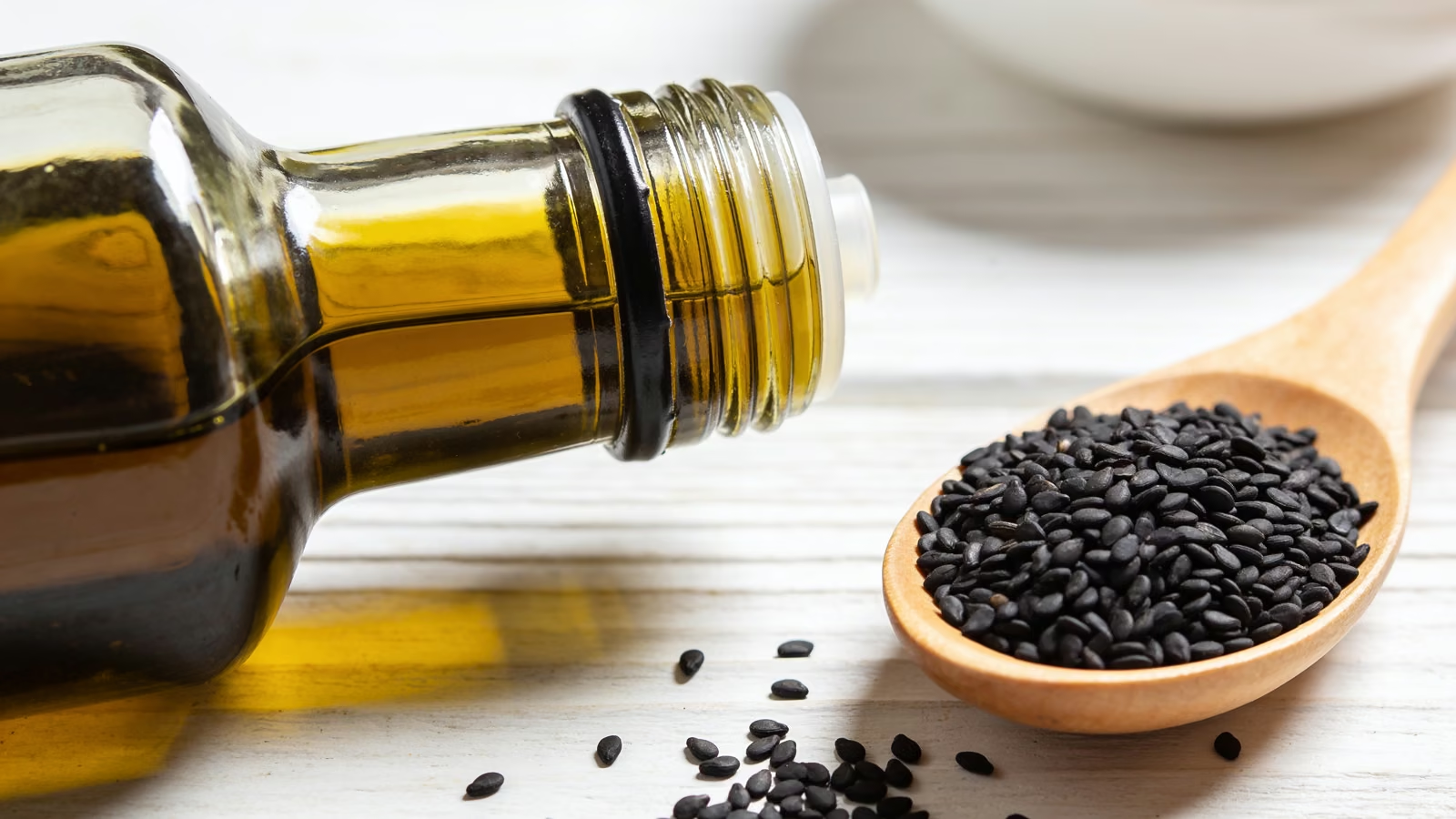
In clinical testing, black seed oil was only marginally less effective against bacteria than conventional antibiotics—falling just 3 per cent short against Staphylococcus aureus. Furthermore, wound infections treated with black seed oil healed more quickly.
Oregano oil, driven by its active constituent carvacrol, also matched conventional antibiotics very closely and showed the greatest efficacy against MRSA. Crucially, whilst pathogens rapidly develop antimicrobial resistance against single-target antibiotics, oregano oil produced zero resistance even after 20 bacterial generations. This is because its complex matrix of multiple compounds (carvacrol, thymol, terpenes) makes it far harder for bacteria to adapt.
Recipe: how to make a natural antibiotic remedy at home
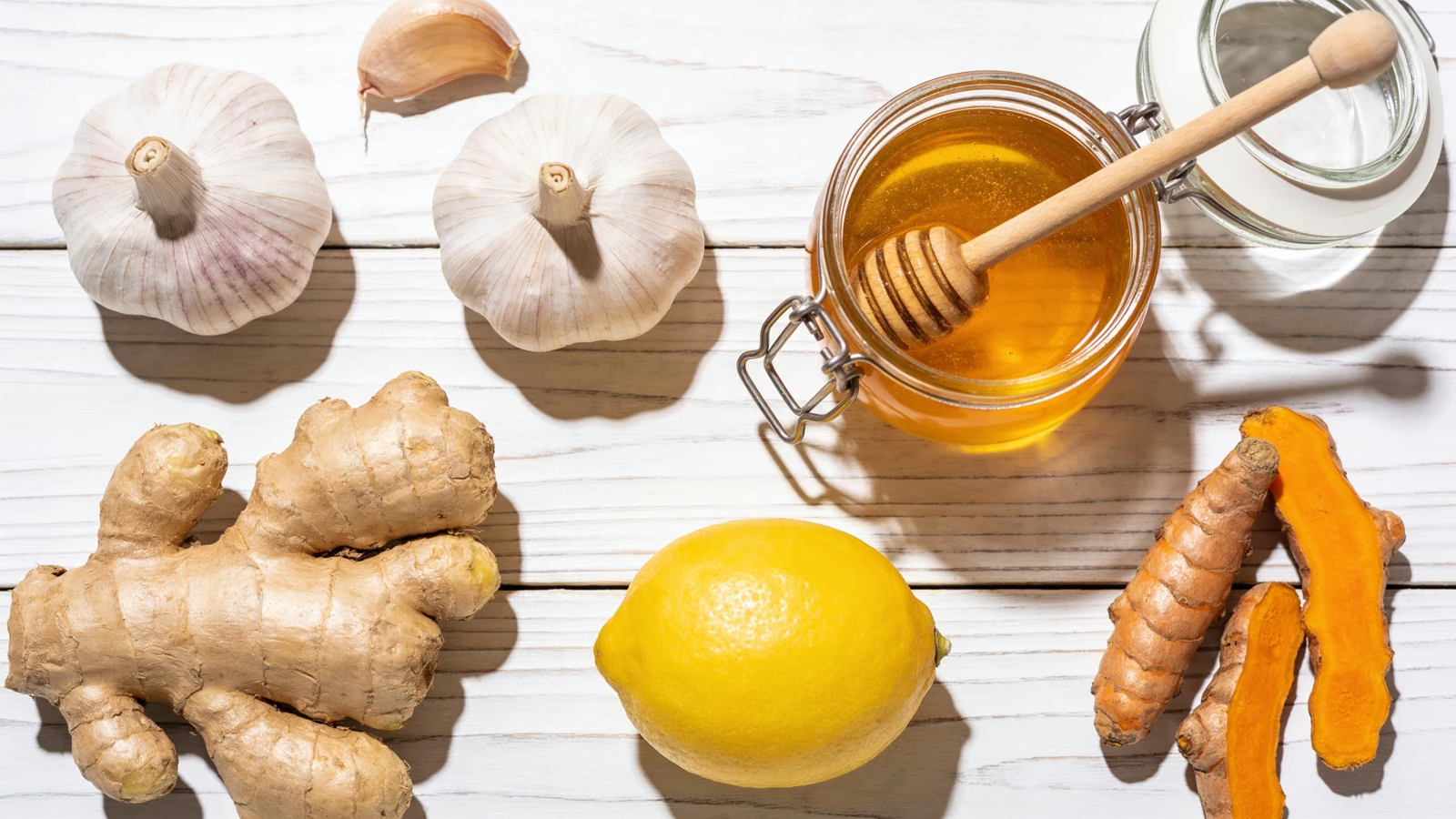
You can combine these five natural antibiotic foods and plant oils into a simple home remedy:
- High-grade Manuka honey or Sidr honey as the base
- One freshly crushed garlic clove (leave to rest briefly after crushing so allicin can form)
- Freshly grated ginger
- A few drops of black seed oil (pure, dark, and laboratory-tested)
- Food-grade oregano oil, checking for high carvacrol content
Mix all ingredients together and take by the teaspoonful as needed. However, if you develop a fever, severe pain, or persistent symptoms, seek medical advice promptly from a GP.
Summary
Five simple natural ingredients—honey, garlic, ginger, black seed oil, and oregano oil—have demonstrated antibacterial properties in studies that come surprisingly close to pharmaceutical drugs. The major benefit of complex plant compounds like oregano oil is that, unlike single-molecule pharmaceuticals, they rarely induce antimicrobial resistance. As home remedies for mild ailments and immune support, natural antibiotics offer a helpful option. For serious bacterial infection accompanied by high fever, however, prescription antibiotics remain indispensable—natural alternatives are a complementary support, not a replacement.
Frequently asked questions
Can natural substances replace prescription antibiotics?
For minor infections, they can offer valuable support and have performed comparably to conventional drugs in laboratory studies. However, for a severe bacterial infection involving fever, they are never a substitute for medical treatment.
Which five ingredients make the best natural antibiotic?
Manuka honey or Sidr honey, garlic, ginger, black seed oil, and oregano oil.
Why do you need to crush garlic?
Crushing garlic allows alliin to react with the enzyme alliinase, creating the potent antibacterial compound allicin.
Does ginger work against Helicobacter pylori?
In clinical research, ginger cleared this resilient stomach pathogen more effectively than the tested antibiotics and was virtually on par with a strong antibiotic in disrupting its biofilm.
Why doesn’t oregano oil cause antimicrobial resistance?
Because it contains a complex blend of active constituents including carvacrol, thymol, and terpenes. Bacteria struggle to adapt to multi-compound natural substances compared to single synthetic antibiotics.
Which honey is the most effective natural antibacterial?
Manuka honey (rich in methylglyoxal) and Sidr honey. They disrupt bacterial cell walls and inhibit growth far more effectively than standard table honey.
How do I make natural antibiotics at home?
Combine Manuka honey as a base with crushed garlic, grated ginger, a few drops of black seed oil, and oregano oil, taking it by the teaspoonful as required.
When should I see a doctor?
You should always consult a GP if you experience a high temperature, severe pain, persistent symptoms, or suspect a serious infection. In such cases, prescription antibiotic treatment may be essential.
References and sources
Systematic reviews, meta-analyses, and controlled clinical studies relevant to this article. All links were verified on 16/08/2026.
- Ogwu MC, Izah SC.: Honey as a Natural Antimicrobial. 2025. PubMed 40149066. DOI: 10.3390/antibiotics14030255.
- Fath Tabar A, Nejati A, Mirbahari SN et al.: Beyond Antibiotics: Alternative Strategies Targeting <i>Helicobacter pylori</i> Resistance. 2026. PubMed 41943230. DOI: 10.1017/erm.2026.10040.
- Bandyopadhyay R, Pattnaik S.: A Comparative Review of Phytochemical Composition, Bioactivity, and Health Implications of Single- and Multiple-Clove Garlic. 2026. PubMed 42040441. DOI: 10.1021/acsomega.5c11125.
- Abuelgasim H, Albury C, Lee J et al.: Effectiveness of honey for symptomatic relief in upper respiratory tract infections: a systematic review and meta-analysis. BMJ evidence-based medicine 2021. PubMed 32817011. DOI: 10.1136/bmjebm-2020-111336.
- El-Saber Batiha G, Magdy Beshbishy A, G Wasef L et al.: Chemical Constituents and Pharmacological Activities of Garlic (Allium sativum L.): A Review. Nutrients 2020. PubMed 32213941. DOI: 10.3390/nu12030872.
- Semwal RB, Semwal DK, Combrinck S et al.: Gingerols and shogaols: Important nutraceutical principles from ginger. Phytochemistry 2015. PubMed 26228533. DOI: 10.1016/j.phytochem.2015.07.012.
- Borlinghaus J, Albrecht F, Gruhlke MC et al.: Allicin: chemistry and biological properties. Molecules (Basel, Switzerland) 2014. PubMed 25153873. DOI: 10.3390/molecules190812591.