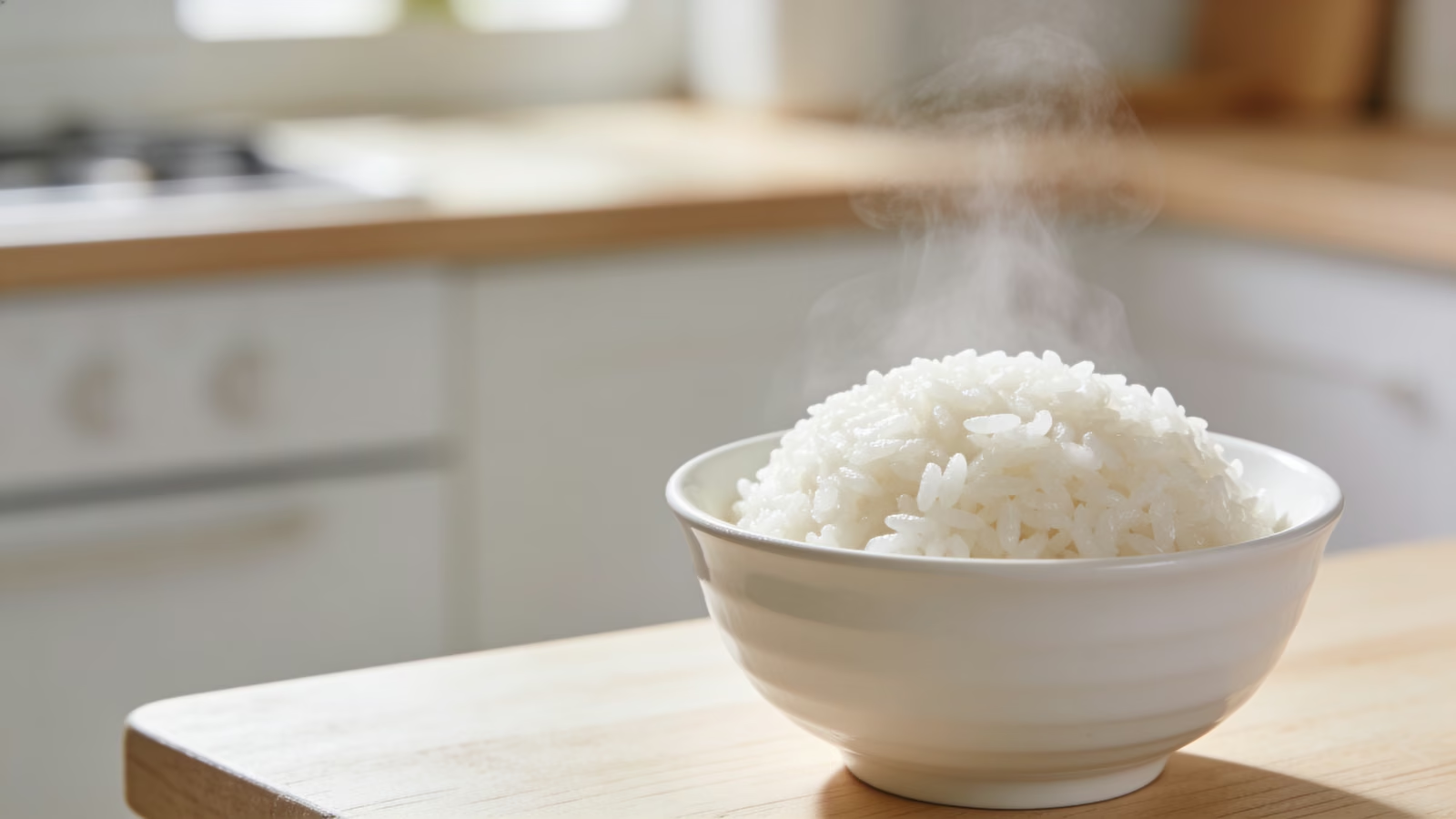
You cooked a batch of rice yesterday and have a portion left over today – can you simply warm it up, or is it dangerous? In fact, reheating rice incorrectly can pose a real health risk, often referred to as rice food poisoning or “fried rice syndrome”. The culprit is a bacterium many people are unfamiliar with: Bacillus cereus. Here is what actually happens, why refrigeration temperature is crucial, and how to safely store and reheat your leftover cooked rice.
Key facts at a glance
- Bacillus cereus is the primary cause of food poisoning linked to rice and dairy dishes.
- The bacterium produces heat-resistant spores that survive normal boiling and cooking.
- At room temperature, bacterial growth begins after just 8 hours, whereas in the fridge it takes around 5 days.
- The refrigeration temperature is decisive, because subsequent cooking does not destroy the bacterial toxins already produced.
- Always ensure rapid cooling of cooked rice and only reheat it once until piping hot.
Why reheating rice can lead to food poisoning
Uncooked rice can harbour spores of the bacterium Bacillus cereus – a type of protective survival capsule capable of withstanding the heat of cooking. If leftover cooked rice is subsequently left at room temperature for prolonged periods, these spores germinate, multiply, and generate bacterial toxins. These substances can trigger unpleasant gastrointestinal symptoms such as nausea, vomiting, and diarrhoea. Young children and the elderly are particularly susceptible, though otherwise healthy adults can also fall ill.
Bacillus cereus and its heat-resistant spores
To understand how quickly a hazard develops, two microbiological terms are essential:
- Lag phase: the initial adaptation phase after germination before the bacteria begin multiplying actively. Very little activity happens here at first.
- Generation time: the doubling time of the bacterium. The shorter this is, the faster the bacterial count surges.
The treacherous aspect is exponential replication: two become four, four become eight, and so on. Under favourable conditions, millions of bacterial cells can form within just a few hours.
How quickly the bacteria multiply
The decisive impact of storage temperature is clearly demonstrated by laboratory measurements for cooked rice:
| Temperature | Lag phase (onset) | Generation time (doubling) |
|---|---|---|
| 10 °C (fridge) | approx. 120 hours (5 days) | approx. 327 minutes |
| 25 °C (room temperature) | approx. 8 hours | approx. 59 minutes |
| 33 °C (warm kitchen) | approx. 2.5 hours | approx. 42 minutes |
Inside the fridge, the bacterium requires around five days before it even starts growing. At room temperature, however, eight hours is plenty of time for growth to commence, and in a warm kitchen, conditions become critical far sooner. A similar principle applies to milk, where the optimal temperature range for bacterial growth lies between 30 and 35 °C.
Safe storage guidelines and reheating rice correctly
The act of reheating is not dangerous in itself – freshly reheated rice consumed immediately is safe to eat. The real danger lies in leaving rice standing for hours within the bacterial danger zone. For good food hygiene, health authorities such as the Food Standards Agency (FSA) and the NHS recommend following these safe storage guidelines:
- Cool cooked dishes rapidly to 7 °C or below (in the fridge)
- Or keep them hot at a minimum of 60 °C
- Never leave rice sitting in the saucepan after cooking; practice rapid cooling instead
- Consume refrigerated rice within one to two days
- Reheat only once, ensuring it is piping hot throughout
Summary
Rice is completely safe to eat – provided it is handled and stored correctly. The bacterium Bacillus cereus survives boiling in spore form and only becomes hazardous when cooked rice sits at room temperature for hours. Because reheating rice does not neutralise heat-stable bacterial toxins once they have formed, correct cooling is far more critical than the reheating process itself. The golden rule is straightforward: chill quickly in the fridge after cooking, consume within two days, and reheat only once until steaming hot. Follow these steps, and yesterday’s rice can be enjoyed without worry.
Frequently asked questions
Why can reheating rice cause food poisoning?
Raw rice can contain spores of Bacillus cereus. If cooked rice is left at ambient temperature for too long, the bacteria multiply and produce toxins that survive subsequent heating, leading to rice food poisoning.
How quickly does Bacillus cereus grow in rice?
At room temperature (25 °C), active bacterial growth begins after approximately 8 hours, whereas at refrigeration temperature (10 °C), it takes around 5 days to start.
How should I store cooked rice properly?
Cool it down as quickly as possible (ideally within an hour) to 7 °C or below and place it straight in the fridge. Do not leave it sitting in the warm saucepan on the hob.
Is reheating cooked rice in microwave or on the hob safe?
Yes, provided it has been refrigerated correctly. When reheating cooked rice in microwave or on the hob, reheat it only once until it is steaming hot all the way through, and eat it immediately.
How long does cooked rice keep, and can you eat cold rice after 2 days?
Leftover cooked rice should be kept in the fridge for no more than 24 to 48 hours. You should not eat cold rice after 2 days, as the risk of bacterial contamination and toxin buildup increases significantly.
Does reheating destroy bacterial toxins?
No. While high temperatures kill active bacterial cells, the toxins produced by Bacillus cereus are heat-resistant and will remain dangerous even after thorough boiling or frying.
Does this risk also apply to milk?
Yes. Bacillus cereus can multiply in dairy products, particularly unpasteurised milk. Its optimum temperature for growth is between 30 and 35 °C.
At what temperature is cooked rice safely stored?
Below 7 °C in the fridge or kept hot at 60 °C and above. Temperatures between these two thresholds represent the danger zone in which bacteria multiply rapidly.