Iron is the most common mineral deficiency worldwide – yet it often goes undetected for a long time or is misdiagnosed. The biggest misconception is focusing solely on the amount of iron in your food. What truly matters is iron absorption: how much of that iron your body is actually able to take in. Here is how to boost iron levels effectively and which blood markers really count.
Key Takeaways
- Iron is essential for oxygen transport, energy metabolism, and immune function – around 60 to 70 per cent is bound within haemoglobin, the red blood pigment.
- The most common mistake is focusing purely on dietary quantity rather than absorption.
- Coffee, tea, calcium, and phytates can severely inhibit iron absorption – drinking coffee alongside a meal can reduce uptake by up to 39 per cent.
- Vitamin C significantly enhances uptake by converting iron into a more bioavailable form.
- Serum iron alone is unreliable for diagnosis; assessing ferritin levels, transferrin, and CRP is crucial.
Iron Deficiency Anaemia: Why It Is Frequently Missed
Iron is involved in some of the body’s most critical physiological processes: oxygen transport, cellular energy metabolism, and immune defence. Around 60 to 70 per cent of the body’s iron is bound within haemoglobin, the pigment in red blood cells. When iron levels drop, symptoms can manifest as chronic fatigue, poor concentration, sleep disturbances, hair loss, increased susceptibility to infections, and even impaired thyroid function.
A common diagnostic pitfall is relying solely on serum iron. Serum iron is merely a snapshot that fluctuates easily – rising after an iron-rich meal much like blood glucose. Accurately assessing iron deficiency anaemia requires a more comprehensive set of blood markers.
Haem Iron vs Plant-Based Non-Haem Iron
Dietary iron comes in two distinct forms. Haem iron, found in animal products, is predominantly present as readily absorbed divalent ferrous iron (Fe2+). Non-haem iron, derived from plant-based foods, exists primarily as trivalent ferric iron (Fe3+) and must first be reduced to the ferrous state in the digestive tract – which is why plant iron exhibits lower bioavailability on paper.
Particularly when relying on plant sources or oral supplements, understanding which compounds support uptake and which act as dietary inhibitors makes a substantial difference.
Dietary Inhibitors: What Blocks Iron Absorption?
Several common dietary components can markedly suppress iron absorption:
| Inhibitor | Impact on Iron Absorption |
|---|---|
| Coffee with a meal | Up to −39% |
| Black tea (polyphenols) | Up to −64% |
| Cheese (calcium) | Approx. −46% |
| Milk (calcium) | Approx. −57% |
| Phytates (wholegrains, pulses) | Markedly reduced (e.g. wholemeal bread 4.6% vs sourdough 15%) |
Notably, polyphenols in coffee and tea continue to exert a strong inhibitory effect even when consumed an hour after eating. Conversely, fermented foods such as traditional sourdough bread contain lower levels of phytates, allowing non-haem iron to be absorbed far more efficiently.
Iron and Vitamin C: The Key to Better Absorption
The most effective absorption enhancer is vitamin C (ascorbic acid). Ascorbic acid reduces ferric iron back to the bioavailable ferrous form, markedly increasing iron absorption across the duodenal mucosa. Clinical studies demonstrate that up to a molar ratio of roughly 7:1 – equivalent to approximately 100 milligrams of vitamin C – uptake increases substantially before the curve plateaus.
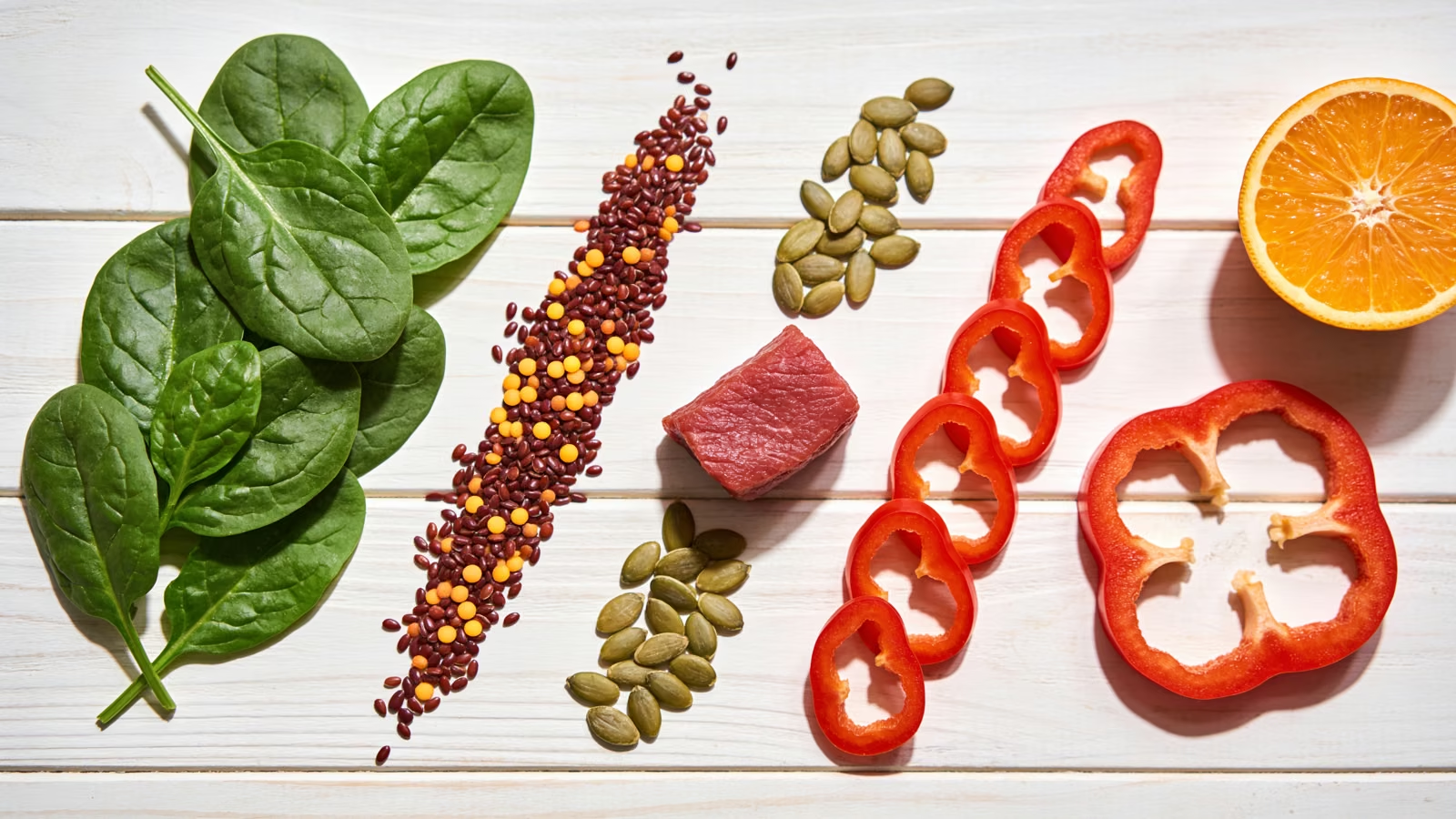
Practical application: Adding vitamin C-rich foods such as raw sauerkraut, peppers, or fresh parsley to an iron-rich dish improves uptake. When taking iron supplements, it is best to take them first thing in the morning on an empty stomach alongside vitamin C, leaving a gap of several hours before having your morning coffee. Copper (essential for cellular iron transport) and glutathione (which maintains iron in haemoglobin in its active oxygen-binding state) are equally vital cofactors.
When You Need to Boost Iron Levels: Increased Demand
Beyond dietary intake, several physiological factors influence overall iron status:
- Increased physiological requirements during pregnancy, breastfeeding, and adolescent growth spurts
- Endurance athletes, due to exercise-induced haemolysis, sweat loss, and elevated levels of the regulatory hormone hepcidin
- Blood loss from heavy menstruation or frequent blood donations – an estimated 40 to 50 per cent of women of reproductive age in Europe have depleted iron stores
- Impaired gut absorption (malabsorption) associated with coeliac disease or inflammatory bowel conditions
- Chronic low-grade inflammation, recurrent infections, or malignancy
Testing Ferritin Levels and Key Blood Markers
Rather than relying on isolated serum iron readings, a comprehensive pathology panel should evaluate:
- Ferritin: reflects total body iron stores – however, because it acts as an acute-phase reactant, ferritin levels rise during active inflammation and must always be interpreted alongside CRP
- CRP (C-reactive protein): identifies systemic inflammation that could falsely elevate ferritin readings
- Transferrin and transferrin saturation: indicate how much circulating iron is actively available for erythropoiesis and cellular metabolism
Summary
Managing iron levels is far more nuanced than simply consuming more iron-rich foods. The decisive factor is how efficiently iron is absorbed, transported, and stored within the body. By spacing out coffee, tea, and calcium supplementation or dairy from main meals and pairing non-haem sources with ascorbic acid, you can significantly enhance iron absorption. If a deficiency is suspected, request a full diagnostic panel – including ferritin levels, CRP, transferrin, and transferrin saturation – from your GP or healthcare provider rather than relying on a basic serum test.
Frequently Asked Questions
What is the most common mistake when managing iron deficiency?
Focusing purely on the quantity of iron in your meals rather than its bioavailability. Without vitamin C and in the presence of dietary inhibitors such as coffee or tannins, much of the dietary iron passes through unabsorbed.
How to increase iron levels quickly?
Pair iron-rich foods with ascorbic acid (such as citrus, peppers, or parsley), take targeted supplements on an empty stomach with vitamin C, and strictly separate tea, coffee, and dairy products from your main meals.
How much does coffee inhibit iron absorption?
Drinking coffee with a meal can reduce uptake by up to 39 per cent, whilst black tea can reduce it by up to 64 per cent – an inhibitory effect that persists even when consumed an hour after eating.
Why is non-haem plant iron absorbed less efficiently?
Plant iron exists primarily in the ferric (Fe3+) state, which must undergo enzymatic reduction before uptake. In addition, phytates in unrefined wholegrains and pulses bind to non-haem iron and hinder absorption.
Which blood tests identify iron deficiency?
A reliable assessment requires testing ferritin (storage iron), transferrin, and transferrin saturation, accompanied by a CRP test to rule out inflammatory distortion.
Why is a ferritin test alone not always definitive?
Ferritin is an acute-phase protein that increases in response to inflammation or infection, potentially masking depleted iron reserves. It should always be evaluated alongside CRP.
When is the best time to take iron supplements?
Ideally first thing in the morning on an empty stomach alongside a source of vitamin C, leaving an interval of at least two hours before consuming coffee, tea, or calcium supplementation.
Who is at the highest risk of iron deficiency?
Women of reproductive age, pregnant individuals, rapidly growing children, endurance athletes, and those living with chronic gastrointestinal malabsorption conditions.
References
Systematic reviews, meta-analyses, and controlled trials relevant to this topic. All links were verified for accessibility on 16/08/2026.
- Dutt S, Hamza I, Bartnikas TB et al.: Molecular Mechanisms of Iron and Heme Metabolism. Annual review of nutrition 2022. PubMed 35508203. DOI: 10.1146/annurev-nutr-062320-112625.
- Alberts A, Moldoveanu ET, Niculescu AG et al.: Vitamin C: A Comprehensive Review of Its Role in Health, Disease Prevention, and Therapeutic Potential. Molecules (Basel, Switzerland) 2025. PubMed 39942850. DOI: 10.3390/molecules30030748.
- Enko D: Physiology of Iron Metabolism. Clinical laboratory 2025. PubMed 40066539. DOI: 10.7754/Clin.Lab.2024.241005.
- DeLoughery TG, Jackson CS, Ko CW et al.: AGA Clinical Practice Update on Management of Iron Deficiency Anemia: Expert Review. Clinical gastroenterology and hepatology : the official clinical practice journal of the American Gastroenterological Association 2024. PubMed 38864796. DOI: 10.1016/j.cgh.2024.03.046.
- Doseděl M, Jirkovský E, Macáková K et al.: Vitamin C-Sources, Physiological Role, Kinetics, Deficiency, Use, Toxicity, and Determination. Nutrients 2021. PubMed 33668681. DOI: 10.3390/nu13020615.
- Saboor M, Zehra A, Hamali HA et al.: Revisiting Iron Metabolism, Iron Homeostasis and Iron Deficiency Anemia. Clinical laboratory 2021. PubMed 33739032. DOI: 10.7754/Clin.Lab.2020.200742.
- Camaschella C, Nai A, Silvestri L et al.: Iron metabolism and iron disorders revisited in the hepcidin era. Haematologica 2020. PubMed 31949017. DOI: 10.3324/haematol.2019.232124.
- Stoffel NU, von Siebenthal HK, Moretti D et al.: Oral iron supplementation in iron-deficient women: How much and how often?. Molecular aspects of medicine 2020. PubMed 32650997. DOI: 10.1016/j.mam.2020.100865.
- Gao G, Li J, Zhang Y et al.: Cellular Iron Metabolism and Regulation. Advances in experimental medicine and biology 2019. PubMed 31456203. DOI: 10.1007/978-981-13-9589-5_2.
- Anderson GJ, Frazer DM: Current understanding of iron homeostasis. The American journal of clinical nutrition 2017. PubMed 29070551. DOI: 10.3945/ajcn.117.155804.