It is one of the most hazardous hidden compounds in our everyday diet – yet you will never find it on an ingredients list: acrylamide. Formed naturally during roasting and baking, frying, and toasting, it has been scrutinised for years over potential carcinogen risk. Significant dietary exposure to acrylamide in food comes from crisps and chips, toast, and even coffee. Fortunately, with a few practical cooking adjustments, you do not need to cut out your favourites. Here is what the science says about its health risks and how to lower your intake.
Key points at a glance
- Acrylamide forms when starchy foods are cooked at high temperatures – starting around 120°C and rising substantially between 160°C and 180°C.
- In the liver, it is converted into glycidamide, a compound that can damage DNA.
- In animal studies, acrylamide significantly increased the mutation rate; however, evidence in humans remains inconclusive.
- Public health authorities such as the Food Standards Agency classify acrylamide as a probable human carcinogen and advise keeping dietary intake as low as reasonably practicable.
- Simple kitchen techniques – aiming for a golden-yellow colour rather than dark brown, blanching, and using rosemary – can substantially reduce its formation.
How acrylamide in food is formed
Acrylamide develops when cooking starchy foods at elevated temperatures, such as during baking, deep-frying, or roasting. The underlying chemical reaction is the Maillard reaction, which is also responsible for typical browning and savoury roasted flavours: free asparagine reacts with reducing sugars. Formation begins at around 120°C and accelerates markedly when the cooking temperature reaches 160°C to 180°C. As a rule of thumb, the darker the food is browned, the higher its acrylamide content.
Acrylamide: foods to avoid and high-risk items
High-carbohydrate and starchy foods are particularly susceptible:
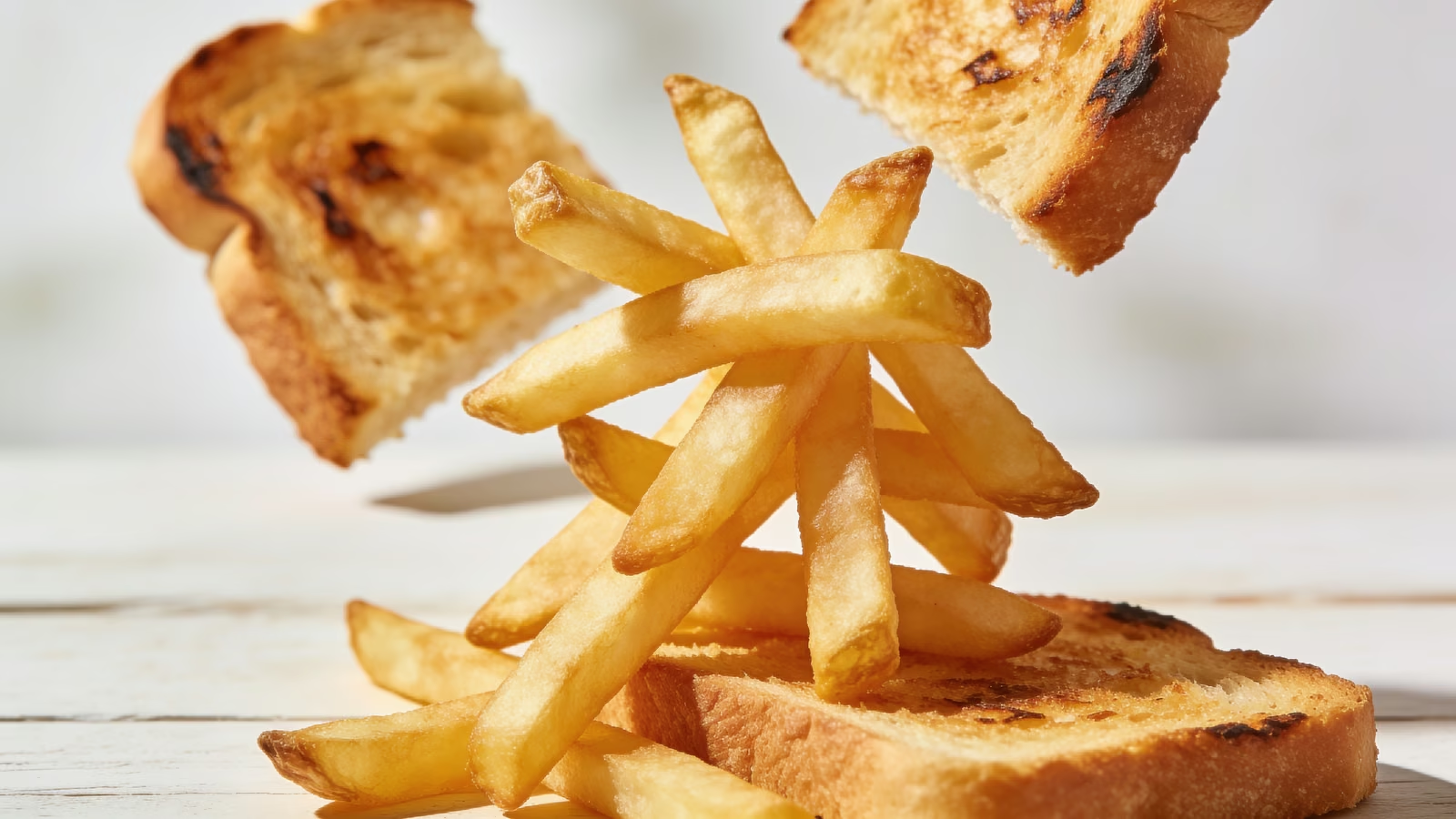
- Potato products such as crisps and chips
- Cereal products such as biscuits, crackers, toast, and breakfast cereals
- Coffee and chocolate
Because acrylamide is water-soluble, it is readily absorbed in the gut and distributed throughout the bloodstream. Tobacco smoke is another major source: smokers have more than twice the level of acrylamide biomarkers in their blood compared with non-smokers.
How dangerous is it? Acrylamide side effects and health risks
A portion of ingested acrylamide is metabolised in the liver into glycidamide, a reactive compound capable of damaging cellular DNA. If this damage persists and the cell divides, mutations can arise that may promote tumour development over the long term. In animal studies, these toxicological effects were clear:
- The mutation rate in bone marrow increased by roughly 130 per cent with acrylamide, and by 190 per cent with glycidamide
- In the thyroid gland, mutation rates increased by 86 per cent and 109 per cent respectively
- Across the animals’ lifespans, a dose-dependent increase in tumours occurred in thyroid, mammary, and testicular tissues
In humans, the epidemiological picture is less conclusive: a meta-analysis of 16 observational studies found no clear association between dietary exposure to acrylamide in food and an increased risk of cancer. Human metabolism differs from laboratory rodents, and numerous dietary and lifestyle variables play a role. Nonetheless, health authorities, including the Food Standards Agency, classify acrylamide as a probable carcinogen and recommend keeping intake as low as possible – particularly in children, who ingest more relative to their body weight.
How to reduce acrylamide: practical tips for cooking
With a few straightforward culinary adjustments, you can significantly reduce acrylamide formation at home:
- Go for golden yellow instead of dark brown: the lighter the colour, the lower the acrylamide levels
- Boil potatoes in water: boiling keeps cooking temperatures low, preventing the compound from forming
- Do not store raw potatoes in the fridge: cold storage increases free sugars (‘cold sweetening’) and enhances subsequent acrylamide formation
- Blanch before roasting or frying: parboiling reduced acrylamide formation by up to 99 per cent in trial settings
- Soak in vinegar water: soaking potato slices for 15 minutes in a 5 per cent vinegar solution lowered formation by up to 90 per cent
- Add rosemary: rosemary powder reduced acrylamide formation in fried chips by up to 96 per cent
Summary
Acrylamide is no reason to panic, but its potential carcinogen risk should be taken seriously – especially since it remains unlabelled while occurring in many crispy, everyday staples. An occasional portion of chips is harmless; what matters is your cumulative dietary exposure over time. By adopting simple kitchen habits – cooking foods to a light golden hue, blanching, storing potatoes in a cool pantry rather than the fridge, and adding rosemary – you can substantially reduce formation. That way, nothing stands in the way of enjoying a bag of hot chips at the seaside.
Frequently asked questions
What is acrylamide?
A chemical substance that forms when starchy foods are subjected to high cooking temperatures during baking, frying, and roasting. It is considered a probable human carcinogen.
Which foods contain high amounts of acrylamide?
Crisps and chips, well-done bread and heavily toasted items (such as acrylamide in toast), biscuits, breakfast cereals, as well as coffee and chocolate.
Is acrylamide genuinely carcinogenic?
In animal studies, it increased mutation rates and tumour incidence. While evidence from human observational studies is not definitive, major food safety authorities classify it as a probable carcinogen.
At what temperature does acrylamide start to form?
Formation begins at approximately 120°C and increases sharply between 160°C and 180°C. The darker the surface browning, the greater the amount of acrylamide produced.
How can I reduce acrylamide when cooking at home?
Aim for a light golden colour, boil potatoes rather than frying, store raw potatoes outside the fridge, blanch them prior to baking, and use herbs such as rosemary.
Why are children more vulnerable to dietary acrylamide?
Children frequently consume processed potato products and biscuits, leading to a higher intake of acrylamide relative to their lower body weight.
Does blanching really make a difference?
Yes. Research indicates that parboiling sweet potatoes before baking reduced subsequent acrylamide formation by up to 99 per cent.
Is there acrylamide in coffee?
Yes, the high roasting temperature of coffee beans produces acrylamide. Tobacco smoke is another major source – smokers show significantly higher acrylamide levels in their blood.
References and scientific sources
Review articles, meta-analyses, and controlled studies relevant to this article. Each link was verified for accessibility on 16 August 2026.
- Pelucchi C, Bosetti C, Galeone C et al.: Dietary acrylamide and cancer risk: an updated meta-analysis. International journal of cancer 2015. PubMed 25403648. DOI: 10.1002/ijc.29339.
- Törős G, Alibrahem W, Kharrat Helu N et al.: Acrylamide in Food: From Maillard Reaction to Public Health Concern. 2026. PubMed 41745784. DOI: 10.3390/toxics14020110.
- Rasool A, Luo X, Zhang Q et al.: Acrylamide and Advanced Glycation End Products in Frying Food: Formation, Effects, and Harmfulness. 2025. PubMed 41097482. DOI: 10.3390/foods14193313.
- Afsari K, Kobarfard F, Yazdanpanah H et al.: Classical and New Approaches to Health Risk Assessment of Acrylamide Through the Consumption of Potato Chips. 2025. PubMed 41179370. DOI: 10.1002/fsn3.71137.
- Mérida DM, Rey-García J, Moreno-Franco B et al.: Acrylamide Exposure and Cardiovascular Risk: A Systematic Review. Nutrients 2024. PubMed 39770901. DOI: 10.3390/nu16244279.
- Žilić S, Nikolić V, Mogol BA et al.: Acrylamide in Corn-Based Thermally Processed Foods: A Review. Journal of agricultural and food chemistry 2022. PubMed 35357820. DOI: 10.1021/acs.jafc.1c07249.
- Kopanska M, Muchacka R, Czech J et al.: Acrylamide toxicity and cholinergic nervous system. Journal of physiology and pharmacology : an official journal of the Polish Physiological Society 2018. PubMed 30898983. DOI: 10.26402/jpp.2018.6.03.