What if you could make your skin more resilient against the sun—without having to slather yourself in sunscreen from head to toe? To a certain degree, that is entirely possible. Specific plant compounds accumulate in the skin tissue to protect it from within. Here is what sun protection foods and carotenoids can genuinely achieve, and why they still cannot replace your daily SPF.
Key Takeaways
- UVB radiation damages the upper layer of the skin and cellular DNA, whilst UVA penetrates deeper, accelerating skin ageing.
- Sunlight also offers benefits: it is vital for the body’s own vitamin D production.
- Carotenoids such as astaxanthin, beta-carotene and lycopene deposit in the skin and protect it from within.
- In clinical studies, the skin’s UV tolerance increased significantly—cocoa flavanols reduced the UV reaction by up to 69 per cent.
- Internal protection does not replace sunscreen, but rather complements it.
How Ultraviolet Radiation Affects the Skin
A distinction is made between UVA and UVB rays. UVB acts primarily on the outermost skin layer and can directly damage DNA in skin cells—the body responds with acute inflammation, known as sunburn. Repeated, severe sunburns increase the risk of skin cancer. UVA penetrates deeper and acts indirectly via free radicals that attack cell membranes, proteins and DNA, accelerating skin ageing and likewise contributing to skin cancer risk.
Why Sunlight Is Also Beneficial
However, we do not need to hide from the sun entirely. UVB radiation is crucial for the body’s synthesis of vitamin D, which is vital for the immune system, bone metabolism and numerous other functions. Several studies even indicate that individuals with higher sun exposure have a lower risk of developing certain cancers, such as prostate and breast cancer. Ultimately, it is about finding the right balance rather than total avoidance.
How to Protect Skin from Sun Naturally: Carotenoids as an Internal Sunscreen
This is where carotenoids come into play—natural pigments that plants produce to protect themselves from ultraviolet radiation and oxidative stress. When we consume them, they deposit in our skin tissue and make it more resilient. Functioning as antioxidants, they neutralise the free radicals triggered by the sun to strengthen antioxidant defence. The most important among them include:
- Astaxanthin: one of the most potent carotenoids, sourced from microalgae (giving salmon and prawns their rich pink colour)
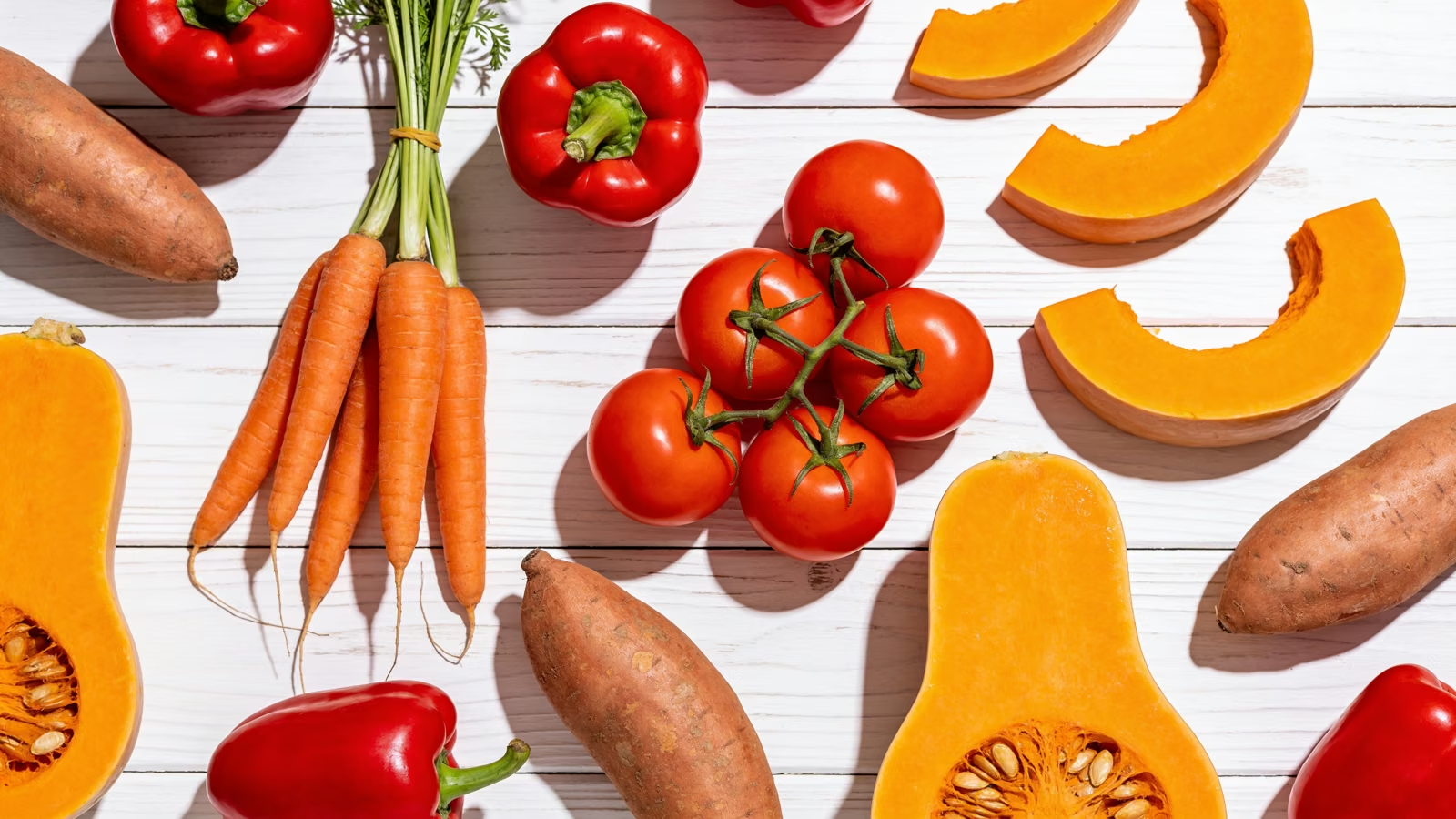
- Beta-carotene: found in colourful vegetables like carrots and sweet potatoes, as well as spirulina
- Lycopene: primarily obtained from tomatoes and tomato purée
Astaxanthin and Beta-Carotene for the Skin
In a randomised study, participants took 4 milligrams of astaxanthin daily over a ten-week period. The skin’s UV tolerance increased significantly—the skin could withstand greater radiation before redness developed, aiding in sunburn prevention. Additionally, UV-induced moisture loss was reduced, and overall skin texture improved.
Beta-carotene also accumulates in the skin, lending it a subtle golden glow. In clinical trials, regular intake reduced the UV-induced skin reaction by around 12 per cent after six weeks and by approximately 36 per cent after twelve weeks. Lycopene from tomatoes achieved roughly a 9 per cent reduction after six weeks and 32 per cent after ten weeks.
Sun Protection Foods and Nutrients That Shield the Skin
Carotenoids are not the only effective compounds. Polyphenols from green tea and cocoa flavanols have also demonstrated clear photoprotection benefits:
| Food | UV Reaction After 6 Weeks | After Longer Intake |
|---|---|---|
| Green tea (catechins) | −16% | −25% (12 weeks) |
| Cocoa (flavanols) | −52% | −69% (12 weeks) |
| Beta-carotene | −12% | −36% (12 weeks) |
An insider tip from a 2024 study is raspberry seed oil: in laboratory tests, it exhibited UV-absorbing properties roughly equivalent to a sun protection factor of 20. How effectively this works when applied to human skin requires further investigation. Across all dietary approaches, consistency of intake is paramount.
Conclusion
It is genuinely possible to fortify the skin from within: carotenoids such as astaxanthin, beta-carotene and lycopene, alongside polyphenols from green tea and cocoa, deposit in the tissue, neutralise free radicals and measurably enhance UV tolerance. Integrating sun protection foods into your diet is a worthwhile addition—yet it is no substitute for sunscreen, shade and protective clothing during intense sun exposure. The ideal approach combines both: enjoying a colourful, antioxidant-rich diet and providing external defence when ultraviolet radiation is high. And as always, consistency is key.
Frequently Asked Questions
Can sun protection foods provide natural UV protection for skin?
To a certain extent, yes. Carotenoids from colourful vegetables accumulate in the skin and enhance UV tolerance. However, they do not replace topical sunscreen.
Which foods help repair skin damage and defend from within?
Carotenoid-rich options such as carrots, sweet potatoes, tomatoes and spirulina, as well as polyphenols from green tea and cocoa.
What is astaxanthin?
One of the strongest carotenoids, extracted from microalgae. In a clinical trial, it increased the skin’s UV tolerance and reduced moisture loss.
How effectively does beta-carotene protect against the sun?
In studies, regular intake reduced UV-induced skin redness by around 36 per cent after twelve weeks. It also gives the skin a subtle golden tone.
Do carotenoids replace sunscreen?
No. They offer limited baseline protection and serve to complement sunscreen, shade and clothing, which remain essential in strong sunlight.
Is sunlight purely harmful?
No. It is essential for vitamin D synthesis, and higher sun exposure has been linked in studies to a reduced risk of certain cancers. Finding the right balance is what matters.
What is raspberry seed oil?
A plant oil that showed UV-absorbing properties in laboratory conditions comparable to an SPF of 20. Its real-world efficacy on human skin still requires further research.
How quickly does internal sun protection take effect?
Not immediately. The protective benefits build up over several weeks of regular consumption—consistency is essential.