If you are searching for a plant-based, low-calorie, and refreshing alternative to commercial fizzy drinks, look no further than water kefir (also known as tibicos or japonicos). This sparkling fermented drink delivers billions of live lactic acid bacteria and live yeast in a zesty, fruity probiotic soda – completely free from dairy, lactose, or artificial additives.
In this comprehensive guide, you will discover the remarkable water kefir benefits for your health, how to brew it flawlessly at home, how a second fermentation creates natural effervescence, and which healthy flavour combinations (such as hibiscus or ginger and lemon) are especially potent.
1. What is water kefir? The plant-based probiotic alternative
Water kefir is a traditional fermented beverage cultured using translucent, gelatinous clusters known as water kefir grains or tibicos.
- Lactic acid bacteria: Lactobacillus brevis, Lactobacillus casei, Lactobacillus hilgardii, Leuconostoc mesenteroides
- Beneficial yeasts: Saccharomyces cerevisiae, Kluyveromyces, Hanseniaspora
- Acetic acid bacteria: Acetobacter
When comparing water kefir vs kombucha, whilst kombucha is brewed from sweetened tea and contains caffeine, water kefir requires only water, a carbohydrate source like unrefined cane sugar, and dried fruit (such as figs or raisins).
2. Milk kefir vs water kefir: Key differences at a glance
| Characteristic | Traditional milk kefir | Water kefir (tibicos) |
|---|---|---|
| Substrate | Cow’s, goat’s, or sheep’s milk | Water + cane sugar + dried fruit |
| Dietary profile | Vegetarian (dairy product) | 100% vegan & dairy-free kefir |
| Texture & flavour | Creamy, tangy, yoghurt-like | Sparkling, zesty, lightly tart and fruity |
| Key nutrients | Protein, calcium, vitamins B12 & K2 | B vitamins, organic acids, enzymes |
| Caffeine content | Caffeine-free | Caffeine-free |
| Effervescence | Gently sparkling | Highly effervescent (like traditional lemonade) |
3. Evidence-based water kefir benefits for immunity, liver and cellular health
- Strengthening the gut-associated lymphoid tissue (GALT): Live lactic acid bacteria support the gut microbiota and stimulate the production of secretory immunoglobulin A (sIgA), the mucosal immune system’s primary defence against invading pathogens.
- Detoxifying liver enzymes: During fermentation, glucuronic acid-like compounds and acetic acid are produced, assisting the body’s natural phase II liver detoxification pathways.
- Antioxidant cellular protection: Polyphenols derived from co-fermented dried fruit and lemon become more bioavailable through microbial enzymatic action, helping neutralise harmful free radicals.
- Enhanced micronutrient absorption: Organic acids lower the pH throughout the digestive tract, improving the solubility and bioavailability of essential minerals such as magnesium, iron, and zinc.
4. How to make water kefir: Basic water kefir recipe (first fermentation)
Brewing your own batch requires just a few simple steps and standard utensils found in any home kitchen.
Ingredients needed for 1 litre:
- 1 litre filtered water (or still mineral water)
- 30–40 g organic water kefir grains (tibicos)
- 30–40 g unrefined cane sugar (supplies vital minerals for the cultures)
- 1–2 unsulphured organic dried figs (or 1 tbsp organic raisins)
- 1/2 organic lemon (unwaxed)
Step-by-step instructions:
- Dissolve the sugar: Dissolve the cane sugar in a small amount of warm water inside your jar, then top up with the remaining cold water.
- Add the ingredients: Gently place the water kefir grains, dried figs, and lemon half into the jar.
- Cover & ferment: Secure a clean cloth over the jar with an elastic band and store at room temperature (21–25 °C) in a shaded spot for 24 to 48 hours.
- Strain: After 2 days, gently squeeze the lemon, remove the figs, and strain the liquid through a plastic sieve. Rinse the grains gently with clean water.
5. The magic of second fermentation: Sparkling effervescence & flavours
The first fermentation produces a mildly tart base drink. The true artisan quality is unlocked during the second fermentation:
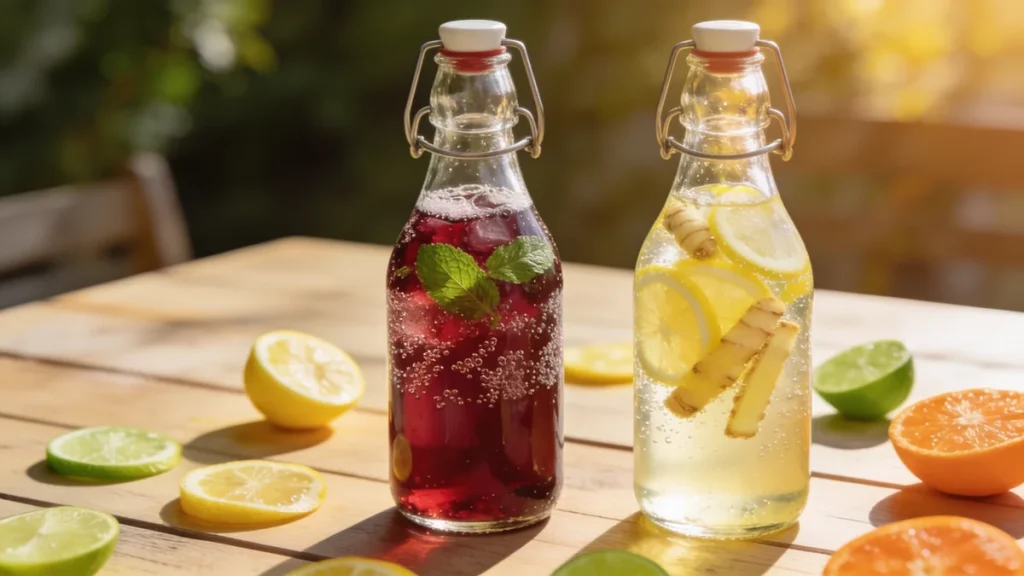
- The method: The strained liquid is decanted without the grains into pressure-rated flip-top bottles alongside your chosen flavour infusion (fruits, juices, herbs, or spices), sealed airtight, and left at room temperature for a further 24 to 36 hours.
- The result: As the generated carbon dioxide cannot escape, it infuses directly into the liquid. This produces a delightfully fizzy, finely sparkling beverage akin to a craft probiotic soda.
6. The 5 best healthy flavour combinations
- 1. Hibiscus & lemon booster: 500 ml water kefir + 1 tbsp organic dried hibiscus flowers + 2 slices of lemon. Rich in anthocyanins, supporting natural fluid balance and blood pressure regulation.
- 2. Golden ginger & turmeric shot: 500 ml water kefir + 2 cm fresh root ginger + 1/2 tsp turmeric + a pinch of black pepper. Potent anti-inflammatory properties.
- 3. Berry & mint refresher: 500 ml water kefir + 1 handful of raspberries/blueberries + fresh garden mint. High antioxidant cellular defence.
- 4. Tropical passion fruit & lime kefir: 500 ml water kefir + pulp of 1 passion fruit + fresh lime juice. Stimulates digestive juices and enzymes.
- 5. Spiced apple & cinnamon brew: 500 ml water kefir + 50 ml cloudy apple juice + 1 Ceylon cinnamon stick. Helps stabilise the insulin response.
7. Hibiscus water kefir: Natural fluid balance & blood pressure support
A standout flavour infusion pairs water kefir with hibiscus flowers (Hibiscus sabdariffa). Clinical studies indicate that hibiscus extracts function as natural ACE inhibitors, helping to gently lower elevated blood pressure. Combined with the metabolically active organic acids in fermented water kefir, this creates a potent botanical tonic supporting heart and kidney health.
8. How much sugar remains after fermentation?
- Sugar feeds the grains, not you: The microorganisms consume the sucrose almost entirely during the brewing process, converting it into beneficial organic acids and effervescence.
- Residual sugar content: Following 48 hours of primary and 24 hours of second fermentation, the sugar content falls to under 5–10 g/litre (less than 1–2 grams per glass) – significantly lower than standard commercial fruit and vegetable juices.
9. Shelf life, storage & caring for your tibicos grains
- Finished drink: Sealed in airtight glass bottles in the fridge, your brewed drink keeps fresh for 2 to 3 weeks.
- Holiday break: Place the crystals in a jar containing 300 ml water and 2 tbsp sugar, and store in the fridge. They will keep comfortably for 3 to 4 weeks.
- Propagation: With regular feeding and care, your water kefir grains will double in volume every 1 to 2 weeks.
10. Common water kefir brewing mistakes (and how to avoid them)
- Using metal utensils: Fermentation acids react with reactive metals, releasing ions that can harm delicate cultures. Use only glass, food-grade plastic, or wood.
- Chlorinated tap water: Chlorine degrades kefir cultures. Always use filtered water or unchlorinated spring water.
- Using only refined white sugar: Without minerals from raw cane sugar or dried fruit, the grains become nutrient-depleted over time.
- Forgetting to release pressure: In warm ambient room temperatures during second fermentation, briefly ‘burp’ flip-top bottles once daily to vent excess gas.
11. Frequently asked questions about water kefir
Does water kefir contain alcohol?
Natural yeast fermentation produces trace quantities of alcohol, usually between 0.2% and 0.8% ABV (similar to very ripe fruit juice or dealcoholised beer).
How often can you drink water kefir?
Water kefir can be enjoyed on a daily basis to harness the full range of water kefir benefits for digestion. An intake of 250 to 500 ml per day is recommended, ideally before or between meals.
12. Summary: The healthiest natural sparkling drink for every day
To enjoy all the remarkable water kefir benefits, this living probiotic soda proves that gut-friendly nutrition can taste exceptional. It enriches your system with active beneficial cultures, keeps calorie counts minimal, and can be tailored into countless effervescent recipes through second fermentation.
Source a batch of fresh tibicos grains, brew your first hibiscus or ginger kefir, and enjoy nature’s most invigorating refreshment!