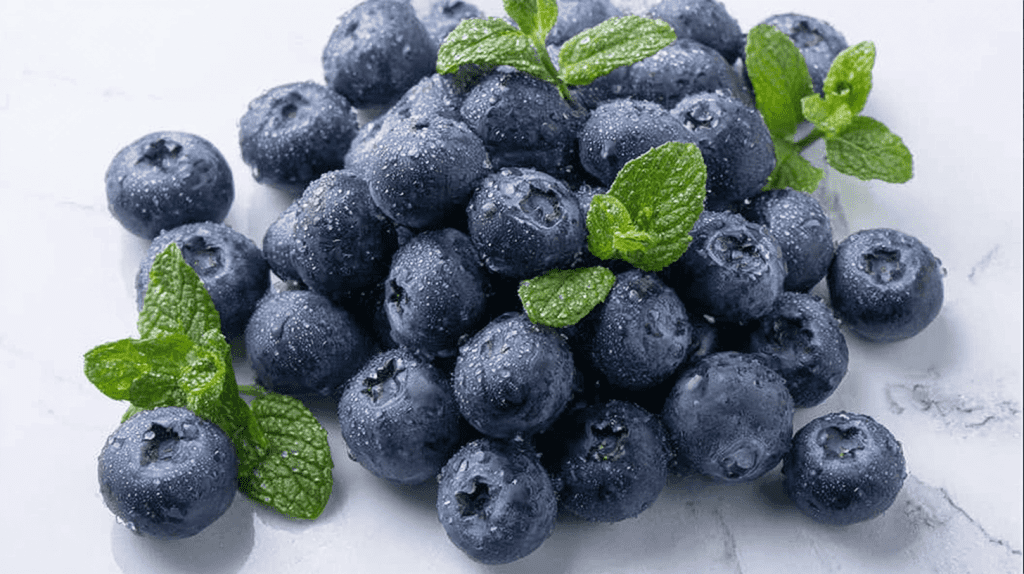
When exploring blueberry health benefits, the scientific evidence is far more robust than many realise. These small blue berries are proven to lower blood pressure, strengthen the immune system, and protect cells against oxidative stress. However, there is a crucial catch: combining them with dairy products can completely negate these positive effects. In this article, you will discover how to use blueberries effectively, what the optimal daily dosage is, and why you should strictly avoid pairing them with yoghurt, milk, or cream.
Contents
- Key Takeaways
- Blueberry Health Benefits: How They Lower Blood Pressure
- Anthocyanins: The Potent Pigments in Blueberries
- CRITICAL: Why Dairy Interaction Blocks the Health Benefits
- Further Health Benefits of Blueberries
- Optimal Daily Dosage: How Much Is Best?
- Cultivated vs Wild Blueberries: Which Are Better?
- Practical Tips: How to Maximise Blueberry Benefits
- Scientific References
Key Takeaways
- Blood pressure drops significantly: 1 cup (approx. 200g) of blueberries daily lowers blood pressure from 138/80 to 131/75 – a clinically meaningful improvement of 7 points systolic.
- Minimal quantities yield results: Just 6 strawberries or 11 blueberries a day (approx. 1/10 of a cup) reduce hypertension risk by 8%, according to Harvard studies involving over 100,000 women.
- CRITICAL – Dairy interaction blocks the benefits entirely: Combining blueberries with yoghurt, milk, or cream completely eliminates their blood-pressure-lowering effect. Total antioxidant capacity even drops below baseline.
- Anthocyanins are the key: These blue pigments act as potent antioxidants, combat inflammation, and support vascular health – but only if they are not blocked by dairy proteins and fats.
- Low in calories and nutrient-dense: At just 46 kcal per 100g, blueberries are ideal for weight management whilst providing essential nutrients in blueberries, including vitamin C, vitamin E, dietary fibre (4.9g/100g), and key minerals.
- Optimal daily dosage: 75–100g: More is not necessarily better – one cup a day is sufficient to unlock maximum blueberry health benefits.
- Superfood for gut health: High fibre content supports the gut microbiome and healthy digestion; dried blueberries also help soothe diarrhoea due to their natural tannins.
- Immune system booster: Vitamin C and anthocyanins bolster the immune system and neutralise free radicals that cause oxidative stress.
Blueberry Health Benefits: How They Lower Blood Pressure
What Do Harvard Studies Reveal About Blueberries and Hypertension?
A series of three Harvard studies tracking over 100,000 women for more than a decade yielded remarkable findings: women with the highest intake of anthocyanins – the vibrant blue pigments found in blueberries and strawberries – had an 8% lower risk of developing high blood pressure.
What makes this particularly striking is that the highest-intake group consumed just 6 strawberries or 11 blueberries a day – roughly a tenth of a cup. This modest amount was enough to achieve a measurable protective effect. The researchers adjusted for other lifestyle factors such as wholemeal intake, fibre consumption, salt intake, smoking, and physical activity; the cardiovascular benefits of the berries remained robust regardless.
How Was the Blood-Pressure-Lowering Effect Tested in Clinical Trials?
Observational studies provide valuable clues, but only randomised, double-blind, placebo-controlled trials can establish causality. One such study, aptly titled “Daily consumption of blueberries improves blood pressure”, delivered precisely that: rigorous scientific proof.
However, how do you conduct a double-blind trial using real food? How do you create convincing placebo blueberries? The researchers solved this by taking roughly one cup of real blueberries, converting them into a freeze-dried powder, and comparing it against a placebo powder matched for calories and sugar content – but containing no real blueberries.
After 8 weeks, the results were unequivocal: the placebo group experienced no meaningful change (138/79 → 139/80). By contrast, the blueberry group saw a significant reduction from 138/80 to 131/75. A 7-point drop in systolic blood pressure is clinically significant.
Is More Always Better? What Happens with a Double Dose?
It is a reasonable question: if 1 cup lowers blood pressure, would 2 cups produce even greater improvements? The answer is no. Trials investigating a double dose (over 2 cups of fresh blueberries daily) showed the exact same reduction, offering no additional benefit.
This points to a plateau effect: one cup per day appears optimal. It is possible that even less may suffice, though this has not yet been tested systematically. The recommended daily dosage of 75–100g (roughly 3 handfuls) is based on these findings.
Why Do Meta-Analyses Show No Overall Effect?
This is where things get intriguing: five intervention studies have investigated blueberries and blood pressure. When pooled together in a meta-analysis, they surprisingly show no overall clinical efficacy. How is that possible when high-quality individual trials demonstrated clear positive effects?
The answer lies in a crucial detail of the study designs – leading us directly to the most critical section of this article.
Anthocyanins: The Potent Pigments in Blueberries
What Are Anthocyanins and How Do They Work?
Anthocyanins belong to the polyphenol family of phytochemicals and are responsible for the rich blue and purple colour of blueberries, blackberries, and red cabbage. These pigments do not merely provide visual appeal – they boast impressive health-promoting properties.
Anthocyanins function as powerful antioxidants. They scavenge free radicals – unstable molecules that trigger oxidative stress and cellular damage. By neutralising free radicals, anthocyanins protect cells and support the immune system in defending against pathogens.
What Specific Health Effects Do Anthocyanins Provide?
Research demonstrates that anthocyanins activate multiple physiological mechanisms:
- Vascular health: They improve blood vessel elasticity and stimulate nitric oxide (NO) production, which relaxes blood vessels and helps lower blood pressure.
- Anti-inflammatory action: Chronic inflammation is a major risk factor for cardiovascular disease; anthocyanins help suppress inflammatory markers throughout the body.
- Antioxidant capacity: Following blueberry consumption, the antioxidant capacity of the bloodstream increases by approximately 100% for over 5 hours.
- Cellular defence: They shield DNA, proteins, and lipids from oxidative damage.
Why Is the Deep Blue Colour So Important?
The more intense the blue colour, the higher the anthocyanin concentration. Fully ripened, deep-blue blueberries contain significantly more of these beneficial pigments than underripe or paler berries. This also explains why wild blueberries, with their richer colouration, often boast higher anthocyanin levels than cultivated varieties – although both offer substantial nutritional value.
CRITICAL: Why Dairy Interaction Blocks the Health Benefits
What Separates the Successful Trials from the Inconclusive Ones?
Remember the question of why meta-analyses failed to show an overall benefit, despite individual trials showing clear improvements? The explanation comes down to a seemingly minor detail: the medium in which the blueberries were consumed.
In the two trials reporting significant reductions in blood pressure, the blueberries were mixed with water – simply blueberry powder dissolved in plain water. In contrast, the trials that found no significant effect combined the blueberries with yoghurt or dried milk preparations.
This distinction is far from trivial. It represents the exact dividing line between clinical efficacy and zero effect.
Does Dairy Genuinely Block the Absorption of Berry Nutrients?
Research established years ago that dairy products can severely hinder the absorption of phytonutrients from berries. When strawberries are consumed with water, substantial quantities of strawberry phytonutrients enter the bloodstream within hours. However, when the identical quantity of strawberries is eaten with double cream or milk, phytonutrient absorption plummets dramatically.
The suspected mechanism is a direct dairy interaction between berry pigments (anthocyanins) and milk proteins. But does this phenomenon also apply to blueberries?
What Happens in the Body When Blueberries Are Paired with Milk?
A study clearly titled “Milk blunts the antioxidant activity of blueberries” provides the answer. Participants consumed one and a half cups of blueberries – on one occasion with water, and on another with milk. The outcome was definitive: milk blocked the absorption of several key phytonutrients.
Yet the crucial question is: does this make a tangible physiological difference? Looking at the plasma concentration curves of absorbed nutrients, blueberries with water produced substantial spikes in the bloodstream. Following blueberries with milk, levels were predictably lower.
Then came the unexpected finding: when researchers analysed the total antioxidant capacity of the blood, eating plain blueberries or blueberries with water caused antioxidant defence to jump within an hour and remain elevated by approximately 100% for over 5 hours.
Does Antioxidant Capacity Truly Drop Below Baseline?
When paired with milk, you might expect the antioxidant boost to simply be slightly smaller. However, the data revealed something far more striking: antioxidant capacity was not merely lower – it dropped below starting levels. Despite eating an entire bowl of blueberries, your body’s overall antioxidant capacity declined simply because they were combined with dairy.
This presents a striking paradox: you consume a superfood packed with antioxidants, yet your body experiences a temporary dip in antioxidant protection. The dairy does not merely cancel out the health benefits – it actively blunts them.
Is Whole Milk Worse Than Skimmed Milk?
Interestingly, whole milk inhibits nutrient absorption most severely. Similar patterns emerge when adding milk to tea: in vitro studies indicate that whole milk reduces antioxidant availability twice as much as skimmed milk.
This was surprising, as researchers previously assumed milk proteins were solely responsible. However, the data suggests that dairy fat also plays an active role in trapping phytonutrients. The higher the fat content, the greater the inhibitory effect.
What Are the Practical Takeaways?
The conclusion is straightforward and scientifically grounded: never combine blueberries with dairy products if you want to maximise blueberry health benefits. This applies to:
- Milk (whole milk is especially problematic)
- Yoghurt (including Greek yoghurt)
- Quark and cottage cheese
- Double cream and whipped cream
- All other dairy products
This explains the conflicting results across meta-analyses: trials combining blueberries with water demonstrate marked blood pressure reductions, whereas those using yoghurt or milk show no effect. The berries are not ineffective – their benefits are simply sabotaged by the dairy interaction.
Further Blueberry Health Benefits
How do blueberries support gut health?
Providing 4.9 grams of fibre per 100 grams, blueberries rank among the most fibre-rich fruits. This dietary fibre delivers several key benefits for your digestive system:
- Nourishing gut flora: Fibre acts as a prebiotic fuel for beneficial gut bacteria, supporting a balanced microbiome.
- Promoting digestion: It stimulates healthy bowel motility and helps prevent constipation.
- Prolonged satiety: Dietary fibre swells gently in the stomach to keep you feeling full for longer – an excellent aid for weight management.
There is also an intriguing dual effect: fresh blueberries encourage healthy digestion thanks to their high fibre content. Dried blueberries, however, have long been used as a traditional remedy for diarrhoea due to their high concentration of tannins. These astringent compounds tighten the intestinal lining and help reduce fluid loss.
Do blueberries really strengthen the immune system?
Yes, through several distinct biological mechanisms:
- Vitamin C: Blueberries provide vitamin C, which contributes to the normal function of the immune system and aids the production of protective white blood cells.
- Antioxidants: Vitamin E and anthocyanins help neutralise harmful free radicals, reducing oxidative stress on the immune system so it can focus on defending against genuine pathogens.
- Anti-inflammatory action: Low-grade chronic inflammation places ongoing strain on immunity. The anti-inflammatory polyphenols in blueberries help relieve this pressure and reinforce the body’s natural defences.
What role does salicylic acid play in blueberries?
Blueberries contain naturally occurring salicylic acid – an active compound also found in willow bark that is chemically related to aspirin. Salicylic acid offers two main health actions:
- Mild blood-thinning properties: It helps inhibit platelet aggregation, promoting healthy blood flow and supporting vascular health.
- Anti-inflammatory effects: It provides gentle anti-inflammatory relief, particularly beneficial for minor irritations in the mouth and throat.
Important note: Anyone taking prescribed blood-thinning medication or living with a known salicylate allergy should take care. Consuming large quantities of blueberries alongside salicylate-based medications could lead to unwanted interactions. For those with a salicylate sensitivity, excess intake may trigger headaches or skin rashes.
Are blueberries good for weight management?
Absolutely. At just 46 kilocalories per 100 grams and containing modest amounts of natural sugar, blueberries fit effortlessly into a calorie-controlled diet. Their substantial fibre content promotes lasting fullness, whilst their natural sweetness helps curb cravings for processed, sugary snacks. Enjoyed as a mid-morning snack, tossed through a salad, or served as a light dessert, they are an ideal companion for weight loss or long-term weight maintenance.
Optimal Daily Dosage: How Many Blueberries Should You Eat?
How many blueberries should you eat each day?
Current scientific evidence suggests an optimal daily dosage of 75–100 grams of blueberries. That equates to roughly three handfuls or just under a standard cup. This quantity reflects the amounts used across clinical trials on blood pressure and aligns with the doses shown to deliver broader cardiovascular and metabolic advantages.
Interestingly, research indicates that more is not necessarily better. Doubling the intake (to 200 grams or more) yielded no measurable additional reduction in blood pressure. This points to a biological saturation threshold, beyond which the body cannot absorb or utilise extra active compounds in a single sitting.
Can smaller daily servings still be effective?
Yes. Large-scale Harvard observational data revealed that even modest regular intakes – as little as 11 blueberries or 6 strawberries daily (roughly one-tenth of a cup) – were associated with an 8% lower risk of high blood pressure. Every portion counts: if eating 100 grams daily is not practical, smaller amounts still deliver far greater benefits than skipping berries entirely.
Are there blueberry side effects or an upper limit?
Like most fruit, consuming fresh blueberries in extreme excess can cause mild digestive upset or loose stools. In this context, “excess” means eating well above the recommended 75–100 grams – typically several hundred grams in a single day.
When considering blueberries benefits and side effects, those with a salicylate allergy or individuals on anticoagulant therapy should be mindful of regular high-dose consumption. In such instances, discussing your daily intake with a GP or registered dietitian is advisable.
For healthy individuals without medication concerns, enjoying berries in moderation is completely safe: a daily dosage of 75–100 grams offers maximum benefits with minimal risk of blueberry side effects.
Cultivated vs Wild Blueberries: Which Is Better?
What is the difference between cultivated and wild blueberries?
The cultivated highbush blueberries commonly found on British supermarket shelves or grown in home gardens originate from North American cultivars. They grow on tall shrubs reaching up to two metres high and feature pale, translucent greenish flesh. Wild blueberries or bilberries (Vaccinium myrtillus), by contrast, are smaller, grow close to the ground in native woodlands, and boast deep purple-blue flesh throughout.
Wild bilberries generally feature a denser concentration of anthocyanins – evidenced by their rich pigmentation and dark juice that readily stains the skin and tongue. Cultivated varieties have lighter flesh and leave far less colour behind.
Are wild blueberries healthier than cultivated varieties?
Wild berries do tend to have a higher total anthocyanin and polyphenol content per gram. Nevertheless, both types deliver remarkable blueberry health benefits. Most clinical trials examining improvements in blood pressure and vascular health have used standard cultivated berries and still recorded impressive physiological gains.
Cultivated blueberries also offer distinct practical advantages: they are readily accessible all year round (fresh or frozen), whereas wild bilberries have a short UK foraging season. Cultivated berries are also plumper, sweeter, and far more abundant.
Do frozen blueberries lose their potency?
Not at all. Frozen blueberries are just as nutritious as fresh fruit – and occasionally superior. Berries destined for freezing are flash-frozen immediately after harvesting. This rapid freezing locks in the essential nutrients in blueberries, preserving their vitamins and polyphenols over months of proper storage at -18°C.
Fresh berries, on the other hand, gradually lose fragile micronutrients during transit and shelf storage. After a week in the fridge, between 20% and 30% of light- and heat-sensitive vitamins can degrade.
Frozen berries therefore provide a dependable, nutrient-dense choice – particularly outside the British growing season (July to September). Simply thaw what you need and consume promptly without refreezing.
Practical Tips: How to Maximise Blueberry Health Benefits
What is the best way to eat blueberries?
Based on the latest nutritional findings:
- EAT THEM PLAIN or with WATER: Enjoy fresh berries as a standalone snack, or blend them with water into a refreshing smoothie.
- NEVER combine with dairy: Steer clear of mixing berries with yoghurt, cow’s milk, quark, cream, or buttermilk, as dairy interaction can significantly blunt the absorption of beneficial polyphenols.
- Try plant-based alternatives: Oat milk, almond milk, coconut milk, or soya milk are practical alternatives; whilst scientific research is ongoing, plant proteins differ structurally from dairy proteins and appear far less prone to binding antioxidants.
- Combine with complementary fruits: A fresh fruit salad dressed without dairy makes a nutrient-rich option.
- In smoothies: Build your smoothies with pure water, coconut water, or plant-based milks rather than cow’s milk.
What should you look for when buying blueberries?
Whenever possible, buy blueberries during the British summer season (July to September), when their flavour profile and natural vitamin concentrations peak. Sourcing British-grown fruit also ensures shorter supply chains and fresher produce.
Check the punnet carefully before purchasing: blueberries bruise easily and are susceptible to mould if damaged. Select firm, plump berries with a uniform, dusty silver-blue bloom and no signs of moisture or soft spots. Once home, keep them refrigerated where they will stay fresh for around a week.
Outside the UK season, choosing frozen berries is often far more cost-effective and nutritious than buying imported fresh berries that have spent days in transit.
How can you store and preserve blueberries?
Two simple methods work best:
- Freezing: Gently rinse the berries, pat them thoroughly dry on kitchen paper, and freeze them flat on a tray before transferring to airtight bags. This provides a steady supply for morning smoothies throughout the year.
- Drying: Dehydrate blueberries using a food dehydrator or a low-temperature oven. Dried berries make a convenient snack and serve as a reliable household remedy for digestive upset due to their astringent tannin content.
Which recipes work best without causing dairy interaction?
Scientifically sound combinations WITHOUT dairy:
- Hydrating blueberry smoothie: Blend 100g blueberries with 200ml cold water, 1 ripe banana, and a tablespoon of porridge oats.
- Fresh fruit salad: Combine blueberries with sliced melon, fresh mint, and other seasonal berries – served without yoghurt dressing.
- Blueberry chia pudding with oat milk: Soak chia seeds in unsweetened oat milk (avoiding cow’s milk) and top with fresh blueberries.
- Eaten whole as a raw snack: The simplest approach – enjoy your 75–100g daily dosage straight from the bowl.
AVOID popular combinations that trigger dairy interaction:
- Blueberries stirred into dairy yoghurt ❌
- Blueberries with quark or curd cheese ❌
- Traditional blueberry milkshakes made with dairy ❌
- Blueberries served with double cream ❌
Whilst these pairings are popular culinary staples, the resulting dairy interaction substantially diminishes the blueberry health benefits you would otherwise absorb.
Can you cook or bake with blueberries?
You can, though with some nutritional trade-offs. Elevated heat breaks down delicate nutrients such as vitamin C. Anthocyanins remain reasonably heat-stable, but prolonged boiling or high oven temperatures will eventually degrade their polyphenol structures.
If you plan to cook or bake with blueberries, keep heating times as short as possible. Scattering fresh or defrosted berries over warm porridge oats or pancakes just before serving is an easy way to enjoy warm dishes while preserving maximum nutritional value.
Scientific Sources
- Cassidy A, O’Reilly ÉJ, Kay C, et al. Habitual intake of flavonoid subclasses and incident hypertension in adults. Am J Clin Nutr. 2011;93(2):338-347.
- Johnson SA, Figueroa A, Navaei N, et al. Daily blueberry consumption improves blood pressure and arterial stiffness in postmenopausal women. J Acad Nutr Diet. 2015;115(3):369-377.
- Seeram NP, Aviram M, Zhang Y, et al. Comparison of antioxidant potency of commonly consumed polyphenol-rich beverages in the United States. J Agric Food Chem. 2008;56(4):1415-1422.
- Seeram NP. Milk blocks the antioxidant activity of blueberries. Related research on berry-dairy interactions.
Sources and References
Review articles, meta-analyses, and controlled trials on the topic of this article. Every link was checked for availability on 16 August 2026.
- Jurja S, Negreanu-Pirjol T, Mehedinți MC et al.: Blueberries and Honeysuckle Berries: Anthocyanin-Rich Polyphenols for Vascular Endothelial Health and Cardiovascular Disease Prevention. 2025. PubMed 41470833. DOI: 10.3390/nu17243888.
- Kalt W, Cassidy A, Howard LR et al.: Recent Research on the Health Benefits of Blueberries and Their Anthocyanins. Advances in nutrition (Bethesda, Md.) 2020. PubMed 31329250. DOI: 10.1093/advances/nmz065.
- Ellis LR, O’Connor D, Khan H et al.: A randomised, double-blind, placebo-controlled trial to assess the postprandial dose-dependent effects of wild blueberries on metabolic and cognitive outcomes following a high-carbohydrate breakfast. 2026. PubMed 42191861. DOI: 10.1007/s00394-026-03974-0.
- Omachi DO, Shahnaz T, Gines B et al.: Phytochemical Profiles, In Vitro Antioxidants and Antihypertensive Properties of Wild Blueberries (<i>Vaccinium angustifolium</i>). 2025. PubMed 41464987. DOI: 10.3390/foods14244281.
- Wood E, Hein S, Mesnage R et al.: Wild blueberry (poly)phenols can improve vascular function and cognitive performance in healthy older individuals: a double-blind randomized controlled trial. The American journal of clinical nutrition 2023. PubMed 36972800. DOI: 10.1016/j.ajcnut.2023.03.017.
- Silva S, Costa EM, Veiga M et al.: Health promoting properties of blueberries: a review. Critical reviews in food science and nutrition 2020. PubMed 30373383. DOI: 10.1080/10408398.2018.1518895.
- Wood E , Hein S , Heiss C et al.: Blueberries and cardiovascular disease prevention. Food & function 2019. PubMed 31776541. DOI: 10.1039/c9fo02291k.
- Lee YM, Yoon Y, Yoon H et al.: Dietary Anthocyanins against Obesity and Inflammation. Nutrients 2017. PubMed 28974032. DOI: 10.3390/nu9101089.