Retinol: is it good or bad for the skin? When people consider retinol, what does it do and is it truly worth adding to an anti-ageing routine? Millions seeking effective skincare ask this very question. The answer is clear: retinol is one of the most scientifically proven active ingredients against skin ageing. Clinical studies demonstrate impressive results – a 44% reduction in fine lines and wrinkles after one year, an 84% improvement in pigmentation, and an 80% boost in collagen production. However, there are crucial differences between safe, over-the-counter retinol and prescription tretinoin, which is banned in Europe for cosmetic use. In this article, you will learn all about proper application, managing side effects, and why you should incorporate retinol into your skincare regime from the age of 30.
Table of Contents
- Key Takeaways
- What Is Retinol: What Does It Do and How Does It Work?
- Impressive Retinol Benefits for the Skin
- How to Use Retinol Correctly: Dosage and Timing
- Retinol for Skin Side Effects: How to Minimise Irritation
- Retinol and Tretinoin: The Crucial Differences
- WARNING: Why Tretinoin Is Problematic for Cosmetic Purposes
- Retinaldehyde: The Gentle Alternative
- Who Should Avoid Using Retinol?
- Finding the Best Retinol Cream: What to Look For
- Scientific Sources
Key Takeaways
- Retinol is clinically proven to be effective: 52 weeks of use reduces crow’s feet by 44% and pigmentation by 84% – significantly outperforming placebo.
- Collagen production rises dramatically: After 10–12 months, collagen formation increases by 80%, whereas it drops by 14% without retinol.
- Retinol is safe when applied correctly: Concentrations of 0.1–0.3%, applied in the evening, result in only 5–8% systemic absorption – presenting no risk of overdose when used on its own.
- Recommended from age 30: The earlier you begin, the better – yet starting even at age 70 delivers meaningful improvements.
- The optimal routine combines sun protection and retinol: Broad-spectrum UV protection in the morning and retinol at night is scientifically the most effective anti-ageing strategy.
- Gradual introduction prevents irritation: Begin twice weekly, step up to alternate evenings after a few weeks, and eventually use daily to allow skin acclimatisation.
- CRITICAL – Tretinoin is different: Prescription-only tretinoin is BANNED in the EU and UK for cosmetic purposes. One trial was halted due to increased mortality (19 vs 14 deaths).
- Note the contraindications: Do not use during pregnancy or breastfeeding (teratogenic risk), on broken or severely reactive skin, active eczema, or alongside oral vitamin A supplements.
What Is Retinol: What Does It Do and How Does It Work?
What is retinol?
Retinol is a form of vitamin A belonging to the broader family of retinoids. It is available over-the-counter in cosmetic skincare products and is converted by enzymes within the skin into small amounts of retinoic acid – the biologically active molecule that stimulates cellular turnover and anti-ageing effects.
Retinoid is the umbrella term for all vitamin A derivatives, which include:
- Retinyl esters (retinyl acetate, retinyl palmitate, retinyl propionate) – the weakest forms, largely ineffective in scientific evaluations
- Retinol – available over-the-counter, highly effective, offering an ideal balance between performance and skin tolerance
- Retinaldehyde (retinal) – over-the-counter, comparable in efficacy to retinol and often slightly gentler
- Tretinoin (all-trans retinoic acid) – prescription-only, offering the strongest potency but also the highest rate of side effects and safety concerns
When applying retinol, what does it do to the skin?
Retinol acts across multiple biological pathways simultaneously:
1. Boosting collagen production: Within the dermis (the middle layer of the skin), retinol stimulates fibroblasts to synthesise structural collagen fibres. These protein fibres maintain skin firmness and elasticity. As we age, natural collagen synthesis declines – retinol actively counteracts and reverses this loss.
2. Reducing oxidative stress: Environmental oxygen and free radicals trigger damaging chemical reactions known as oxidative stress, accelerating collagen breakdown. Retinol acts as an antioxidant to neutralise these destructive pathways.
3. Inhibiting matrix metalloproteinases: These enzymes break down existing collagen. Retinol inhibits their activity, thereby halting age-related structural degradation.
4. Strengthening the dermal-epidermal junction: Over time, the interlocking junction between the epidermis (outer layer) and dermis flattens. Retinol helps restore this undulating structure, leading to firmer, more resilient skin.
Retinol before and after: what visible changes happen on the face?
The visible benefits after several months of consistent application include:
- Reduction in fine lines and wrinkles (44% improvement after 1 year)
- Diminished age spots, sun spots, and uneven pigmentation (84% reduction)
- Smoother, refined surface texture due to accelerated cellular turnover
- Noticeably firmer skin supported by increased dermal collagen density
- Visibly tightened and refined pores
The Impressive Retinol Benefits for Your Skin
How robust is the scientific evidence behind retinol benefits?
The clinical evidence supporting retinol benefits is compelling. A randomised, double-blind, placebo-controlled clinical trial – the gold standard in medical research – demonstrated that 52 weeks of daily retinol application yielded a 44% improvement in crow’s feet (fine lines and wrinkles around the eyes) and an 84% reduction in mottled pigmentation.
These improvements were statistically significant compared to the control group, confirming that the outcomes are not mere placebo or random fluctuation, but real, measurable structural changes.
Retinol before and after: what happens to collagen during treatment?
Full-thickness skin biopsies taken before and after 10–12 months of treatment offer striking biological insights:
- Control group (without retinoid): Collagen formation dropped by 14% as natural chronological ageing progressed.
- Retinoid group: Collagen production increased by 80% – representing a substantial reversal of the intrinsic ageing process.
Whilst these specific biopsy figures stem from trials evaluating prescription tretinoin, cosmetic retinol demonstrates comparable regenerative pathways with significantly lower irritation and superior tolerability.
How long does it take for retinol to work?
Consistency and patience are essential. Initial textural improvements generally appear after 8–12 weeks. Substantial reductions in fine lines and wrinkles emerge around the 6-month mark, with optimal structural rejuvenation visible after 12 months of daily use.
While this timeline requires dedication, skin ageing is a multi-decade process; reversing structural damage takes time. The foundation of success is continuous adherence across months and years.
How to Use Retinol Correctly: Dosage and Timing
When should you apply retinol?
Dermatologists consistently advise: apply retinol in the evening before bed.
Why use retinol exclusively at night? Several physiological factors support this timing:
- Sun sensitivity: Retinoids accelerate cell renewal, leaving fresh skin vulnerable to UV exposure. Using it at night minimises immediate photosensitivity.
- Cellular repair cycles: Skin undergoes its peak regenerative processes overnight, aligning perfectly with retinol’s cellular stimulation.
- Compatibility with daytime SPF: Morning routines should focus on broad-spectrum sunscreen, giving evening retinol ample time to absorb undisturbed.
At what age should you start an anti-ageing routine with retinol?
Leading aesthetic practitioners recommend: incorporating retinol from age 30 onwards makes biological sense. Prior to your thirties, natural collagen production and cellular turnover remain robust. From 30, natural collagen degradation accelerates, marking the optimal window for preventative intervention.
However, starting at 40, 50, 60, or 70 remains highly worthwhile. Clinical trials confirm that mature skin retains the capacity to respond to retinoid stimulation at any age. Early adoption prevents cumulative damage, but later introduction still yields remarkable restorative improvements.
How do you apply a retinol serum step-by-step?
Follow this optimal evening application routine:
- Cleanse: Thoroughly remove make-up, sunscreen, and daily pollutants.
- Dry the skin: Wait 5–10 minutes until your face is completely dry. Applying retinol to damp skin enhances penetration too rapidly, increasing the likelihood of irritation.
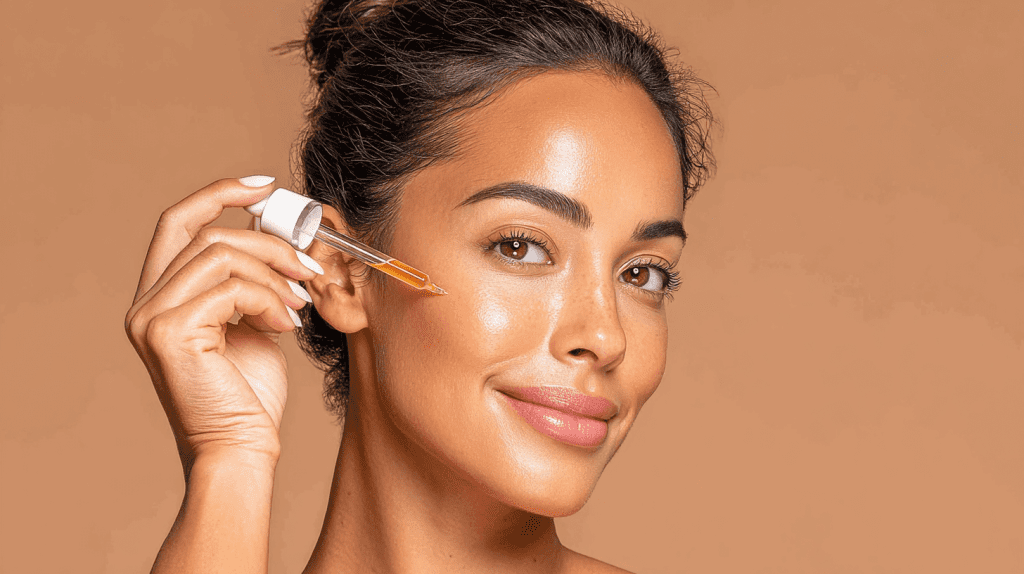
- Apply the retinol serum: Dispense a pea-sized amount for the entire face. Smooth on gently, taking care to avoid the immediate eye contours and lips.
- Allow absorption: Leave to absorb for 10–15 minutes.
- Moisturise: Follow with a nourishing barrier cream to lock in hydration.
Crucial rule: ALWAYS wear broad-spectrum sun protection (SPF 30 or higher) every morning when using evening retinoids to safeguard against sun sensitivity.
Which concentration should you choose?
For beginners: 0.1% retinol is an ideal starting strength. Widely formulated in over-the-counter serums, this concentration delivers proven efficacy whilst minimising initial reactivity.
After several months of good tolerance, you can graduate to 0.3% – the maximum concentration considered safe for facial cosmetics under UK and EU safety regulations.
Body formulations should not exceed 0.05% retinol, as applying product over larger surface areas results in higher cumulative systemic exposure.
Managing Retinol for Skin Side Effects and Irritation
Does retinol dry out the skin?
Yes, retinol can cause temporary dryness and flaking, particularly during the initial weeks of treatment. This is an expected physiological adjustment as cellular turnover accelerates, and it typically settles as the skin barrier adapts.
Other classic initial symptoms of retinol for skin side effects include:
- Localised erythema (redness)
- Mild stinging or tingling upon application
- Superficial peeling and flakiness
- Transient skin purging or minor breakouts
- Mild itching or tightness
These responses typically emerge during the first two weeks, reach a peak, and gradually subside. Importantly, over-the-counter retinol provokes far milder, less frequent reactions than prescription tretinoin.
How can you minimise retinol side effects?
Adopt a gradual “low and slow” titration schedule:
Weeks 1–4: Apply twice weekly at night (e.g., Monday and Thursday evenings).
Weeks 5–8: Increase application to alternate nights.
From Week 9 onwards: Move to nightly application, provided your skin remains calm and comfortable.
Practical tips to maintain skin comfort:
- Start with a gentle 0.1% over-the-counter formula
- Ensure the skin is completely dry before application
- Keep clear of the delicate orbital eye area and corners of the mouth
- Apply a ceramide-rich moisturiser directly afterwards (or buffer beforehand)
- If marked irritation occurs, pause for a few days before reintroducing at a lower frequency
Are these side effects dangerous?
No. Standard retinoid acclimatisation symptoms are uncomfortable but harmless, reflecting heightened epidermal turnover. When introduced gradually at appropriate concentrations, significant adverse reactions are exceptionally rare.
The safety profile differs markedly for potent prescription retinoic acid – as explored below.
Retinol and Tretinoin: The Crucial Differences
What is the difference between retinol and tretinoin?
While both compounds are vitamin A derivatives, their potency and regulatory status differ fundamentally:
| Feature | Retinol | Tretinoin |
|---|---|---|
| Availability | Over-the-counter (high-street chemist, pharmacy) | Prescription-only medicine |
| Chemical Form | Retinol (converted by skin enzymes into retinoic acid) | Retinoic acid (all-trans retinoic acid, directly bioactive) |
| Potency | Moderate (highly effective with cumulative use) | Extremely potent |
| Side Effect Incidence | Low (generally well tolerated) | Very high (approx. 71% experience severe retinoid dermatitis) |
| UK & EU Regulatory Status | Approved for cosmetic formulations | BANNED for general cosmetic anti-ageing use |
| Safety Profile | Safe when used as directed | Halted clinical trial due to excess mortality (controversial) |
Why is tretinoin more potent than retinol?
Tretinoin is pure retinoic acid, meaning it binds directly to nuclear retinoic acid receptors without requiring enzymatic conversion. Retinol, by contrast, undergoes a slow, rate-limited two-step conversion in the epidermis. This controlled metabolic release delivers potent anti-ageing benefits with far greater comfort.
Greater strength does not necessarily translate to a superior beauty routine. With tretinoin, elevated biological potency brings a drastically higher risk of barrier disruption, severe flaking, and dermatitis.
Should you choose retinol or tretinoin?
For cosmetic anti-ageing and maintaining skin health: retinol is the clear choice.
Over-the-counter retinol offers:
- Clinically proven reduction in fine lines and wrinkles (44% improvement)
- Convenient over-the-counter access without requiring a GP consultation
- Superior skin tolerance and lower risk of barrier compromise
- An established safety record under strict cosmetic safety regulations
- Full legal compliance for anti-ageing cosmetics across the UK and Europe
Tretinoin, conversely, remains restricted as a prescription pharmaceutical – and for good reason.
WARNING: Retinol and Tretinoin – Why Tretinoin Is Problematic for Cosmetic Use
Why is tretinoin banned in Europe for cosmetic use?
Tretinoin (also known as Retin-A, all-trans retinoic acid) is not permitted in the UK and European Union for cosmetic purposes. The reason: safety concerns stemming from a halted clinical trial.
What happened in the Veterans Affairs study?
The Veterans Affairs Topical Tretinoin Chemoprevention Trial was designed as a 6-year randomised controlled trial to investigate whether tretinoin could prevent skin cancer. However, the study had to be terminated prematurely.
The reason: significantly more people died in the tretinoin group than in the placebo group.
At the time the study was stopped:
- Tretinoin group: 19 deaths
- Placebo group: 14 deaths
The probability that this difference was purely down to chance is approximately 1 in 100 (p < 0.01). That is statistically notable.
Is tretinoin fatal?
We do not know with certainty. There are two possibilities:
- Statistical anomaly: The difference may have occurred by chance. With small sample numbers (19 vs 14), this is possible, albeit unlikely.
- Genuine biological effect: Tretinoin could indeed increase mortality risk. Between 1% and 8% of topically applied retinoic acid is absorbed systemically – which could have unforeseen consequences.
Until this question is definitively resolved, using tretinoin purely for cosmetic purposes remains questionable. The risk-benefit ratio is unclear: for medically necessary treatments (severe acne, extensive photodamage), the risk may be justifiable. For a cosmetic anti-ageing routine – when safe over-the-counter alternatives such as retinol exist – it is not.
High rate of adverse effects: the “retinoid reaction”
Regardless of the mortality question, tretinoin carries a very high rate of adverse effects:
- 71% of tretinoin users experience skin irritation (erythema, stinging, burning, itching, peeling)
- By comparison: only 23% with retinaldehyde, and even fewer with retinol
- 4% in the placebo group (normal background skin reactions)
Ironically, this persistent irritation may be part of the mechanism of action – the skin is perpetually forced to accelerate cellular turnover. But is this constant stress on the skin barrier truly healthy? Or does it cause long-term damage?
Should you still use tretinoin?
For cosmetic anti-ageing purposes: no.
There is no reason to take an unresolved risk when retinol delivers scientifically proven, impressive results for boosting collagen production and smoothing the skin – with substantially better tolerance and no safety red flags.
Tretinoin may be clinically indicated for severe dermatological conditions. But for conventional anti-ageing goals, retinol remains the smarter, safer choice.
Retinaldehyde: The Gentle Retinoid Alternative
What is retinaldehyde?
Retinaldehyde (also known as retinal) is another retinoid that sits directly between retinol and tretinoin – both in terms of potency and skin tolerability. It is available over-the-counter and offers an attractive middle ground.
How effective is retinaldehyde in comparison?
A 48-week clinical trial compared retinaldehyde directly with tretinoin (retinoic acid) and a placebo:
- Measurement method: Silicone replicas of crow’s feet before and after treatment, analysed using high-resolution digital image processing (objective quantification)
- Results: Retinaldehyde demonstrated a comparable reduction in fine lines and wrinkles to tretinoin
- Side effects: Only 23% skin irritation with retinaldehyde vs 71% with tretinoin vs 4% with placebo
This means retinaldehyde delivers virtually the same clinical efficacy as prescription tretinoin, but with a threefold reduction in adverse reactions.
Who is retinaldehyde suitable for?
Retinaldehyde is ideal for individuals with:
- Sensitive skin that struggles to tolerate standard retinol
- A desire for stronger action than retinol without needing a doctor’s prescription
- A willingness to invest slightly more (retinaldehyde formulations tend to carry a higher price point)
Most people achieve excellent results with retinol. However, if you are particularly prone to irritation or prefer an even gentler step-up in your regimen, retinaldehyde is an outstanding option.
Retinol for Skin Side Effects: Who Should Not Use Retinol?
Is retinol permitted during pregnancy?
No. Expectant mothers should strictly avoid retinol.
High doses of vitamin A are teratogenic (capable of harming foetal development). Although only 5% to 8% of topically applied retinol is absorbed systemically – a relatively small amount – dermatologists and health authorities advise pregnant women to steer clear of all retinoid-containing skincare products as a precautionary measure.
The reasoning behind this caution: isotretinoin (Roaccutane), an oral vitamin A derivative used for severe acne, causes severe congenital disorders. While topical retinol delivers vastly lower systemic levels, the risk cannot be entirely ruled out.
Can you use retinol whilst breastfeeding?
Here again, the guidance is clear: it is best avoided.
Small quantities of retinol could potentially pass into breast milk. Nursing infants should not receive additional vitamin A from this source. Once you have finished breastfeeding, you can safely reintroduce retinol into your skincare regimen.
For which skin conditions is retinol unsuitable?
Individuals with the following dermatological conditions should avoid retinol:
- Atopic eczema (atopic dermatitis): The skin barrier is already chronically inflamed and hyper-reactive. Retinol would exacerbate flare-ups and compromise barrier integrity.
- Extremely sensitive, dry skin: If your skin already reacts to gentle, fragrance-free products with redness and stinging, retinol is not advisable.
- Rosacea: This inflammatory skin condition can be aggravated by retinoids, leading to heightened flushing and irritation. Extreme caution is warranted.
- Broken skin, active eczema, or acute infections: Always wait until the skin has completely healed before introducing active ingredients.
When should you avoid combining retinol with other products?
Exercise caution when combining retinol with:
- Vitamin A food supplements: Risk of hypervitaminosis A. Around 5% of people in the UK already consume substantial levels of vitamin A through multivitamins and dietary supplements. Adding topical retinol could push cumulative intake too high.
- Potent active ingredients: AHA/BHA exfoliants (glycolic acid, lactic acid, salicylic acid), benzoyl peroxide, or pure vitamin C (L-ascorbic acid) should not be layered at the same time as retinol – either separate them into morning and evening routines or alternate on different nights to prevent excessive irritation and barrier breakdown.
Which at-risk groups should be especially cautious?
Post-menopausal women with an elevated risk of osteoporosis: Excessive vitamin A intake has been linked to accelerated bone density loss and higher fracture rates. Retinol creams on their own are generally unproblematic due to minimal systemic absorption (5–8%). However, when combined with high-dose vitamin A supplements, total exposure could become a concern.
Paradoxically, these women often represent the core demographic seeking to address ageing skin and pigmentation. They do not necessarily need to forgo topical retinol, but they should avoid taking supplementary vitamin A unless explicitly prescribed by their GP.
Finding the Best Retinol Cream: What Does It Do and What to Look For?
Which retinol concentration is best?
For beginners: 0.1% retinol
After several months: 0.3% retinol (the maximum recommended safe concentration for facial leave-on cosmetics in the UK and EU)
Some brands market higher percentages, but stronger is not inherently better – beyond a certain threshold, you only increase the risk of skin purging, redness, and flaking without gaining proportionate clinical benefits.
Where should you buy retinol products?
You have two main routes:
1. High-street health and beauty retailers: Extensive range, accessible price points, but minimal specialist guidance.
2. Pharmacy: Access to qualified healthcare professionals who can guide you towards the right formulation for your skin type. Whilst prices may be higher, you gain pharmaceutical-grade formulations and tailored skincare advice.
For those completely new to retinoids, consulting a pharmacist or skincare specialist is strongly recommended to help avoid common initial pitfalls.
Which ingredients should you look for on the label?
High-quality retinol products should contain:
- Encapsulated or stabilised retinol: Pure retinol degrades rapidly when exposed to light and air. Premium formulations utilise protective encapsulation technologies and opaque, airless packaging.
- Hydrating and barrier-supporting ingredients: Hyaluronic acid, glycerin, and ceramides help counteract dryness and reduce flaking.
- Antioxidants: Vitamin E or niacinamide work synergistically with retinol to soothe the complexion and defend against environmental stressors.
Ingredients to avoid:
- Retinyl esters (retinyl palmitate, retinyl acetate): These weak derivatives show poor biological activity in clinical settings. Even after 48 weeks of daily application, studies show negligible difference compared to placebo.
- Synthetic fragrance and essential oils: These frequently trigger contact allergies and amplify retinoid-induced sensitivity.
Serum, cream, or gel – which texture is best?
The optimal vehicle depends on your specific skin type:
- Serum: Lightweight, fast-absorbing, and typically features a concentrated active delivery. Well suited to normal, combination, and oily skin types.
- Cream: Richer and more emollient, offering an extra cushion of moisture. Ideal for dry, dehydrated, or mature complexions.
- Gel: Ultra-lightweight and mattifying. Perfect for blemish-prone or very oily skin.
Ultimately, the vehicle is secondary to the quality, stability, and concentration of the retinol itself.
How should you store retinol products properly?
Retinoids are notoriously sensitive to environmental degradation:
- Store in a cool, dark place (avoid warm, humid bathrooms)
- Keep caps tightly sealed to prevent oxidation from air exposure
- Use within 6 to 12 months of opening
- Notice a distinct yellow-brown discolouration? The formula has likely oxidised and should be replaced
Scientific Sources
- Randhawa M, Rossetti D, Leyden JJ, et al. One-year topical stabilized retinol treatment improves photodamaged skin in a double-blind, vehicle-controlled trial. J Drugs Dermatol. 2015;14(3):271-280.
- Griffiths CE, Russman AN, Majmudar G, Singer RS, Hamilton TA, Voorhees JJ. Restoration of collagen formation in photodamaged human skin by tretinoin (Retinoic acid). N Engl J Med. 1993;329(8):530-535.
- Creidi P, Vienne MP, Ochonisky S, et al. Profilometric evaluation of photodamage after topical retinaldehyde and retinoic acid treatment. J Am Acad Dermatol. 1998;39(6):960-965.
- Weinstock MA, Bingham SF, Lew RA, et al. Topical tretinoin therapy and all-cause mortality. Arch Dermatol. 2009;145(1):18-24.
- Scientific Committee on Consumer Safety. Opinion on Vitamin A (Retinol, Retinyl Acetate, Retinyl Palmitate) Scientific Committee on Consumer Safety; Brussels, Belgium: 2016.
- Darlenski R, Surber C, Fluhr JW. Topical retinoids in the management of photodamaged skin: from theory to evidence-based practical approach. Br J Dermatol. 2010;163(6):1157-1165.