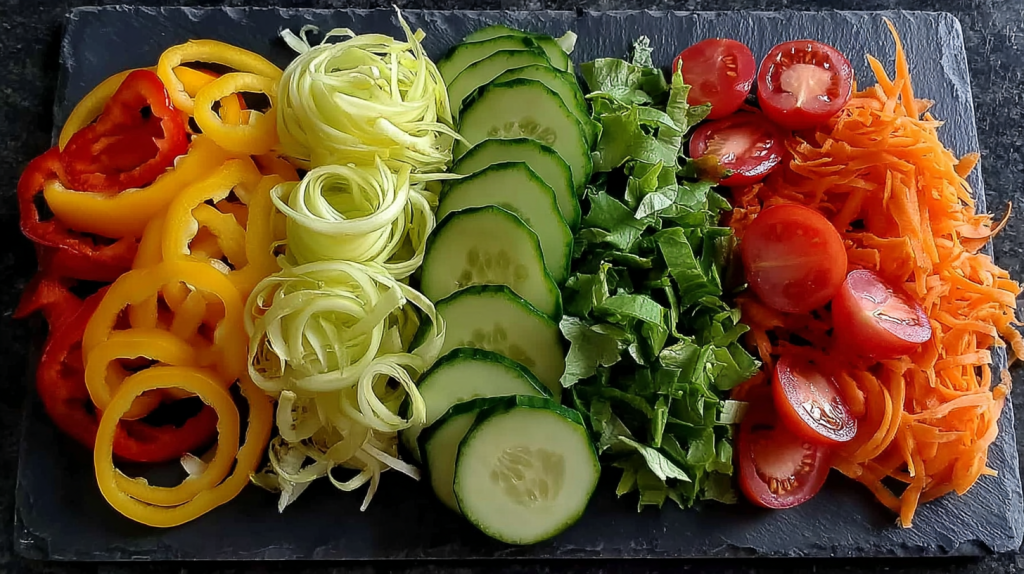
Pre-cut vegetables are convenient and save time – yet scientific research reveals a surprising health risk. As soon as you prepare chopped vegetables such as carrots and celery, or slice onions, the plants lose their natural plant defence barrier. Within just a few days, bacterial growth develops, producing pro-inflammatory endotoxins – even under proper refrigeration. Studies show that this modern trend towards convenience food produce is linked to increased oral endotoxin exposure, which can partially negate the valuable anti-inflammatory benefits of fresh veg.
Table of Contents
- Key Takeaways
- What Are Endotoxins?
- The Natural Plant Defence Barrier
- Pre-Cut Produce Bacteria and Chopped Vegetables
- Studies: Low- vs High-Endotoxin Diets
- The Onion Study: Are Pre-Cut Vegetables Safe?
- Why Are Endotoxins Problematic?
- How to Store Chopped Vegetables Correctly
- Practical Everyday Tips
- Frequently Asked Questions
- Scientific References
Key Takeaways
- Endotoxins trigger inflammation: Structural components of Gram-negative bacteria such as E. coli that can provoke systemic inflammation throughout the body.
- Highest endotoxin levels in meat: Meat and dairy products contain the highest concentrations of endotoxins, whilst fresh fruit and vegetables contain the lowest.
- Natural plant defence barrier: Intact plants possess a protective outer layer that prevents bacteria from penetrating their inner tissues.
- Barrier compromised by slicing: As soon as vegetables are cut, bacteria can enter and multiply – even during domestic refrigeration.
- Endotoxin accumulation during storage: Pre-cut carrots and onions produce progressively more endotoxins day by day due to ongoing bacterial growth.
- 12% reduction in inflammation: One week on a low-endotoxin diet (fresh vegetables, whole cuts of meat) reduced white blood cell counts by 12%.
- 14% increase in inflammation: Just four days on a high-endotoxin diet (minced meat, pre-cut vegetables) increased inflammatory markers by 14%.
- Onion study proves the difference: Freshly sliced onions significantly reduced inflammatory markers, whereas pre-cut onions showed no beneficial effect.
- Endotoxins are heat-stable: Boiling for even two hours does not destroy endotoxins – they retain their pro-inflammatory potency.
- Cutting your own is healthier: Whilst eating pre-cut vegetables is better than eating no vegetables at all, preparing whole produce yourself maximises the health benefits.
What Are Endotoxins?
Endotoxins are structural components of the outer cell membrane of Gram-negative bacteria, such as Escherichia coli (E. coli). Chemically, they are lipopolysaccharides (LPS) – complex molecules composed of lipid and polysaccharide chains. When bacteria die, these components are released and can provoke powerful immune reactions inside the human body.
The endotoxin theory was originally developed to explain how a single meal of sausage and egg muffins could impair arterial function within a matter of hours. Certain foods harbour high bacterial loads – particularly minced meat. The hypothesis was that the endotoxins within the food itself trigger the acute inflammation.
However, critics argued that our large intestine already houses countless bacteria – roughly a kilogram of pure bacterial mass. Up to 30 grams of endotoxins may reside in the gut microbiome, whereas a lethal intravenous dose is only a few micrograms. How could a tiny amount of dietary endotoxin make any real difference?
The answer lies in compartmentalisation: location is everything. Faecal bacteria are harmless within the colon, but they should never enter the bloodstream or be ingested orally – particularly alongside dietary fats, which can enhance the absorption of endotoxins across the small intestine.
Are Endotoxins Heat-Resistant?
A notable characteristic of endotoxins is their extreme heat stability. They can withstand boiling for two full hours without losing their capacity to trigger inflammation. Thorough cooking will kill all living bacteria, but the endotoxins they have already produced remain biologically active. Just as you cannot “cook the dirt out of spoiled meat”, bacterial endotoxins cannot simply be neutralised by heat.
The Natural Plant Defence Barrier
Fresh fruit and vegetables naturally exhibit the lowest endotoxin levels – but this applies only to intact, uncut produce. The majority of spoilage organisms cannot penetrate the surface of the plant and therefore cannot reach the inner tissues. This explains why fruit and vegetables can sit in the sun in a field all day without rapidly rotting.
This natural plant defence barrier consists of several key components:
- Cuticle: A waxy outer coating that prevents moisture loss and locks out micro-organisms
- Cell walls: Robust cellulose structures that provide mechanical protection
- Phytochemicals: Antimicrobial compounds that actively fend off bacteria and fungi
- Low pH: Many fruits and vegetables maintain an acidic pH that suppresses bacterial proliferation
However, once this defence barrier is damaged by slicing, bacteria gain direct access to the nutrient-rich inner tissues. Within a few days, the produce begins to spoil and loses its freshness – even when kept chilled.
Why Don’t Intact Plants Spoil Quickly?
The resilience of intact plants against microbial decay is remarkable. Whilst minced meat can spoil within hours at room temperature, whole apples, carrots, or cabbages can remain fresh for weeks when stored in cool conditions. This natural shelf life allows farmers to harvest and transport produce without requiring immediate refrigeration at every stage.
The combination of a physical barrier, biochemical defences, and structural integrity makes whole, uncut vegetables an inhospitable environment for most pathogenic and spoilage bacteria.
Pre-Cut Produce Bacteria: Bacterial Growth in Chopped Vegetables
What does this mean for the convenience food options widely available in supermarkets today? Whilst endotoxins are virtually undetectable in unprocessed produce, cutting vegetables and damaging their protective outer skin dramatically weakens their resistance to microbial contamination.
Scientific investigations demonstrate a clear timeline: freshly prepared chopped vegetables, such as carrots and celery, start with undetectable endotoxin levels. Yet day by day – even inside a domestic fridge – bacterial growth progresses, and with those bacteria come endotoxins.
Although endotoxin concentrations in pre-cut vegetables do not reach the extreme levels found in processed meat products, they are far from negligible. The crucial question is: are these differences significant enough to exert a measurable impact on human health?
How Quickly Do Bacteria Grow After Cutting Vegetables?
The rate of bacterial growth in sliced vegetables depends on several key food safety factors:
- Temperature: At typical fridge temperatures (around 5°C), growth is slowed but not halted entirely
- Moisture: Sliced produce releases cellular fluid, creating ideal conditions for bacterial multiplication
- Nutrient availability: Internal tissues are rich in sugars and micronutrients that nourish microbes
- Increased surface area: More exposed cut surfaces provide more entry points and territory for bacteria
- Initial bioburden: The baseline level of bacterial contamination introduced during industrial processing and packaging
Research demonstrates that even under optimal refrigeration, the bacterial load on pre-cut produce can increase by 10 to 100 times within 3 to 5 days. As bacterial numbers climb, endotoxin concentrations rise in tandem.
Studies: Low- vs High-Endotoxin Diets
To evaluate the real-world impact, researchers conducted an intervention study. What happens when individuals switch between a diet designed to have low endotoxin exposure and one containing higher levels of dietary endotoxins?
Participants transitioned from whole cuts of meat (such as steaks) and intact whole fruit and vegetables to a diet containing more minced meat, pre-cut vegetables, and ready-made convenience meals.
Results of the Low-Endotoxin Diet:
After just one week on the lower-endotoxin diet, participants’ white blood cell counts – a primary clinical marker of systemic inflammation – dropped by an impressive 12 per cent.
Results of the High-Endotoxin Diet:
Conversely, after just four days on the higher-endotoxin diet, markers of inflammation rose by 14 per cent. In addition, participants on the lower-endotoxin regimen lost around 700 grams of body weight and saw a reduction in waist circumference.
Was It Truly Down to Endotoxins?
There was, however, a methodological question mark: the two diets were not entirely identical in nutritional composition. Participants on the high-endotoxin diet appeared to consume more cheese and processed meats overall, and potentially ingested more food additives from ready meals. How could scientists be certain that endotoxins from pre-cut produce were driving the effect?
This is where the targeted onion study comes in – an elegant clinical trial designed to answer that exact question.
The Onion Study: Are Pre-Cut Vegetables Safe?
A further study was specifically designed to compare two meals that differed exclusively in their content of bacterial by-products, whilst remaining nutritionally identical in every other respect. Researchers compared freshly sliced onions with pre-cut onions that had been refrigerated for several days. Crucially, the pre-cut onions were not rotten or visibly spoiled – they were well within their stated use-by date.
Did the freshness of the preparation make a difference? The findings were striking:
Freshly Chopped Onions:
Within three hours of consumption, the meal containing freshly prepared onions led to significant reductions across several inflammatory markers. This is precisely what fresh vegetables are supposed to do: calm systemic inflammation.
Pre-Cut Onions:
However, these anti-inflammatory benefits were completely absent following the consumption of pre-cut onions. For instance, whilst one inflammatory marker dropped significantly after eating freshly cut onions, the exact same quantity of pre-cut onions produced no measurable improvement three hours post-consumption.
An Important Distinction:
The pre-cut onions did not actively provoke higher inflammation in the way high-fat processed meats or dairy might. However, they appeared to extinguish the natural therapeutic, anti-inflammatory properties of the onion itself.
This finding is particularly noteworthy because the trial utilised a nutritionally matched meal – the sole variable was the shelf life interval between cutting vegetables and eating them. The bacterial endotoxins that accumulated during cold storage were sufficient to blunt the vegetable’s health-promoting properties.
Why Are Endotoxins Problematic? Why Avoid Pre-Cut Vegetables
Endotoxins trigger an inflammatory cascade within the body. When these bacterial components cross from the gut into the bloodstream, the immune system identifies them as an active microbial threat and mobilises defence mechanisms:
- Immune cell activation: Macrophages and circulating white blood cells become stimulated
- Cytokine release: Pro-inflammatory signalling molecules such as TNF-alpha, IL-6, and IL-1 are released
- Systemic inflammation: The inflammatory response can spread throughout the cardiovascular system and peripheral tissues
- Oxidative stress: The generation of damaging reactive oxygen species increases
- Vascular function: Endothelial function within blood vessels is temporarily compromised
Long-Term Health Effects:
Persistent, low-grade systemic inflammation fuelled by recurrent endotoxin exposure is implicated in several long-term health concerns:
- Cardiovascular disease
- Metabolic syndrome
- Type 2 diabetes
- Inflammatory bowel conditions and altered gut microbiome balance
- Accelerated cellular ageing
Whilst a single meal containing modest levels of endotoxins will not cause lasting harm, the cumulative burden over months and years of relying heavily on convenience chopped vegetables and ready-to-eat produce can have meaningful consequences for long-term health.
How to store chopped vegetables
If you want to prepare and store chopped vegetables in advance, there are several food safety strategies to minimise bacterial growth and the formation of endotoxins:
Refrigeration and temperature are crucial:
- Immediate refrigeration: Chill chopped vegetables immediately after cutting (below 5°C) to protect their shelf life
- Short storage times: Keep for a maximum of 1–2 days rather than 5–7 days
- Consistent chilling: Do not break the cold chain at any point
Maintain strict hygiene:
- Clean chopping boards: Use separate boards for vegetables and raw meat
- Sharp knives: Clean, precise cuts cause less cellular damage to the plant defence barrier
- Washed hands: Wash hands thoroughly before and after cutting vegetables
- Airtight containers: Minimise oxidation and drying out
Optimise cutting shapes:
- Larger pieces: The larger the pieces, the less surface area exposed to bacterial growth
- Dicing rather than grating: Chop carrots into cubes instead of grating them
- Slices rather than thin strips: Opt for thicker slices with cucumbers and courgettes
Alternative: Blanching:
Briefly blanching (30–60 seconds in boiling water) can sterilise the outer surface and inactivate enzymes that accelerate spoilage. However, this may also reduce heat-sensitive nutrients and alter texture.
Practical tips for everyday life: are pre-cut vegetables safe?
The scientific evidence surrounding endotoxins and pre-cut produce bacteria raises an essential question: what is actually practical in everyday life?
The pragmatic approach:
Eating pre-cut convenience food is definitely better than eating no vegetables at all. When the choice is between convenience produce and no vegetables, the answer is clear: choose the convenience food. The overall health benefits of vegetables for your body and gut microbiome — even with slightly elevated endotoxin levels — far outweigh avoiding them altogether.
The optimal strategy: why avoid pre-cut vegetables when possible
Nevertheless, research shows clearly: cutting vegetables fresh at home is the healthiest approach. If you have the time and ability to prepare fresh chopped vegetables and consume them within a few hours, you maximise the anti-inflammatory benefits without triggering systemic inflammation.
Practical compromises:
- Same-day meal prep: Chop vegetables in the morning to use that evening
- Buy semi-prepared: Buy whole carrots and celery to peel and slice yourself, rather than buying pre-grated packs
- A mixed strategy: Prepare base vegetables yourself, and buy time-intensive cuts (such as fine julienne) pre-made
- Frozen vegetables: Frozen produce is flash-frozen directly after harvesting and often contains fewer endotoxins than pre-cut vegetables stored in the fridge for days
Particularly vulnerable produce:
Certain types of vegetables are far more susceptible to bacterial growth and spoilage than others:
- High susceptibility: Bagged salad leaves, spinach, mushrooms, chopped tomatoes
- Moderate susceptibility: Peppers, cucumbers, courgettes
- Lower susceptibility: Carrots and celery, cabbage (due to a lower pH value or firmer physical structure)
Frequently asked questions
How should you store chopped vegetables?
Chopped vegetables should be stored immediately in airtight containers at below 5°C. Use clean chopping boards and sharp knives when cutting vegetables to minimise damage to the cellular plant defence barrier. Storing for a maximum of 1–2 days is ideal. The larger the vegetable pieces, the smaller the exposed surface area for bacterial growth. Thoroughly wash your hands and utensils before cutting to reduce the initial bacterial load and maintain food safety.
Can you freeze chopped vegetables?
Yes, freezing chopped vegetables is a sensible alternative to chilled storage. Blanch the vegetables for 1–2 minutes before freezing to inactivate enzymes. Deep-freezing at -18°C or colder completely stops bacterial growth. Frozen vegetables do not develop endotoxins during storage. Use freezer-proof containers or bags and press out excess air. Shelf life: 6–12 months in a constant deep freeze.
Wissenschaftliche Quellen
- Vogel RA, Corretti MC, Plotnick GD. “Effect of a single high-fat meal on endothelial function in healthy subjects.” Am J Cardiol. 1997;79(3):350-4.
- Wassenaar TM, Zimmermann K. “Lipopolysaccharides in Food, Food Supplements, and Probiotics: Should We be Worried?” Eur J Microbiol Immunol (Bp). 2018;8(3):63-69.
- Erridge C, Attina T, Spickett CM, Webb DJ. “A high-fat meal induces low-grade endotoxemia: evidence of a novel mechanism of postprandial inflammation.” Am J Clin Nutr. 2007;86(5):1286-92.
- Kagan JC. “Immunology. Sensing endotoxins from within.” Science. 2013;341(6151):1184-5.
- Erridge C. “The capacity of foodstuffs to induce innate immune activation of human monocytes in vitro is dependent on food content of stimulants of Toll-like receptors 2 and 4.” Br J Nutr. 2011;105(1):15-23.
- Jay JM, Margitic S, Shereda AL, Covington HV. “Determining endotoxin content of ground beef by the Limulus amoebocyte lysate test as a rapid indicator of microbial quality.” Appl Environ Microbiol. 1979;38(5):885-90.
- Herieka M, Faraj TA, Erridge C. “Reduced dietary intake of pro-inflammatory Toll-like receptor stimulants favourably modifies markers of cardiometabolic risk in healthy men.” Nutr Metab Cardiovasc Dis. 2016;26(3):194-200.
- Ghoshal S, Witta J, Zhong J, De Villiers W, Eckhardt E. “Chylomicrons promote intestinal absorption of lipopolysaccharides.” J Lipid Res. 2009;50(1):90-7.
- Giombelli A, Gloria MB. “Prevalence of Salmonella and Campylobacter on broiler chickens from farm to slaughter and efficiency of methods to remove visible fecal contamination.” J Food Prot. 2014;77(11):1851-9.
- Erridge C. “Accumulation of stimulants of Toll-like receptor (TLR)-2 and TLR4 in meat products stored at 5 °C.” J Food Sci. 2011;76(2):H72-9.
- Tournas VH. “Spoilage of vegetable crops by bacteria and fungi and related health hazards.” Crit Rev Microbiol. 2005;31(1):33-44.