
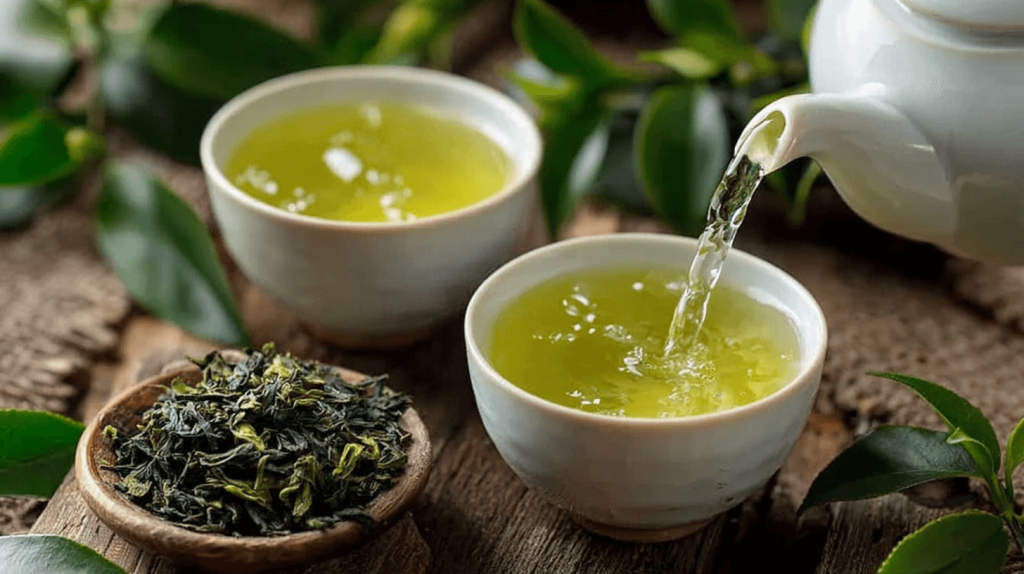
Why do people across the globe drink billions of cups of tea every single day? It is not merely for the caffeine – coffee contains far more. Nor is it purely down to flavour – many might otherwise choose peppermint or fruit infusions. The real answer lies in a remarkable compound found almost exclusively in the tea plant Camellia sinensis: L-theanine. This unique amino acid measurably alters our brainwaves to produce a state of relaxed alertness that is otherwise achieved only through meditation. From sharpening cognitive function to protecting cardiovascular health, the proven L-theanine benefits of drinking green tea are backed by a robust and growing body of clinical research.
Scientific studies demonstrate that drinking green tea can produce neurological effects on brainwaves comparable to decades of dedicated meditation practice. At the same time, it lowers blood pressure and cholesterol, supports heart health, and aids weight management. The distinctive synergy between L-theanine and caffeine makes green tea the ideal beverage for calm, sustained concentration without jitteriness.
Table of Contents
- Key Takeaways
- L-Theanine Benefits: The Unique Amino Acid in Green Tea
- What Are Brainwaves?
- Alpha Waves: Relaxed Alertness
- Meditation or Tea? The Scientific Comparison
- EGCG and Catechins: Heart Protection from Green Tea and Matcha
- Green Tea for the Heart and Blood Vessels
- Green Tea for Weight Loss
- Dosage and Preparation
- Safety and Side Effects
- Frequently Asked Questions
- Scientific References
Key Takeaways
- Unique L-theanine source: L-theanine occurs in concentrated amounts in only two natural sources: the tea plant Camellia sinensis and the rare bay bolete mushroom. All true teas (green, black, oolong, and white) originate from this single botanical species.
- Alpha waves akin to meditation: Consuming 1–2 cups of tea (240–480 ml) produces measurable increases in alpha brainwaves on an EEG – similar to the patterns observed during meditation. Tea can stimulate neural effects that would otherwise take up to 30 years of meditation practice to cultivate.
- Four main brainwave types: The brain generates delta waves (deep sleep, ~1 Hz), theta waves (drowsiness, ~5 Hz), alpha waves (relaxed alertness), and beta waves (active, stressed thinking). Alpha waves arise during calm, attentive wakefulness.
- 90 minutes vs. a single cup: Without aids, it takes roughly 90 minutes of dedicated rest in a peaceful environment to generate significant alpha wave activity. A cup of tea accelerates this neurological shift considerably.
- The perfect synergy: The balanced combination of L-theanine (relaxation) and caffeine (alertness) in tea creates a state of relaxed alertness – sharp and focused, yet thoroughly composed.
- EGCG as the primary active compound: Epigallocatechin gallate (EGCG) is the most abundant catechin in green tea. A single cup provides up to 200 mg of EGCG, delivering potent antioxidant, cardioprotective, and anti-inflammatory properties.
- Cardiovascular health benefits: Green tea reduces blood pressure by 2–3 mmHg, improves cholesterol profiles, enhances endothelial blood vessel function, and reduces stroke risk by approximately 7%. Leading heart health organisations, including the British Heart Foundation, recognise the cardiovascular benefits of regular tea drinking.
- Metabolism and weight management: Green tea stimulates metabolic rate, supporting fat oxidation and thermogenesis. Studies show moderate support for healthy weight loss – not an overnight miracle, but a proven dietary ally.
- Optimal daily intake: 1–2 cups daily are recommended for baseline wellbeing, whilst 3–4 cups provide optimal cardiovascular protection. More is not necessarily better.
- Exercise caution with concentrated extracts: Drinking green tea as an infusion is exceptionally safe. However, high-dose green tea extracts in capsule form (exceeding 800 mg EGCG daily) can place stress on the liver. Healthcare professionals and consumer watchdogs advise caution with concentrated supplements.
L-Theanine Benefits: The Unique Amino Acid in Green Tea
Out of more than 287,655 known plant species on our planet, the tea plant Camellia sinensis is virtually the only one containing meaningful quantities of L-theanine. This amino acid is the primary reason why tea remains the most widely consumed beverage in the world after water – ahead of coffee, despite coffee containing substantially higher levels of caffeine.
L-theanine was first isolated from tea leaves by Japanese scientists in the 1950s. Its name originates from Thea sinensis, an older botanical classification for the tea bush. Outside of tea, L-theanine is found in concentrated amounts in only one other living organism: the bay bolete (Imleria badia), an unusual wild mushroom with pores rather than gills. As this woodland mushroom hardly pairs well with a morning cuppa or warm crumpets, it never caught on as a popular dietary source of theanine.
How does L-theanine act on the brain? The amino acid readily crosses the blood-brain barrier, directly influencing central neurotransmitter pathways. It increases concentrations of GABA (gamma-aminobutyric acid), serotonin, and dopamine – chemical messengers intrinsically linked with relaxation, elevated mood, and mental focus.
The measurable outcome is clearly visible in cortical brainwave activity: L-theanine stimulates alpha waves across the brain. This calming effect begins within 30 to 40 minutes of drinking green tea and persists for several hours. Crucially, unlike pharmaceutical sedatives, L-theanine does not induce drowsiness or mental fog; rather, it produces clear-headed, relaxed alertness and supports overall cognitive function.
What Are Brainwaves?
The human brain is electrically active at all times. Billions of neurons communicate continuously through microscopic electrical impulses. This neuroelectrical activity can be precisely measured using an electroencephalogram (EEG), where small sensors placed on the scalp detect and record rhythmic voltage fluctuations.
Brain activity displays distinct rhythmic oscillations categorised into specific frequency bands:
Delta waves (0.5–4 Hz)
The slowest brainwaves, oscillating at roughly one cycle per second. They predominate during deep, restorative sleep when conscious awareness is completely suspended. In healthy, conscious adults, delta waves do not normally manifest unless there is severe brain pathology.
Theta waves (4–8 Hz)
At roughly 5 cycles per second, theta waves are slightly faster than delta rhythms. They appear during light dozing, daydreaming, or in early sleep stages. Theta waves are also prominently observed during REM dreaming and states of profound meditation.
Alpha waves (8–13 Hz)
The hallmark frequency of calm wakefulness. Alpha waves emerge when we are relaxed yet fully attentive – such as sitting comfortably with closed eyes during mindfulness practice. They signify a tranquil yet alert mental state: clear, aware, and effortlessly composed.
Beta waves (13–30 Hz)
The fastest of the four primary frequency bands. Beta waves dominate during intense concentration, active problem-solving, high-stress situations, and mental strain. This is the state in which most adults spend the majority of their waking hours: hyper-vigilant, stressed, and locked into constant hustle and bustle.
Our fast-paced modern lifestyle keeps many people trapped in chronic beta dominance. Non-stop sensory stimulation from digital screens, workplace demands, and daily stressors prevents the brain from shifting down into the restorative alpha state. The consequences are widespread: inner restlessness, difficulty concentrating, and mental fatigue.
Alpha Waves: Relaxed Alertness
Alpha waves represent an optimal cognitive state: fully awake and attentive, yet calm and unhurried. In this frequency range, the brain operates with maximum neural efficiency, unburdened by the friction of stress or acute anxiety.
How does one typically achieve alpha dominance? The traditional route involves deep physical relaxation in a serene setting. Clinical research shows that it takes around 90 minutes in a peaceful environment for prominent alpha activity to register on an EEG – identifiable as warm yellow and red bands on frequency mapping scans.
Buddhist monks with decades of meditation practice can access this neural state almost instantaneously. Remarkably, they can sustain robust alpha activity even with their eyes wide open – a skill that is exceptionally difficult for untrained individuals, as visual inputs typically trigger immediate beta waves. The deeper the meditative absorption, the stronger and more synchronised the alpha waves become.
For most people juggling everyday commitments, achieving alpha dominance unassisted is a genuine hurdle. Setting aside 90 minutes for quiet contemplation during a busy working day is rarely feasible, and committing to 30 years of monastic meditation training is even less practical. This is precisely where drinking green tea comes to the fore.
In controlled clinical trials, participants were given either plain water (control group) or a dose of L-theanine equivalent to 1–2 cups of tea (240–480 ml). The findings were definitive: the tea group exhibited a marked rise in occipital and parietal alpha wave activity on EEG readouts, whereas the water group showed no change whatsoever.
This biological reaction explains why tea brewed from the Camellia sinensis plant has been treasured for millennia. Harnessing these proven L-theanine benefits offers a natural shortcut to alpha wave dominance – helping to soothe mental tension without years of meditation practice, simply through enjoying a freshly brewed cup of tea.
Meditation or Tea? The Scientific Comparison
The question sounds provocative: 30 years of meditation, or simply drinking green tea? In reality, neuroimaging and EEG recordings reveal striking parallels between the brainwave dynamics seen during mindfulness meditation and those measured after consuming tea.
Meditation is a time-tested practice with well-documented physical and mental health benefits. Regular practice reduces perceived stress, lowers blood pressure, enhances cognitive function, and promotes emotional balance. The underlying mechanism is clear: meditation shifts cortical brain activity away from agitated beta frequencies (stress) towards soothing alpha rhythms (relaxation) and, in deeper states, theta waves.
For beginners, mastering meditation requires years of consistent effort. Even experienced meditators typically need 10 to 20 minutes of quiet sitting before entering deeper alpha states. Monks with tens of thousands of hours of practice display exceptionally elevated alpha activity even while engaging in routine daily tasks.
Drinking green tea is not a complete replacement for meditation; the profound emotional, psychological, and spiritual insights gained from years of mindfulness practice cannot be replicated in a single mug. However, the acute neurophysiological effects on brainwaves are measurably and remarkably similar.
The ideal strategy brings both approaches together: tea helps ease the mind into contemplative practices, making relaxed alertness far more accessible during a hectic day. At the same time, regular meditation reinforces the brain’s natural ability to transition smoothly between different frequency bands.
Another key factor is that L-theanine works synergistically with mindfulness exercises. Those who drink tea prior to meditating frequently report finding it easier to settle into a state of calm, focused concentration. Because the brain is already gently primed towards alpha activity, letting go of racing thoughts and mental chatter becomes far more effortless.
EGCG and Catechins: Heart Protection from Green Tea and Matcha
Alongside L-theanine, green tea delivers a second group of bioactive plant compounds with exceptional health properties: catechins. These natural polyphenols from the flavonoid family are responsible for the majority of green tea’s impressive cardiovascular health and metabolic benefits.
The most potent catechin in green tea is epigallocatechin gallate (EGCG). A single cup of green tea yields between 50 and 200 mg of EGCG, depending on the variety, cultivation method, and infusion time. High-grade Japanese green tea cultivars, such as sencha, and stone-ground matcha are particularly concentrated sources of EGCG.
EGCG is a formidable antioxidant whose free-radical scavenging capacity significantly surpasses that of vitamins C and E. Antioxidants neutralise harmful free radicals – unstable reactive oxygen molecules that drive cellular oxidation, tissue inflammation, and accelerated biological ageing.
The physiological mechanisms of EGCG are wide-ranging and well-documented:
Vascular protection: EGCG supports the function of the endothelium – the delicate cellular monolayer lining our blood vessels. It stimulates the bio-availability of nitric oxide (NO), a vital compound that dilates blood vessels and improves arterial elasticity. As a result, blood pressure decreases and peripheral circulation to all organs improves.
Anti-inflammatory properties: Low-grade chronic inflammation plays a pivotal role in the progression of coronary heart disease, type 2 diabetes, and other long-term metabolic conditions. EGCG downregulates pro-inflammatory signalling cascades and lowers circulating inflammatory markers such as C-reactive protein (CRP) and interleukin-6.
Cholesterol management: EGCG helps reduce LDL cholesterol (often termed “bad” cholesterol) whilst maintaining healthy levels of protective HDL cholesterol. Crucially, it prevents the oxidative modification of LDL particles – a fundamental trigger in the formation of arterial plaques and atherosclerosis.
Blood glucose regulation: Catechins enhance cellular insulin sensitivity and help blunt post-meal blood sugar surges. This balancing action lowers the risk of insulin resistance and aids long-term metabolic health and weight management.
Drinking Green Tea for Heart and Cardiovascular Health
The British Heart Foundation notes that drinking green tea can be a valuable part of a heart-healthy diet. This guidance is supported by decades of epidemiological research and clinical trials consistently demonstrating positive cardiovascular outcomes.
Large-scale population studies from Japan and China – where drinking green tea is a longstanding daily habit – reveal that individuals who consume 3–4 cups of green tea daily have a significantly lower risk of cardiovascular disease. The risk of stroke falls by around 7 per cent per daily cup, whilst heart attack risk decreases by approximately 5 per cent.
Blood pressure reduction: Meta-analyses demonstrate that regular green tea consumption lowers systolic blood pressure by an average of 2–3 mmHg and diastolic blood pressure by 1–2 mmHg. Whilst this might sound modest, on a population level a reduction of just 2 mmHg could prevent thousands of strokes and heart attacks across the UK every year.
Atherosclerosis prevention: Green tea helps slow the build-up of arterial plaque. Its potent catechins prevent the oxidation of LDL cholesterol and soothe inflammation in blood vessel walls – both of which are central drivers in the development of atherosclerosis.
Optimal dosage: For cardiovascular health, 3–4 cups daily yield the most pronounced benefits. Drinking more delivers no extra protective effect and may cause sleep disruption or restlessness in caffeine-sensitive individuals.
Important: Green tea is not a replacement for conventional medical treatment in diagnosed cardiovascular conditions. For high blood pressure, elevated cholesterol, or other risk factors, medical therapy and lifestyle changes (a balanced diet, regular exercise, and smoking cessation) are paramount. Green tea can offer complementary support, but should never serve as a standalone cure.
Green Tea for Weight Loss
Green tea is often marketed as a miracle slimming solution. The scientific reality is more grounded: green tea can support weight loss, but its effects are modest and only function alongside a calorie deficit and regular physical activity.
Metabolic support: EGCG and caffeine act synergistically to stimulate metabolic rate. Research demonstrates an increase in energy expenditure of 3–4 per cent – equating to roughly 60–80 additional calories burned per day. Over weeks and months, this effect can meaningfully accumulate.
Fat burning: Green tea encourages fatty acid oxidation, prompting the body to utilise stored fat for fuel. This effect is especially pronounced during physical activity: individuals who drink green tea prior to working out can burn up to 17 per cent more fat during moderate exercise.
Thermogenesis: Catechins enhance the body’s natural heat production. This thermogenic process uses energy and directly contributes to a higher daily calorie burn.
Appetite regulation: Some people report that green tea helps curb food cravings. Scientific evidence remains mixed, suggesting this is largely an individual response.
Realistic expectations: In controlled trials over 12 weeks, participants drinking green tea lost roughly 1–2 kg more than control groups. Whilst statistically significant, it is not a dramatic transformation. Green tea is a practical supportive aid, not a magic fix.
Overall energy balance remains the decisive factor. Without dietary adjustments and regular movement, green tea alone will achieve negligible weight loss. As part of a comprehensive lifestyle approach, however, it can help streamline and accelerate your progress.
Green tea extracts for weight loss: Exercise caution with concentrated green tea slimming pills. Whilst brewed tea is entirely safe, extracts containing over 800 mg of EGCG can cause liver toxicity. UK and European health watchdogs explicitly warn against such high-dose supplements. Natural brewed tea remains the safer, gentler choice.
Dosage and Preparation: Green Tea and Matcha
Recommended intake: 1–2 cups of green tea daily provide a solid baseline to enjoy general wellness and l theanine benefits. For optimal cardiovascular health outcomes, 3–4 cups deliver the strongest evidence-backed results. Consuming more than 5 cups provides no added advantage and may supply too much caffeine for sensitive individuals.
Proper brewing: How you prepare your tea profoundly impacts the extraction and concentration of beneficial compounds like L-theanine and EGCG from the Camellia sinensis leaves.
- Water temperature: 70–80°C is optimal. Boiling water (100°C) scalds delicate catechins and results in an unpleasantly bitter brew. Allow freshly boiled water to cool for 5–10 minutes before pouring.
- Steeping time: 2–3 minutes for a smooth, gentle flavour and moderate caffeine release. 5 minutes yields maximum catechin extraction, albeit with a more astringent taste.
- Tea quality: Whole loose-leaf tea is markedly superior to standard tea bags. Japanese Sencha, Gyokuro, and high-grade matcha provide especially dense concentrations of EGCG and the amino acid L-theanine.
- Organic certification: Conventional tea cultivation frequently involves agricultural sprays. Opting for certified organic green tea minimises your exposure to pesticide residues.
Timing: Drinking green tea in the morning or early afternoon is ideal. Because caffeine remains active in your system for 4–6 hours, drinking it late in the evening may disrupt sleep architecture. Anyone sensitive to stimulants should have their final cup by the early afternoon.
With or without milk? Cow’s milk contains proteins that bind to tea catechins, reducing their bioavailability and absorption. If you drink green tea for targeted health benefits, it is best enjoyed plain. Conversely, adding a squeeze of fresh lemon juice enhances EGCG absorption thanks to its vitamin C content.
Safety and L-Theanine Side Effects
Green tea enjoyed as a traditional beverage has an outstanding safety record. Millennia of cultural use across Asia and decades of modern clinical investigation show no significant health risks with moderate daily consumption (1–5 cups).
Caffeine sensitivity: A typical mug of green tea contains 30–50 mg of caffeine – roughly half the amount found in a standard cup of instant coffee. In very high doses, or for those with low caffeine tolerance, potential l-theanine side effects associated with tea’s caffeine component include restlessness, mild palpitations, insomnia, or an upset stomach.
Iron absorption: Catechins can bind to non-haem iron in the digestive tract, hindering its absorption from plant-based foods. Individuals with anaemia or low iron stores should avoid drinking green tea directly alongside meals, maintaining a 1–2 hour interval instead.
Pregnancy: The NHS advises pregnant women to limit total caffeine intake to no more than 200 mg per day from all sources. Whilst 1–2 cups of green tea daily comfortably sit within these limits, higher consumption could potentially affect birth weight.
Medication interactions: Green tea contains vitamin K and active polyphenols that can interact with anticoagulant medications (such as warfarin), blood pressure drugs, and certain antibiotics. If you take prescription medicines regularly, discuss your daily tea habits with your GP or pharmacist.
Green tea extract supplements – caution required: While standard tea is exceptionally safe, high-dose EGCG extracts in dietary capsules have been linked to liver damage. The UK Food Standards Agency and European safety authorities recommend against consuming supplement doses exceeding 800 mg of EGCG per day due to documented cases of hepatotoxicity. Drinking natural tea remains far safer – even 5 generous cups provide a fraction of the EGCG found in these problematic high-dose capsules.
Häufig gestellte Fragen
What are the primary l theanine benefits and health effects of green tea?
Green tea increases alpha waves in the brain via L-theanine, promoting relaxed alertness and cognitive function without sedation. EGCG catechins lower blood pressure (by 2–3 mmHg) and cholesterol, supporting overall cardiovascular health and fat burning. Drinking 3–4 cups daily reduces stroke risk by 7% and heart attack risk by 5%.
What are the l-theanine benefits for anxiety and mental focus?
Green tea provides mental benefits (alpha waves, calm concentration), cardiovascular protection (blood pressure reduction, vascular health), metabolic support (metabolic rate +3–4%, fat oxidation), and rich antioxidant defence. The natural pairing of the amino acid L-theanine and caffeine fosters focused clarity and relaxed alertness, making it widely favoured alongside meditation and cognitive work without causing jitteriness or anxiety.
Does green tea support weight loss?
Green tea increases energy expenditure by 3–4% (~60–80 kcal/day) and enhances fat oxidation during exercise by up to 17%. In 12-week trials, participants achieved 1–2 kg greater weight loss than non-tea drinkers. However, it only works as an adjunct to a healthy calorie deficit and exercise, rather than a standalone cure.
Scientific Sources
- Wong M, et al (2022). Phytochemical profile of differently processed tea.
- Pan SY, et al (2014). Historical perspective of traditional indigenous medical practices.
- Shen FM, Chen HW (2008). Element composition of tea leaves and tea infusions.
- Nobre AC, et al (2008). L-theanine, a natural constituent in tea, and its effect on mental state.
- Okello EJ, et al (2015). Effects of green and black tea consumption on brain wave activities.
- Banquet JP (1973). Spectral analysis of the EEG in meditation.
- Katyal S, Goldin P (2021). Alpha and theta oscillations are inversely related to progressive levels of meditation depth.
Sources on the Topic
Review articles, meta-analyses, and controlled clinical trials related to this article. Every link was checked for accessibility on 16/08/2026.
- Dashwood R, Visioli F.: l-theanine: From tea leaf to trending supplement – does the science match the hype for brain health and relaxation?. 2025. PubMed 39854799. DOI: 10.1016/j.nutres.2024.12.008.
- Capasso L, De Masi L, Sirignano C et al.: Epigallocatechin Gallate (EGCG): Pharmacological Properties, Biological Activities and Therapeutic Potential. Molecules (Basel, Switzerland) 2025. PubMed 39942757. DOI: 10.3390/molecules30030654.
- Rovaldi E, Di Donato V, Paolino G et al.: Epigallocatechin-Gallate (EGCG): An Essential Molecule for Human Health and Well-Being. 2025. PubMed 41009815. DOI: 10.3390/ijms26189253.
- Chieng D, Kistler PM: Coffee and tea on cardiovascular disease (CVD) prevention. Trends in cardiovascular medicine 2022. PubMed 34384881. DOI: 10.1016/j.tcm.2021.08.004.
- Willems MET, Şahin MA, Cook MD et al.: Matcha Green Tea Drinks Enhance Fat Oxidation During Brisk Walking in Females. International journal of sport nutrition and exercise metabolism 2018. PubMed 29345213. DOI: 10.1123/ijsnem.2017-0237.