Muscle strength is about far more than just having large biceps – it is one of the most vital factors for a long, healthy, and independent life. This makes an emerging area of research all the more fascinating: bacteria living in our digestive tract appear to play a significant role in our muscular health. Scientists now refer to this communication channel as the gut muscle axis. Here is what a specific bacterium has to do with it, and how you can nourish it through your diet.
Key takeaways
- Greater muscle strength (measured by grip strength) is linked to an up to 31 per cent lower mortality risk.
- Alongside exercise and nutrition, the gut microbiota also influences muscle function via the so-called gut muscle axis.
- A bacterium known as Roseburia inulinivorans has been linked in studies to higher muscle strength.
- In mouse studies, this bacterium increased grip strength by up to 30 per cent – without any training.
- The bacterium feeds on inulin, a prebiotic dietary fibre found in chicory, onions, garlic, and asparagus.
Why muscle strength is vital for your health
Muscle strength is one of the most reliable markers of overall health and longevity. A meta-analysis comprising data from more than two million people demonstrates that higher muscle strength – measured by grip strength – is associated with an up to 31 per cent lower risk of all-cause mortality compared to lower muscle strength.
As we get older, many people lose muscle mass and strength – a condition known as sarcopenia. Historically, physical activity, resistance training, and dietary protein have been the primary focus of prevention. However, emerging research indicates that the gut plays a key role as well.
The gut muscle axis
Whilst many people are familiar with the gut-brain axis, the discovery that gut bacteria communicate directly with our muscles is relatively new. Through metabolic by-products like short-chain fatty acids such as butyrate, inflammatory signalling pathways, and nutrient absorption, the gut microbiota can actively influence muscular performance. This intricate biological crosstalk is what scientists term the gut muscle axis.
Roseburia inulinivorans: Gut bacteria linked to muscle strength
In one study, researchers analysed stool samples from 90 young, sedentary individuals (aged 18–25) alongside 33 older adults (aged over 65). One particular bacterium stood out: Roseburia inulinivorans. Among the younger participants, higher gut levels of this microbe correlated with greater grip strength – with similar positive trends observed in leg press and bench press performance, as well as maximal oxygen uptake (VO2 max, or cardiovascular endurance).
In older adults, the effect was even more pronounced: individuals with detectable levels of the bacterium exhibited roughly 29 per cent higher grip strength than those without detectable amounts.
From correlation to causation: The mouse trials
A correlation does not automatically prove causation – naturally stronger individuals often lead healthier lifestyles overall. To investigate causality, researchers tested the bacterium in mouse models. Over an eight-week period, mice were administered Roseburia inulinivorans. The results showed:
- Up to 30 per cent greater forelimb grip strength compared to the control group
- Larger muscle fibre cross-sectional area
- A higher proportion of fast-twitch muscle fibres, which are responsible for explosive and forceful movements
Remarkably, the mice did not consume more food or engage in additional physical activity – the bacterium alone drove the improvements.
How gut bacteria affect muscle growth and metabolism
Researchers identified evidence that the bacterium positively influences several metabolic pathways essential for muscle protein synthesis and maintenance:
- Amino acid metabolism: Building blocks required for muscle protein synthesis were more readily available and utilised more efficiently.
- Purine metabolism: Critical for the synthesis of ATP, which supports cellular energy and optimal mitochondrial function.
- Pentose phosphate pathway: A protective cellular defence system that shields cells against oxidative stress and assists with tissue repair.
In summary: more essential building blocks, improved energy availability, and enhanced cellular protection.
Microbiome and muscle: How to nourish the bacterium
Roseburia inulinivorans is not currently available in standard probiotic supplements or capsules. The practical approach is different: while almost everyone naturally hosts this bacterium, many carry only tiny quantities. Fortunately, targeted nutrition can stimulate its growth.
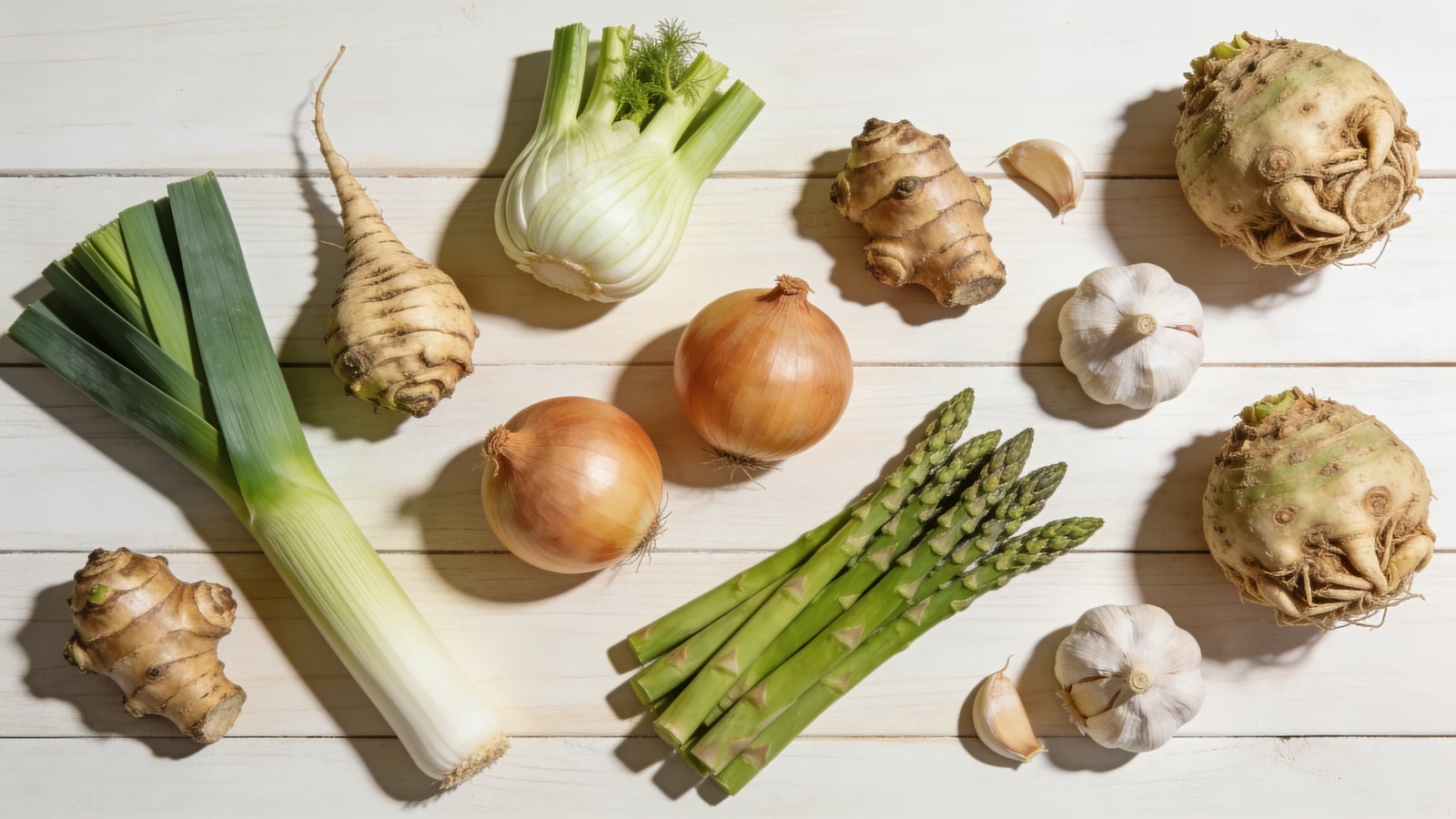
As the name suggests, the bacterium feeds on inulin, a prebiotic dietary fibre. Foods particularly rich in inulin include:
- Chicory
- Onions
- Garlic
- Asparagus
- Jerusalem artichokes
- Leeks
What studies on prebiotics show
Early trials indicate that selectively feeding gut bacteria delivers tangible benefits: in a randomised trial involving older adults, a prebiotic blend containing inulin increased grip strength by 17 per cent after 13 weeks. At the same time, self-reported feelings of fatigue fell by approximately 43 per cent.
Importantly, research in this area is still in its infancy, and many findings still need to be validated in large-scale human randomised controlled trials. Nevertheless, the underlying concept is compelling – microscopic gut microbes may play a decisive role in determining our muscular strength.
Summary
Muscle strength is key to maintaining a long, active, and independent life – and our gut microbiome appears to have a direct say in the matter. The bacterium Roseburia inulinivorans has been associated with greater muscular power in observational studies and substantially improved grip strength in mouse trials without any additional exercise. Although research is still evolving, there is already an actionable takeaway: nourishing your gut flora with inulin-rich prebiotic dietary fibre from chicory, onions, garlic, and asparagus benefits both your digestive system and your muscles. However, dietary prebiotics are no substitute for physical activity – muscles still require regular resistance training and mechanical load to thrive.
Frequently asked questions
Can you build muscle without training?
No. While gut bacteria can support muscle function and metabolism, building genuine muscle mass requires physical resistance and progressive overload. Mouse studies demonstrated noticeable improvements in strength, but in humans, gut microbes cannot replace regular exercise.
What is the gut muscle axis?
The gut muscle axis refers to the bidirectional communication link between gut bacteria and muscular function. Through metabolic by-products, short-chain fatty acids, and inflammatory signalling, the gut microbiome influences muscle maintenance and performance.
Which gut bacteria are linked to muscle strength?
Roseburia inulinivorans has stood out in recent research. Higher gut concentrations correlated with greater grip strength in humans, whilst in mouse trials, the bacterium increased physical strength by up to 30 per cent.
How do I get more of this bacterium?
Not through probiotic supplements, but through diet: the bacterium thrives on inulin, a prebiotic fibre found in chicory, onions, garlic, asparagus, and Jerusalem artichokes.
What is inulin?
Inulin is a soluble prebiotic dietary fibre that serves as nourishment for beneficial gut bacteria. It is found in abundance in vegetables such as chicory, onions, garlic, and asparagus.
Does this help prevent age-related muscle loss?
Potentially. Older adults tend to have lower levels of this bacterium, and clinical trials using prebiotic mixtures have shown improvements in grip strength and reduced fatigue. However, physical exercise remains the cornerstone of preventing sarcopenia.
Are probiotic capsules worth taking?
There is currently no commercially available probiotic capsule containing this specific bacterium. A far more effective strategy is to support your existing gut flora by consuming high-fibre foods rich in natural inulin.
How quickly do dietary changes take effect?
The gut microbiota can begin shifting within just a few days of changing your diet, but noticeable improvements in physical strength typically require weeks or months – clinical studies observed significant benefits after around 13 weeks.
References and sources
Reviews, meta-analyses, and controlled clinical trials relating to this article. All links were verified on 16/08/2026.
- Marchitto SA, Abbatecola G, Zeidan RS et al.: The Gut-Muscle Axis in Sarcopenia: Mechanisms, Evidence Gaps and Translational Challenges. 2026. PubMed 42193302. DOI: 10.3390/biomedicines14050976.
- Gandham A, Prokopidis K, Glavas C et al.: Impact of probiotic, prebiotic, and synbiotic supplementation on the gut microbiome in older adults with sarcopenia, obesity, and sarcopenic obesity. 2026. PubMed 41507594. DOI: 10.1007/s00198-025-07801-w.
- Gao LL, Chen Y, Dai T et al.: Gut-muscle axis crosstalk in age-related sarcopenia: mechanisms and therapeutic targets. 2025. PubMed 41480113. DOI: 10.3389/fmicb.2025.1638880.
- Ni Lochlainn M, Bowyer RCE, Moll JM et al.: Effect of gut microbiome modulation on muscle function and cognition: the PROMOTe randomised controlled trial. Nature communications 2024. PubMed 38424099. DOI: 10.1038/s41467-024-46116-y.
- Luo J.: Dietary index for gut microbiota: A new frontier in sarcopenia prevention. 2026. PubMed 42332518. DOI: 10.1097/md.0000000000049287.
- Giron M, Thomas M, Dardevet D et al.: Gut microbes and muscle function: can probiotics make our muscles stronger?. Journal of cachexia, sarcopenia and muscle 2022. PubMed 35278043. DOI: 10.1002/jcsm.12964.
- Liu C, Cheung WH, Li J et al.: Understanding the gut microbiota and sarcopenia: a systematic review. Journal of cachexia, sarcopenia and muscle 2021. PubMed 34523250. DOI: 10.1002/jcsm.12784.