
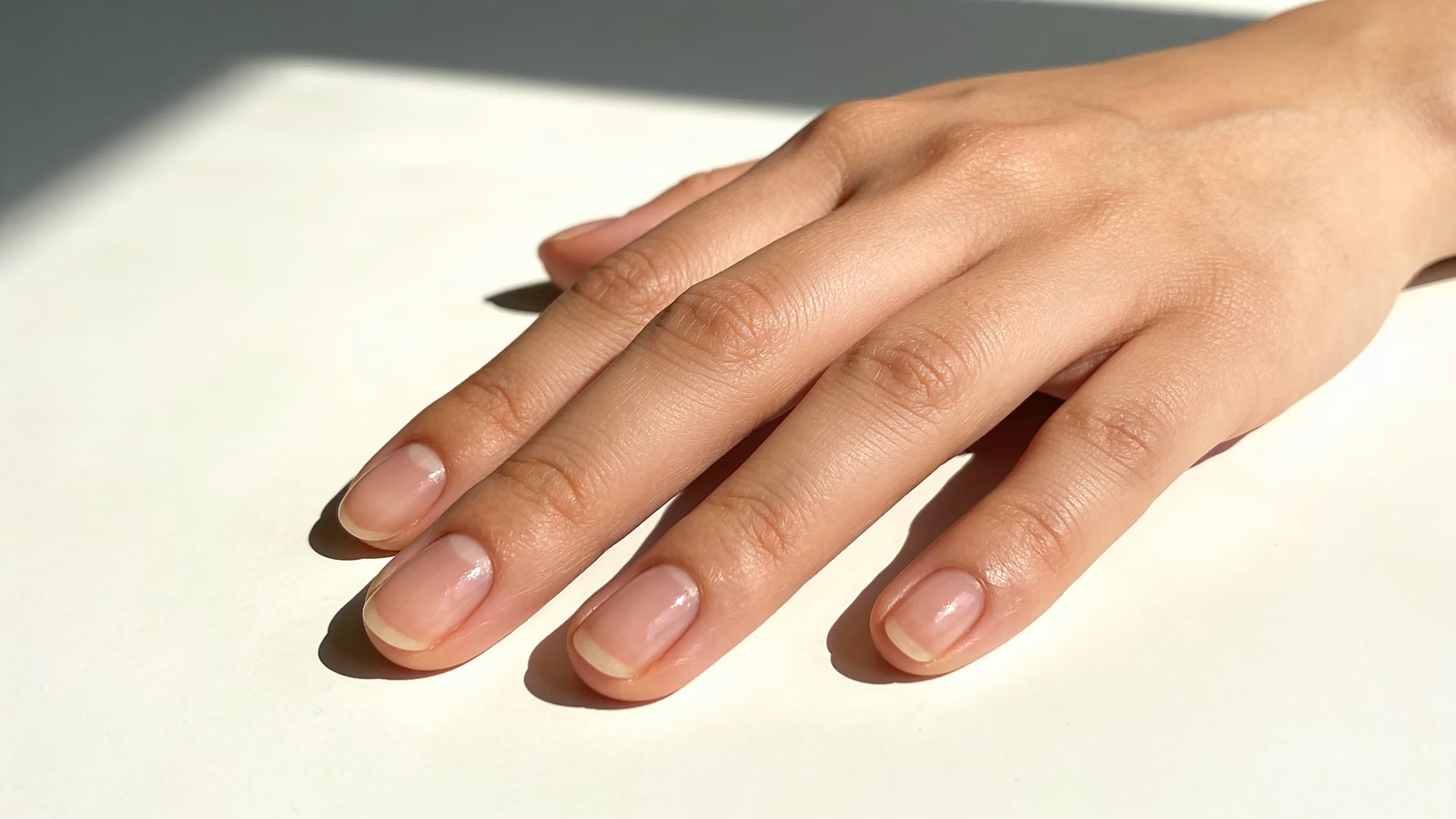
Who would have thought that fingernails could reveal so much about our health? Different patterns, nail discolouration, or ridges on nails can provide clues about nutritional deficiencies or more serious underlying health conditions – some are harmless, whilst others are a genuine warning sign. Here are the ten most important nail changes and what you should have checked by a doctor.
Key Takeaways
- Fingernails can indicate nutritional deficiencies and sometimes serious underlying conditions.
- White Terry’s nails and half-and-half nails can point to liver, heart, or kidney problems.
- Pale nails often indicate anaemia, whilst blue nails suggest oxygen deprivation.
- Dark streaks appearing without prior injury should be investigated due to the risk of melanoma (melanonychia).
- Vertical ridges are usually harmless, whereas horizontal ridges and brittle nails often point to deficiencies or systemic stress.
What Do Ridges on Nails and Nail Changes Mean for Your Health?
Nails grow slowly – approximately 3 to 4 millimetres per month – and change over time. Important tip: observe your nails in a relaxed position without extending your fingers, otherwise the tips can appear artificially white. A single sign should never be over-interpreted, but certain patterns certainly warrant medical attention.
White and Pale Nails
Several distinct white patterns can offer clinical clues:
- Terry’s nails: A milky-white nail plate with a reddish band at the tip. These can be related to natural ageing, but they may also point to liver cirrhosis, heart failure, diabetes, or thyroid disorders.
- Half-and-half nails (Lindsay’s nails): Proximal white and distal red-brown – highly specific to chronic kidney disease.
- White spots (leukonychia): Isolated spots are usually harmless. Transverse white bands, however, can indicate systemic issues or a deficiency in protein, zinc, or calcium.
- Pale nails: Frequently suggest anaemia, often linked to iron deficiency. In such cases, it is worth testing serum iron, ferritin, vitamin B12, and haemoglobin levels.
Yellow and Blue Nails
Yellow, thickened nails with a crumbly texture frequently indicate a fungal nail infection. It is important to identify the root cause – such as tight footwear or transmission in swimming pools and saunas. Tea tree oil is often used as a traditional home remedy, alongside pharmacy treatments.
Bluish nails (cyanosis) are a sign of insufficient oxygen in the blood, often related to pulmonary or cardiovascular conditions. A standard finger pulse oximeter can quickly provide clarity regarding blood oxygen saturation.
Dark Streaks and Splinter Haemorrhages
Dark discolouration or longitudinal bands beneath the nail can be harmless, often caused by a minor knock or trauma. However, if a new dark stripe (melanonychia) appears without an injury, it must be evaluated by a GP or dermatologist – in rare cases, it can indicate subungual melanoma (skin cancer), particularly if the pigmentation extends onto the cuticle.
Splinter haemorrhages – tiny, red-brown longitudinal lines – can be caused by physical trauma or psoriasis. If they recur repeatedly without any injury, a cardiac assessment is advisable, as they can sometimes indicate endocarditis (an infection of the inner heart lining).
Horizontal Ridges on Nails, Vertical Lines, and Brittle Nails
Fine vertical ridges are extremely common and benign; the primary vertical nail ridges cause is normal ageing. Horizontal ridges on nails (Beau’s lines), by contrast, occur when keratin production and nail matrix growth temporarily stop – for instance, following severe illness, high fever, poorly managed diabetes, or a zinc or silicon deficiency.
Brittle, splitting nails or spoon-shaped depressions (koilonychia) are not a normal state and can point to nutritional deficiencies or underlying issues: iron deficiency, biotin (vitamin B7), calcium, silicon, or thyroid disorders such as hypothyroidism. It is sensible to have your GP test silicon, iron/ferritin, thyroid markers (T3, T4, TSH, anti-TPO), a vitamin B complex (including vitamin B12), and vitamin D3. Calcium should not be taken as an isolated supplement; instead, aim to meet requirements through diet alongside optimal vitamin D levels.
Summary
Fingernails are a surprisingly effective reflection of overall health: white, pale, yellow, or blue nail discolouration, as well as streaks and ridges on nails, can point to nutritional deficiencies or more serious underlying illnesses. Many changes are completely harmless – such as faint vertical lines or an isolated white spot. However, new dark streaks, blue nails, recurrent splinter haemorrhages, or suddenly brittle nails should be taken seriously and checked by a healthcare professional. Whilst nail changes never replace a formal medical diagnosis, they serve as a valuable early indicator.
Frequently Asked Questions
What do fingernails reveal about your overall health?
Discolouration, bands, and ridges can offer clues about nutritional deficiencies or conditions affecting the liver, heart, kidneys, or thyroid. However, they do not replace a clinical diagnosis.
What do white nails mean?
Milky-white Terry’s nails with a reddish band at the edge can indicate liver, heart, or thyroid disorders, or diabetes, and should be assessed by a doctor.
What do pale nails mean?
They often suggest anaemia, such as from iron deficiency. It is advisable to test iron, ferritin, vitamin B12, and haemoglobin levels.
What causes blue fingernails?
Bluish nails (cyanosis) indicate a lack of oxygen in the blood, frequently linked to lung or heart conditions. A pulse oximeter can quickly check oxygen saturation.
When should I worry about nail ridges?
Fine vertical ridges are generally harmless and increase with age. Deep horizontal ridges (Beau’s lines), however, suggest a temporary interruption in nail growth caused by illness or nutritional deficiency.
When are dark streaks in the nail dangerous?
If a new dark streak appears without any trauma or if pigment spreads onto the surrounding cuticle, subungual melanoma must be ruled out by a doctor.
Can a vertical ridges on nails vitamin deficiency cause brittle nails?
While vertical lines are mostly age-related, brittle nails often stem from deficiencies in iron, biotin, calcium, or silicon, or an underactive thyroid. A comprehensive blood test can identify any shortfall.
Should you take calcium supplements for nail problems?
Calcium should not be supplemented in isolation; it is best obtained through a balanced diet supported by adequate vitamin D levels.
References and Sources
Review articles, meta-analyses, and controlled clinical studies relevant to this topic. All links were verified for accessibility on 16 August 2026.
- Ricardo JW, Bellet JS, Jellinek N et al.: Evaluation and diagnosis of longitudinal melanonychia: A clinical review by a nail expert group. Journal of the American Academy of Dermatology 2025. PubMed 40023404. DOI: 10.1016/j.jaad.2025.02.075.
- Leggit JC: Nail Abnormalities. American family physician 2025. PubMed 41118185.
- Lee DK, Lipner SR: Optimal diagnosis and management of common nail disorders. Annals of medicine 2022. PubMed 35238267. DOI: 10.1080/07853890.2022.2044511.
- DiBaise M, Tarleton SM: Hair, Nails, and Skin: Differentiating Cutaneous Manifestations of Micronutrient Deficiency. Nutrition in clinical practice : official publication of the American Society for Parenteral and Enteral Nutrition 2019. PubMed 31144371. DOI: 10.1002/ncp.10321.