Psyllium husk is one of the most effective natural remedies for supporting digestive health: derived from Plantago ovata, the husks swell in the gut, bind water, and promote gentle bowel regularity without harsh chemicals. Read on to discover the key psyllium husk benefits, practical guidance on how to take it, the ideal daily dosage, and simple recipe ideas to incorporate it into your daily routine.
Psyllium husk benefits: what happens in the body?
Psyllium husks consist largely of soluble dietary fibre. In the intestinal tract, they absorb many times their own weight in fluid to form a gentle stool softening gel. This increases stool volume, facilitates transit, and supports bowel regularity and constipation relief as well as helping to manage loose stools.
Psyllium husk: how to use properly
The golden rule: always take with plenty of fluid. Stir 1 tsp of psyllium husk into a large glass of water (250–300 ml), drink it quickly, and follow up with a second glass of water. This ensures that the husks swell in the stomach rather than in the throat.
How much psyllium husk per day?
The standard daily recommended dosage is 1–3 tsp (approx. 5–15 g). Start with a single teaspoon and increase gradually so your digestive tract has time to adjust. Important: ensure adequate water intake of at least 200 ml per portion, alongside 1.5–2 litres of fluids across the day.
Psyllium husk side effects: bloating and digestion
You may experience mild flatulence initially whilst your gut microbiome adapts. Increasing your intake slowly helps to prevent discomfort. Alongside wider psyllium husk benefits such as cholesterol management, it supports digestion and blood sugar regulation – read more in our dedicated feature on psyllium husk for diabetes.
Psyllium husk uses: in water (the basics)
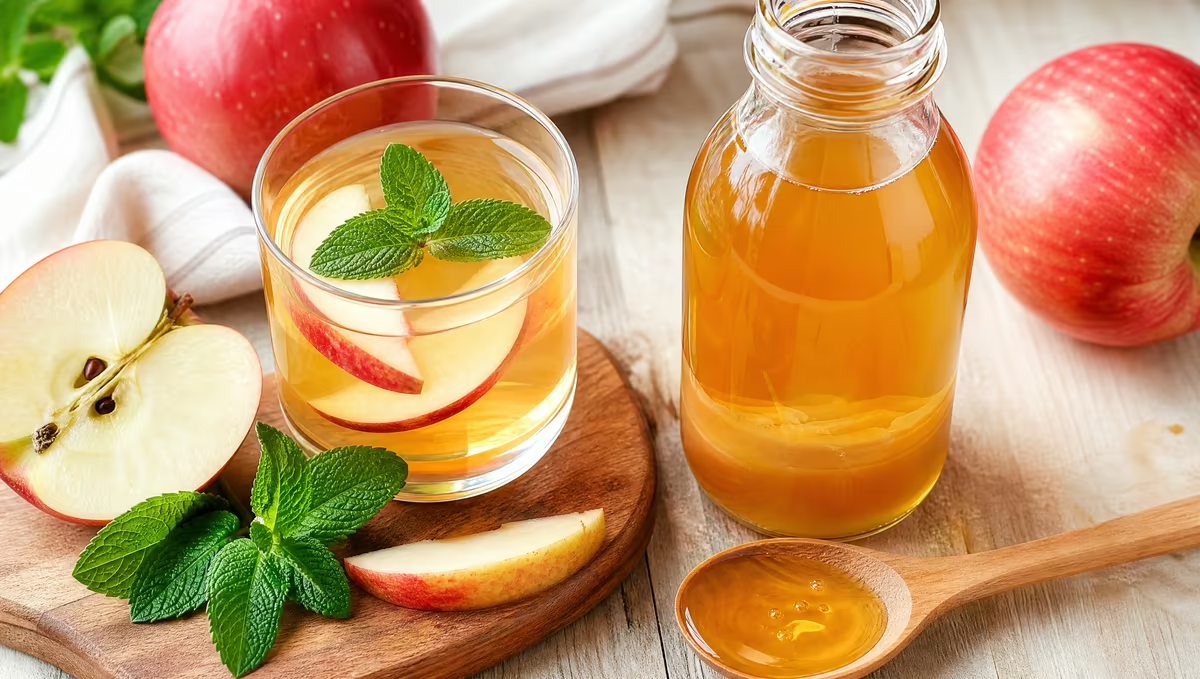
The most straightforward method: stir 1 tsp into a glass of water, leave it to swell briefly, and drink immediately. Take either first thing in the morning on an empty stomach or in the evening before going to bed.
Psyllium husk in yoghurt
Stir 1 tsp of psyllium husk into plain natural yoghurt or Greek yoghurt, leaving it to thicken for a couple of minutes. Creamy, filling, and prebiotic-rich – the probiotic cultures perfectly complement the fibre, making it a satiating option for those considering psyllium husk weight loss strategies.
Overnight oats with psyllium husk
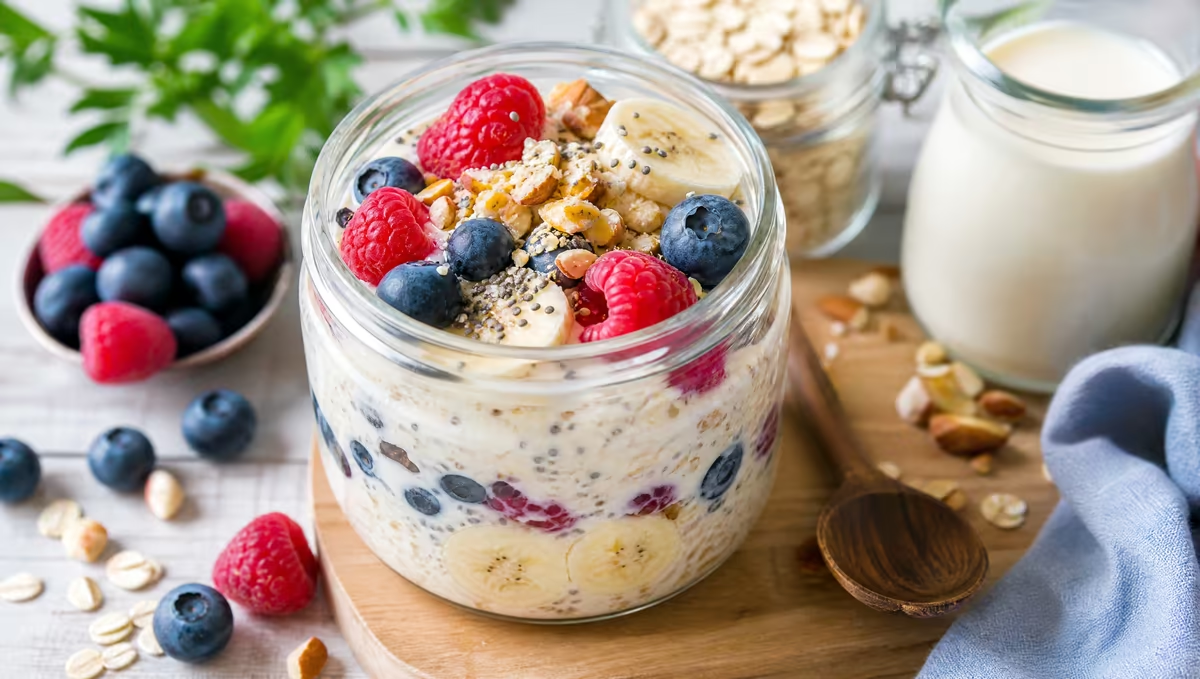
Simply add 1 tsp of psyllium husk to your standard overnight oats recipe. It makes porridge oats luxuriously thick, creamy, and extra filling.
Psyllium husk pudding
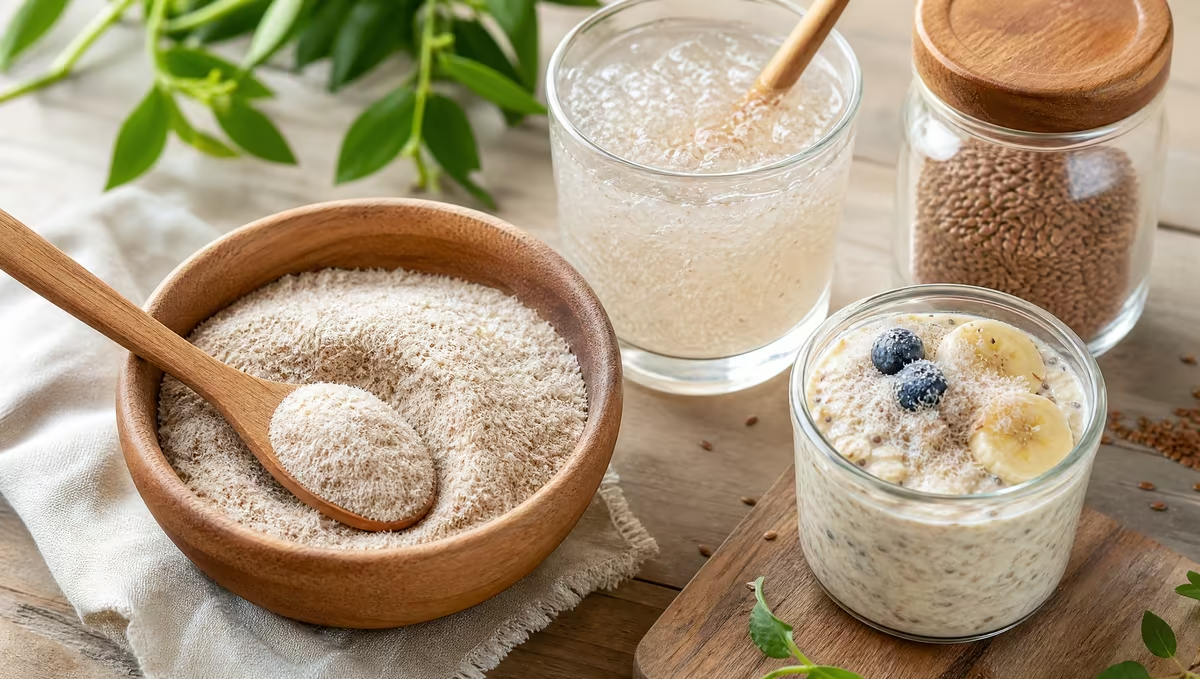
Similar to chia pudding: whisk psyllium husk into milk or a plant-based alternative, leave it to gel for 15 minutes, and top with fresh berries for a quick, high-fibre breakfast.
Baking and bread with psyllium husk
Psyllium husk is an exceptional binder in gluten-free baking: it acts as a structural substitute for gluten, providing dough elasticity and giving loaves and rolls a soft, moist crumb. 1–2 tbsp per bread recipe is usually sufficient.
Whole psyllium husks or psyllium powder?
Whole husks swell more significantly and are ideal for drinks and promoting bowel movement. Ground psyllium powder is better suited to baking because it blends seamlessly throughout the flour. In terms of active fibre content, both forms are equally effective.
Important precautions to keep in mind
- Always ensure adequate water intake – without sufficient fluid, psyllium cannot work effectively and may cause intestinal blockages.
- Leave a gap before taking medication (at least 30–60 minutes), as dietary fibre can impair the absorption of medicines.
- Increase the dose gradually to prevent bloating and abdominal discomfort.
Frequently asked questions (FAQ)
When is the best time to take psyllium husk?
First thing in the morning on an empty stomach or in the evening – drinking sufficient water alongside it is far more critical than the specific time of day.
How long does it take for psyllium husk to work?
Typically within 12–48 hours. With regular daily intake, the full digestive benefits usually establish themselves over several days.
Can you take psyllium husk every day?
Yes, a daily dose of 1–3 tsp is considered safe for long-term use, provided you maintain adequate hydration throughout the day.
Summary
Psyllium husk is a straightforward, natural way to support digestive health – whether taken in water, stirred into yoghurt, mixed into overnight oats, or used as a binder in gluten-free baking. The essential rule for enjoying maximum psyllium husk benefits: always drink plenty of water and increase your daily intake gradually.
Sources and scientific studies
Review articles, meta-analyses, and controlled clinical trials relevant to this guide. Each link was checked for accessibility on 16 August 2026.
- Przybyszewska J, Kuźmiński A, Przybyszewski M et al.: The role and therapeutic effectiveness of <i>Plantago ovata</i> husk (psyllium husk) in the prevention and non-pharmacological treatment of gastrointestinal diseases. Part 2. Clinical use of psyllium husk in the treatment of constipation and diarrhea. 2025. PubMed 40620304. DOI: 10.5114/pg.2024.141832.
- Reid JESJ, Alhasani AT, MacCalman T et al.: A randomised, placebo-controlled trial in healthy humans of modified cellulose or psyllium evaluating the role of gelation in altering colonic gas production during inulin co-administration. 2026. PubMed 41636227. DOI: 10.1039/d5fo03532e.
- Strkalj L, Yakubov GE, Burton RA et al.: Structural and Functional Properties of Fiber From Psyllium (Plantago ovata) Husk: Current Knowledge and Strategies to Expand Its Application in Food and Beyond. 2025. PubMed 40985195. DOI: 10.1111/1541-4337.70297.
- Chey SW, Chey WD, Jackson K et al.: Exploratory Comparative Effectiveness Trial of Green Kiwifruit, Psyllium, or Prunes in US Patients With Chronic Constipation. The American journal of gastroenterology 2021. PubMed 34074830. DOI: 10.14309/ajg.0000000000001149.
- Jalanka J, Major G, Murray K et al.: The Effect of Psyllium Husk on Intestinal Microbiota in Constipated Patients and Healthy Controls. International journal of molecular sciences 2019. PubMed 30669509. DOI: 10.3390/ijms20020433.