
Ecdysterone is frequently promoted online as a “natural anabolic” – a plant-derived compound purported to build muscle without being banned. It sounds almost too good to be true. In this article, we take a balanced, evidence-based look at the research: what ecdysterone is, what the studies truly reveal about potential ecdysterone benefits, how powerful the often-overlooked placebo effect is, and where it stands regarding doping status and safety. By the end, you will understand why this compound is intriguing – and why healthy scepticism remains warranted.
What is ecdysterone?
Ecdysterone (also known as 20-hydroxyecdysone) is a naturally occurring compound found in certain plants and insects. In the fitness community, it is widely marketed as an ecdysterone supplement for muscle building. Chemically, it belongs to the ecdysteroids – compounds that regulate moulting in insects. It serves no such biological function in humans, yet it has attracted scientific interest due to its unique molecular structure. An important caveat from the outset: “natural” does not automatically mean “safe” or “effective” – both aspects require careful, critical scrutiny.
Is ecdysterone a steroid? Structurally similar to testosterone
Ecdysterone is classified as a plant steroid (phytosteroid) and shares structural similarities with human steroid hormones such as testosterone. This resemblance is precisely why it generates so much excitement: researchers hypothesise that it might influence similar pathways involved in muscle protein synthesis and muscle hypertrophy. However, unlike classical anabolic steroids, it is not considered a traditional sex hormone with identical physiological actions in the body (with research suggesting it may act via pathways like oestrogen receptor beta rather than classical androgen receptors). Whether and to what extent it exerts hormonal effects in humans remains an open and debated scientific question.
Why muscle mass is vital for overall health
Before examining ecdysterone benefits, it is worth looking at skeletal muscle itself. Muscle is a metabolically active organ: it burns glucose and fat, supports posture, and keeps you mobile. In clinical research, greater muscle mass is consistently associated with better long-term health outcomes and lower all-cause mortality. Maintaining muscle is therefore far more than an aesthetic goal. This fundamental metabolic importance is precisely why compounds that might support muscle hypertrophy and growth are so heavily marketed and researched.
A 15% lower mortality risk from just a small amount of exercise
The profound impact of even moderate physical activity is illustrated by a major pooled analysis of 16 studies spanning hundreds of thousands of individuals over up to 25 years: just 40 minutes of exercise per week was linked to an approximate 15% reduction in all-cause mortality – including deaths from cardiovascular disease, diabetes, and cancer. While this represents an observational association rather than direct causation, the takeaway is compelling: by far the most scientifically proven “muscle booster” remains regular physical activity and resistance training, not a supplement powder.
How working muscles help lower blood sugar
A key health benefit of muscle lies in blood glucose regulation. Active, exercised muscles absorb glucose directly from the bloodstream for energy. This lowers circulating blood sugar levels – and chronically elevated blood sugar is strongly linked to the risk of cardiovascular disease, the leading cause of death in the UK. Having more active muscle mass acts as a natural metabolic buffer. No supplement in the world can replace this protective mechanism, which arises purely from actively contracting muscles.
Muscles and blood lipids: protecting your arteries
A similar principle applies to blood lipids. Fatty acids are another primary fuel source that working muscles clear from the bloodstream and metabolise. Persistently elevated blood lipids can narrow arterial walls and increase the risk of cardiovascular events such as strokes and heart attacks. Maintaining active muscle tissue helps the body utilise circulating fats for fuel rather than storing them. These mechanisms highlight why muscular health is vital for heart and circulatory health, well beyond athletic performance.
Exercise, free radicals, and endogenous antioxidants
During physical exertion, mitochondria produce free radicals, which can place oxidative stress on cells. Does this mean exercise is harmful? Far from it – a healthy body responds adaptively by generating its own endogenous antioxidants, such as coenzyme Q10 and superoxide dismutase, to neutralise these free radicals. These protective enzymes remain elevated following training, supporting cellular resilience. To keep things in perspective: this antioxidant benefit stems directly from exercise itself, not from an ecdysterone supplement. The two should never be conflated.
Why recovery is the real key to muscle growth
Muscles do not grow during resistance training, but during the recovery period that follows. The training stimulus causes micro-tears in muscle fibres, which the body repairs – adapting by rebuilding them slightly stronger and larger through muscle protein synthesis. How effectively this recovery unfolds determines overall progress. This is where many dietary supplements claim to help, aiming to accelerate recuperation. Ecdysterone is often discussed in this context, although whether it measurably improves human muscle recovery remains unproven by robust clinical evidence.
Early laboratory studies: more potent than testosterone?
The initial hype surrounding ecdysterone stems from early in vitro and animal studies. Under specific experimental conditions, the compound appeared to stimulate muscle fibre formation and protein synthesis even more effectively than growth factors like IGF-1 or testosterone – a statistically notable finding. Researchers described remarkable anabolic properties, comparable to or exceeding certain anabolic steroids. While this sounds spectacular, it remains an isolated laboratory finding. What occurs in a Petri dish or rodent model cannot simply be translated directly to human physiology.
What “anabolic properties” actually mean in practice
“Anabolic” simply means tissue-building. High anabolic potency in a laboratory setting merely indicates that a substance strongly influences muscle-building pathways in a controlled test model. It is an interesting clue, not definitive real-world proof. In living humans, numerous variables come into play: Is the compound bioavailable? Does it reach target muscle tissue in sufficient concentrations? How does the body adapt over several weeks? This gap between impressive in vitro data and tangible real-world ecdysterone benefits lies at the very heart of the debate.
From test tubes to humans: the crucial difference
The ultimate test is always human application: what happens when real people take the compound consistently over several weeks? Only well-designed, randomised, placebo-controlled human clinical trials can establish whether laboratory promises translate into measurable real-world outcomes. While human trials on ecdysterone exist, they are small and their results far more nuanced than marketing claims suggest. This is why it is worth looking closely at two key trials rather than relying on promotional headlines.
Spinach – the food with the highest natural ecdysterone content
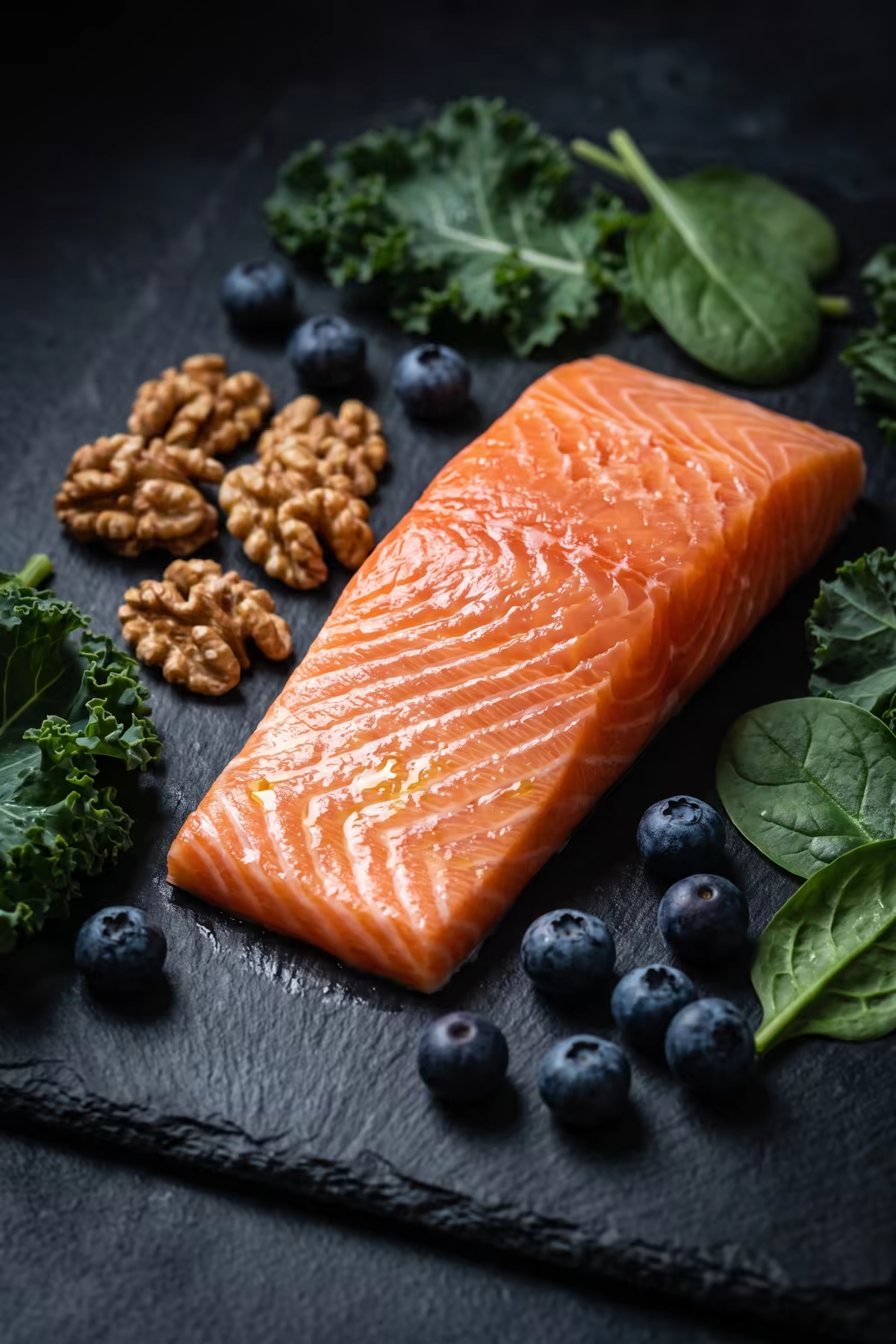
Curiously enough, few whole foods contain as much natural ecdysterone as spinach. Popeye, it seems, was not entirely mistaken. Consequently, researchers have frequently utilised standardised spinach extract to evaluate its physiological effects. However, the concentration of ecdysterone in culinary spinach is relatively low – eliciting the doses tested in trials requires highly concentrated extracts. This puts into perspective the appealing notion that one could naturally “dope” simply by eating a few bowls of leafy greens. Spinach is nutritious, but eating it is no shortcut to massive muscle growth.
The spinach extract study: design and participants
One of the more prominent human trials was double-blind: approximately 50 participants engaged in resistance training were randomised into two groups, without knowing whether they were taking spinach extract or an inert placebo. Over roughly 12 weeks, one cohort received a daily standardised dose of the extract. Crucially for methodological rigour, the groups showed no significant baseline differences in age, body weight, or blood pressure. This baseline comparability is essential if any observed physiological differences are to be attributed to the compound itself.
Evaluating ecdysterone benefits: what the spinach study showed for strength
The findings showed some positive trends: in one tested exercise, strength gains increased to a statistically significant degree in the spinach extract group, but not in the placebo group. In another exercise, both cohorts improved, though the spinach group achieved larger gains. The researchers reported notable improvements in muscular strength and muscle quality. While this sounds like a clear endorsement of ecdysterone benefits, a closer inspection reveals a more complicated picture, as the next section illustrates. Isolated positive data points do not tell the whole story.
The caveat: a powerful placebo effect
Looking more closely at the data, several metrics – including changes in body fat and muscle mass – also improved considerably in the placebo group. The primary distinct difference remained in pure strength gains. This highlights just how powerful the placebo effect is, particularly in resistance training: simply believing you are taking a potent ergogenic aid can boost training intensity, consistency, and athletic performance. When evaluating ecdysterone, part of the marketed “effect” may well come down to heightened expectations and greater training effort.
The second trial: pure ecdysterone over 10 weeks
More revealing is a trial that administered pure ecdysterone – investigated as a “non-conventional anabolic agent”. Roughly 50 resistance-trained participants were followed over approximately 10 weeks, with comprehensive blood, urine, and strength assessments conducted at baseline and study completion. The protocol included a placebo group alongside two active groups receiving different doses of ecdysterone. This design allowed researchers not only to compare the active substance against a placebo, but also to observe whether higher intake produced a dose-response relationship, making it the more informative trial.
Ecdysterone dosage for muscle growth: low vs high doses
Comparing the lower and higher dose cohorts demonstrated that more pronounced effects occurred in the higher-dose group. This points towards a genuine dose-dependent relationship – an important scientific hallmark, as random fluctuations rarely follow a neat dose curve. Specific milligram amounts are deliberately omitted here as dosage recommendations: quantities used in research settings should not be taken as general guidance for personal supplementation. Any decision regarding whether to supplement, what dosage to use, or whether it is appropriate at all is a matter for qualified medical or nutritional professionals, not an online article.
Greater muscle mass, but overall weight gain too
In the higher-dose cohort, muscle mass increased most substantially and reached statistical significance – whereas the placebo group actually lost a small amount of muscle mass. However, total body weight also increased the most in this group. Total weight gain is not automatically advantageous: added mass can reflect water retention or body fat, and uncontrolled weight gain is rarely the goal. The finding is therefore a double-edged sword – an increase in lean mass, but accompanied by caveats that deserve transparent consideration.
Bench press strength gains
Given the correlation between muscle cross-sectional area and force production, it is unsurprising that strength gains were highest in the higher-dose group – particularly in the bench press, remaining statistically significant compared to placebo after 10 weeks. This represents the most tangible evidence of an ergogenic effect. At the same time, participants in the placebo group also achieved notable strength progressions. Whilst ecdysterone demonstrated favourable trends in this study, the margin between supplementation and consistent resistance training with a placebo was narrower than marketing suggests.
What blood biomarkers revealed about its mechanisms
A crucial question remains: does the compound exert a genuine physiological effect, or are findings merely coincidental? The blood analyses provided a plausible biological thread. In the higher-dose group, specific biomarkers showed the most distinct shifts – correlating directly with the participants who experienced the greatest strength improvements. Such alignment between blood biomarkers and physical performance supports the concept of genuine biological activity. While not definitive proof, it lends greater credibility to the results than isolated strength testing alone.
Why small-scale studies must be interpreted with caution
As intriguing as the data may appear, both trials included only around 50 participants and lasted just a few weeks. Small, short-term studies carry a higher risk of overestimating or underestimating true effects and cannot readily be generalised to wider populations. Establishing robust conclusions requires larger, longer-term, independently replicated trials. Scientific research into ecdysterone is still in its early stages. Those interested in the findings should view them as preliminary indications rather than definitive facts.
Ecdysterone side effects and testosterone: no free pass
Because ecdysterone shares structural similarities with testosterone, it is frequently promoted as a risk-free “testosterone booster”. This is an oversimplification. Whether it meaningfully and permanently alters endogenous hormone levels in humans remains unresolved. Even if it does, altering endocrine pathways rarely comes without potential risks. Independent scientific consensus is far more measured than promotional claims. Being “structurally similar to testosterone” is not a badge of quality; it is a reason for diligent evaluation of potential ecdysterone side effects and hormonal interactions.
Liposomal formulations: do they enhance absorption?
Some commercial products offer ecdysterone in a liposomal delivery format – encapsulated within microscopic lipid vesicles designed to enhance intestinal absorption. For certain nutrients, liposomal technology genuinely improves bioavailability. However, whether this translates into a meaningful difference for muscle growth with ecdysterone is currently unsupported by robust clinical evidence. Furthermore, “enhanced absorption” does not automatically equate to greater efficacy or safety. Such claims are primarily marketing angles based on thin scientific evidence that warrants careful examination.
Is ecdysterone truly “natural doping”?
The label “natural doping” is pure marketing hype. The term “natural” implies neither safety nor efficacy – countless natural compounds are pharmacologically potent or potentially hazardous. Moreover, “doping” is a strictly defined regulatory term in sports governance. Framing ecdysterone as an edgy grey-area supplement drives sales, but obscures the fundamental questions: How effective is it in reality, what are the long-term safety implications, and how is it regulated in competitive sport? These are the questions that truly matter, not catchy slogans.
World Anti-Doping Agency and competitive sport: doping status
For drug-tested athletes, official doping status is critical. Ecdysterone is currently included on the World Anti-Doping Agency (WADA) Monitoring Program – meaning it is under active observation due to suspected performance-enhancing potential. Substances on the monitoring list can be reclassified or prohibited at any time. Anyone competing in regulated sports should verify the latest WADA guidelines and exercise extreme caution. “Not currently banned” is neither a guarantee nor a blanket endorsement for unrestricted use.
Legal Does Not Automatically Mean Safe
The fact that a substance is available over the counter says very little about its safety. Dietary supplements are not regulated or tested in the same way as medicinal products. Quality, purity, and actual active content can vary considerably between brands, and contamination is always a possibility. “Legal” simply means not banned – not “tested and approved”. This distinction is vital for all muscle supplements, and especially for a hormone-like compound such as an ecdysterone supplement. Trust is no substitute for critical scrutiny here.
Ecdysterone Side Effects: What We Do (and Don’t) Know
A frequent marketing claim is that ecdysterone has “no side effects”. That simply does not hold up to scrutiny. While short-term clinical trials have reported no severe adverse events, these studies were small and lasted only a few weeks. When it comes to the long-term safety in humans, taken over months or years in higher amounts, we simply know very little. “No reported adverse effects in brief trials” is fundamentally different from “proven safe”. This is a crucial distinction to bear in mind when weighing up potential ecdysterone benefits against possible risks.
Ecdysterone from Food – Is Spinach Enough?
Can you get enough ecdysterone simply by eating spinach? In principle yes, but the concentrations are tiny. To achieve the potential ecdysterone benefits observed in research, participants were given concentrated spinach extract, not an ordinary dinner portion. The good news: spinach and other leafy greens are exceptionally nutritious anyway and form an essential part of a muscle-friendly, high-protein diet. By all means enjoy your greens – but for the right nutritional reasons. Relying on your dinner plate as a targeted muscle-building tool for ecdysterone is practically impossible.
Who Might Benefit from Ecdysterone – and Who Should Steer Clear?
To put it honestly: for the vast majority of people, prioritising resistance training, dietary protein, and sleep delivers incomparably greater results than any niche supplement. Competitive athletes must also keep anti-doping regulations firmly in mind. If you are still considering taking an ecdysterone supplement, you should be fully aware of the limited human evidence, insist on third-party tested product quality, and consult a GP or medical professional – particularly if you have any pre-existing health conditions. Teenagers, pregnant women, and breastfeeding mothers should avoid experimenting with hormone-like compounds altogether. Exercising caution here is not a weakness; it is common sense.
The Verdict: Promising, but Premature
Ecdysterone is a fascinating compound: structurally hormone-like, impressive in laboratory trials, and showing early hints of strength gains in small studies. Yet at the same time, study sizes remain small, the placebo effect is substantial, long-term safety remains unproven, and its doping status is under active monitoring by the World Anti-Doping Agency (WADA). The honest conclusion is that real-world ecdysterone benefits remain promising, but premature. Anyone looking to build muscle will find far more reliable, proven results through consistent resistance training and solid nutrition – available right now, without grey areas or unanswered questions.
Frequently Asked Questions
Is ecdysterone a steroid?
It is a plant-derived ecdysteroid that structurally resembles testosterone and is marketed as a muscle-building dietary supplement. However, clinical evidence in humans remains very limited.
Does ecdysterone really work?
Small trials have shown modest improvements in strength and muscle mass, but with a notable placebo effect. Large-scale, long-term trials are lacking, so definitive scientific proof is still pending.
Is ecdysterone banned in sport?
It is currently on the World Anti-Doping Agency (WADA) Monitoring Programme, meaning it is under scrutiny and could potentially be prohibited in future. Competitive athletes should check the latest anti-doping list and, if in doubt, avoid it.
Is ecdysterone safe?
Short-term studies have reported no serious ecdysterone side effects. However, very little is known about its long-term safety. Being legal to buy does not automatically mean it has been tested and certified safe.
Can I get enough ecdysterone from spinach?
While spinach contains some of the highest natural levels among foods, the actual amounts are very low. The dosages investigated in clinical research require concentrated spinach extract rather than standard food portions.
Is ecdysterone “natural doping”?
This is primarily a marketing buzzword. Calling something “natural” says nothing about its efficacy or safety, and anti-doping rules are strictly defined. What matters is proven evidence, health safety, and sports governing body regulations.
Is ecdysterone as powerful as testosterone?
This claim stems from early laboratory and animal studies. Findings from cell cultures cannot simply be translated to humans – reliable clinical evidence backing such claims is entirely lacking.
Should I take an ecdysterone supplement?
For most people, focusing on progressive resistance training, adequate protein, and quality sleep will yield far greater returns. If you do consider it, be mindful of the sparse evidence base and seek medical advice first. It should be strictly avoided by adolescents, pregnant women, and breastfeeding mothers.
Further reading on muscle and fitness: Gut bacteria and muscle strength · HMB: more effective than creatine? · Interleukin-11 and longevity.
References
Systematic reviews, meta-analyses, and controlled clinical trials relating to this article. Every link was checked for accessibility on 16 August 2026.
- Isenmann E, Ambrosio G, Joseph JF et al.: Ecdysteroids as non-conventional anabolic agent: performance enhancement by ecdysterone supplementation in humans. Archives of toxicology 2019. PubMed 31123801. DOI: 10.1007/s00204-019-02490-x.
- Volodin VV, Sidorova IuS, Mazo VK et al.: [20-Hydroxyecdysone–plant adaptogen: an anabolic effect, possible use in sports nutrition]. Voprosy pitaniia 2013. PubMed 24741953.
- Sripinyowanich S, Denben B, Satapoomin P et al.: Effects of Asparagus-Derived 20-Hydroxyecdysone Supplementation on Fat Oxidation and Insulin Sensitivity in Resistance-Trained Males. Journal of nutritional science and vitaminology 2025. PubMed 41485968. DOI: 10.3177/jnsv.71.526.
- Todorova V, Ivanova S, Chakarov D et al.: Ecdysterone and Turkesterone-Compounds with Prominent Potential in Sport and Healthy Nutrition. 2024. PubMed 38732627. DOI: 10.3390/nu16091382.