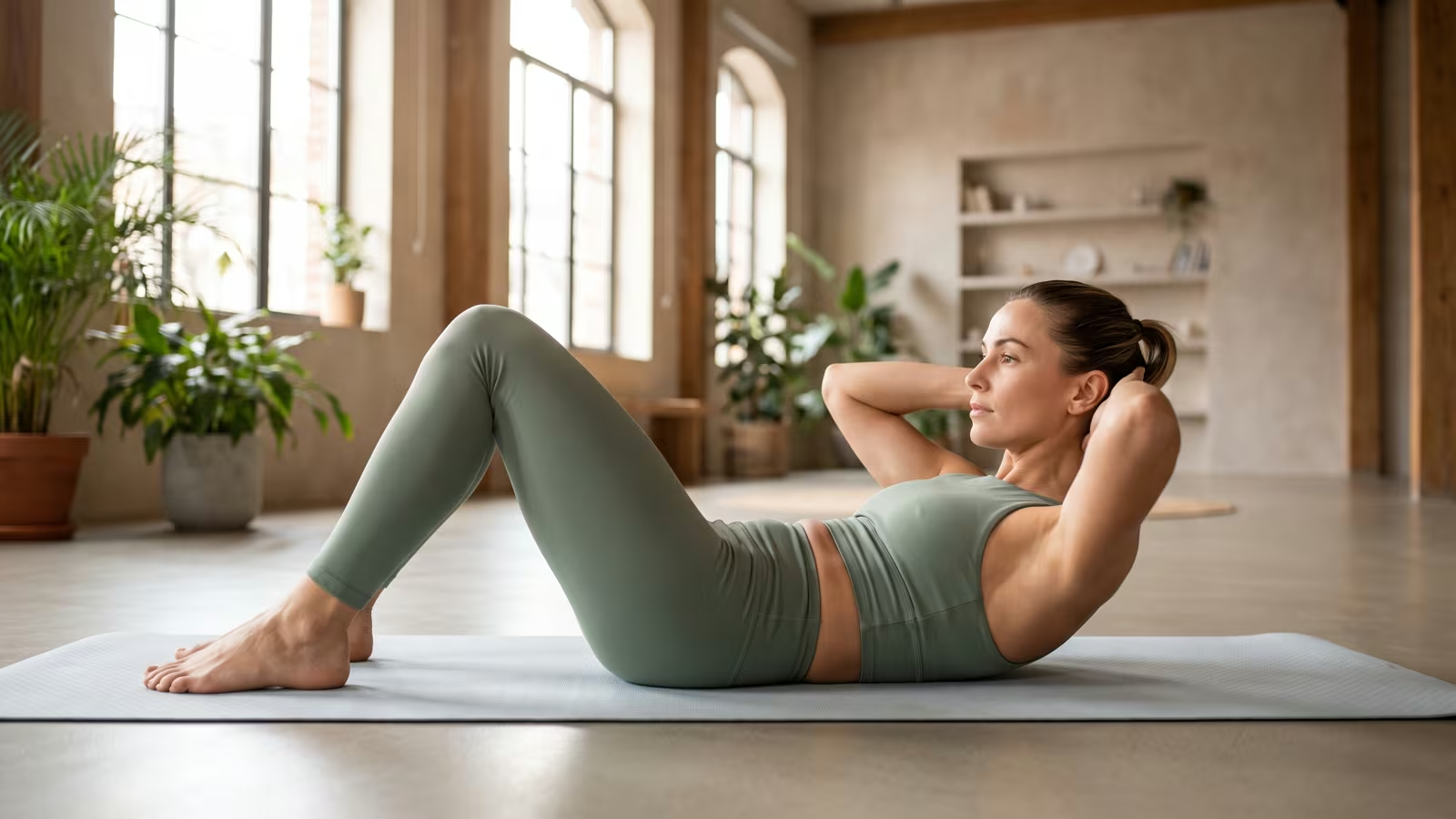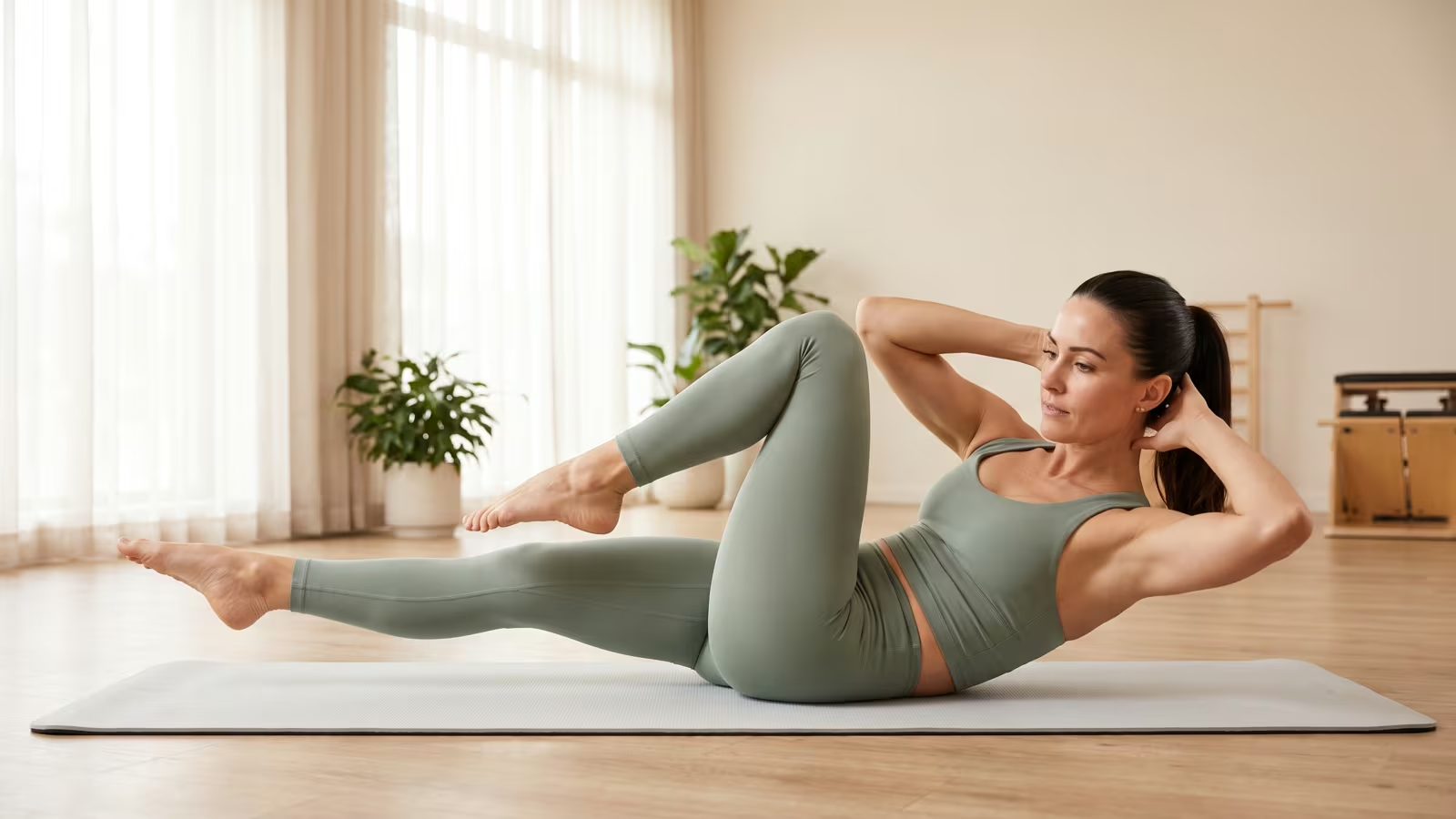
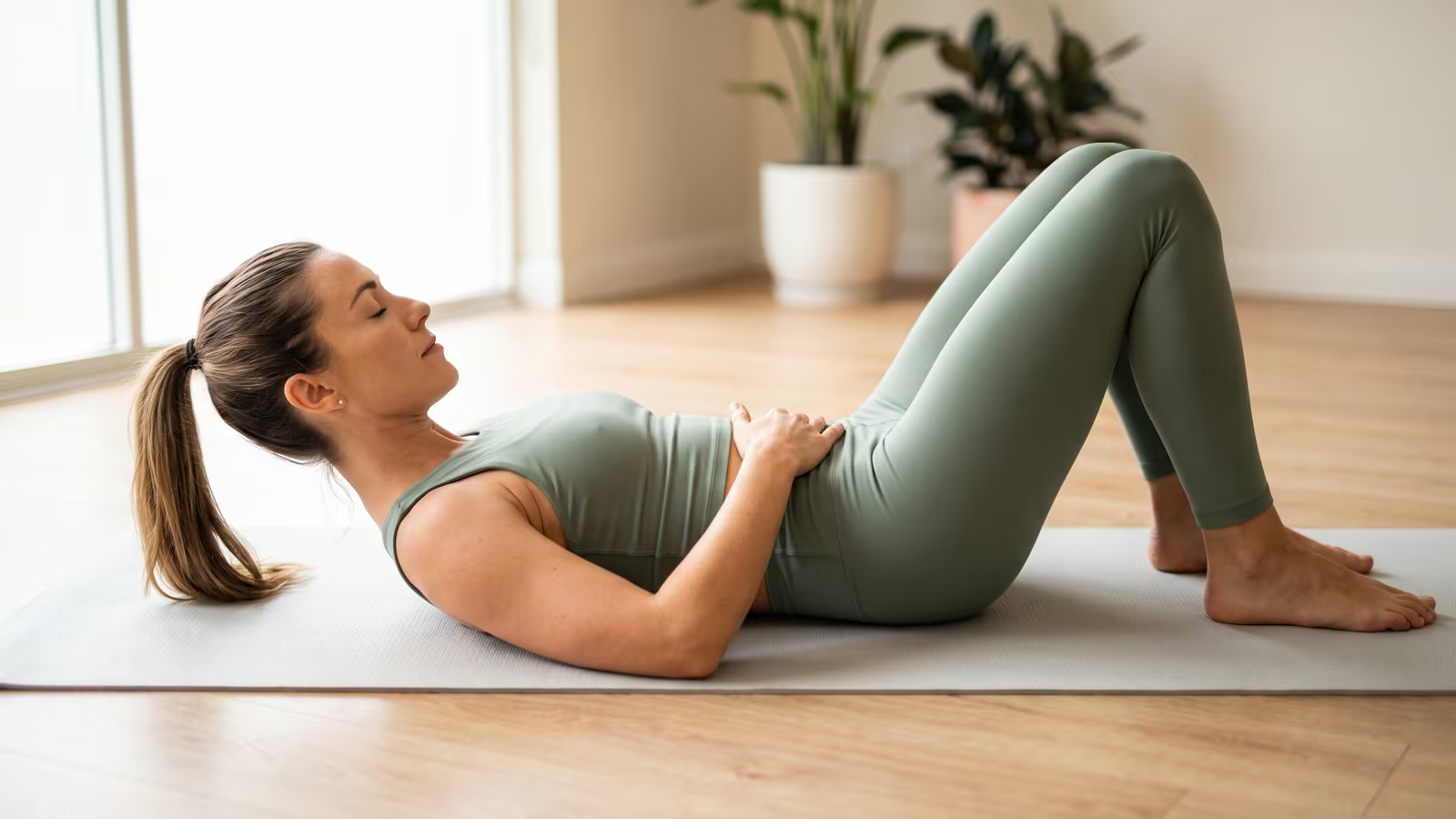
Before jumping straight into targeted abdominal workouts, it is worth looking at the foundation: the core. In Pilates, this central hub is known as the powerhouse – the muscular girdle encircling the abdomen, lower back, and pelvis from which all movement mechanics originate. Engaging your centre before you begin not only makes your workout more effective, but also provides vital spinal support. Here is everything you need to know about the Pilates powerhouse, how to engage it correctly, and how to build a firmer, stronger midsection with targeted core training.
Key points at a glance
- The core is much more than just your abs: it comprises deep abdominal muscles, the back extensors, the pelvis, and the pelvic floor.
- In Pilates, this centre is known as the powerhouse – it creates torso stability and serves as the starting point for every movement.
- You activate the core using the navel to spine cue alongside a gentle contraction of the pelvic floor.
- A strong core protects your back, enhances posture alignment, and makes every abdominal exercise far more effective.
- The best starter exercises are the dead bug, plank, and toe taps.
What is the core – and what are the Pilates powerhouse muscles?
The core is the muscular centre of your body. It includes not only the superficial abdominal wall, but primarily the deep abdominal muscles (the transverse abdominis), the erector spinae along the lumbar spine, the pelvic floor, and the diaphragm. Together, they act like an internal corset that stabilises the spine and pelvis. In Pilates, this entire region is referred to as the powerhouse. The underlying principle is simple: every powerful, controlled movement begins at the centre and radiates outward to the limbs. Active Pilates powerhouse muscles are therefore essential for clean, safe movement mechanics.
How to activate your core muscles correctly
Lie on your back and maintain steady breath control. As you exhale, gently draw your navel to spine and slightly upward, as if zipping up a snug pair of trousers. At the same time, gently engage your pelvic floor – similar to the sensation of stopping the flow of urine mid-stream. Crucially, this should be a subtle, deep engagement rather than forceful bracing. Keep your lumbar spine in its neutral position whilst your breathing flows naturally. This activation forms the starting point of every Pilates exercise: you maintain this deep connection whilst your arms and legs move.
The benefits of core training: Why a strong centre matters
A well-conditioned core delivers benefits that extend far beyond a flat stomach. It provides crucial spinal support, helping to prevent back pain – one of the most common musculoskeletal complaints in the UK. It also enhances posture alignment by keeping the torso upright, whilst boosting balance and functional strength during everyday tasks, from carrying heavy shopping to bending down. From an athletic perspective, torso stability acts as the vital link between the upper and lower body, meaning runners, cyclists, and weightlifters all benefit equally from dedicated core training.
The best core activation exercises for beginners
When building foundational strength, stability-focused exercises are ideal. The dead bug targets the deep stabilisers whilst placing minimal strain on the lower back. The plank builds whole-body torso stability in a single static hold. Meanwhile, toe taps offer a gentle entry point for working the lower abdominals. If you want to progress, incorporate the side plank to challenge lateral stability. Start with two to three of these movements, consciously engaging your powerhouse before every single repetition.
How often should you do core training?
Two to three focused sessions per week are plenty to build noticeable strength. Because the deep postural muscles work continuously throughout the day, they respond well to regular work, though rest days remain essential for recovery. You can make your progress even more effective by applying powerhouse engagement to daily life: consciously connect with your centre whilst sitting at your desk, standing in queues, or lifting objects. In this way, core training becomes an effortless daily habit that protects your back from morning to night.
Summary
The core provides the foundation for every abdominal movement – and the Pilates powerhouse makes this concept tangible. Learning to consciously activate your deep centre not only makes abdominal exercises more effective, but also supports the spine and refines posture alignment. Start with foundational core activation exercises and carry that awareness into your daily routine. Always engage your powerhouse before initiating movement – it makes every repetition safer and significantly more productive.
Frequently Asked Questions
Which muscles make up the core?
The core consists of the deep abdominal muscles (transverse abdominis), the back extensors along the lumbar spine, the pelvic floor, and the diaphragm. Together, they create an internal support system that stabilises the spine and pelvis.
What is a powerhouse in Pilates?
In Pilates, the powerhouse refers to the central band of muscles encompassing the abdomen, lower back, hips, and pelvic floor. It acts as the body’s powerhouse from which all controlled movement originates.
How do I activate my core muscles?
On an exhalation, gently draw your navel towards your spine and slightly upwards, whilst lightly engaging your pelvic floor. Focus on subtle, deep tension rather than bearing down or holding your breath.
Does core training help with back pain?
Yes. Strong core muscles provide essential spinal support and can help prevent everyday back pain. If you have an existing spinal condition or severe discomfort, consult a GP or physiotherapist before starting a new exercise programme.
How often should I train my core?
Two to three focused sessions each week are sufficient. You can complement this by maintaining gentle core awareness during daily activities such as sitting, standing, and lifting.
Is the core just another word for the abdominal muscles?
No. The abdominal wall is only one component. The core also incorporates the muscles of the back, pelvis, and pelvic floor, which work together as a unified system to stabilise the trunk.
Which core exercise is best for beginners?
The dead bug is an excellent starting point because it trains the deep abdominal wall without straining the back. From there, the standard plank and toe taps are great progression steps.
Will I notice the benefits of a strong core in everyday life?
Yes, absolutely. Greater torso stability enhances posture alignment, balance, and lifting strength during routine daily tasks, whilst taking noticeable strain off your back.