
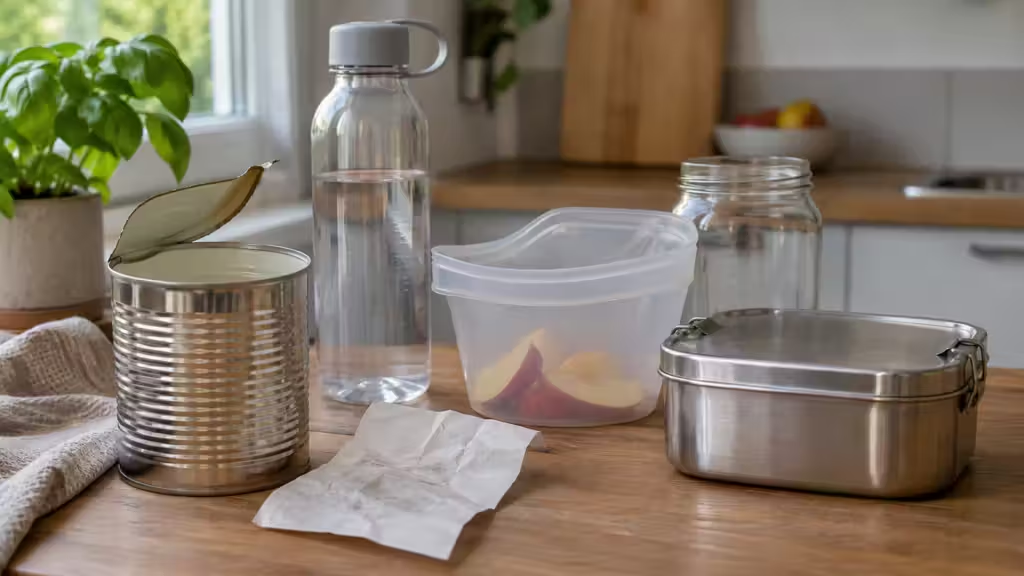
Bisphenol A (BPA) is classified in the EU as toxic to reproduction and is considered hormonally active [2][5]. Whether the amounts people encounter in everyday life cause harm is assessed very differently by the authorities. Since 2023, the EU food safety authority EFSA has set the tolerable daily intake at 0.2 ng/kg body weight. The German Federal Institute for Risk Assessment (BfR) sets it at 200 ng/kg, a thousand times higher. EFSA sees cause for concern about intake through food. The BfR expects no health risk for most of the population, and only for children and adolescents does it remain uncertain [1][2]. For the classic plasticizers (phthalates), exposure in Germany has fallen sharply for decades, while replacement substances are on the rise [28]. BPA and plasticizers can be detected in the urine of almost everyone. That shows intake, but not yet harm. They enter the body mainly through food, and in toddlers plasticizers also enter through house dust [2][15].
This article is part 8 of our series “How Do People Get Poisoned?” and does not replace medical advice. Published so far: Mercury poisoning, Lead poisoning, Cadmium in food, Arsenic in rice, Aluminum in deodorant and aluminum foil, Glyphosate and pesticides and PFAS and forever chemicals. Last updated: November 2026.
Key points at a glance
- In 2023, EFSA set a tolerable daily intake for bisphenol A (BPA) of 0.2 ng/kg body weight, 20,000 times lower than the provisional value of 2015 (4 micrograms). The German Federal Institute for Risk Assessment (BfR) derives 200 ng/kg [1][2].
- German Environmental Survey for children (GerES V; urine, ages 3 to 17, 2014 to 2017): BPA geometric mean 1.905 µg/L, and only 0.11 percent of samples above the HBM-I value (a German assessment value for human biomonitoring set by the German Environment Agency, UBA) of 100 µg/L (0.1 milligram) [23].
- German Environmental Specimen Bank, 1988 to 2022 (1,825 urine samples): exposure to the plasticizers dibutyl phthalate (DnBP) and DEHP fell by 96.6 and 90.9 percent. Since 2018, intake of the replacement substance DEHTP has been higher than that of DEHP [28].
- Five days of canned soup raised urinary BPA from a geometric mean of 1.1 to 20.8 µg/L (75 participants). Two hours of handling receipts without gloves raised it from 1.8 to 5.8 µg/L (a study from before the 2020 ban) [31][32].
- Law: The BPA ban for food contact materials (Regulation 2024/3190) has applied since January 20, 2025. The general transition period ended on July 20, 2026, and for packaging of fruit, vegetables and fish it runs until January 20, 2028. In thermal paper, BPA at 0.02 percent or more has been prohibited since January 2, 2020 [8][9].
What are bisphenol A and plasticizers?
Bisphenol A and plasticizers are two different groups of substances. BPA acts on hormones, and among the plasticizers this applies to some phthalates [2][15]. BPA is the starting material for the plastic polycarbonate and for epoxy resins. Polycarbonate is found in DVDs and smartphones, but also in drinking bottles, food containers and tableware. Epoxy resins are used as adhesives, paints and the inner coating of beverage and food cans [2]. Under normal use, both plastics release hardly any BPA. Only residues can be released in small amounts [2].
Plasticizers make hard plastics flexible, and the best-known group is the phthalates. Brittle PVC has 30 to 40 percent plasticizer added, and it is then called soft PVC (cables, films, flooring, tubing, lid seals of screw-top jars). The phthalates are not firmly bound in it and leach out. For a long time, the most widely used were DEHP (di(2-ethylhexyl) phthalate), DBP (dibutyl phthalate), BBP (benzyl butyl phthalate) and DIBP (diisobutyl phthalate). Because they endanger reproduction in animal experiments, they were restricted and in part replaced by other phthalates such as DINP and DIDP [15]. Polyethylene cling film needs no plasticizers at all [15]. Nonstick coatings and impregnations do not belong here: those are PFAS (part 7).
Endocrine disruptors: What does that mean?
The German Federal Institute for Risk Assessment (BfR) uses the term endocrine disruptors for substances that influence the hormone system and can thereby cause harm. In everyday language they are often called “hormonally active substances.” Strictly speaking, not every hormonally active substance is harmful: a substance is called a disruptor only when harm results. For BPA, the estrogenic effect is in the foreground. It binds to estrogen receptors, but several orders of magnitude more weakly than the natural hormones. In addition, it can inhibit the action of male sex hormones (antiandrogenic effect) [2]. Some phthalates also influence the hormone system [15].
Since 2016, BPA has been classified as toxic to reproduction, category 1B (“may damage fertility”). For that reason it was identified as a substance of very high concern (SVHC) in January 2017, additionally in June 2017 because of its endocrine effects on humans, and in January 2018 because of its effects on the environment. The BfR stresses that classification and SVHC status do not automatically mean that the amounts taken in daily are a health risk [2].
Where are BPA and plasticizers found?
You take in both groups of substances mainly through food. For BPA, according to EFSA’s 2015 data, the predominant contribution came from cans with an epoxy resin inner coating, and the second most important source was thermal paper (from age three, where the estimate is considerably more uncertain) [2][6]. The BfR found no clear relationship between the contents of a can and its BPA level. The level might depend on the preservation method [2]. According to the BfR, phthalates also come mainly from food, and in toddlers house dust and objects put in the mouth add to this. All staple foods can contain traces, and you cannot tell by looking [15].
| Source | Substance | What is established | Evidence |
|---|---|---|---|
| Food and beverage cans (inner coating) | BPA from epoxy resin | predominant contribution to intake according to EFSA 2015; no labeling requirement | [2][31] |
| Drinking bottles, containers, tableware made of polycarbonate | BPA | residues can transfer in small amounts | [2] |
| Receipts, parking tickets, labels (thermal paper) | BPA until 2019, afterward mostly bisphenol S (BPS) | BPA below 0.02 percent since January 2, 2020; in the view of the German Environment Agency (UBA), BPS is not a suitable substitute | [5][6][9] |
| Soft PVC: cables, films, flooring, tubing, lid seals | Phthalates | 30 to 40 percent plasticizer, not firmly bound; transfer mainly into fatty foods | [15] |
| House dust, objects in toddlers’ mouths | Phthalates | children take in considerably more this way; imported toys occasionally contain banned DEHP | [15] |
Bisphenol A: How dangerous is BPA?
Harmful effects of bisphenol A are documented in animal studies, and the EU therefore classifies it as toxic to reproduction [5]. Whether your risk at today’s intake is real is assessed differently by the authorities. According to the BfR, BPA has only low acute toxicity, but in animal experiments with long-term intake it is linked to a number of effects [2].
EFSA versus the BfR: 0.2 versus 200 nanograms
Both values are tolerable daily intakes (TDI): amounts that a person can take in every day for a lifetime without a health risk [2].
EFSA (April 2023): Based on animal data and supported by observational studies in humans, EFSA considered the immune system to be the most sensitive. As the critical effect, it chose an increase in certain immune cells (Th17 cells) in mice. This yielded a reference point of 8.2 ng/kg body weight per day. With an overall uncertainty factor of 50, the result was a TDI of 0.2 ng/kg body weight per day, rounded. According to the 2015 data, intake through food was two to three orders of magnitude above this in all age groups, which is why EFSA sees cause for concern [1].
BfR (2023): The BfR evaluated more than 600 studies and derives 200 ng/kg, based on the reduced sperm count of adult rats. It considers the EFSA derivation inappropriate in three respects. First, the endpoint: the Th17 increase did not harm healthy mice, and transferability to humans is open. Second, selection and quality of studies: the mice in the key study lived in polycarbonate cages, so the actual dose is unclear. Third, the conversion factor from mouse to human: it is based on too few measurement points, which makes the TDI too low by a factor of 10 to 100. According to the BfR, the European Medicines Agency (EMA) also criticizes essentially the same points. Other authorities, such as the US Food and Drug Administration (FDA), the Dutch Rijksinstituut voor Volksgezondheid en Milieu (RIVM) and Food Standards Australia New Zealand (FSANZ), use the BfR value or their own values in the range of the BfR value or above it [2].
The other side: EFSA counters that an intermediate value such as the Th17 cells can also serve as a reference point if it is linked to a disease. That a few long-term studies found no effect does not prove there is none, because species differ in sensitivity. In a joint report, EFSA and the BfR state that their positions could not be reconciled because of the different methods [3]. The European Environment Agency (EEA) points out that experts have supported the EFSA approach [4].
On intake: based on its first own data, the BfR expects that for most of the population, intake through food is in part clearly below the BfR value, while for children and adolescents uncertainty remains. According to a comparison with urine data, EFSA’s 2015 estimate for adults (200 to 1,100 ng/kg per day from food and thermal paper) was probably too high by a factor of 2 to 4. Since the ban in thermal paper, the share from receipts has probably dropped considerably [2].
My assessment: Anyone who declares BPA “proven harmless” or “proven dangerous” skips over this dispute. Two agencies calculate using two methods.
What observational studies in humans show
In humans there are many associations, but no established proof of a cause. Two umbrella reviews of meta-analyses find associations of BPA with, among other things, preterm birth, obesity, type 2 diabetes and high blood pressure [41][42]. In the larger one (52 systematic reviews on plastic chemicals), 78 percent of the meta-analyses come from reviews of moderate methodological quality [42]. An association only shows that two things occur together, not the cause: diet or social status, for example, can influence both. For asthma, allergy and “chalky teeth,” the BfR cites no confirmed link with BPA, and according to its account, EFSA also considered none of the effects examined to be likely on the basis of human intake data [2]. A review on time to pregnancy found little to no evidence of a BPA influence [40].
BPA and plasticizers in urine: What the measurements mean
Bisphenol A and plasticizers can be detected in the urine of almost everyone, but detection is not evidence of harm. In GerES V, BPA was found in almost all samples (about 515) from 3- to 17-year-olds: geometric mean 1.905 µg/L, maximum 399 µg/L. Compared with 2003 to 2006, urinary BPA fell, especially in small children. 0.11 percent of samples exceeded the HBM-I value of 100 µg/L (0.1 milligram) [23]. The Human Biomonitoring Commission at the German Environment Agency (UBA) sets the German HBM values: up to the HBM-I value, no health impairment is to be expected according to current knowledge, and above the HBM-II value it appears possible. Both are guidance values without legal status [15]. Above HBM-I, the measured value and its source should be checked [18].
The European comparison also depends on the yardstick: the EEA converted the EFSA value into a guidance value for urine, using the method of the European human biomonitoring initiative HBM4EU: 11.5 ng/L. In the HBM4EU data on adults from eleven countries, depending on the country, at least 71 to 100 percent were above it. These are minimum values, because the detection limits of the methods are above the guidance value. The guidance value is not an official limit [4]. Among European women, in 14 of 15 surveys (2007 to 2014) all participants exceeded the guidance value [24]. Those who, like the BfR, consider the EFSA value too low assess this differently.

Use the graphic on your site
You may use the graphic freely with attribution and a link. Copy the code:
<a href="https://gesundefakten.com/en/health/bisphenol-a-phthalates/"><img src="https://gesundefakten.com/wp-content/uploads/2026/11/bisphenol-grafik-en.webp" alt="Infographic: plasticizers in urine, DnBP minus 96.6 percent, DEHP minus 90.9 percent" width="1600" height="1000"></a><br>Source: <a href="https://gesundefakten.com/en/health/bisphenol-a-phthalates/">gesundefakten.com</a>Plasticizers in urine: What the values say
Plasticizers are measured in urine through their breakdown products (metabolites), and detection allows conclusions about intake from all routes [15]. In GerES V (2,256 samples, ages 3 to 17), metabolites of eight phthalates were found in 97 to 100 percent of participants. Compared with 2003 to 2006, the mean for DEHP and for dibutyl phthalate (called DnBP in the studies) had fallen to 23 percent. Even so, 0.38 percent of participants for DnBP and 0.08 percent for DEHP were above the health-based guidance values, and for them an effect cannot be ruled out with sufficient certainty [25].
The German Environmental Specimen Bank (Umweltprobenbank des Bundes) has archived 24-hour urine samples since the early 1980s [28]. Until 2015 they came from students aged 20 to 29 [19]. For 1988 to 2022 there are 1,825 samples. The steepest declines were for DnBP (96.6 percent) and DEHP (90.9 percent), and DINP and DIDP are also declining after an earlier rise. In turn, the replacement substances DINCH and DEHTP are increasing, and since 2018 the daily intake of DEHTP has been above that of DEHP [28].
My assessment: A single urine value says little about your risk. It shows intake over the last hours to days and fluctuates with what you have eaten and touched.
How long does bisphenol A stay in the body?
Not long. After a single oral dose, the half-life in 14 volunteers was 6.4 hours, and in 10 of 14, more than 90 percent was excreted in urine as breakdown products within 24 hours [34]. Through the skin, elimination takes longer: the half-life was 21.4 hours, and 2.2 percent of the applied dose entered the body [35]. Because BPA is taken in anew every day, it can nevertheless be detected in almost all urine samples [23].
Phthalates: How dangerous are plasticizers?
Phthalates have harmful effects in animal experiments, and in humans studies show associations. For adults, the BfR sees no significant risk at today’s intake, while children are more heavily exposed. In animal experiments, DEHP and other phthalates mainly reduced the fertility of male rats and mice, and the damage arose already in the womb. DINP and DIDP acted mainly on the liver. The effects appeared only with longer, comparatively high intake. The BfR assumes that the effects can appear similarly in humans, but this is difficult to demonstrate directly [15].
In humans, systematic reviews see robust evidence of an association of DEHP and DBP with male reproductive characteristics, such as sperm values, testosterone and the anogenital distance (the distance between anus and genitals) in boys. For DINP and BBP, the evidence is moderate [38]. In women there is moderate evidence for an association with preterm birth (DEHP, DBP, DEP), and the rest is weak or unclear [39]. The BfR puts this in context: some studies found an association with male fertility, others did not, and nothing can be concluded from them about causality [15].
On intake there are two series of numbers that at first seem to contradict each other. In 2019, EFSA set a TDI of 50 µg/kg body weight per day for DBP, BBP, DEHP and DINP together (in DEHP equivalents), because they share the same mechanism: less testosterone in the unborn child. Through food, intake in the worst case reached up to 23 percent of it [22]. According to HBM4EU, the total intake estimated Europe-wide (food, air, skin) was 0.1 to 1 µg/kg body weight per day, that is 500 to 50 times below the TDI. The combined intake of DBP, BBP, DEHP and DINP estimated from the GerES V urine values, by contrast, was still above the group TDI for the majority of German 3- to 10-year-olds [15]. For individual substances, only a few children exceed their guidance values (0.38 percent for DnBP, 0.08 percent for DEHP) [25], but the sum of the four substances is above the group TDI in most of them. The UBA confirms this for a large share of children and adolescents, especially the younger ones [17]. The European estimate applies to the population as a whole, the German one to children.
Mixture risk: Several substances together
Because substances with the same effect can add up, recent studies calculate mixtures. In GerES V (1,090 children and adolescents), the hazard index for nine substances that can impair sperm quality was above 1 in 31 percent. These include DEHP, DnBP, DIBP, BBP, DINP, acrylamide and PCB 118. In 26 percent of these cases, this would not have been noticed when looking at single substances. Younger children and children of lower social status had higher values [30]. In the HBM4EU data, a health risk from five phthalates together cannot be ruled out for about 17 percent of children and adolescents [29].
DINCH and DEHTP: Are replacement plasticizers better?
Replacement plasticizers are considered less toxic, but they have been studied less. Chemically, DINCH and DEHTP are not phthalates, but as plasticizers they behave similarly [20]. In GerES V, breakdown products of DINCH were found in 100 percent of children, and 0.04 percent exceeded the HBM-I value of 3 mg/L. Even a less toxic substitute can reach values in individual people at which effects cannot be reliably ruled out [26]. DEHTP was detectable in all children, with no exceedance of the HBM-I value of 1.8 mg/L [27]. Based on data up to 2017, the German Environmental Specimen Bank saw no acute need for action, but considered monitoring indispensable because of the steep increase [20].
Sunscreen and plasticizers: The MnHexP case
MnHexP is a breakdown product of the plasticizer di-n-hexyl phthalate (DnHexP), which is considered toxic to reproduction and is not authorized in the EU. The North Rhine-Westphalia state agency LANUK (formerly LANUV) reported its detection in the urine of daycare children in early 2024. The UBA considers sunscreen the main source: during production of the UV filter DHHB, DnHexP can arise as an impurity, and not every product containing DHHB is contaminated [17][18].
In GerES VI, MnHexP was detectable in 26 percent of about 1,600 adults, clearly more often in the summer half-year than in winter. In children and adolescents (ALISE study, April to July 2025) it was found in 238 of 259 samples (92 percent), and two participants exceeded the HBM-I value of 60 µg/L, with 83 and 107 µg/L [17][18]. After a first assessment in 2024, the BfR saw no cause for increased concern, but advises reducing intake as far as possible [15]. The UBA stresses that sun protection remains important for lowering skin cancer risk [17].
Receipts, thermal paper and bisphenol S
Bisphenol A in thermal paper has been practically banned since January 2, 2020, and bisphenol S mostly took its place. Thermal paper containing 0.02 percent by weight or more BPA may no longer be placed on the market in the EU. The BfR sees this as a ban on use, because below that level BPA does not have the desired technical effect [2][9]. Thermal paper is the special paper used for receipts, parking tickets and labels, and it contains about 0.5 to 3 percent color developer [6].
BPA on receipts: How much gets into the body?
For receipts there is a small pilot study from before the ban. 24 volunteers held receipts for two hours. Urinary BPA rose from a geometric mean of 1.8 to 5.8 µg/L. With nitrile gloves there was no significant increase. The authors stress the small sample size and consider the significance for cashiers possibly particularly relevant [32].
There are also data for the substitute: in 17 cashiers, more bisphenol S was found in urine than in 15 controls (median 2.53 versus 0.67 µg/L) [37]. According to the UBA, there are no conclusive assessments for bisphenol S, but it is classified as toxic to reproduction, category 1B. The UBA recommends disposing of thermal paper in residual waste and choosing the digital receipt where possible. Children should not play with receipts [6][7].
BPA-free: Does that automatically mean safe?
“BPA-free” does not automatically mean safe, because a related substance often takes the place of BPA. According to the BfR, BPS and bisphenol F (BPF) are less well studied, similar mechanisms of action are assumed, and the acceptable daily intake is not known. For risk assessment, the BPA value is therefore used provisionally. With “BPA-free,” other bisphenols may be present, whereas with “bisphenol-free,” none may be present [2].
A systematic review of 32 studies (25 of them laboratory-only) found hormonal activity of BPS and BPF in the same order of magnitude as BPA [36]. HBM4EU found BPS in the urine of 67 percent and BPF in 62 percent of adults from ten countries, and depending on the country, 0.5 to 19.2 percent exceeded the guidance value for BPS [4]. For drinking bottles, glass helps, and the BfR points to the risk of breakage and injury [2].
BPA ban and phthalate rules: What applies?
Since January 20, 2025, bisphenol A has been banned in most food contact materials, but it is not a total ban. Regulation (EU) 2024/3190 prohibits BPA in adhesives, rubber, ion-exchange resins, plastics, printing inks, silicones, varnishes and coatings. Also prohibited are other bisphenols that have a harmonized classification as mutagenic, carcinogenic, toxic to reproduction or as an endocrine disruptor with effects on human health. Exceptions apply to epoxy coatings in permanently installed containers over 1,000 liters and to filters with polysulfone membranes, where BPA must not transfer into food. Paper and cardboard are not covered by the regulation [8][2].
- Finished single-use articles containing BPA could be placed on the market until July 20, 2026, and this general deadline has expired. A longer deadline applies until January 20, 2028 for articles used to preserve fruit and vegetables (excluding fruit juices) and fishery products, as well as for items with BPA coating on the outer surface only.
- After the respective deadline has expired, single-use articles may still be filled and sealed for 12 months, and packaged foods can be sold until stock is used up. Cans with a BPA coating can therefore stay on the market even longer.
- Reusable articles: first placed on the market until July 20, 2026, commercial production equipment until January 20, 2028, and in circulation until January 20, 2029 at the latest [8].
- Baby bottles: production ban since March 1, 2011, ban on placing on the market and import since June 1, 2011 [10], and since 2018 also for spill-proof drinking cups for infants and toddlers [2].
- Toys: for toys for children under three and for toys intended to be put in the mouth, a limit of 0.04 mg/L for the release of BPA has applied so far [11]. The new Toy Safety Regulation (EU) 2025/2509 places BPA under the general ban on carcinogenic, mutagenic and reproductive-toxic substances (CMR substances) and sets a migration limit of 0.005 mg/L. It applies from August 1, 2030 [44].
For phthalates: DEHP, DBP, BBP and DIBP may no longer be placed on the market in articles since July 7, 2020 if, individually or together, they reach 0.1 percent by weight of the plasticized material. Exempt are, among others, food contact materials, medical devices, purely industrial or outdoor articles without skin or mucous membrane contact, and goods placed on the market before July 7, 2020 [12]. Since February 21, 2015, these four substances may be used only with authorization [13]. For plastic food contact materials, a limit of 0.6 mg per kilogram of food for DBP, DIBP, BBP and DEHP together (in DEHP equivalents) has applied since 2023 [15]. In cosmetics, dibutyl phthalate, DEHP and benzyl butyl phthalate are on the list of prohibited substances [14]. “Banned” is therefore only partly accurate: these are restrictions with exceptions, and according to the BfR, imported products sometimes still contain high DEHP levels [15].
Children, pregnancy and baby bottles
Children take in more plasticizers than adults, and for bisphenol A the BfR sees uncertainty precisely in children and adolescents. The 3- to 5-year-olds in GerES V had higher phthalate values than older children almost across the board [25], and for DINCH almost threefold [26]. Besides food, house dust and objects in the mouth contribute, and tips on this are in the table below [15]. For baby bottles there are BPA-free ones made of polypropylene, and glass carries a risk of breakage. Pacifiers made of latex or silicone do not need BPA. It may be present in the plastic shield, but according to the BfR, a transfer into the nipple is not expected under normal conditions [2]. If you are pregnant or breastfeeding and unsure, talk to your doctor or midwife.
Myth check: What is said about BPA and plasticizers
Misconceptions persist around PET bottles, recycling codes, receipts and phthalates, while the data are more nuanced.
| Claim | Finding | Evidence |
|---|---|---|
| “PET bottles contain plasticizers.” | No. Neither phthalate plasticizers (orthophthalates) nor BPA are used in the production of PET. In recycled PET there are occasionally traces of BPA as an impurity, well below the BfR value. | [16] |
| “Recycling code 7 means BPA.” | No. Polycarbonate has no code of its own, and code 7 (“other”) groups together many plastics. | [2] |
| “Receipts contain BPA.” | Since January 2, 2020, BPA at 0.02 percent or more in thermal paper has been banned. Today bisphenol S is mostly used. You cannot see which substance is in the paper. | [6][9] |
| “Phthalates are banned, so the problem is solved.” | Partly. Exposure is falling sharply, but the restrictions have exceptions, imported goods sometimes contain DEHP, and replacement substances are increasing. | [12][15][28] |
How to lower your intake of BPA and plasticizers
Best supported are: less packaged and preserved food, no handling of receipts, and protecting toddlers from dust. The table also shows the limits of the studies.
| Measure | What is established | Evidence |
|---|---|---|
| Cook fresh more often, eat less packaged food | In a study of 20 people from five families, three days of fresh food lowered urinary BPA by 66 percent and DEHP breakdown products by 53 to 56 percent, after which BPA rose again to about baseline. Small study, and several authors work at organizations that call for stricter BPA rules. Health consequences were not studied. | [33] |
| Fewer canned foods | In a randomized study of 75 participants, urinary BPA after five days of canned soup rose to 20.8 versus 1.1 µg/L after fresh soup. Only one soup brand, probably a short-lived peak, and the effect is unknown. | [31] |
| Don’t handle receipts; use gloves or a digital receipt | Without gloves, urinary BPA rose, and with gloves it did not (pilot study, 24 volunteers). The UBA recommends the electronic receipt and disposal in residual waste. | [32][6] |
| No polycarbonate bottles, no hot food in plastic | One week of cold drinks from polycarbonate bottles raised urinary BPA by 69 percent (77 students, not randomized). As alternatives, the BfR names “bisphenol-free” products or glass (which, however, can break). HBM4EU also advises not filling polycarbonate with hot food and not using scratched containers, because then more BPA transfers. Measurements for this are not available. | [43][2][21] |
| Toddlers: clean floors and carpets, only suitable objects in the mouth | Recommendation of the BfR, because toddlers take in phthalates additionally through house dust and mouth contact. | [15] |
| Check products | With the free UBA app “Scan4Chem” you can look up products by barcode (over 35,000 products, not every one is listed). For articles, you can ask the supplier whether they contain BPA (above 0.1 percent) or phthalates that are toxic to reproduction. The supplier must answer within 45 days. | [15][21][45] |
Microplastics are covered in a separate article: Microplastics in the body.
Frequently asked questions
Is bisphenol A dangerous?
What does “BPA-free” mean?
That no BPA was used in production. Other bisphenols such as BPS may be present, and “bisphenol-free” is the stricter claim [2].
Where is bisphenol A found?
In polycarbonate (drinking bottles, containers, tableware), in epoxy resin coatings of cans, and in thermal paper. In food contact, BPA is being phased out under the EU ban (in force since January 20, 2025) with transition periods, and in thermal paper it has been restricted since January 2, 2020 [2][8][9].
Is bisphenol S better than BPA?
Is bisphenol A banned in Germany?
Which plasticizers are banned?
What does a high plasticizer value in urine mean?
Do PET bottles contain BPA or plasticizers?
No, neither bisphenol A nor phthalates or other plasticizers are used in the production of PET bottles. In recycled PET bottles, small amounts of BPA were occasionally found as an impurity, and they are very clearly below the TDI derived by the BfR [16].
Conclusion: BPA and plasticizers are a matter of precaution
Bisphenol A is classified as toxic to reproduction, but whether today’s intake causes harm is assessed by EFSA and the BfR with a thousandfold difference. For everyday life, that means pragmatic precaution rather than panic. What is certain: BPA and plasticizers can be detected in almost everyone, exposure to the classic phthalates has fallen sharply since 1988, and replacement substances are increasing. In humans there are many associations, but no proof of a cause. If you want to take in less, a few simple habits are enough: cook fresh more often, eat fewer canned foods, don’t handle receipts, watch the dust around toddlers, and prefer “bisphenol-free” when shopping. The BPA ban for food contact materials has applied since January 2025, the transition periods run until 2028, and for reusable articles in circulation until January 2029.
Suggested citation: gesundefakten.com (2026): Bisphenol A and Plasticizers: How Dangerous Are BPA and Phthalates Really? https://gesundefakten.com/en/health/bisphenol-a-phthalates/
Sources
- EFSA Panel on Food Contact Materials, Enzymes and Processing Aids (CEP): Re-evaluation of the risks to public health related to the presence of bisphenol A (BPA) in foodstuffs. EFSA Journal 2023; 21(4): e06857. PubMed; efsa.europa.eu.
- BfR: Bisphenol A (BPA) in Alltagsprodukten: Wieviel nehmen Verbraucherinnen und Verbraucher auf und was bedeutet das? FAQ of September 7, 2026. bfr.bund.de (PDF).
- EFSA and BfR: Report on diverging views between EFSA and BfR on EFSA bisphenol A (BPA) opinion. April 2023. efsa.europa.eu (PDF).
- European Environment Agency (EEA): Human exposure to bisphenol A in Europe. Briefing 17/2023, September 14, 2023. eea.europa.eu.
- Umweltbundesamt (UBA): Bisphenole (Stoffgruppe), last updated January 19, 2026. umweltbundesamt.de.
- Umweltbundesamt (UBA): Fragen und Antworten zur Bonpflicht. June 21, 2024. umweltbundesamt.de.
- Umweltbundesamt (UBA): Kassenbons gehören nicht ins Altpapier. January 21, 2020. umweltbundesamt.de.
- Verordnung (EU) 2024/3190 der Kommission vom 19. Dezember 2024 über die Verwendung von Bisphenol A (BPA) und anderen Bisphenolen und Bisphenolderivaten, die aufgrund spezifischer gefährlicher Eigenschaften eine harmonisierte Einstufung erhalten haben, in bestimmten Materialien und Gegenständen, die dazu bestimmt sind, mit Lebensmitteln in Berührung zu kommen. Official Journal of the EU of December 31, 2024 (Articles 3 to 5, 11, 12, Annex II). publications.europa.eu.
- Verordnung (EU) 2016/2235 der Kommission vom 12. Dezember 2016 (REACH Annex XVII, entry 66, bisphenol A in thermal paper). publications.europa.eu.
- Richtlinie 2011/8/EU der Kommission vom 28. Januar 2011 zur Änderung der Richtlinie 2002/72/EG hinsichtlich der Einschränkung der Verwendung von Bisphenol A in Säuglingsflaschen aus Kunststoff. publications.europa.eu.
- Richtlinie (EU) 2017/898 der Kommission vom 24. Mai 2017 (bisphenol A in toys). publications.europa.eu.
- Verordnung (EU) 2018/2005 der Kommission vom 17. Dezember 2018 (REACH Annex XVII, entry 51, DEHP, DBP, BBP, DIBP). publications.europa.eu.
- Verordnung (EG) Nr. 1907/2006 (REACH), Annex XIV: list of substances subject to authorization. publications.europa.eu.
- Verordnung (EG) Nr. 1223/2009 über kosmetische Mittel, Annex II (list of prohibited substances). publications.europa.eu.
- BfR: Fragen und Antworten zu Phthalat-Weichmachern. Updated FAQ of June 7, 2024. bfr.bund.de (PDF).
- BfR: PET-Flaschen: Keine Anhaltspunkte für ein gesundheitliches Risiko. Questions and answers, May 28, 2025. bfr.bund.de.
- Umweltbundesamt (UBA): Kinder und Jugendliche auch 2025 mit verbotenem Weichmacher belastet. Press release 06/2026 of February 17, 2026. umweltbundesamt.de.
- Umweltbundesamt (UBA): Fund eines Weichmachers in Urinproben: Fragen und Antworten. FAQ of February 6, 2024, updated February 17, 2026. umweltbundesamt.de.
- Umweltprobenbank des Bundes: Phthalates in human samples. Updated January 12, 2022. umweltprobenbank.de.
- Umweltprobenbank des Bundes: Phthalate substitutes in humans: DINCH and DEHTP metabolites. Updated January 12, 2022. umweltprobenbank.de.
- HBM4EU consortium (Horizon 2020): Bisphenols: what you need to know. Factsheet, 2019. The original page hbm4eu.eu is no longer available; copy from the project partner Swiss TPH and archive copy of the original file. swisstph.ch (PDF); Archive (PDF).
- EFSA Panel on Food Contact Materials, Enzymes and Processing Aids (CEP): Update of the risk assessment of di-butylphthalate (DBP), butyl-benzyl-phthalate (BBP), bis(2-ethylhexyl)phthalate (DEHP), di-isononylphthalate (DINP) and di-isodecylphthalate (DIDP) for use in food contact materials. EFSA Journal 2019; 17(12): e05838. PubMed.
- Tschersich C, Murawski A, Schwedler G et al.: Bisphenol A and six other environmental phenols in urine of children and adolescents in Germany: human biomonitoring results of the German Environmental Survey 2014–2017 (GerES V). Science of the Total Environment 2021; 763: 144615. PubMed.
- Tagne-Fotso R, Riou M, Saoudi A et al.: Exposure to bisphenol A in European women from 2007 to 2014 using human biomonitoring data. Environment International 2024; 190: 108912. PubMed.
- Schwedler G, Rucic E, Lange R et al.: Phthalate metabolites in urine of children and adolescents in Germany. Human biomonitoring results of the German Environmental Survey GerES V, 2014–2017. International Journal of Hygiene and Environmental Health 2020; 225: 113444. PubMed.
- Schwedler G, Conrad A, Rucic E et al.: Hexamoll DINCH and DPHP metabolites in urine of children and adolescents in Germany (GerES V). International Journal of Hygiene and Environmental Health 2020; 229: 113397. PubMed.
- Schwedler G, Rucic E, Koch HM et al.: Metabolites of the substitute plasticiser di-(2-ethylhexyl) terephthalate (DEHTP) in urine of children and adolescents in Germany (GerES V). International Journal of Hygiene and Environmental Health 2020; 230: 113589. PubMed.
- Kasper-Sonnenberg M, Pälmke C, Wrobel S et al.: Plasticizer exposure in Germany from 1988 to 2022: Human biomonitoring data of 20 plasticizers from the German Environmental Specimen Bank. Environment International 2025; 195: 109190. PubMed.
- Gerofke A, Lange R, Vogel N et al.: Phthalates and substitute plasticizers: Main achievements from the European human biomonitoring initiative HBM4EU. International Journal of Hygiene and Environmental Health 2024; 259: 114378. PubMed.
- Koelman L, Lange R, Kolossa-Gehring M et al.: Mixture risk assessment of nine reproductive toxic chemicals affecting male sperm quality in a representative sample of German children and adolescents (GerES V). International Journal of Hygiene and Environmental Health 2026; 274: 114783. PubMed.
- Carwile JL, Ye X, Zhou X et al.: Canned soup consumption and urinary bisphenol A: a randomized crossover trial. JAMA 2011; 306(20): 2218–2220. PubMed.
- Ehrlich S, Calafat AM, Humblet O et al.: Handling of thermal receipts as a source of exposure to bisphenol A. JAMA 2014; 311(8): 859–860. PubMed.
- Rudel RA, Gray JM, Engel CL et al.: Food packaging and bisphenol A and bis(2-ethylhexyl) phthalate exposure: findings from a dietary intervention. Environmental Health Perspectives 2011; 119(7): 914–920. PubMed.
- Thayer KA, Doerge DR, Hunt D et al.: Pharmacokinetics of bisphenol A in humans following a single oral administration. Environment International 2015; 83: 107–115. PubMed.
- Sasso AF, Pirow R, Andra SS et al.: Pharmacokinetics of bisphenol A in humans following dermal administration. Environment International 2020; 144: 106031. PubMed.
- Rochester JR, Bolden AL: Bisphenol S and F: a systematic review and comparison of the hormonal activity of bisphenol A substitutes. Environmental Health Perspectives 2015; 123(7): 643–650. PubMed.
- Ndaw S, Remy A, Denis F et al.: Occupational exposure of cashiers to bisphenol S via thermal paper. Toxicology Letters 2018; 298: 106–111. PubMed.
- Radke EG, Braun JM, Meeker JD et al.: Phthalate exposure and male reproductive outcomes: a systematic review of the human epidemiological evidence. Environment International 2018; 121: 764–793. PubMed.
- Radke EG, Glenn BS, Braun JM et al.: Phthalate exposure and female reproductive and developmental outcomes: a systematic review of the human epidemiological evidence. Environment International 2019; 130: 104580. PubMed.
- Hipwell AE, Kahn LG, Factor-Litvak P et al.: Exposure to non-persistent chemicals in consumer products and fecundability: a systematic review. Human Reproduction Update 2019; 25(1): 51–71. PubMed.
- Lin MH, Lee CY, Chuang YS et al.: Exposure to bisphenol A associated with multiple health-related outcomes in humans: an umbrella review of systematic reviews with meta-analyses. Environmental Research 2023; 237: 116900. PubMed.
- Symeonides C, Aromataris E, Mulders Y et al.: An umbrella review of meta-analyses evaluating associations between human health and exposure to major classes of plastic-associated chemicals. Annals of Global Health 2024; 90(1): 52. PubMed.
- Carwile JL, Luu HT, Bassett LS et al.: Polycarbonate bottle use and urinary bisphenol A concentrations. Environmental Health Perspectives 2009; 117(9): 1368–1372. PubMed.
- Verordnung (EU) 2025/2509 des Europäischen Parlaments und des Rates vom 26. November 2025 über die Sicherheit von Spielzeug und zur Aufhebung der Richtlinie 2009/48/EG. Official Journal of the EU of December 12, 2025 (Annex II Part III No. 4, Appendix Part A, Article 59). publications.europa.eu.
- Umweltbundesamt (UBA) and BfR: Häufige Fragen zu Phthalaten bzw. Weichmachern. FAQ of February 10, 2013, updated November 21, 2016. umweltbundesamt.de.