High cholesterol affects millions of people across the UK. Many are looking for natural ways to lower their cholesterol levels without immediately turning to medication. When exploring cholesterol and diet, nuts offer an evidence-based solution. Numerous studies show that eating nuts regularly can significantly reduce harmful LDL cholesterol whilst supporting cardiovascular health. But what are the best nuts for cholesterol? How many should you eat each day? And are raw nuts better than roasted? In this comprehensive guide, you will discover everything about how nuts lower cholesterol — backed by scientific research and tailored for everyday life.
Table of Contents
- Key Takeaways
- Nuts and Cholesterol: The Scientific Evidence
- The Best Nuts for Cholesterol: Which Types Work Most Effectively?
- Optimal Daily Portion: How Many Nuts Should You Eat?
- How Nuts Lower Cholesterol: Mechanisms of Action
- Raw vs Roasted Nuts: The Decisive Difference
- Nuts and Heart Health: More Than Just Lowering Cholesterol
- How to Incorporate Nuts into Your Diet
- Frequently Asked Questions
- Scientific References
Key Takeaways
- Nuts effectively reduce LDL cholesterol: Meta-analyses demonstrate that eating around 67 grams of nuts daily can reduce harmful LDL cholesterol by an average of 7.4%.
- Small quantities deliver measurable results: Just a small handful of nuts a day (20–25 grams) can have a positive impact on blood lipid profiles.
- Walnuts, almonds, and pistachios lead the way: These three varieties demonstrate the strongest cholesterol-lowering effects in clinical studies, with pistachios showing a notable reduction of 6.6 mg/dl.
- No weight gain despite calorie density: Although nuts are energy-dense, eating them does not lead to weight gain because they are highly satiating and naturally displace other calories.
- Unsaturated fats are key: The cholesterol-lowering effect is primarily driven by high levels of monounsaturated fats and polyunsaturated fatty acids, particularly the omega-3 fatty acids in walnuts.
- Raw nuts offer greater benefits: Unroasted nuts contain significantly fewer advanced glycation end products (AGEs), which can contribute to oxidative stress and inflammation.
- Triglycerides improve too: In people with elevated baseline levels, nuts can reduce triglycerides by up to 20.6 mg/dl.
- Health authorities recommend them: The NHS and the British Dietetic Association recommend a daily handful of nuts as part of a balanced, heart-healthy diet.
- Results visible within 4–6 weeks: Improvements in blood lipid profiles and cholesterol levels can be measured after just one month of regular nut consumption.
- Nuts do not replace prescribed medication: If you take cholesterol-lowering medication (such as statins), nuts should complement your treatment rather than replace it — always consult your GP.
Nuts and Cholesterol: The Scientific Evidence
The link between nut consumption and cholesterol management is well documented. A comprehensive meta-analysis evaluating 25 intervention trials with a total of 583 participants delivered compelling results: consuming an average of 67 grams of nuts per day led to a 10.9 mg/dl (5.1%) reduction in total cholesterol and a 10.2 mg/dl (7.4%) reduction in LDL cholesterol. These changes are clinically meaningful and comparable to mild pharmacological interventions.
Remarkably, the cholesterol-lowering effect of nuts follows a dose-response relationship: higher nut intakes yield greater improvements in blood lipid profiles. Furthermore, individuals with higher baseline LDL levels and lower body mass index (BMI) tend to benefit the most from the intervention.
Which studies demonstrate the cholesterol-lowering effects of nuts?
The evidence supporting the cholesterol-lowering effects of nuts is drawn from dozens of randomised controlled trials. A two-year study on walnuts found that after 24 months, the intervention group had a median LDL cholesterol level 4.3 mg/dl lower than at baseline, whilst total cholesterol fell by 8.5 mg/dl. This trial used nuclear magnetic resonance spectroscopy, a high-precision technique for measuring lipoprotein concentrations in the blood.
Other trials have focused on specific nut varieties. For almonds, studies using doses of 40–75 grams daily showed an LDL reduction of 4–9% over 4–16 weeks. Pistachio-rich diets proved particularly effective in comparative analyses, achieving a 6.6 mg/dl reduction, followed by almonds (4.6 mg/dl) and walnuts (3.5 mg/dl).
What percentage can nuts reduce LDL cholesterol by?
On average, nuts reduce LDL cholesterol by 7.4%, though reductions range between 6% and 30% depending on baseline levels, portion sizes, and individual metabolic factors. UK health guidance, in line with the NHS and British Dietetic Association, recommends a daily handful of nuts (roughly 25–30 grams) as part of a heart-healthy diet. This quantity is typically associated with a 5–7% reduction in LDL cholesterol, which can significantly lower cardiovascular disease risk.
Crucially, the absolute reduction depends on your starting numbers. For instance, someone with an LDL cholesterol level of 160 mg/dl achieving a 7.4% reduction would see their level drop to roughly 148 mg/dl — a clinically relevant shift that helps reduce the risk of atherosclerosis and coronary heart disease.
The Best Nuts for Cholesterol: Which Types Work Most Effectively?
Not all nuts are created equal when it comes to managing cholesterol. Scientific literature highlights clear differences between varieties, both in their cholesterol-lowering potency and the dosages required.
Which nuts lower cholesterol most effectively?
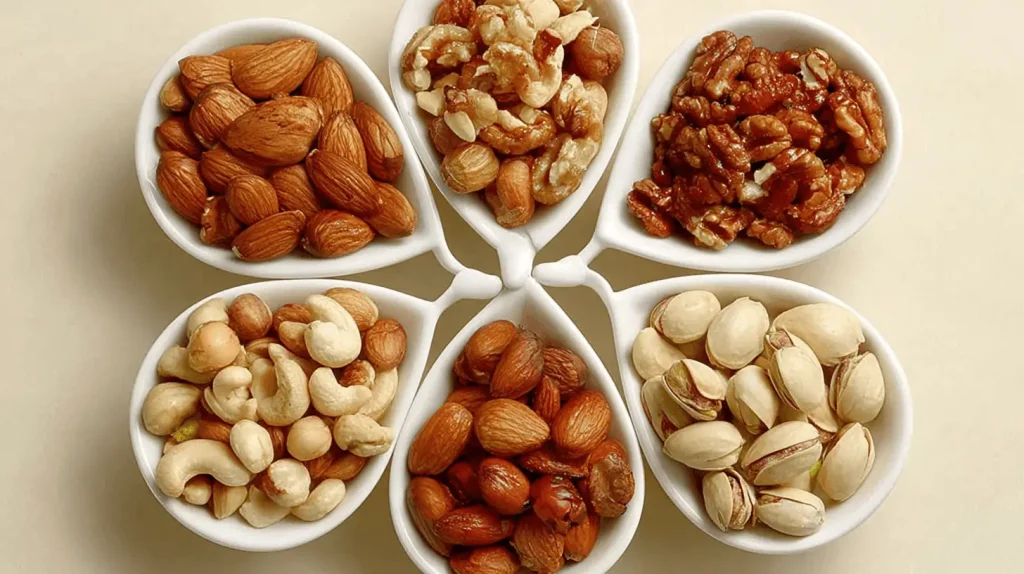
At the top of the list are pistachios, which demonstrated the greatest reduction in LDL cholesterol in meta-analyses (-0.17 mmol/L or 6.6 mg/dl). They are closely followed by almonds with an average reduction of 4.6 mg/dl and walnuts at 3.5 mg/dl. This ranking is based on head-to-head comparative studies testing different nuts under identical conditions.
Other effective nut varieties include:
- Macadamia nuts: Packed with monounsaturated fats, offering notable benefits at higher daily intakes
- Hazelnuts: Rich in vitamin E and plant sterols, which actively inhibit cholesterol absorption
- Pecans: High in polyphenols, antioxidants, and unsaturated fatty acids
- Cashew nuts and cholesterol: Cashews offer a moderate effect on LDL cholesterol whilst helping support HDL cholesterol levels
- Brazil nuts: An exceptional source of selenium, providing potent antioxidant support
Which is better for cholesterol: walnuts or almonds?
Comparing walnuts and almonds directly reveals that both are remarkably effective, albeit through slightly different nutritional mechanisms. Almonds, consumed at 40–75 grams per day in clinical trials, consistently produce an LDL reduction of 4–9%. Walnuts, on the other hand, stand out for their exceptional levels of omega-3 fatty acids (alpha-linolenic acid). Beyond lowering LDL cholesterol, walnuts help combat systemic inflammation and reduce small, dense LDL particles — the most atherogenic subfraction of low-density lipoproteins.
The consensus among nutritionists is clear: eating a varied mixture of nuts is the ideal approach to benefit from diverse nutrient profiles. However, if choosing a primary nut, both walnuts and almonds rank among the best nuts for cholesterol control with solid scientific backing.
Are peanuts as effective as other nuts for lowering cholesterol?
Although peanuts are botanically legumes, they are classified nutritionally as nuts. They provide a similar profile of healthy fats and have been shown to lower cholesterol in trials, though their impact is slightly less pronounced than that of walnuts, almonds, or pistachios. The advantage of peanuts is affordability, making them an accessible, budget-friendly option for everyday eating. To reap the benefits without unwanted sodium or additives, choose plain, unroasted, and unsalted peanuts.
Optimal Daily Portion: How Many Nuts Should You Eat?
How many nuts should you eat a day to lower cholesterol?
Clinical studies show a broad spectrum of effective quantities. The optimal daily intake is approximately 25–67 grams per day, depending on individual health goals and baseline lipid levels:
- Minimum effective dose: 10–20 grams per day (a small handful or roughly 7–15 nuts)
- Recommended standard dose: 25–30 grams per day (one generous handful) — aligning with NHS dietary advice
- Maximum study-tested dose: 67 grams per day (about two large handfuls) for the most pronounced effect
A simple rule of thumb: one handful of nuts daily is sufficient for most adults to achieve meaningful improvements in blood lipid profiles. This corresponds to around 25–30 grams, providing roughly 150–200 calories.
How many walnuts a day to lower cholesterol?
For walnuts specifically, research points to 40–43 grams per day, which equates to roughly half a cup or 7–8 whole shelled walnuts. In a two-year clinical trial, this daily amount led to significant improvements in lipid profiles without causing weight gain. Walnuts are particularly rich in alpha-linolenic acid (ALA), a plant-based omega-3 fatty acid that provides additional anti-inflammatory and cardiovascular benefits alongside cholesterol reduction.
How long does it take for nuts to lower cholesterol?
You do not have to wait months to see tangible changes: measurable improvements in blood lipid profiles appear within 4–6 weeks of regular nut consumption. Most clinical intervention trials run for 4–8 weeks and consistently demonstrate statistically significant reductions in LDL cholesterol within that timeframe.
To maintain these results and maximise cardiovascular disease risk reduction, nuts should become a permanent staple of your diet. Two-year longitudinal data show that lipid improvements persist and can even strengthen over time when nuts are eaten consistently as part of a balanced diet.
How Nuts Lower Cholesterol: Mechanisms of Action
Why do nuts lower cholesterol?
The cholesterol-lowering power of nuts stems from a multi-faceted physiological mechanism:
1. Displacing saturated fats: When nuts replace conventional snacks or processed meal components, they naturally reduce the intake of saturated fats and trans fats that elevate LDL cholesterol.
2. Unsaturated fats optimise lipid metabolism: The monounsaturated fats and polyunsaturated fatty acids abundant in nuts improve lipid clearance and decrease hepatic production of VLDL particles, the precursors to LDL cholesterol.
3. Plant sterols block intestinal absorption: Nuts contain plant sterols (phytosterols) that share a similar chemical structure to cholesterol, competitively inhibiting its absorption in the gut. As a result, more cholesterol is excreted rather than absorbed into the bloodstream.
4. Soluble fibre binds bile acids: The soluble fibre in nuts binds to bile acids in the digestive tract. Because bile acids are rich in cholesterol, the liver must draw more LDL cholesterol from the blood to synthesise new bile acids, lowering circulating levels.
5. Antioxidants protect LDL from oxidation: Nuts are rich in vitamin E, polyphenols, and other protective antioxidants that prevent LDL cholesterol from oxidising. Oxidised LDL is especially harmful to arterial walls and accelerates atherosclerosis.
Which nutrients in nuts lower LDL cholesterol?
The key active components in nuts responsible for lowering LDL cholesterol include:
- Unsaturated fatty acids: Making up 50–70% of total fat content, primarily oleic acid (omega-9) and linoleic acid (omega-6)
- Alpha-linolenic acid (ALA): Abundant in walnuts, this plant-based omega-3 fatty acid supports heart health
- Plant sterols: Providing 95–270 mg per 100g of nuts, directly impeding cholesterol absorption
- Soluble fibre: Providing 2–4g per serving, binding bile acids in the gut
- Polyphenols: Powerful antioxidants, found in high concentrations in walnuts and hazelnuts
- L-arginine: An amino acid that promotes nitric oxide production and improves vascular endothelial function
- Magnesium: Supports arterial elasticity and improves glucose metabolism
Raw vs Roasted: Choosing the Best Nuts for Cholesterol
Are roasted nuts as effective as raw nuts against cholesterol?
Here lies an essential, frequently overlooked factor: from a health perspective, raw nuts are significantly preferable. This is due to advanced glycation end-products (AGEs), also known as glycotoxins, which form at high temperatures in foods rich in fat and protein.
AGEs contribute to oxidative stress and chronic inflammation – both major factors that elevate cardiovascular disease risk. When nuts are roasted, their AGE content increases dramatically. Whilst boiled tofu, for example, displays low AGE levels, grilled or roasted tofu contains many times that amount. The same principle applies to nuts: raw nuts and seeds have low AGE concentrations, whereas roasted nuts are substantially higher.
In practical terms: choose raw, unroasted varieties whenever you are looking for the best nuts for cholesterol management. This also applies to nut butters – look for products made from 100% raw nuts without added palm oil, salt, or sugar.
Which nuts have the lowest cholesterol content?
This is a common question, but strictly speaking, an irrelevant one: all nuts are completely cholesterol-free, as cholesterol is found exclusively in animal-derived foods. Plant-based foods, including every variety of tree nut and peanut, contain no dietary cholesterol whatsoever. Instead, they provide plant sterols (phytosterols) – natural compounds structurally similar to cholesterol that block its absorption in the gut and actively help lower overall levels.
The more relevant question is: which nuts offer the most beneficial fatty acid profile? Here, walnuts, almonds, and pistachios lead the way, packed with beneficial monounsaturated fats and polyunsaturated fatty acids.
Which nuts increase cholesterol – or can eating too many raise your levels?
Fundamentally, no. There is no clinical evidence to suggest that consuming nuts – even in relatively generous amounts – will increase cholesterol levels. However, practical boundaries do apply: nuts are energy-dense (providing approximately 600–700 kcal per 100g), and excessive intake without substituting other foods can lead to weight gain. Being overweight, in turn, worsens blood lipid profiles and increases cardiovascular disease risk.
The solution: use nuts as a direct replacement for less healthy snacks, rather than eating them on top of your existing diet. Swapping crisps, biscuits, or other ultra-processed snacks for a portion of nuts allows you to gain all the cholesterol-lowering benefits without consuming surplus calories.
Nuts and Heart Health: More Than Just Lowering Cholesterol
Can nuts help prevent heart disease?
Undoubtedly – and the clinical evidence is overwhelming. Beyond simply reducing LDL cholesterol, incorporating the best nuts for cholesterol management provides a comprehensive package of cardioprotective benefits:
- Reduction in atherosclerosis: By lowering LDL cholesterol and delivering antioxidant activity, nuts slow the progression of plaque build-up in arterial walls.
- Improved vascular function: The L-arginine in nuts promotes nitric oxide production, which relaxes and widens blood vessels, supporting healthy blood flow.
- Anti-inflammatory action: Omega-3 polyunsaturated fatty acids and polyphenols reduce systemic chronic inflammation, a primary driver of heart disease.
- Blood pressure support: Regular nut consumption has been shown to achieve modest reductions in blood pressure.
- Better blood lipid profiles: Alongside reducing LDL cholesterol, nuts also help improve triglycerides and maintain protective HDL cholesterol levels.
Long-term epidemiological studies demonstrate that individuals who regularly eat nuts have a 30–50% reduced risk of coronary heart disease compared to those who rarely or never eat them.
Can nuts raise HDL cholesterol (good cholesterol)?
Research on this specific outcome shows mixed results. Whilst nuts consistently lower LDL cholesterol, their effect on HDL cholesterol (the “good” cholesterol) is generally neutral to mildly positive. Some clinical trials demonstrate modest increases in HDL, whilst others report no significant shift.
However, what matters far more than the absolute HDL number is the total cholesterol-to-HDL or LDL/HDL ratio. This ratio improves substantially with regular nut consumption because LDL falls whilst HDL remains stable or slightly increases. A lower LDL/HDL ratio is strongly linked to reduced cardiovascular disease risk.
How do nuts affect triglycerides?
In individuals with elevated baseline levels, nuts can significantly reduce triglycerides – clinical trials have observed reductions of up to 20.6 mg/dl (approx. 0.23 mmol/L). Walnuts are particularly potent here thanks to their exceptionally high plant-based omega-3 content. Conversely, in people with normal baseline triglyceride readings, the effect is minimal.
This highlights a crucial clinical insight: nuts exert their strongest therapeutic effects in people with elevated starting values. The higher your initial LDL cholesterol or triglycerides, the greater the improvement you are likely to experience from eating nuts consistently.
Cholesterol and Diet: How to Add Nuts to Your Routine
When is the best time to eat nuts: morning or evening?
The reassuring answer: timing does not meaningfully affect their cholesterol-lowering efficacy. Studies comparing different consumption times throughout the day found no significant variance in final blood lipid profiles. What truly matters is consistent, daily consumption.
Practical suggestions for your day:
- Morning: Stir nuts into muesli or use them as a topping on warm porridge oats to provide long-lasting satiety and soluble fibre.
- Midday / Afternoon: Enjoy a small handful as a desk-side snack between meals to prevent energy dips and cravings.
- Evening: Scatter toasted or raw kernels across a fresh dinner salad, or enjoy them as a satisfying alternative to crisps whilst relaxing in the evening.
Practical everyday tips:
- Pre-portion small 25–30g snack bags of nuts at the start of the week to take to work.
- Scatter chopped walnuts or almonds over salads, roasted vegetables, and hearty soups.
- Use 100% smooth raw nut butter as a nutrient-dense spread on wholemeal toast instead of dairy butter or margarine.
- Blend nuts or nut butters into smoothies for extra plant protein, soluble fibre, and healthy monounsaturated fats.
- Replace traditional breadcrumb coatings on chicken or fish fillets with finely crushed nuts.
- Use ground almonds or hazelnut meal in home baking recipes in place of refined white flour.
Frequently Asked Questions
Can nuts replace cholesterol-lowering medication?
No, never stop or alter prescribed medication on your own initiative. If your GP has prescribed lipid-lowering medication (such as statins), you must not discontinue them without medical advice. However, eating the best nuts for cholesterol support serves as an excellent dietary adjunct to medical therapy and may assist in achieving target lipid levels on lower medication doses.
For individuals with mildly raised cholesterol that does not yet warrant pharmaceutical intervention, combining daily nuts with broader dietary adjustments (more wholemeal grains, pulses, vegetables, and less saturated fat) can often help manage levels naturally. Speak with your GP or a registered dietitian to establish an individualised nutrition plan.
What do the NHS and the British Dietetic Association (BDA) say about nuts and cholesterol?
As part of a heart-healthy diet, UK health guidelines and the British Dietetic Association (BDA) recommend consuming a small handful of nuts daily (around 25–30g). This advice is backed by extensive clinical evidence demonstrating their cardioprotective benefits and ability to lower LDL cholesterol. Guidelines emphasize using nuts as a substitute for snacks high in saturated fats, rather than simply adding them on top of an already high-calorie diet.
Importantly, health professionals recommend choosing plain, unsalted, and unroasted nuts to keep sodium intake minimal and avoid elevated AGE compounds.
How quickly do nuts work to lower high cholesterol?
Most clinical trials record measurable improvements in blood lipid profiles after 4–6 weeks of daily nut consumption. Some dietary interventions demonstrate statistically significant reductions in LDL cholesterol in as little as 3–4 weeks. Peak benefits are typically reached within 2–3 months and remain stable with sustained daily intake.
If you would like an objective assessment of how they work for you: request a baseline lipid panel from your GP, introduce a 30g daily serving of nuts into your diet for 6–8 weeks, and arrange a follow-up test to review your progress.
Scientific References
- Siqueira APS, Pacheco MTB, Naves MMV. (2015). Nutritional quality and bioactive compounds of partially defatted baru almond flour. Food Science and Technology (Campinas), 35(1):127-32.
- Union of Concerned Scientists. (2016). The importance of Brazil’s Cerrado. October 2016.
- Marques T. (2014). Chemical composition of processed baru (Dipteryx alata Vog.) almonds: Lyophilization and roasting. African Journal of Agricultural Research, 9(13):1061-9.
- Borges TH, Rodrigues N, De Souza AM, Pereira JA. (2014). Effect of different extraction conditions on the antioxidant potential of baru almonds. Journal of Food & Nutrition Research, 53(2):180-8.
- Araujo ACF, et al. (2017). Consumption of baru nuts (Dipteryx alata) in the treatment of obese mice. Ciência Rural, 47(2):1-4.
- Fernandes DC, Alves AM, De Castro G, Jordao AA. (2015). Journal of Food Research, 4(4):38-46.
- Bento AP, Cominetti C, Simões Filho A, Naves MM. (2014). Baru almond improves lipid profile in mildly hypercholesterolemic subjects. Nutrition, Metabolism and Cardiovascular Diseases, 24(12):1330-6.
- Tamizifar B, et al. (2005). A low-dose almond-based diet decreases LDL-C while preserving HDL-C. Archives of Iranian Medicine, 8(1):45-51.
- Jamshed H, Sultan FA, Iqbal R, Gilani AH. (2015). Dietary Almonds Increase Serum HDL Cholesterol in Coronary Artery Disease Patients. Journal of Nutrition, 145(10):2287-92.
- Musa-Veloso K, Paulionis L, Poon T, Lee HY. (2016). The effects of almond consumption on fasting blood lipid levels. Journal of Nutritional Science, 5:e34.
- Lemos MRB, de Almeida Siqueira EM, Arruda SF, Zambiazi RC. (2012). The effect of roasting on the phenolic compounds and antioxidant potential of baru nuts. Food Research International, 48(2):592-7.
- Uribarri J, Woodruff S, Goodman S, et al. (2010). Advanced glycation end products in foods and practical reduction guide. Journal of the American Dietetic Association, 110(6):911-16.
- de Souza RGM, Gomes AC, de Castro IA, Mota JF. (2018). A baru almond-enriched diet reduces abdominal adiposity. Nutrition, 55-56:154-60.
References
Systematic reviews, meta-analyses and controlled trials relating to the topic of this article. Every link was checked for accessibility on 16 August 2026.
- Wong HY, Coates AM, Carter S et al.: Does Medication Status Impact the Effectiveness of Nuts in Altering Blood Pressure and Lipids? A Systematic Review and Meta-Analysis. 2025. PubMed 40168679. DOI: 10.1093/nutrit/nuaf033.
- Guadagni AJ, Paton CM, Cooper JA. et al.: Dose-Response Effects of Pecan Consumption on Blood Lipid Profiles in Adults with Excess Body Weight and/or Dyslipidemia: a Randomized Controlled Trial. 2026. PubMed 41651071. DOI: 10.1016/j.tjnut.2026.101396.
- Olas B.: The Cardioprotective Properties of Selected Nuts: Their Functional Ingredients and Molecular Mechanisms. 2024. PubMed 38254543. DOI: 10.3390/foods13020242.
- Schoeneck M, Iggman D: The effects of foods on LDL cholesterol levels: A systematic review of the accumulated evidence from systematic reviews and meta-analyses of randomized controlled trials. Nutrition, metabolism, and cardiovascular diseases : NMCD 2021. PubMed 33762150. DOI: 10.1016/j.numecd.2020.12.032.