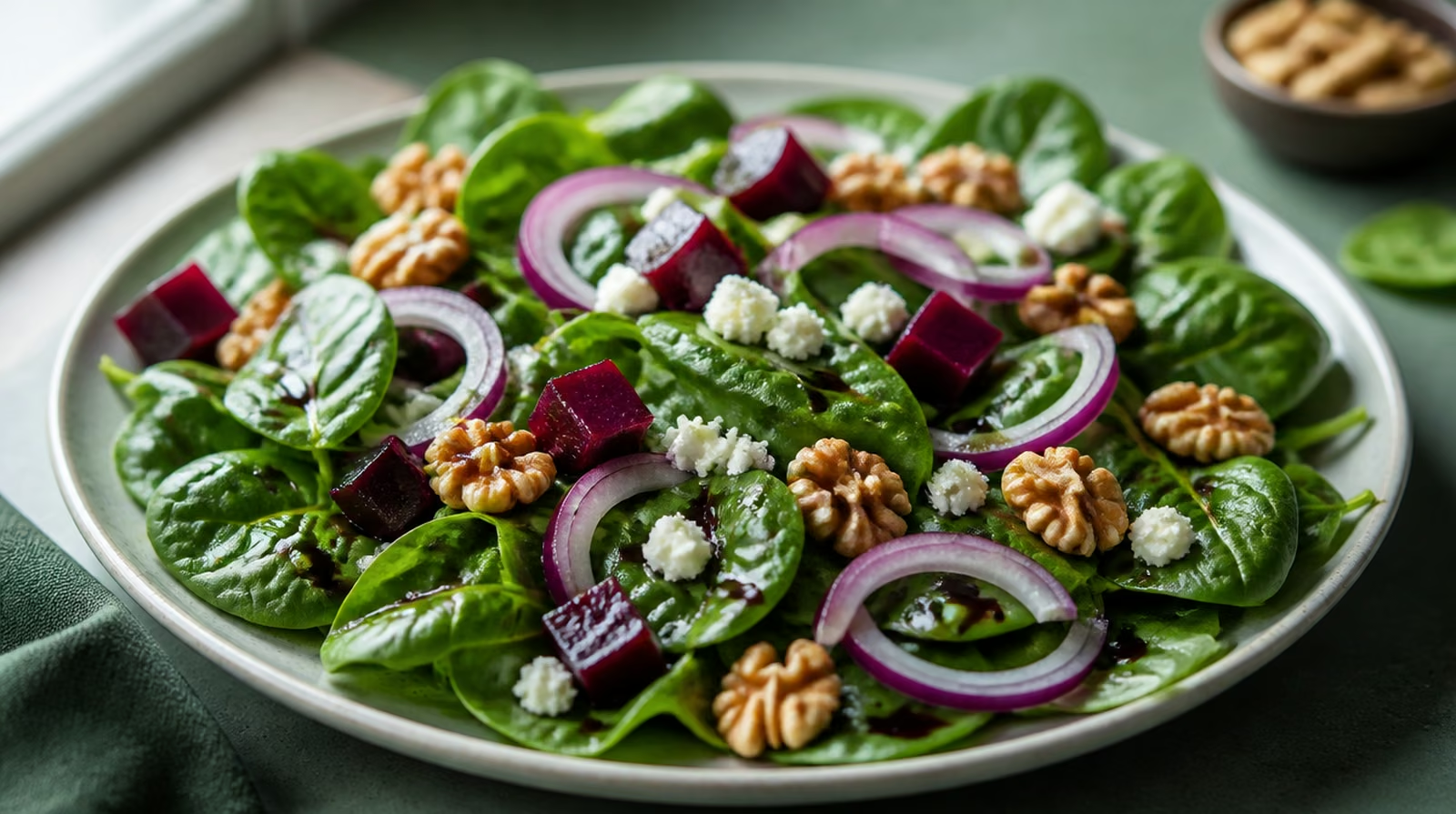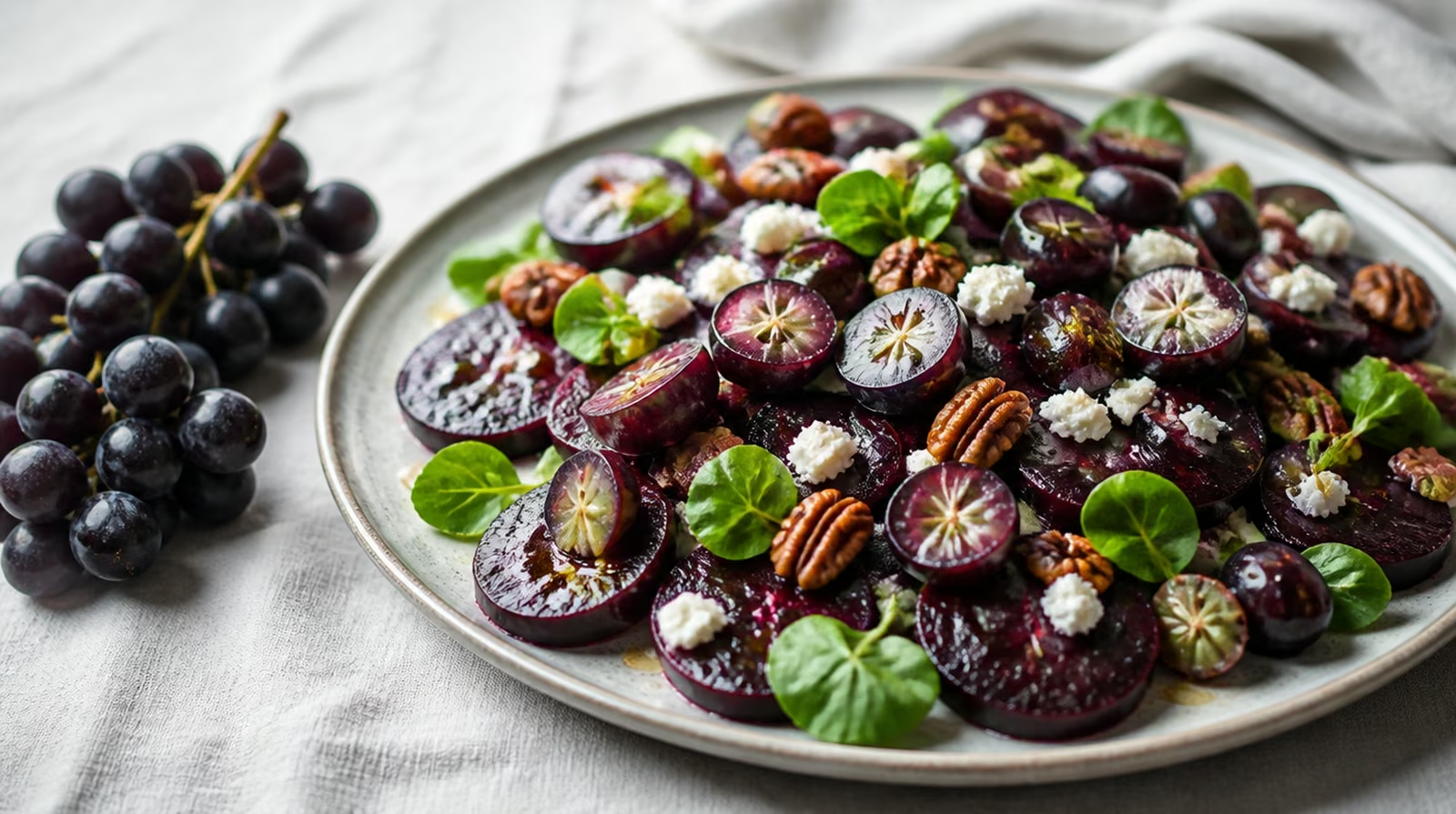
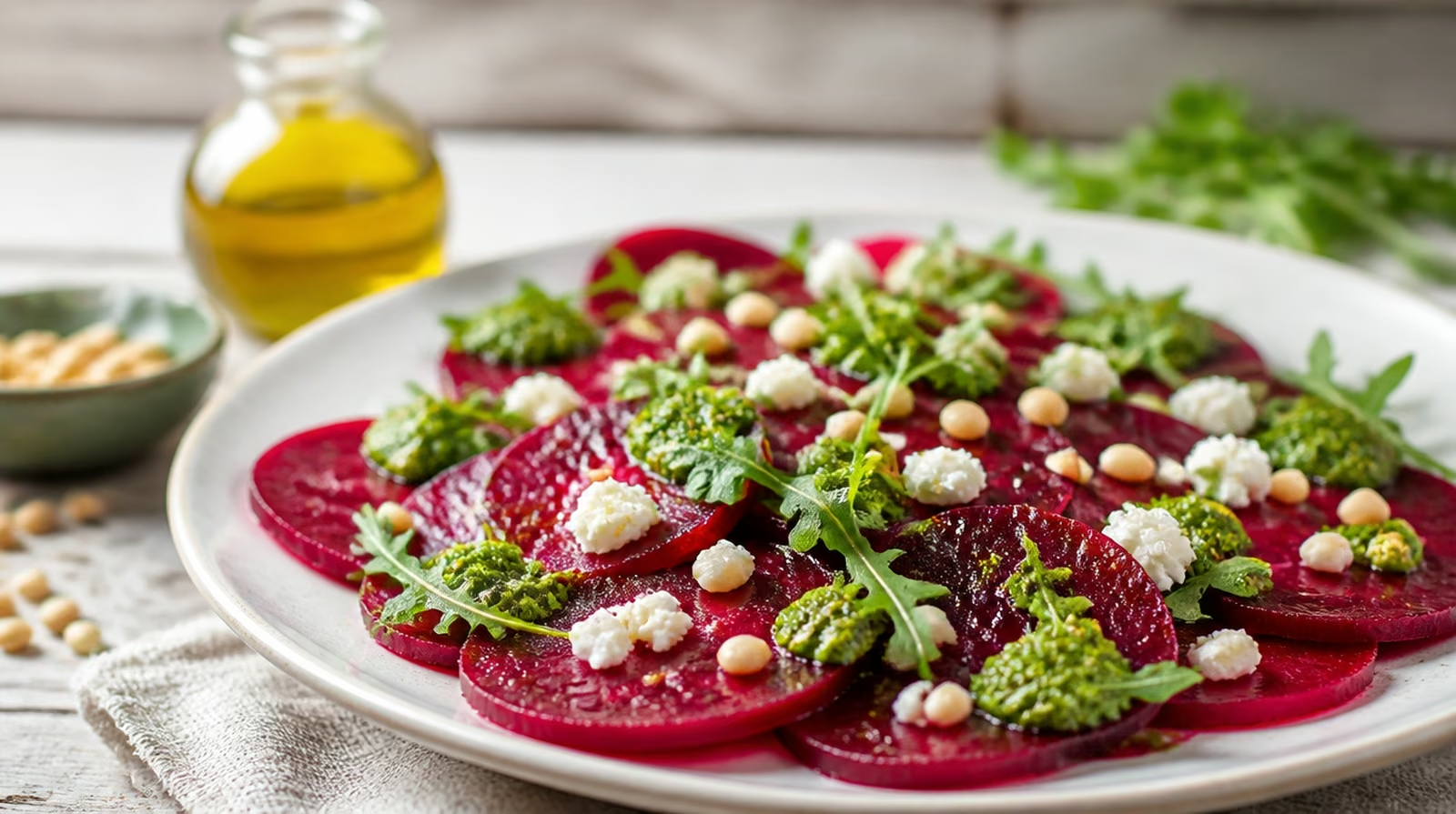
There is an instinct that has persisted since the 1990s: salads are healthy, oil is unhealthy, so we reach for a low fat dressing or skip it altogether. When it comes to a beetroot salad, this habit is not just outdated – it measurably reduces your nutrient absorption.
This Spanish-inspired recipe, a beetroot salad with pesto and feta, instinctively gets it right. Here is why.
Nutrient absorption: what is left behind with a low fat dressing
Nutrients broadly fall into two camps: water-soluble and fat-soluble. Fat-soluble vitamins – including vitamin A, D, vitamin E and K, along with the entire family of carotenoids – require dietary fats as a carrier for efficient gut absorption. Without fat present in the same meal, a significant proportion passes through the digestive tract unabsorbed, severely limiting bioavailability.
Controlled trials examining salad meals have investigated just how large this proportion is. The findings were far more striking than most expect: with a completely fat-free dressing, the uptake of carotenoids was virtually zero. Only as the fat content in the dressing increased did the amount actually reaching the bloodstream rise accordingly.
For a beetroot salad with leafy greens and feta, the practical implications are clear: the vitamin K from the salad greens, the carotenoids from the red onion and fresh herbs, and the vitamin E from the seeds or nuts in the pesto – all rely entirely on oil for proper nutrient absorption.
Betalains are the exception
Then there are betalains, the deep red pigments found in beetroot itself. These are water-soluble and do not require dietary fat for transport – they are absorbed effectively even without it.
Their vulnerability lies elsewhere: heat and light. Betanin degrades during prolonged boiling, and as it breaks down, its antioxidant activity declines. That is why a cold salad made with gently cooked beetroot is superior in this respect to any heavily boiled dish. For the gentle cooking method, see our foundational guide.
What is the healthiest dressing to put on your salad? Why olive oil
Not all fats perform the same function, and the differences extend far beyond their fatty acid profiles.
Extra virgin olive oil contains potent polyphenols – notably oleocanthal and oleuropein – which refined oils lose during processing. Oleocanthal is the compound responsible for that characteristic peppery tickle in the back of the throat when an oil is fresh and robust. That slight burning sensation is a hallmark of quality, not a defect.
For olive oil containing at least 5 milligrams of hydroxytyrosol and its derivatives per 20 grams, health authorities permit the claim that these polyphenols contribute to the protection of blood lipids from oxidative stress. This is one of the very few authorised health claims; the majority of submissions have been firmly rejected by the EFSA.
Practical tip: For cold applications such as dressings and pesto, choose extra virgin olive oil, ideally from a dark glass bottle stored well away from the heat of the cooker. For shallow frying, a standard, more affordable cooking oil is perfectly adequate.
The pesto: low fat dressing recipes and what to adapt
Classic basil pesto consists of fresh basil, pine nuts, parmesan, garlic, olive oil and salt. When paired with feta in a salad, this doubles up on sodium – shop-bought jarred pesto often contains 2 to 3 grams of salt per 100 grams, and parmesan adds even more.
A sensible modification: make your own pesto and either omit the cheese entirely or halve it, since the feta in the salad already fulfils the same savoury role.
Salad pesto dressing, serves 4:
- 1 large bunch of fresh basil (approx. 50 g)
- 30 g pine nuts or sunflower seeds
- 1 small garlic clove
- 6 tbsp extra virgin olive oil
- A squeeze of fresh lemon juice
- Freshly ground black pepper, very little salt
Dry-toast the seeds or nuts in a pan and leave them to cool. Blend everything briefly – do not over-process, as the friction heat can turn the basil bitter and darken its colour.
Pine nuts can be pricey, but they are easily swapped for sunflower seeds or pumpkin seeds. Pumpkin seeds offer the added benefit of extra zinc.
The salad
Serves 4
- 400 g cooked beetroot, sliced or diced
- 150 g feta
- 100 g rocket or mixed salad leaves
- 1 small red onion
- The pesto dressing from above
- Optional: a handful of cherry tomatoes
To serve: Arrange the beetroot across the plate and spoon the pesto over it in dollops – avoid stirring it in, otherwise the dish turns a uniform muddy purple. Scatter the rocket, red onion and crumbled feta over the top. Finish with a few drops of olive oil.
The striking visual contrast between the vivid green pesto and the deep purple beetroot is half the appeal of this dish. However, it only holds if you resist the urge to mix everything together.
How much fat is too much? Healthy salad dressing for weight loss
A fair question. A salad dressed with 6 tablespoons of oil and 150 grams of feta is hardly a low-calorie diet dish – each portion comes to roughly 450 calories, with the majority coming from fat.
The argument is not that more fat is indefinitely better. In nutrient absorption studies, the uptake curve plateaus: around 6 grams of fat per meal was sufficient to achieve the vast majority of the benefit, with higher amounts offering little additional absorption.
In practical terms: one tablespoon of good quality oil per serving is plenty to unlock essential fat-soluble vitamins. Anything beyond that is a culinary choice rather than a nutritional necessity. If your goal is a healthy salad dressing for weight loss, you are better off cutting back on the cheese rather than stripping away the oil – cheese does not play a comparable role in facilitating nutrient bioavailability.
Nutritional values per portion (estimated)
| Per serving | |
|---|---|
| Energy | approx. 450 kcal |
| Protein | approx. 11 g |
| Fat | approx. 38 g |
| of which monounsaturates | approx. 24 g |
| Carbohydrate | approx. 12 g |
| Vitamin K | High (salad leaves + oil) |
The takeaway rule
A zero-fat dressing is the worst possible choice for a vegetable salad – it saves 80 calories at the expense of the fat-soluble nutrients across the entire plate. If you are searching for the best low fat dressing approach, simply reduce the quantity of quality olive oil rather than switching to an ultra-processed, water-based commercial dressing.
To discover what else a dressing can do for your health, read our article on making homemade vinaigrette.
References
- Luo M, Xiao H.: Black Pepper and Dietary Lipids Synergistically Enhance Carotenoid Bioavailability: A Narrative Review. 2026. PubMed 42186282. DOI: 10.1093/nutrit/nuaf248.
- Lindenmayer LA, Mayer MJ, Schmöckel SM et al.: Saponins Do Not Impede the Bioaccessibility of Minerals and Fat-Soluble Vitamins from Different Quinoa Genotypes. 2026. PubMed 42030452. DOI: 10.1021/acs.jafc.6c01729.
- Zugravu CA, Petre M, Constantin C. et al.: Traditional Food Systems as Nutrient Optimization Architectures: Mechanisms of Bioavailability and Dietary Resilience. 2026. PubMed 42124046. DOI: 10.3390/nu18091448.
- Kurniawan SB, Subramaniam SV, Hasan HA et al.: Advances in Sustainable Lutein Production: Sources, Technologies, and Functional Applications. 2026. PubMed 42195918. DOI: 10.3390/foods15101717.
- Hao M, Tan X, Liu K et al.: Nanoencapsulation of nutraceuticals: enhancing stability and bioavailability in functional foods. 2025. PubMed 41601897. DOI: 10.3389/fnut.2025.1746176.
- Omer E, Chiodi C: Fat digestion and absorption: Normal physiology and pathophysiology of malabsorption, including diagnostic testing. Nutrition in clinical practice : official publication of the American Society for Parenteral and Enteral Nutrition 2024. PubMed 38429963. DOI: 10.1002/ncp.11130.
- Flieger J, Raszewska-Famielec M, Radzikowska-Büchner E et al.: Skin Protection by Carotenoid Pigments. International journal of molecular sciences 2024. PubMed 38338710. DOI: 10.3390/ijms25031431.
- Chungchunlam SMS, Moughan PJ: Comparative bioavailability of vitamins in human foods sourced from animals and plants. Critical reviews in food science and nutrition 2024. PubMed 37522617. DOI: 10.1080/10408398.2023.2241541.
- Mrowicka M, Mrowicki J, Kucharska E et al.: Lutein and Zeaxanthin and Their Roles in Age-Related Macular Degeneration-Neurodegenerative Disease. Nutrients 2022. PubMed 35215476. DOI: 10.3390/nu14040827.
- Stevens SL: Fat-Soluble Vitamins. The Nursing clinics of North America 2021. PubMed 33549284. DOI: 10.1016/j.cnur.2020.10.003.
- Li LH, Lee JC, Leung HH et al.: Lutein Supplementation for Eye Diseases. Nutrients 2020. PubMed 32526861. DOI: 10.3390/nu12061721.