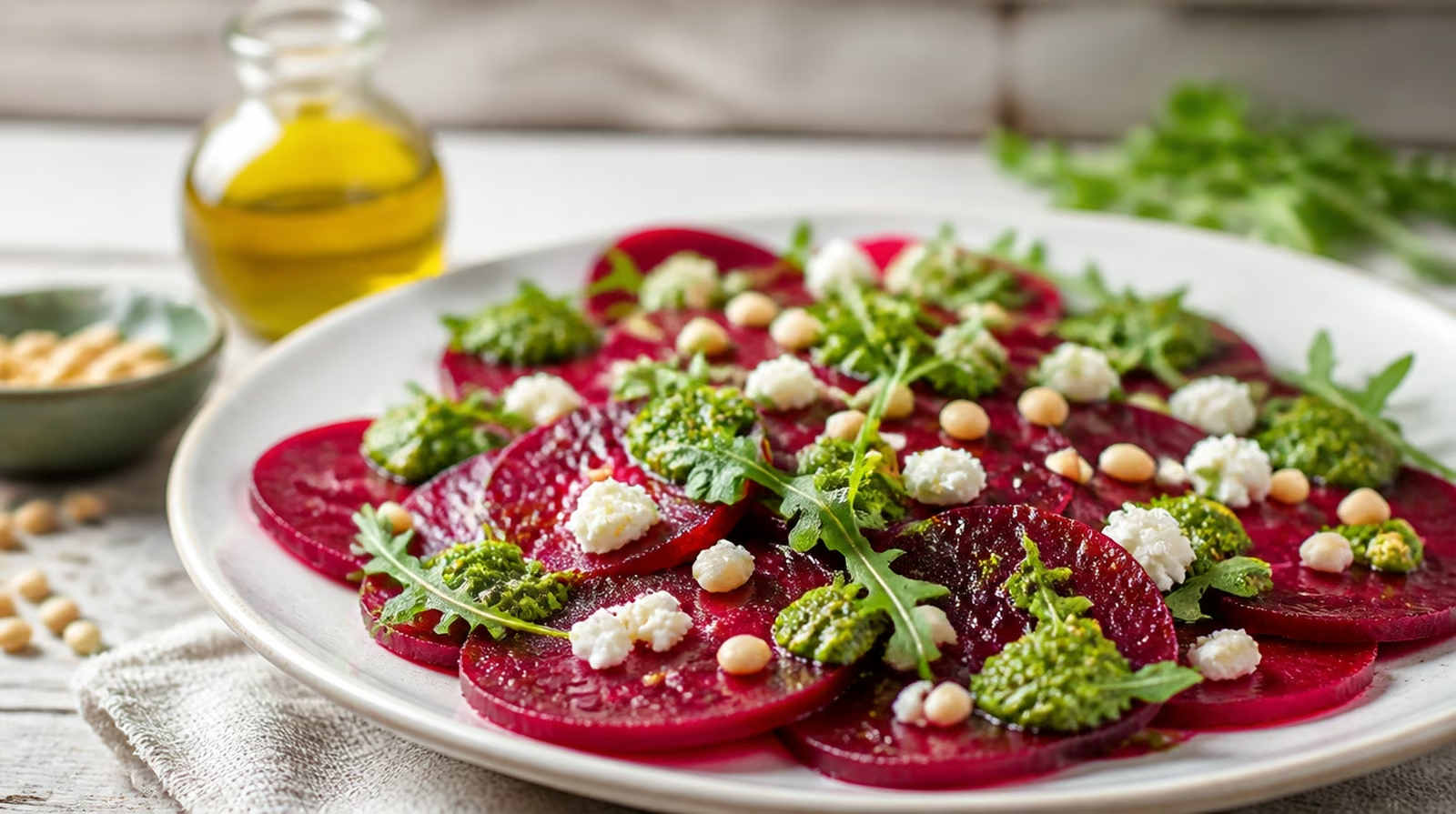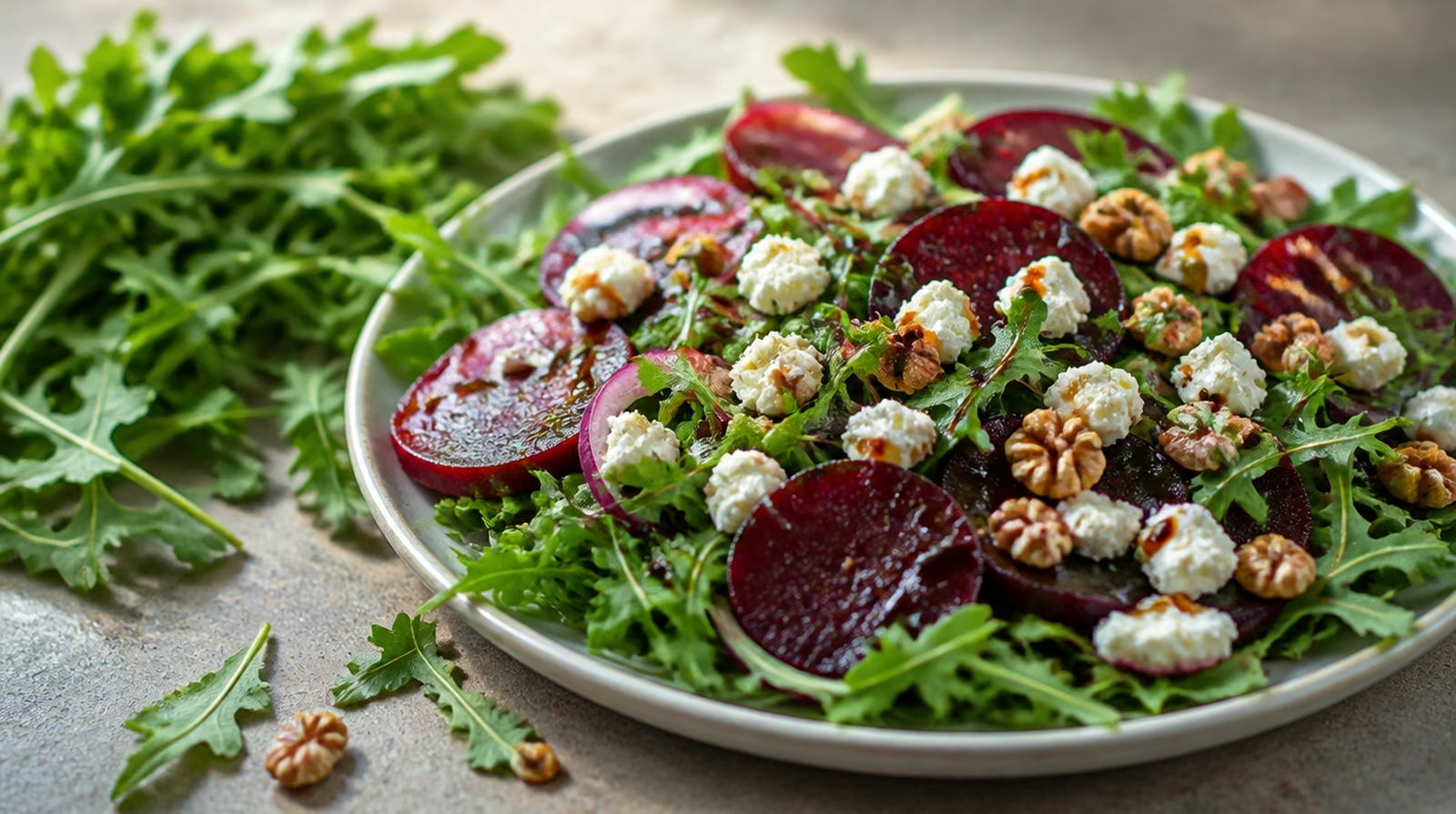
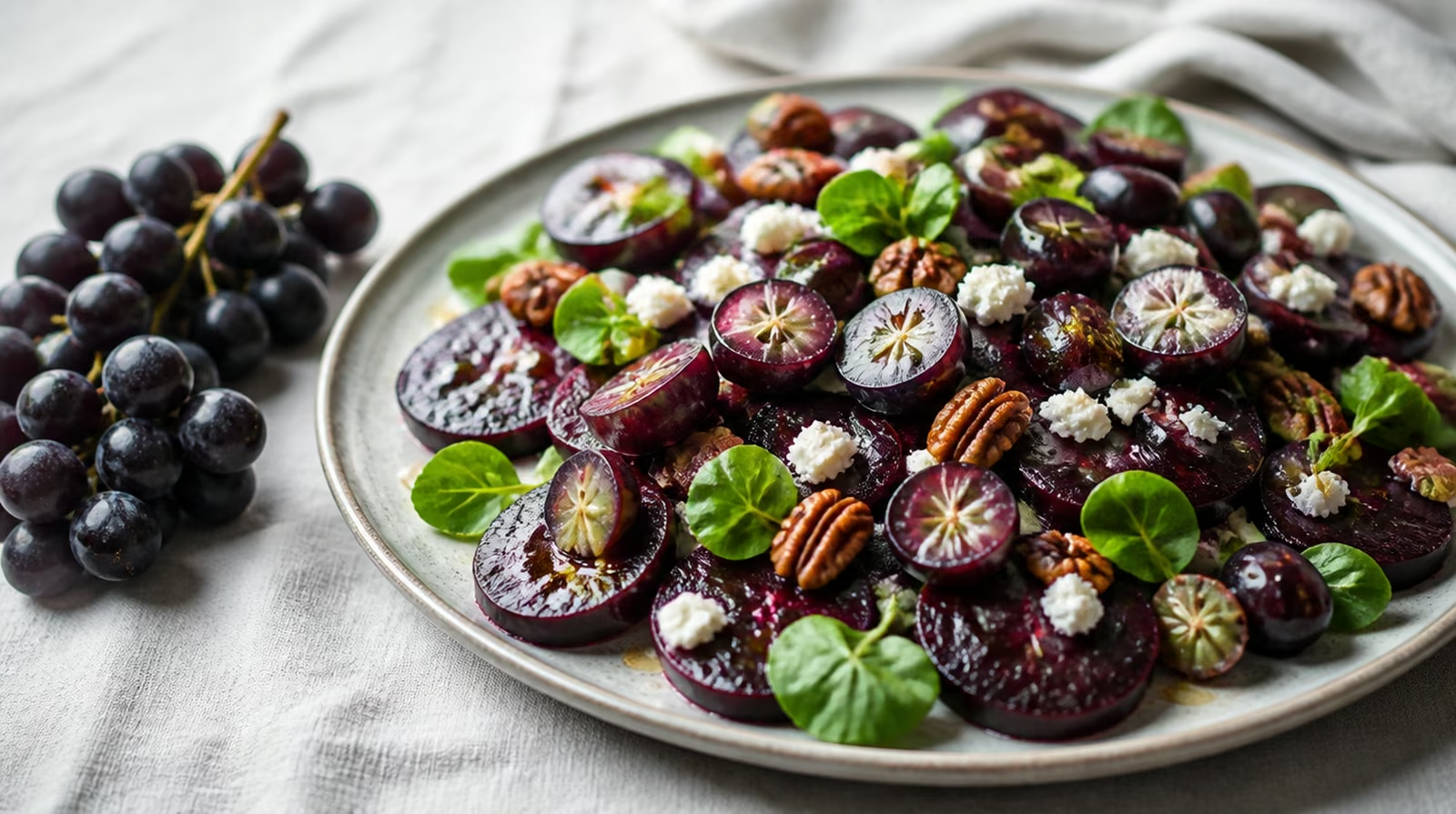
Including grapes in salad dishes is a Dutch culinary idea that might seem surprising at first, but quickly makes complete sense in a savoury salad. The sweetness cuts through the earthy flavour of beetroot and feta, while the tanginess of the cheese balances both elements perfectly.
Yet whenever fruit in salad is on the menu, the same question arises—and it is rarely answered honestly: at what point does a healthy lunch become a dessert trap topped with cheese?
Sugar in salad: doing the maths
Grapes are among the fruits with the highest natural sugar content. A 100-gram serving contains around 15 grams of sugar—roughly twice as much as strawberries, and considerably more than an apple.
A handful of grapes in salad for two people comes to about 100 grams, meaning 50 grams per portion and roughly 7.5 grams of sugar. That equals just under two teaspoons.
To put this into perspective: WHO sugar guidelines recommend limiting free sugars to under 10 per cent of daily energy intake, and ideally below 5 per cent. Fructose from whole fruit does not count as free sugar—that category refers to added sugars, alongside sugars found in fruit juices and syrups. The reason for this distinction lies in the food matrix: in whole fruit, the sugars are bound inside cellular walls, surrounded by dietary fibre, water, and polyphenols. They are absorbed far more slowly.
The verdict is therefore reassuring: a handful of grapes in salad is completely unproblematic. Grazing through half a kilogram of grapes as an afternoon snack is a different matter—and with grapes, that happens all too easily because they require virtually no chewing effort.
What is inside the skin
The reason grapes still deserve a mention on a health website, despite their sugar content, lies within their skins and seeds.
Resveratrol is the most famous compound found here, made renowned by the so-called French paradox and red wine. A dose of realism is needed, however: the concentrations that show effects in laboratory cell studies are virtually impossible to obtain from food alone. Red grapes contain small amounts depending on the variety and cultivation methods, whilst white grapes contain significantly less.
Far more interesting are the anthocyanins and proanthocyanidins—the same family of plant pigments that colour beetroot, blueberries, and red cabbage. These are present in measurable quantities and contribute to the antioxidant capacity of a meal.
Practical takeaway: dark, seeded grapes beat white, seedless ones. Seedless varieties have been bred for convenience, yet the seeds hold the majority of the proanthocyanidins. If you dislike seeds, halve the grapes and flick them out—that way you still retain the valuable skin and flesh.
A second pigment in a salad with grapes and feta
What makes this combination remarkable is the coming together of two completely distinct classes of plant pigments. Beetroot is one of the few foods that owes its vibrant colour not to anthocyanins, but to betalains—a nitrogen-containing group of compounds found almost exclusively in the order Caryophyllales (the carnation order).
In the plant kingdom, betalains and anthocyanins are practically mutually exclusive: a plant synthesises one or the other, never both. On this plate, however, they arrive side by side—two separate antioxidant systems combined in a single bowl.
Grapes in salad recipe with beetroot and feta
Serves 2
- 250 g cooked beetroot
- 100 g dark grapes
- 100 g feta
- 60 g lamb’s lettuce or rocket
- 30 g walnuts or pecans
- 2 tbsp olive oil
- 1 tbsp white wine vinegar
- 1 tsp mustard
- Pepper
Method: Slice the beetroot and halve the grapes. Whisk the dressing together. Arrange the salad leaves as a base, scatter over the beetroot and grapes, crumble over the feta, and finish with the nuts.
Wash the grapes beforehand and dry them thoroughly—wet grapes prevent the dressing from clinging and will water down the salad.
Substitutions: from a salad with grapes and apples to berries
Grapes are easily substituted here. If you want alternative fruit options that work just as well with less sugar:
| Alternative to grapes | Sugar per 100 g | Culinary difference |
|---|---|---|
| Grapes | 15 g | Reference, sweetest option |
| Pear | 12 g | Softer, less bite |
| Apple | 10 g | More tart, crisper bite |
| Pomegranate seeds | 14 g | Higher acidity, tangy burst |
| Raspberries | 4.5 g | Noticeably tarter, breaks down easily |
Pomegranate seeds make the most interesting swap: similarly sweet, but offering greater acidity alongside punicalagins, which are among the most potent plant antioxidants known.
Nutritional values per portion (estimated)
| Per portion | |
|---|---|
| Energy | approx. 400 kcal |
| Protein | approx. 12 g |
| Fat | approx. 28 g |
| Carbohydrates | approx. 22 g |
| of which sugars | approx. 16 g |
| Dietary fibre | approx. 5 g |
Sixteen grams of sugar per portion might sound high, but it originates entirely from vegetables and fruit. By comparison, a standard commercial fruit yoghurt of a similar portion weight contains substantially more, with the majority coming from added sugars.
Who should take note
For anyone managing type 2 diabetes or insulin resistance, portion control with grapes is sensible to manage blood sugar impact—there is no need to avoid them, but sticking to 50 grams per portion rather than adding extra is wise. Why beetroot itself does not pose an issue is explained in our blood sugar article.
References
- Mattioli R, Francioso A, Mosca L et al.: Anthocyanins: A Comprehensive Review of Their Chemical Properties and Health Effects on Cardiovascular and Neurodegenerative Diseases. Molecules (Basel, Switzerland) 2020. PubMed 32825684. DOI: 10.3390/molecules25173809.
- Jaganjac M, Orie NN.: Modulation of Redox Balance by Phytochemicals: Implications for Cardiovascular Health. 2026. PubMed 42075017. DOI: 10.3390/nu18081204.
- Bas TG.: Dietary Polyphenols (Flavonoids) Derived from Plants for Use in Therapeutic Health: Antioxidant Performance, ROS, Molecular Mechanisms, and Bioavailability Limitations. 2026. PubMed 41683824. DOI: 10.3390/ijms27031404.
- Akif A, Munami JW, Das R et al.: Dietary Polyphenols in Non-Communicable Chronic Diseases: Neuro-Enteric Mechanisms, Multi-Omics Biomarkers and Translational Opportunities. 2026. PubMed 42079325. DOI: 10.1002/fsn3.71856.
- Alharbi NA.: Polyphenol metabolites in fermented foods: biotransformation, bioavailability, and functional roles. 2026. PubMed 41693952. DOI: 10.3389/fnut.2026.1767453.
- Wu X, Muharib D, Boesch C et al.: Potential Role of Polyphenols in Platelet Aggregation and Blood Coagulation. 2026. PubMed 42188105. DOI: 10.3390/jcdd13050219.
- Calcaterra V, Cena H, Conti MV et al.: Dietary polyphenols in pediatric obesity and cardiometabolic risk: mechanisms and clinical evidence. 2026. PubMed 42325523. DOI: 10.3389/fnut.2026.1849842.
- Medeiros SGF, Guimarães RCA, Inada AC et al.: Polyphenols as Adjuvant Treatment for Heart Failure with Preserved Ejection Fraction (HFpEF): A Review. 2026. PubMed 41897468. DOI: 10.3390/antiox15030322.
- Teparak C, Uriyapongson J, Phoemsapthawee J et al.: Diabetes Therapeutics of Prebiotic Soluble Dietary Fibre and Antioxidant Anthocyanin Supplement in Patients with Type 2 Diabetes: Randomised Placebo-Controlled Clinical Trial. Nutrients 2025. PubMed 40218856. DOI: 10.3390/nu17071098.
- Ahmad Z, Rauf A, Orhan IE et al.: Antioxidant Potential of Polyphenolic Compounds, Sources, Extraction, Purification and Characterization Techniques: A Focused Review. 2025. PubMed 41383579. DOI: 10.1002/fsn3.71259.
- Liang A, Leonard W, Beasley JT et al.: Anthocyanins-gut microbiota-health axis: A review. Critical reviews in food science and nutrition 2024. PubMed 36927343. DOI: 10.1080/10408398.2023.2187212.
- Sahoo DK, Heilmann RM, Paital B et al.: Oxidative stress, hormones, and effects of natural antioxidants on intestinal inflammation in inflammatory bowel disease. Frontiers in endocrinology 2023. PubMed 37701897. DOI: 10.3389/fendo.2023.1217165.
- Naz R, Saqib F, Awadallah S et al.: Food Polyphenols and Type II Diabetes Mellitus: Pharmacology and Mechanisms. Molecules (Basel, Switzerland) 2023. PubMed 37241737. DOI: 10.3390/molecules28103996.
- Grabska-Kobyłecka I, Szpakowski P, Król A et al.: Polyphenols and Their Impact on the Prevention of Neurodegenerative Diseases and Development. Nutrients 2023. PubMed 37571391. DOI: 10.3390/nu15153454.
- Yang K, Chen J, Zhang T et al.: Efficacy and safety of dietary polyphenol supplementation in the treatment of non-alcoholic fatty liver disease: A systematic review and meta-analysis. Frontiers in immunology 2022. PubMed 36159792. DOI: 10.3389/fimmu.2022.949746.
- Kalt W, Cassidy A, Howard LR et al.: Recent Research on the Health Benefits of Blueberries and Their Anthocyanins. Advances in nutrition (Bethesda, Md.) 2020. PubMed 31329250. DOI: 10.1093/advances/nmz065.
- Castaldo L, Narváez A, Izzo L et al.: Red Wine Consumption and Cardiovascular Health. Molecules (Basel, Switzerland) 2019. PubMed 31597344. DOI: 10.3390/molecules24193626.
- Durazzo A, Lucarini M, Souto EB et al.: Polyphenols: A concise overview on the chemistry, occurrence, and human health. Phytotherapy research : PTR 2019. PubMed 31359516. DOI: 10.1002/ptr.6419.
- Wood E , Hein S , Heiss C et al.: Blueberries and cardiovascular disease prevention. Food & function 2019. PubMed 31776541. DOI: 10.1039/c9fo02291k.
- Fang J: Bioavailability of anthocyanins. Drug metabolism reviews 2014. PubMed 25347327. DOI: 10.3109/03602532.2014.978080.
- Mullin GE: Red wine, grapes, and better health–resveratrol. Nutrition in clinical practice : official publication of the American Society for Parenteral and Enteral Nutrition 2011. PubMed 22205561. DOI: 10.1177/0884533611423927.