
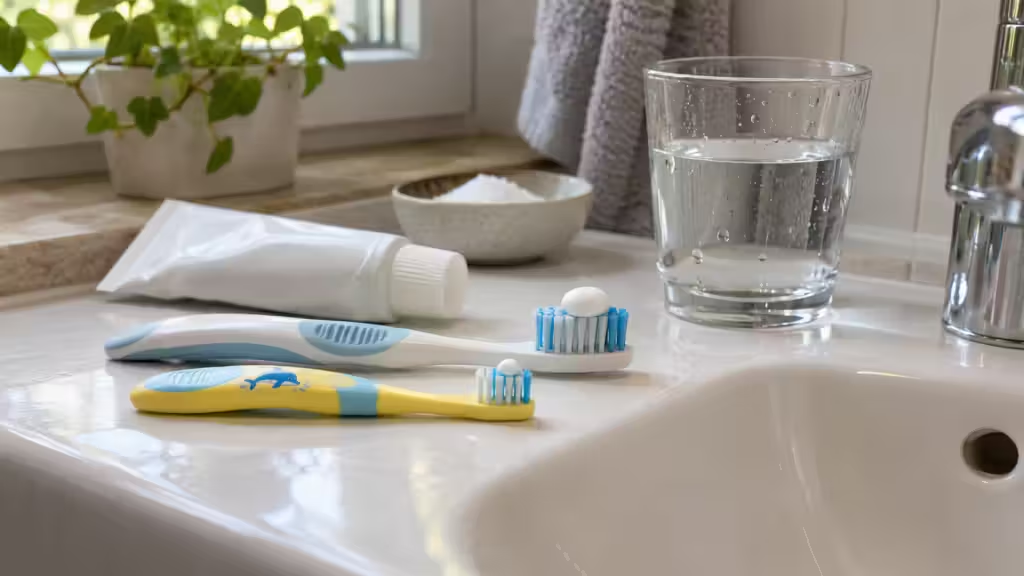
Fluoride in toothpaste demonstrably protects against cavities, and the dose decides everything else. In drinking water with more than 1.5 milligrams of fluoride per liter, studies find lower IQ in children [1][2]. German drinking water is not fluoridated and contains an average of 0.1 milligrams per liter [3]. In children up to eight years old, however, swallowed toothpaste can exceed the upper level set by the European Food Safety Authority (EFSA) and cause dental fluorosis. EFSA cautiously assumes complete swallowing in its calculation and considers exceeding the upper level unlikely when toothpaste is spat out properly [1][4]. Because infants and toddlers cannot yet spit out toothpaste, fixed amounts apply to them (rice-grain-sized or pea-sized) [5]. Whether fluoride is harmful depends on amount, age and source.
This article is Part 9 of our series “How Do People Poison Themselves?” and does not replace medical or dental advice. Published so far: Mercury poisoning, Lead poisoning, Cadmium in food, Arsenic in rice, Aluminum in deodorant and aluminum foil, Glyphosate and pesticides, PFAS and forever chemicals and Bisphenol A and plasticizers. Updated: November 2026.
Key points at a glance
- Fluoride toothpaste with 1,000 to 1,250 ppm reduces caries in children and adolescents compared with fluoride-free toothpaste (Cochrane review of 96 studies; effect measure standardized mean difference −0.28, a negative value means less caries; 95% confidence interval −0.32 to −0.25) [6].
- German drinking water is not fluoridated: mean 0.1 milligrams per liter, over 90 percent of samples below 0.3 milligrams per liter; limit of the German Drinking Water Ordinance (TrinkwV) 1.5 milligrams per liter [3][7].
- EFSA 2025, tolerable upper intake level (UL) per day: infants 1.0 milligram, children 1 to 3 years 1.6 milligrams, 4 to 8 years 2.0 milligrams; 3.3 milligrams is considered safe from age 9 and in pregnancy [1][4].
- IQ: The 2024 monograph by the US National Toxicology Program (NTP) sees, with moderate confidence, lower IQ at more than 1.5 milligrams per liter of drinking water. Below that the picture is inconsistent: the 2025 meta-analysis found no significant effect for water measurements below 1.5 milligrams per liter and a small one for urine measurements (−0.08 standard deviations) [2][8].
- German recommendation (2021) for children: toothpaste with 1,000 ppm, from the first tooth up to 24 months rice-grain-sized (up to 0.125 grams), from 2 to 6 years pea-sized (up to 0.25 grams), each twice daily; from tooth eruption to the first birthday (12 months) there are two options (table below) [5].
Where does fluoride come from?
In Germany, you take in fluoride mainly through toothpaste, fluoridated table salt, tea and some mineral waters. Drinking water contributes little. The German Federal Institute for Risk Assessment (BfR) names fish, black and green tea and some mineral waters as good sources [3]. “Fluorine” is the element, “fluoride” the form in which it occurs in toothpaste, water and tea [9].
Drinking water is not fluoridated in Germany. The natural content averages 0.1 milligrams per liter; only individual regions (for example the Eastern Eifel) are higher, and in all samples examined from large supply areas it stayed below the limit of 1.5 milligrams per liter [3][7]. In the EFSA data, over 86 percent of European samples were below 0.3 milligrams per liter [1]. The local level can be obtained from the health department, the state authority or the water utility [3][5]. The fluoride from the tap is chemically the same as that in toothpaste [1].
Fluoridated table salt has been available to households in Germany since 1991 under an exemption permit and, according to the BfR FAQ of 2026, may contain up to 310 milligrams of fluoride per kilogram; older BfR documents give 250 [3][10][11]. According to the EFSA model calculation, salt contributes 15 percent (children 4 to 8 years) to 33 percent (adults) of mean total intake [1].
Toothpaste on the market typically contains 1,000 to 1,450 ppm; under EU rules the maximum permitted is 1,500 ppm (0.15 percent fluoride) [3][12]. Common compounds are sodium fluoride and sodium monofluorophosphate; tin fluoride (stannous fluoride) and amine fluoride (also written amine-fluoride) are also used [3][13]. In the EU, about 90 percent of the toothpastes sold contain fluoride; when spat out, they contribute hardly anything to intake [4]. According to EFSA, swallowed dental care products account for 15 percent of mean intake in adults and up to 75 percent in infants and toddlers [1].
For tea, variety and preparation matter: in a study of 121 black teas from the Polish market, tea bags had the highest levels, and African origin had roughly twice as much as Central and East Asian origin [14]. In a Canadian birth cohort, the fluoride intake of pregnant women was 0.76 milligrams per day with tea versus 0.41 without tea. In this observational study, the children’s IQ was 1.67 points lower per additional 0.5 milligrams of daily intake (95% confidence interval: 0.24 to 3.10 points lower); the authors consider drinking less tea during pregnancy worth considering [15].
| Source | Value | Note | Reference |
|---|---|---|---|
| Drinking water | Mean 0.1 mg/L; over 90% of samples below 0.3 mg/L; limit 1.5 mg/L | Not fluoridated; some regions have more naturally | [3][7] |
| Table salt with fluoride | up to 310 mg/kg permitted (formerly 250 mg/kg) | Explicitly labeled; share of mean intake 15 to 33% | [3][10][1] |
| Toothpaste | 1,000 to 1,450 ppm common, at most 1,500 ppm | Hardly any uptake when spat out; up to 75% of mean intake in toddlers | [3][12][1][4] |
| Black and green tea | Black tea bags have the highest levels; 0.76 versus 0.41 mg/day (with/without tea, Canada) | The BfR names tea as a good source; amount depends on variety and origin | [3][14][15] |
| Mineral water | 0.1 to 4.5 mg/L; “contains fluoride” above 1 mg/L | Under German labeling rules: above 1.5 mg/L the notice “not for regular consumption” for infants and children under 7 years; “suitable for infant food” only up to 0.7 mg/L | [3][16][17] |
| Fluoride tablets | Combination tablet with 0.25 mg fluoride and 400 to 500 IU vitamin D | Recommended in Germany from birth to the first tooth; after that, up to the first birthday, two options (see children’s toothpaste); do not combine with fluoride toothpaste | [5] |
Does fluoride protect against cavities?
Yes. For toothpaste and fluoride varnish, the protection is supported by Cochrane reviews. For water fluoridation, however, the benefit today is small and weakly supported. The BfR writes: “However, it is undisputed that fluoride has a caries-preventive effect”; it acts mainly directly on the tooth surface, which is why local application is preferred [3]. Tin fluoride and amine fluoride additionally inhibit bacteria on the tooth surface [13].
Fluoride toothpaste: what Cochrane shows
The 2019 Cochrane review evaluates 96 studies from 1955 to 2014. Toothpaste with 1,000 to 1,250 ppm reduces caries in the permanent teeth of children and adolescents compared with fluoride-free toothpaste (standardized mean difference −0.28, a negative value means less caries; confidence interval −0.32 to −0.25; 55 studies; high to moderate certainty). With 1,450 to 1,500 ppm, the difference from fluoride-free was −0.36 (−0.43 to −0.29), and compared with 1,000 to 1,250 ppm it was −0.08 (−0.14 to −0.01; moderate certainty). In baby teeth, a toothpaste with 1,500 ppm reduced the number of affected tooth surfaces by an average of 1.86 compared with fluoride-free toothpaste (95% confidence interval 1.21 to 2.51). In adults, the number of decayed tooth surfaces fell by an average of 0.53 with 1,000 to 1,100 ppm (0.04 to 1.02). For small children, the authors say the concentration has to be weighed against the risk of fluorosis [6].
Fluoride varnish at the dentist
In a Cochrane review (22 studies with a total of 12,455 randomized children and adolescents), fluoride varnish prevented an average of 43 percent of caries in permanent teeth (13 studies in this analysis; 95% confidence interval 30 to 57 percent; moderate quality) and 37 percent in baby teeth (10 studies; 24 to 51 percent). The results are inconsistent, and there are few data on side effects [18].
Fluoride in water: how large is the benefit today?
The 2024 Cochrane review evaluates 157 studies, all non-randomized. For the period after 1975, a small effect emerges in baby teeth: 0.24 fewer teeth with caries after fluoridation began (95% confidence interval −0.03 to 0.52; 2 studies with 2,908 children; low certainty), and the interval includes “no effect.” The proportion of caries-free children might be about 4 percentage points higher (baby teeth) and 3 (permanent teeth), again with intervals that include “no effect.” There are no studies in adults. Of 22 caries studies, 21 had a serious or critical risk of bias, and none had a low one [19].
There is criticism of this: authors who are mostly office holders of the British Fluoridation Society consider the assessment too narrow, because public health programs can rarely be tested in a randomized way [20]. A study from Queensland (2026) compared areas newly fluoridated since 2010, after the policy change of 2008, with never-fluoridated areas. It found a 1.40-fold lower caries experience in baby teeth (confidence interval 1.08 to 1.80; equivalent to 1.1 fewer affected tooth surfaces); in permanent teeth the factor was 1.32, and the interval includes 1 (0.95 to 1.84) [21]. For Germany this is a side issue, because drinking water in Germany is not fluoridated [3].
Is fluoride bad for you? Dose and EFSA limits
Fluoride is harmful at too high a dose. With usual use in Germany, intake is mostly below the upper levels; only in children up to eight years old can swallowed toothpaste exceed the upper level. Fluoride is not an essential nutrient, but it protects against caries [3]. In 2013, EFSA set an adequate intake of 0.05 milligrams per kilogram of body weight per day (all sources including toothpaste). The German Nutrition Society (DGE) gives reference values from 0.25 milligrams per day (infants under 4 months) to 3.0 milligrams (women) and 3.5 milligrams (men), each aged 15 and older [3].
In July 2025, EFSA reassessed the upper levels, with dental fluorosis as the decisive endpoint for children. For pregnant women and everyone aged 9 and older, no upper level could be derived; instead it names 3.3 milligrams per day as a safe intake, derived from effects on the fetal nervous system with the reference point of 1.5 milligrams per liter of drinking water [1]. The value applies to pregnant women and everyone aged 9 and older and, according to EFSA, also protects against possible effects on bone and thyroid [4].
| Group | EFSA 2025 | Type of value | Old value (EFSA 2005) |
|---|---|---|---|
| Infants under 1 year | 1.0 | tolerable upper intake level (UL), dental fluorosis | not stated |
| Children 1 to 3 years | 1.6 | UL, dental fluorosis | 1.5 |
| Children 4 to 8 years | 2.0 | UL, dental fluorosis | 2.5 |
| 9 years and older, pregnant women | 3.3 | “safe level of intake” (no UL derivable), fetal nervous system | 5 (9 to 14 years), 7 (15 years and older; fractures) |
According to EFSA, mean intake and upper reference value (95th percentile) in the baseline scenario were below the upper levels. Exceptions: in toddlers (1 to 3 years), the upper level is slightly exceeded in the upper intake range; in children 4 to 8 years, even mean intake reaches the upper level, and in the upper range it is exceeded. Mild dental fluorosis on the molars is possible there. The model cautiously assumes that all toothpaste is swallowed [1][4]. At the upper end of European drinking water values, the EFSA upper levels are exceeded; for this reason EFSA classes the EU limit of 1.5 milligrams per liter as not sufficiently protective, and the European Commission may review it [1][4].
According to the BfR, anyone who combines several sources can use up the upper level: fluoride-containing mineral water, a lot of black tea, fluoridated salt and fluoride tablets together [3]. Fluoride crosses the placenta; in umbilical cord blood the concentration reaches about 60 percent of the mother’s value [1].
Does fluoride lower IQ?
At drinking water levels above 1.5 milligrams of fluoride per liter, studies consistently show lower IQ in children. Below that, the results are inconsistent, and a causal link is not proven. The real debate concerns the low amounts.
Fluoride and IQ: what the US National Toxicology Program (NTP) and EFSA say
The 2024 NTP monograph (US health institute NIEHS) evaluated 72 studies on IQ in children: 19 of high quality, of which 18 showed a negative association (more fluoride, lower IQ) (3 prospective cohorts, 15 cross-sectional studies from 5 countries). Of 53 studies of low quality, 46 also showed lower IQ. With moderate confidence, fluoride exposures above 1.5 milligrams per liter of drinking water (WHO guideline value) go along with lower IQ; below that, more research is needed. Animal studies and mechanisms remain unclear [2].
EFSA screened over 20,000 papers [4]; in the draft it assessed 152 human and 81 animal studies in detail [22]. Its result: an association with lower IQ appears for drinking water above 1.5 milligrams per liter; below that the evidence is “inconclusive”; prospective studies with lower concentrations partly show lower IQ, and the overall picture remains open. A careful rat study found no behavioral effects up to 2.1 milligrams per kilogram of body weight per day; other animal studies report effects from 2.5 milligrams per kilogram per day [1].
2025 IQ meta-analysis: what the data below 1.5 mg/L show
The meta-analysis in JAMA Pediatrics (Taylor and colleagues, authors from NIEHS and ICF) pools 74 studies (mostly cross-sectional, 45 from China, 22 with low risk of bias). In group comparisons from 59 studies (20,932 children), IQ was on average 0.45 standard deviations lower (95% confidence interval 0.33 to 0.57 lower; the standard deviation is a measure of the spread of test scores). The range below 1.5 milligrams per liter is disputed. For water measurements, the result there was +0.05 (−0.36 to 0.45; p = 0.82; 7 studies), and with only low-risk-of-bias studies −0.32 (−0.91 to 0.26; p = 0.28; 3 studies with 879 children); both values are not significant. For urine measurements below 1.5 milligrams per liter, the effect was small but significant: −0.08 (−0.15 to −0.002; p = 0.04; 4 studies with low risk of bias). For drinking water below 1.5 milligrams per liter, the authors speak of limited data and uncertainty [8]. An older meta-analysis from 2012, with large differences between studies, also arrived at −0.45 [23].
Cohorts from Canada and Mexico
The Canadian MIREC cohort (512 mother-child pairs) found higher urinary fluoride levels in women with fluoridated water (0.69 versus 0.40 milligrams per liter). Per 1 milligram per liter of urinary fluoride, boys’ IQ was 4.49 points lower (95% confidence interval: 0.60 to 8.38 points lower); in girls no significant effect was seen, and none in the whole group either (−1.95; −5.19 to 1.28). Per 1 milligram of fluoride intake per day, it was −3.66 points (−7.16 to −0.14) [24]. One author lists as a conflict of interest a planned, unpaid role as an expert witness in a US case against the EPA [24]. In Mexico (299 mother-child pairs), IQ was 3.15 points (at age 4) and 2.50 points (at ages 6 to 12) lower per 0.5 milligrams per liter of maternal urinary fluoride [25]. Both studies measure fluoride in urine, not the intake from individual sources.
Contrary findings: Sweden, New Zealand, Denmark, Spain, Australia
Several studies found no association. In New Zealand, the Dunedin cohort (95.4 percent of participants stayed in the study for 38 years) showed no clear IQ difference due to water fluoridation [26]. In Sweden, an analysis of register data (birth cohorts 1985 to 1992) found no effect on cognitive abilities [27]. In the Danish Odense cohort (837 children), there was no significant association; in the pooled analysis with Mexico and Canada it was significant, and the authors conclude from this that pregnant women and children need protection [28]. In Spain, four-year-old boys had higher test scores at higher maternal urinary fluoride; for ADHD symptoms there was no association [29][30]. The Australian study (357 young adults) found, with lifelong water fluoridation, a statistically non-significant IQ difference of +1.07 points (−2.86 to 5.01) [31]. These studies concern low exposures; they do not refute the findings at over 1.5 milligrams per liter.
How the BfR classifies the studies
The German BfR does not consider causality derivable: most studies are methodologically weak, confounders such as diet and socioeconomic status are not sufficiently accounted for, and biological plausibility is unclear. The data available for risk assessment come essentially from observational studies from China, Iran, India, Pakistan, Mexico and Canada. For populations below 1.5 milligrams per liter, as in Germany, the data are not sufficient, according to the BfR, to establish an association [3]. The often-cited 2006 report of the US National Research Council concerned levels of 2 to 4 milligrams per liter and expressly says nothing about the lower amounts common in the US [32].
The graphic puts the water values side by side. Only above 1.5 milligrams per liter do studies see lower IQ.

Use the graphic on your site
You may use the graphic freely with attribution and a link. Copy the code:
<a href="https://gesundefakten.com/en/health/fluoride-teeth-water/"><img src="https://gesundefakten.com/wp-content/uploads/2026/11/fluorid-grafik-en.webp" alt="Infographic: fluoride in water in mg per liter, German drinking water mostly below 0.3, US recommendation 0.7, mineral water for infant food at most 0.7, limit of the German Drinking Water Ordinance 1.5, IQ findings above 1.5" width="1600" height="1000"></a><br>Source: <a href="https://gesundefakten.com/en/health/fluoride-teeth-water/">gesundefakten.com</a>Fluorosis: teeth and skeleton
Dental fluorosis, a mineralization disorder of the tooth enamel with whitish spots and, in more severe cases, discoloration up to loss of enamel, arises only during tooth formation from too much fluoride [3]. Skeletal fluorosis occurs only with very high intake over many years, which is not to be expected at the levels in German drinking water. The teeth remain susceptible until about the age of eight [3]. According to the WHO, the highest sensitivity is during mineralization of the upper incisors at about 22 to 26 months [33].
Dental fluorosis: thresholds and frequency
The WHO cites mild fluorosis (prevalence 12 to 33 percent) at 0.9 to 1.2 milligrams per liter, based on Dean’s 1942 data [33]. From this, EFSA derives a lower threshold limit (BMCL) of 1.4 milligrams per liter (5 percent combined prevalence of mild to severe), and for moderate to severe forms 1.7 milligrams per liter at 1 percent [1]. According to the 2024 Cochrane review, at 0.7 milligrams per liter about 12 percent of children are affected in an aesthetically relevant way (95% confidence interval 8 to 17 percent) and about 40 percent to any degree (35 to 44 percent); new evidence on this was not searched for [19].
In the US, fluorosis increased: among 16- to 17-year-olds, the share of “very mild and higher” rose from 29.7 percent (2001/02) to 61.3 percent (2011/12), adjusted odds ratio 3.85 (2.20 to 6.72) [34]. In the 2015/16 survey, the prevalence was 70 percent according to the authors (odds ratio 2.30 for water above 0.70 versus 0 to 0.30 milligrams per liter) [35]. This applies to the US with community water fluoridation; for Germany there is no reliable current figure.
Skeletal fluorosis: at what intake the bones are affected
According to the WHO, skeletal changes are possible at 3 to 6 milligrams per liter of drinking water, severe forms usually only above 10 milligrams per liter; in 1985 the US EPA considered 4 milligrams per liter protective against the most severe forms [33]. The BfR names as a risk an extremely high intake of 10 to 25 milligrams per day over many years: bone density rises, elasticity falls, and fracture risk grows [3]. EFSA sees changes in bone density and an increased fracture risk possibly from about 3 milligrams per day, that is, below the earlier upper level of 7 milligrams; the data are not robust enough for a more precise threshold [1]. According to EFSA, the new safe intake of 3.3 milligrams per day also protects against effects on bone [4]. A link with bone cancer is not supported [1]. In 2006, the US National Research Council considered an increased fracture risk likely with lifelong exposure to 4 milligrams per liter and more, and considered the US limit of 4 milligrams per liter not sufficiently protective [32]. German drinking water is below 1.5 milligrams per liter [7].
Fluoride toothpaste for children: how much is right?
Since 2021, a uniform recommendation has applied in Germany: toothpaste with 1,000 ppm fluoride, from the first tooth up to 24 months rice-grain-sized, from 2 to 6 years pea-sized, and let the child spit out as soon as they can. From tooth eruption to the age of 12 months there are two options (table). It is backed by pediatric and dental societies in Germany, coordinated by the Gesund ins Leben network [5][13]; the BfR refers to it in 2026 [3]. Its 2018 opinion still recommended 500 ppm for the preschool age, but saw no clear evidence that a toothpaste with 500 ppm works less well than one with 1,000 ppm; the reason was the risk of fluorosis [10]. How flossing and brushing fit together is covered in Floss first or brush first?
| Age | Fluoride source / concentration | Amount per brushing | Frequency | Reference |
|---|---|---|---|---|
| From birth to the first tooth | Combination tablet 0.25 mg fluoride plus 400 to 500 IU vitamin D | 1 tablet | daily | [5] |
| Tooth eruption to 12 months | one of two options: (1) combination tablet with fluoride, brushing without or with a little fluoride-free toothpaste; (2) vitamin D tablet (without fluoride per the recommendation) and toothpaste with 1,000 ppm | for (2) up to 0.125 g (rice-grain-sized), calculated 0.125 mg fluoride | (1) tablet daily; (2) brushing up to 2 × daily | [5] |
| 12 to under 24 months | 1,000 ppm | up to 0.125 g (rice-grain-sized), calculated 0.125 mg fluoride | 2 × daily | [5] |
| 24 to 72 months | 1,000 ppm | up to 0.25 g (pea-sized), calculated 0.25 mg fluoride | 2 × daily, at daycare (Kita) additionally up to 0.25 g | [5] |
Fluoride tablets and fluoride toothpaste should not be combined. If the water used for infant food contains 0.3 milligrams per liter of fluoride or more (for infants fed mainly with infant formula), vitamin D without fluoride is given and toothpaste only once daily or fluoride-free [5]. Toddlers cannot yet spit out: the network assumes 20 to 40 percent of the toothpaste is swallowed, and individual studies found 64 to 84 percent in children aged one and a half to two and a half years [5]. The EU Cosmetics Regulation requires fluoride toothpaste to carry a notice that children up to 6 years should use only a pea-sized amount [12]; German dental societies recommend the even smaller rice-grain-sized amount under 2 years [5]. The German Society for Dental and Oral Medicine (DGZMK) urges spitting the paste out well [36]. How much to rinse with water afterward is not addressed separately in the recommendations mentioned.
Fluoride-free toothpaste and hydroxyapatite: does it make sense?
For fluoride-free toothpaste, evidence at the level of fluoride toothpaste is lacking. Hydroxyapatite is a possible alternative, but the evidence is thin and partly shaped by manufacturers. In the Cochrane review, fluoride toothpaste protects better than fluoride-free toothpaste (see above, −0.28) [6].
Three relevant papers exist on hydroxyapatite (HAP). An 18-month, double-blind study in 189 adults showed non-inferiority compared with sodium fluoride toothpaste with 1,450 ppm: in 89.3 percent (HAP) versus 87.4 percent, caries did not increase; the authors were employed by the manufacturer [37]. A 2024 meta-analysis (5 clinical and 8 in situ studies) with a manufacturer-affiliated author rates HAP as effective [38]. An independent 2025 meta-analysis (4 in situ studies with participants under 25 years, no conflicts of interest) found no significant differences from fluoride toothpaste (relative risk 0.98; 0.85 to 1.12) and considers hydroxyapatite a possible effective alternative (in the original, “could be an effective alternative”) [39]. The data are mostly short-term or in situ, and a Cochrane assessment and a position from German professional societies are lacking. There is no evidence of superiority over fluoride.
If you want to avoid fluoride out of concern about IQ: the IQ findings concern drinking water with more than 1.5 milligrams per liter, not toothpaste that is spat out [2][4].
Fact check: what is said about fluoride
Most claims about fluoride are unproven or exaggerated. Some, however, have a kernel of truth. The table shows what the sources say about statements ranging from “rat poison” to “makes people docile.”
| Claim | What is true | Reference |
|---|---|---|
| “Fluoride is added to drinking water in Germany.” | False. Drinking water is not fluoridated; the natural level is mostly below 0.3 mg/L. | [3][7] |
| “Sodium fluoride is rat poison.” | Not supported. In the official sources, sodium fluoride does not appear as a rat poison; the US Environmental Protection Agency (EPA) lists it only as an additive to wood preservatives for utility poles and railroad ties (used since the 1930s). The dose matters: probably toxic from 5 mg/kg body weight; one serving of children’s toothpaste (rice-grain-sized to pea-sized) contains only a calculated 0.125 to 0.25 mg fluoride, and toothpaste that is spat out hardly contributes to intake. | [40][9][41][42][5][4] |
| “Fluoride is industrial waste, artificially made.” | The origin changes nothing: EFSA assesses fluoride regardless of source; the ion in natural water or tea is the same. | [1][9] |
| “Fluoride makes people docile and was used in Nazi camps.” | No historical evidence in official sources; EFSA, NTP and the BfR name no calming effect at everyday doses. | [1][2][3] |
| “Fluoride is in 60 percent of psychiatric drugs.” | Not supported. Around 20 percent of medicines contain fluorine, but firmly bound, not as free fluoride; EFSA excludes bound fluorine. Documented exception: voriconazole (an antifungal) in long-term therapy with elevated blood fluoride and bone pain (periostitis, skeletal fluorosis). | [43][1][44] |
| “Fluoride calcifies the pineal gland.” | The study by Luke (2001) found fluoride in the pineal gland of 11 elderly deceased people (297 ± 257 mg/kg wet weight, 0.5 in muscle) and an association with calcium (r = 0.73). Accumulation is described; a functional disorder has not been shown. “Intuition” and “third eye” are not supported. | [45] |
| “Fluoride harms the thyroid.” | Inconsistent: associations are described, causal evidence is lacking. England (general practice data): a high prevalence of an underactive thyroid (hypothyroidism) was almost twice as likely in a fully fluoridated area as in a non-fluoridated one. Canada (adults): with moderate to severe iodine deficiency, +0.35 mIU/L of the thyroid-stimulating hormone TSH per 1 mg/L urinary fluoride. MIREC (pregnant women, water levels 0.04 to 0.87 mg/L): odds ratio 1.65 (1.04 to 2.60) for hypothyroidism per 0.5 mg/L, but no significant association with urinary fluoride or intake. Reviews from 2024: no TSH increase in the low water range (linear only from about 2.5 mg/L), low certainty of evidence. EFSA names TSH increases at over 1.5 mg/L with a small effect size; 3.3 mg/day also protects the thyroid. | [46][47][48][49][50][1] |
| “Fluoride reacts with mercury from amalgam and damages the brain.” | No evidence. In the sources examined, there is no evidence for the formation of “mercury fluoride” in the mouth. According to the EU committee SCENIHR (2015), the risk of systemic harm from amalgam is low. More in Part 1 on mercury poisoning. | [51] |
| “Fluoride causes diabetes.” | Not supported in humans. A 2025 review (20 papers, of which 1 human study) found indications of impaired sugar metabolism mainly in animal studies. | [52] |
| “Fluoride destroys the oral microbiome.” | No evidence of destruction. Fluoride inhibits the growth of acid-producing bacteria. In a study of 236 children, fluoride varnish did not change the diversity of plaque bacteria; individual genera shifted, and the clinical significance is open. For the gut microbiome, high doses are potentially adverse; in a laboratory test with human stool, up to 2 mg/L sodium fluoride had a rather positive effect. | [3][53][54] |
Fluoride policy in the US in 2025 and 2026
In the US, fluoride in drinking water is under political and legal attack. A nationwide ban nevertheless does not exist. The US recommendation for community water fluoridation has been 0.7 milligrams per liter since 2015 (previously 0.7 to 1.2) [55]. The EPA limit remains unchanged at 4.0 milligrams per liter [56][57].
- EPA: In April 2025 it announced an expeditious review of new science; in January 2026 a preliminary assessment plan followed, and on August 3, 2026 a protocol for the toxicity assessment. There is no new limit [56][57].
- Court ruling: On September 24, 2024, a district court in Northern California found fluoride in drinking water at 0.7 milligrams per liter to be an “unreasonable risk” under the chemicals law TSCA [58]. The appeals court (9th Circuit) vacated the ruling on May 21, 2026 on procedural grounds; the court did not decide the scientific questions, and there is no final order to the EPA [59].
- States: Utah has banned the addition of fluoride to public water systems since May 7, 2025 (H.B. 81) [60]. The Florida law SB 700 does not mention fluoride in its text; reading it as a fluoridation ban is an interpretation [61].
- Fluoride tablets: In May 2025 the FDA announced action against ingestible fluoride products for children and on October 31, 2025 wrote to four companies: the products are not approved and should not be used in children under 3 years or without a high caries risk; this is not a blanket ban [62][63].
This is US government policy, not an EFSA assessment, and it does not apply to Germany, where no drinking water is fluoridated [3].
Emergency: swallowed toothpaste or fluoride tablets
When toothpaste, tablets or fluoride gel has been swallowed, the amount relative to body weight is what counts. If in doubt, Poison Control can help. A “probably toxic dose” is considered to be 5 milligrams of fluoride per kilogram of body weight [41][42]. The German BfR names 0.4 to 5 milligrams per kilogram as the lowest dose with gastrointestinal complaints; with very high intake, convulsions, cardiac arrest and death, among other things, are a threat [3]. The BfR wrote in 2017 that about 70 grams of children’s toothpaste with 500 ppm cause “at most stomachache.” Today’s children’s toothpaste contains 1,000 ppm [5] and therefore no longer falls into this category of pastes; for “other toothpastes” and gels, according to the BfR a poison information center must be called, because the amount ingested has to be calculated. After high doses of fluoride (about 100 milligrams), severe cardiovascular symptoms are possible [64].
Emergency: a child has swallowed a lot of toothpaste, fluoride tablets or fluoride gel? If the child is unconscious, has a seizure, has trouble breathing or has severe symptoms, call 911 immediately and do not give any liquids. Otherwise call Poison Control in your area and have the package ready. If the child is awake and responsive, remove remnants from the mouth and let them drink water or tea in small sips. Do not induce vomiting and do not give salt water [64][65].
On milk, the recommendations differ: the German Poison Information Center Bonn generally advises against it in poisonings, because milk is not an antidote and can speed up the absorption of many substances [65]. In 2017, the German BfR named “an occasional glass of milk” for toothpaste [64]. Whether milk makes sense in an individual case is best clarified directly by phone with Poison Control; for this reason milk is not on the list here. Treatment with a calcium-containing solution belongs in the hospital, not at home [41].
Frequently asked questions
Is fluoride in toothpaste harmful?
Is drinking water fluoridated in Germany?
Does fluoride lower children’s IQ?
For drinking water above 1.5 milligrams per liter, studies show lower IQ (NTP: moderate confidence). Below that, the data are inconclusive: the 2025 meta-analysis found no significant effect for water measurements and a small one for urine measurements (−0.08 standard deviations). A causal link is not proven [2][8][3].
How much toothpaste is right for children?
Toothpaste with 1,000 ppm (German recommendation): from the first tooth up to 24 months rice-grain-sized (up to 0.125 grams), from 2 to 6 years pea-sized (up to 0.25 grams), twice daily; from tooth eruption to the first birthday (12 months) there are two options. Let the child spit out as soon as they can [5][36].
From what age can children use adult toothpaste?
After the first permanent teeth have erupted, at around age 6: according to the DGZMK, toothpaste with 1,000 to 1,500 ppm (adult toothpaste) can then be used at least twice daily [36]. Up to 6 years, the uniform 2021 recommendation applies (1,000 ppm, pea-sized) [5]; the DGZMK materials date from 2013 and still give 500 ppm for the preschool age.
Do babies need fluoride tablets?
The German Gesund ins Leben network recommends a combination tablet with 0.25 milligrams of fluoride and vitamin D until the first tooth; from tooth eruption to the first birthday there are two options (see table above). Tablets and fluoride toothpaste are not combined. If the water for infant food contains 0.3 milligrams per liter or more, vitamin D without fluoride is given. It is best to clarify this with the pediatrician [5].
Is toothpaste without fluoride just as good?
Is fluoride safe in pregnancy?
Fluorine or fluoride: what is the difference?
Do I need table salt with fluoride?
Not necessarily: according to the BfR and EFSA, fluoride is not an essential nutrient; table salt with fluoride is permitted but not mandatory. The content is stated on the package (up to 310 milligrams per kilogram permitted). The salt contributes 15 to 33 percent of mean intake and counts toward total intake. Other fluoride-containing products should be taken alongside the salt only on medical advice (notice on the package) [3][1].
Conclusion: when fluoride is harmful is a question of dose
Fluoride toothpaste and fluoride varnish demonstrably protect against cavities, and the risks depend on the amount. For drinking water above 1.5 milligrams per liter, studies show lower IQ in children; below that, the data are inconclusive. German drinking water is not fluoridated and is mostly below 0.3 milligrams per liter. Real risks with usual use are dental fluorosis in toddlers who swallow too much toothpaste, and acute overdoses with tablets or gel. For everyday life: brush children’s teeth according to the 2021 German recommendation and do not combine fluoride tablets with fluoride toothpaste. Toothpaste, tablets and gel belong out of children’s reach. Anyone who chooses fluoride-free toothpaste will find only thin evidence for hydroxyapatite. What remains scientifically open so far is only whether even low drinking water levels below 1.5 milligrams per liter have small effects on mental development.
Suggested citation: gesundefakten.com (2026): Fluoride in Toothpaste and Water: How Dangerous Is It Really? https://gesundefakten.com/en/health/fluoride-teeth-water/
References
- EFSA Scientific Committee (Bennekou SH et al.): Updated consumer risk assessment of fluoride in food and drinking water including the contribution from other sources of oral exposure. EFSA Journal 2025; 23(7): e9478. PubMed; PMC.
- NTP (NIEHS): NTP monograph on the state of the science concerning fluoride exposure and neurodevelopment and cognition: a systematic review. NTP Monograph 2024; (8). PubMed; DOI.
- BfR: Fluorid: Ein wichtiger Baustoff für die Zähne. Fragen und Antworten, as of March 17, 2026. bfr.bund.de.
- EFSA: Fluoride safety: updated intake levels for all ages. News release of July 22, 2025. efsa.europa.eu.
- Netzwerk Gesund ins Leben: Handlungsempfehlungen zur Kariesprävention (uniform recommendations 2021; pages “Empfehlungen”, “Fluorid: Überdosierung vermeiden” and news item “Neue einheitliche Empfehlungen”). Recommendations; Avoiding overdose; 2021 news item.
- Walsh T, Worthington HV, Glenny AM, Marinho VC, Jeroncic A: Fluoride toothpastes of different concentrations for preventing dental caries. Cochrane Database of Systematic Reviews 2019; (3): CD007868. PubMed.
- Trinkwasserverordnung (German Drinking Water Ordinance) 2023, Anlage 2 (chemical parameters, fluoride 1.5 mg/L). gesetze-im-internet.de.
- Taylor KW, Eftim SE, Sibrizzi CA et al.: Fluoride exposure and children’s IQ scores: a systematic review and meta-analysis. JAMA Pediatrics 2025; 179(3): 282–292. PubMed.
- ATSDR (CDC): ToxFAQs for Fluorides, Hydrogen Fluoride, and Fluorine. atsdr.cdc.gov.
- BfR: Für gesunde Zähne: Fluorid-Vorbeugung bei Säuglingen und Kleinkindern. Opinion No. 015/2018 of May 31, 2018. DOI; bfr.bund.de (PDF).
- BfR: Höchstmengenvorschläge für Fluorid in Lebensmitteln inklusive Nahrungsergänzungsmitteln. 2021 (year based on the PDF file and the literature cut-off of March 1, 2021; no issue date in the document). bfr.bund.de (PDF).
- Verordnung (EG) Nr. 1223/2009 des Europäischen Parlaments und des Rates vom 30. November 2009 über kosmetische Mittel (EU Cosmetics Regulation), Anhang III Nr. 31 (sodium fluoride) and other fluorine compounds, consolidated version of September 1, 2025. eur-lex.europa.eu.
- Schiffner U: Verwendung von Fluoriden zur Kariesprävention. Bundesgesundheitsblatt 2021; 64(7): 830–837. PubMed; PMC.
- Małyszek A, Zawiślak I, Kulus M et al.: Fluoride content in infusions of selected teas available on the Polish market: an in vitro study. Foods 2025; 14(14): 2452. PubMed.
- Khan D, Hall M, Ayoub K et al.: Prenatal fluoride exposure and child IQ: is tea a key source of fluoride? Environmental Pollution 2026; 408: 128829. PubMed.
- Bundesinstitut für gesundheitlichen Verbraucherschutz und Veterinärmedizin (BgVV, predecessor of the BfR): Verwendung fluoridierter Lebensmittel und die Auswirkung von Fluorid auf die Gesundheit. Opinion, July 2002. bfr.bund.de; PDF.
- Mineral- und Tafelwasser-Verordnung (German Mineral and Table Water Ordinance) (§ 8 labeling, § 15 para. 2 infant food, Annexes 4 and 6). gesetze-im-internet.de.
- Marinho VC, Worthington HV, Walsh T, Clarkson JE: Fluoride varnishes for preventing dental caries in children and adolescents. Cochrane Database of Systematic Reviews 2013; (7): CD002279. PubMed.
- Iheozor-Ejiofor Z, Walsh T, Lewis SR et al.: Water fluoridation for the prevention of dental caries. Cochrane Database of Systematic Reviews 2024; (10): CD010856. PubMed.
- Walmsley AD, Lowry R, Al Rasheed A et al.: Critique of the review of „Water fluoridation for the prevention of dental caries“ published by the Cochrane Collaboration in 2024. British Dental Journal 2026; 241(1): 26–30 (authors are office holders of the British Fluoridation Society). PubMed.
- Do LG, Spencer AJ, Roberts-Thomson K et al.: Effectiveness of community water fluoridation in Queensland: a population-based causal analysis following the 2008 policy change. Journal of Dental Research 2026 (online October 28, 2026). PubMed.
- EFSA: Have your say: draft risk assessment of fluoride in food and drinking water (consultation draft, until February 9, 2025). efsa.europa.eu.
- Choi AL, Sun G, Zhang Y, Grandjean P: Developmental fluoride neurotoxicity: a systematic review and meta-analysis. Environmental Health Perspectives 2012; 120(10): 1362–1368. PubMed.
- Green R, Lanphear B, Hornung R et al.: Association between maternal fluoride exposure during pregnancy and IQ scores in offspring in Canada. JAMA Pediatrics 2019; 173(10): 940–948. PubMed.
- Bashash M, Thomas D, Hu H et al.: Prenatal fluoride exposure and cognitive outcomes in children at 4 and 6–12 years of age in Mexico. Environmental Health Perspectives 2017; 125(9): 097017. PubMed.
- Broadbent JM, Thomson WM, Ramrakha S et al.: Community water fluoridation and intelligence: prospective study in New Zealand. American Journal of Public Health 2015; 105(1): 72–76. PubMed.
- Aggeborn L, Öhman M: The effects of fluoride in the drinking water. Journal of Political Economy 2021; 129(2): 465–491. DOI.
- Grandjean P, Meddis A, Nielsen F et al.: Dose dependence of prenatal fluoride exposure associations with cognitive performance at school age in three prospective studies. European Journal of Public Health 2024; 34(1): 143–149. PubMed.
- Ibarluzea J, Gallastegi M, Santa-Marina L et al.: Prenatal exposure to fluoride and neuropsychological development in early childhood: 1- to 4-year-old children. Environmental Research 2022; 207: 112181. PubMed.
- Ibarluzea J, Subiza-Pérez M, Arregi A et al.: Association of maternal prenatal urinary fluoride levels with ADHD symptoms in childhood. Environmental Research 2023; 235: 116705. PubMed.
- Do LG, Sawyer A, Spencer AJ et al.: Early childhood exposures to fluorides and cognitive neurodevelopment: a population-based longitudinal study. Journal of Dental Research 2025; 104(3): 243–250. PubMed.
- National Research Council (National Academies): Fluoride in Drinking Water: A Scientific Review of EPA’s Standards. 2006. DOI 10.17226/11571.
- WHO: Fluoride in Drinking-water. Background document for development of WHO Guidelines for Drinking-water Quality (WHO/SDE/WSH/03.04/96). 2004. who.int (PDF).
- Wiener RC, Shen C, Findley P et al.: Dental fluorosis over time: NHANES 2001–2002 vs. 2011–2012. Journal of Dental Hygiene 2018; 92(1): 23–29. PubMed.
- Dong H, Yang X, Zhang S et al.: Associations of low level of fluoride exposure with dental fluorosis among U.S. children and adolescents, NHANES 2015–2016. Ecotoxicology and Environmental Safety 2021; 221: 112439. PubMed.
- Deutsche Gesellschaft für Zahn-, Mund- und Kieferheilkunde (DGZMK) und Bundeszahnärztekammer: Fluoridierungsmaßnahmen zur Kariesprophylaxe. Patient information, as of 4/2013, and S2k guideline Fluoridierungsmaßnahmen, short version (AWMF 083-001, April 2013; note on the pages: not updated for over five years). Patient information; S2k guideline short version.
- Paszynska E, Pawinska M, Enax J et al.: Caries-preventing effect of a hydroxyapatite-toothpaste in adults: an 18-month double-blinded randomized clinical trial. Frontiers in Public Health 2023; 11: 1199728 (conflict of interest: authors employed by the manufacturer Dr. Kurt Wolff GmbH). PubMed.
- Pawinska M, Paszynska E, Amaechi BT et al.: Clinical evidence of caries prevention by hydroxyapatite: an updated systematic review and meta-analysis. Journal of Dentistry 2024; 151: 105429 (address of one author: Dr. Kurt Wolff GmbH). PubMed.
- Chatzidimitriou K, Theodorou K, Seremidi K et al.: The role of hydroxyapatite-based, fluoride-free toothpastes on the prevention and the remineralization of initial caries lesions: systematic review and meta-analysis. Journal of Dentistry 2025; 156: 105691 (no conflicts of interest). PubMed.
- U.S. EPA: Reregistration Eligibility Decision (RED) for Sodium Fluoride. EPA 739-R-07-010, December 2007. epa.gov (PDF).
- Whitford GM: Acute toxicity of ingested fluoride. Monographs in Oral Science 2011; 22: 66–80. PubMed.
- Shulman JD, Wells LM: Acute fluoride toxicity from ingesting home-use dental products in children, birth to 6 years of age. Journal of Public Health Dentistry 1997; 57(3): 150–158. PubMed.
- Inoue M, Sumii Y, Shibata N: Contribution of organofluorine compounds to pharmaceuticals. ACS Omega 2020; 5(19): 10633–10640. PubMed.
- Moon WJ, Scheller EL, Suneja A et al.: Plasma fluoride level as a predictor of voriconazole-induced periostitis in patients with skeletal pain. Clinical Infectious Diseases 2014; 59(9): 1237–1245; Tarlock K, Johnson D, Cornell C et al.: Elevated fluoride levels and periostitis in pediatric hematopoietic stem cell transplant recipients receiving long-term voriconazole. Pediatric Blood & Cancer 2015; 62(5): 918–920; Stefan S, Altork N, Alzedaneen Y et al.: Voriconazole-induced diffuse periostitis. AACE Clinical Case Reports 2022; 8(5): 191–193 (voriconazole, periostitis and fluorosis). PubMed; PubMed; PubMed.
- Luke J: Fluoride deposition in the aged human pineal gland. Caries Research 2001; 35(2): 125–128. PubMed.
- Peckham S, Lowery D, Spencer S: Are fluoride levels in drinking water associated with hypothyroidism prevalence in England? Journal of Epidemiology and Community Health 2015; 69(7): 619–624. PubMed.
- Malin AJ, Riddell J, McCague H, Till C: Fluoride exposure and thyroid function among adults living in Canada: effect modification by iodine status. Environment International 2018; 121: 667–674. PubMed.
- Hall M, Lanphear B, Chevrier J et al.: Fluoride exposure and hypothyroidism in a Canadian pregnancy cohort. Science of the Total Environment 2023; 869: 161149. PubMed.
- Iamandii I, De Pasquale L, Giannone ME et al.: Does fluoride exposure affect thyroid function? A systematic review and dose-response meta-analysis. Environmental Research 2024; 242: 117759. PubMed.
- Ferreira MKM, Nascimento PC, Bittencourt LO et al.: Is there any association between fluoride exposure and thyroid function modulation? A systematic review. PLoS One 2024; 19(4): e0301911. PubMed.
- SCENIHR (scientific committee of the EU Commission): Opinion on the safety of dental amalgam and alternative dental restoration materials for patients and users. 2015. health.ec.europa.eu.
- Thakur R, Rana S, Baltoo R: Exploring fluoride’s role in diabetes development: a review. Journal of Trace Elements in Medicine and Biology 2025; 89: 127635. PubMed.
- Zeng X, Wong HM, Zhou Q et al.: Impact of fluoride varnish and oral health education on caries increment and dental plaque microbiota among children with early mixed dentition: a three-armed RCT. Microbiology Spectrum 2025; 13(9): e0090225. PubMed.
- Yasin M, Zohoori FV, Kumah EA et al.: Effect of fluoride on gut microbiota: a systematic review. Nutrition Reviews 2025; 83(7): e1853–e1880. PubMed.
- U.S. Federal Panel on Community Water Fluoridation: U.S. Public Health Service recommendation for fluoride concentration in drinking water for the prevention of dental caries. Public Health Reports 2015; 130(4): 318–331. PubMed.
- U.S. EPA: EPA will expeditiously review new science on fluoride in drinking water. Press release, April 2025. epa.gov.
- U.S. EPA: Fluoride in Drinking Water, with notices of January 22, 2026 (Preliminary Assessment Plan) and August 3, 2026 (toxicity assessment protocol, EPA-822-D-26-001). epa.gov.
- U.S. District Court, N.D. Cal. (Judge Chen): Food & Water Watch, Inc. et al. v. U.S. EPA, No. 3:17-cv-02162-EMC, Findings of Fact and Conclusions of Law of September 24, 2024. govinfo.gov.
- U.S. Court of Appeals, 9th Circuit: Food & Water Watch v. EPA, No. 25-384, Memorandum (not for publication) of May 21, 2026. ca9.uscourts.gov (PDF).
- State of Utah: H.B. 81 „Fluoride Amendments“, 2025 General Session (§ 19-4-111), in force since May 7, 2025. le.utah.gov (PDF).
- State of Florida: CS/CS/CS SB 700 (2025), Sections 31 and 32 (§ 403.852(19), § 403.859(8) Florida Statutes). flsenate.gov.
- U.S. FDA: FDA acts to protect children from unapproved fluoride drug products. October 31, 2025. fda.gov.
- U.S. FDA: FDA begins action to remove ingestible fluoride prescription drug products for children from the market. May 13, 2025. fda.gov.
- BfR: Risiko Vergiftungsunfälle bei Kindern. Consumer information, 2017. bfr.bund.de (PDF).
- Informationszentrale gegen Vergiftungen Bonn: Ratgeber für Vergiftungsunfälle. 6th edition, December 2009. gizbonn.de (PDF).