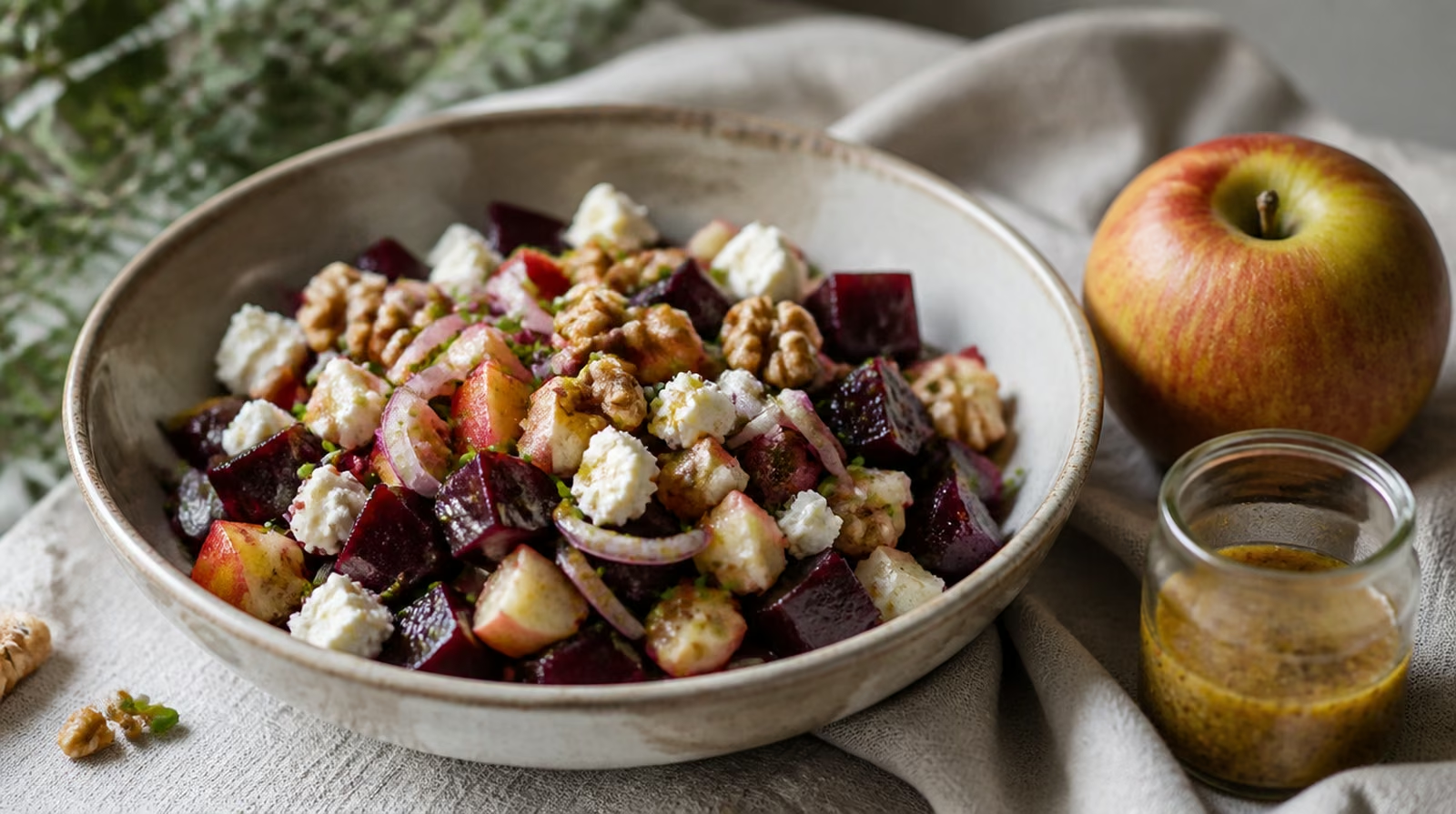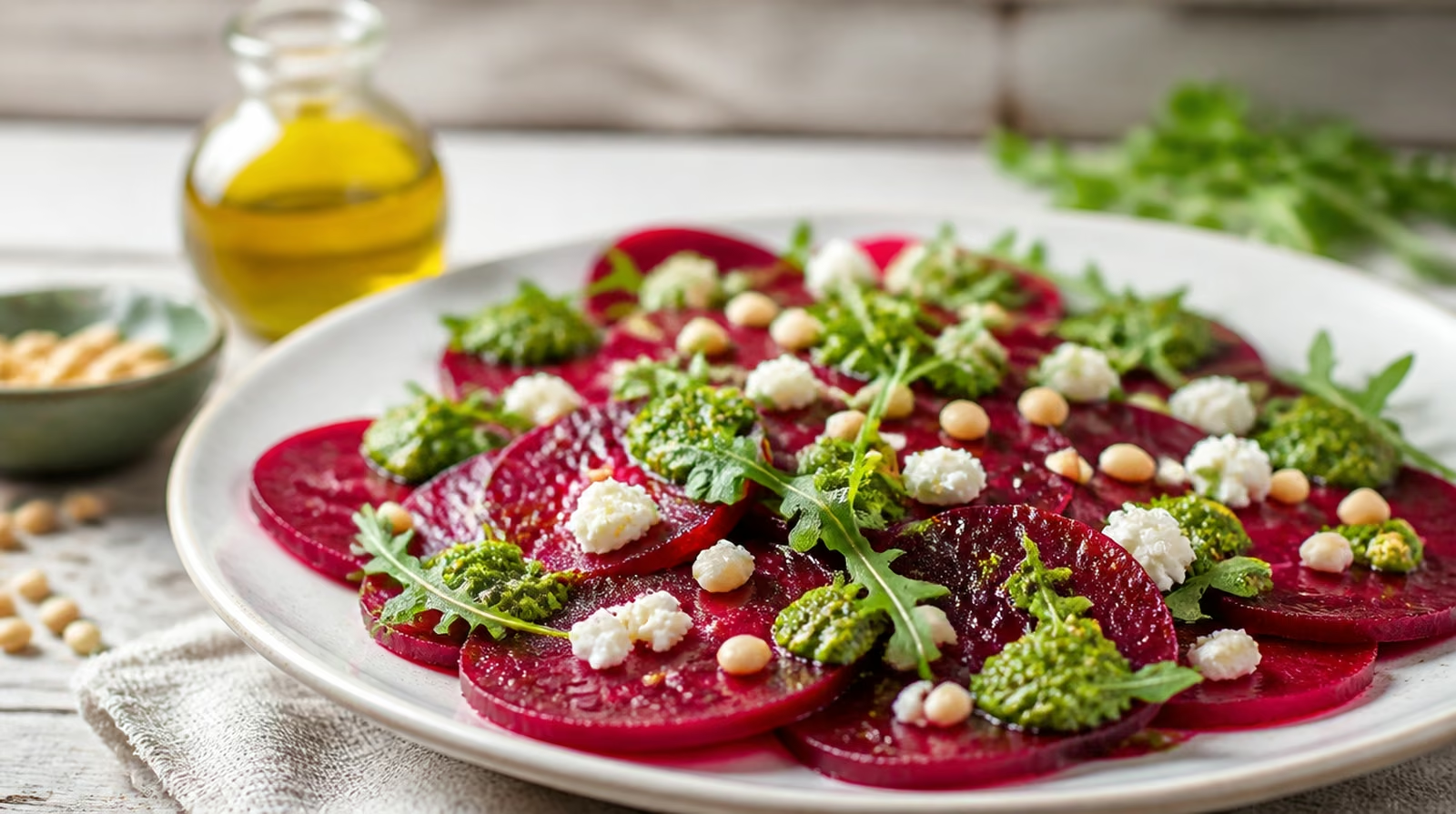
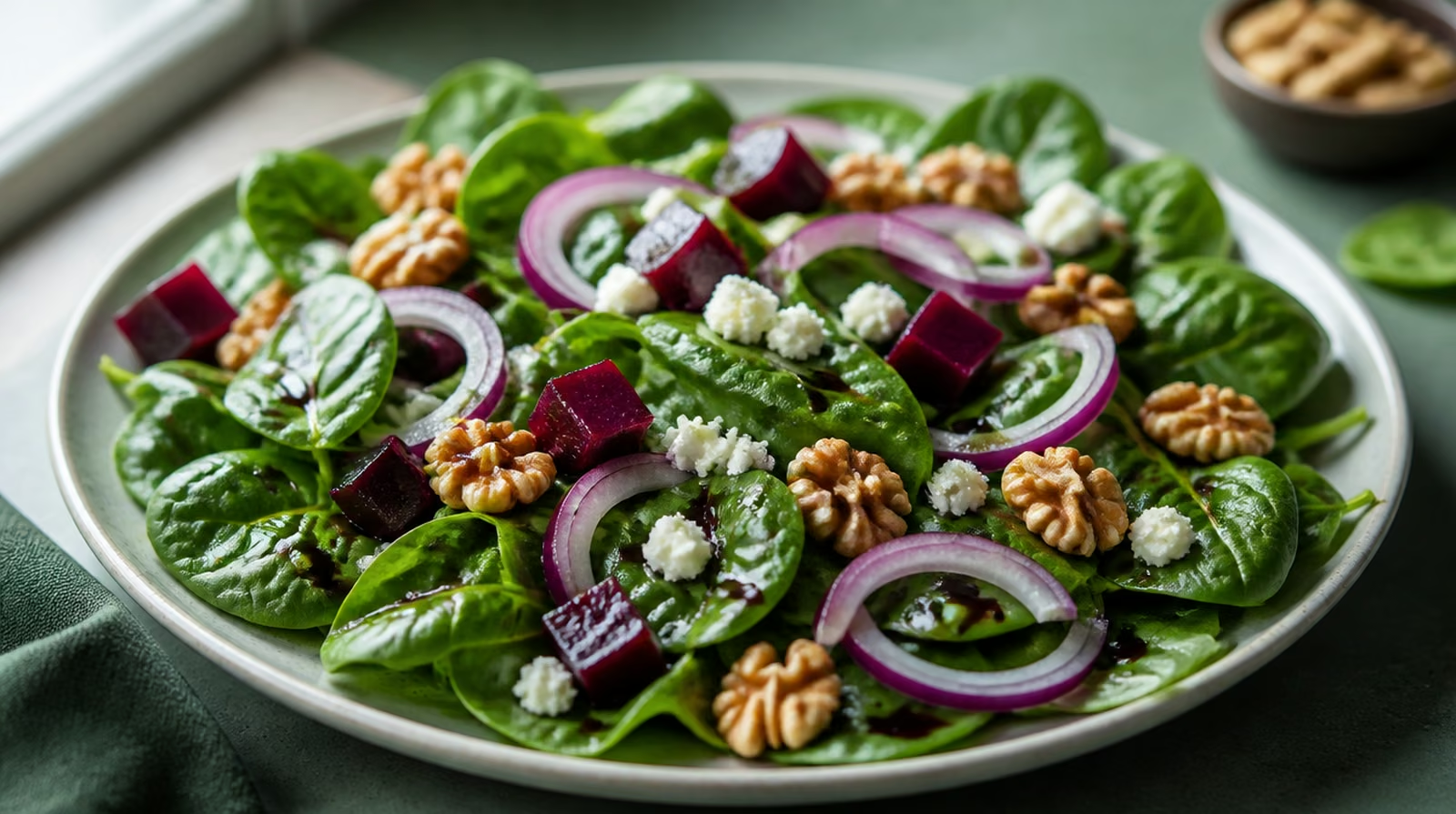
Beetroot, young baby spinach, walnuts, feta – on paper, a combination nobody could fault. The Polish salad classic sałatka z burakami i fetą turns these ingredients into a fresh meal in minutes.
Yet there is a reason why this specific combination warrants a closer look rarely mentioned in everyday recipes. It comes down to oxalate rich foods: while it does not affect everyone, for those it does, the impact is significant.
Oxalate rich foods: what are the worst foods for oxalates?
Oxalic acid occurs naturally in many plants. It binds to essential minerals – particularly calcium – forming poorly soluble salts that can impede mineral absorption. While much of this is excreted safely via the urinary tract, in susceptible individuals it can crystallise in the kidneys. Around 80 per cent of all kidney stones are composed of calcium oxalate.
The problem with this ingredient list: beetroot and spinach are among the most notable oxalate rich foods available. Botanically related, both belong to the Amaranthaceae family.
| Food | Oxalate per 100 g |
|---|---|
| Spinach (raw) | 600–970 mg |
| Rhubarb | 460–600 mg |
| Beetroot | 150–500 mg |
| Swiss chard | 300–650 mg |
| Walnuts | 70–75 mg |
| Broccoli | 10–20 mg |
Depending on portion size, a single serving of this salad can contain over 500 milligrams of oxalate. By comparison, guidance from NHS dietitians for those prone to calcium oxalate stones often recommends an upper limit of 50 to 100 milligrams per day.
Are oxalates bad for you? Who needs to be cautious
Not relevant for the vast majority. A healthy individual with normal kidney function and adequate fluid intake processes these amounts without issue. There is no reason to avoid oxalate rich foods as a precaution – doing so would mean cutting out some of the most nutrient-dense vegetables available, reducing overall nutrient bioavailability.
Relevant for anyone with:
- A history of diagnosed calcium oxalate kidney stones
- Impaired kidney function
- Inflammatory bowel disease or a history of intestinal surgery, which can increase oxalate absorption
- A chronically low fluid intake
What foods neutralize oxalates? The smart pairing trick
This is where strategic food pairing comes into play: consuming calcium in the same meal reduces oxalate absorption. Through calcium binding, the mineral binds oxalic acid in the gut into an insoluble compound that is excreted naturally, rather than entering the bloodstream and traveling to the kidneys.
That is precisely what the feta does in this recipe. A 100-gram serving of feta provides around 400 milligrams of calcium. The cheese is not just there for flavour; it serves as a functional counterweight to the oxalate load.
This explains why traditional combinations of spinach and cheese – from spinach lasagne to Turkish ıspanaklı börek – are nutritionally smarter than they might appear. It is culinary tradition that happens to get the science spot on.
Second lever: Hydration. Drinking two to three litres of fluid spread throughout the day dilutes the urine sufficiently to make crystallisation in the urinary tract far less likely. For those prone to stones, adequate hydration is by far the single most effective preventive measure – even more impactful than strict dietary restrictions.
Third lever: Blanching. Oxalic acid is water-soluble. If spinach is lightly blanched and the cooking water discarded, its oxalate content decreases by 30 to 80 per cent. With raw baby spinach in a salad, this option is lost – the inevitable trade-off of eating fresh greens.
What walnuts contribute
Walnuts are the only commonly eaten nut with a substantial content of alpha-linolenic acid (ALA), the plant-based omega-3 fatty acid. Providing around 7.5 grams per 100 grams, they offer significantly more than any other common nut.
The caveat to keep in mind: the body converts only a small percentage of ALA into the long-chain fatty acids EPA and DHA, which deliver the main cardiovascular benefits. Walnuts are no direct replacement for oily fish such as salmon or mackerel. Nevertheless, they remain the best plant-based source, and a daily handful also delivers magnesium, vitamin E, and polyphenols concentrated in their slightly bitter skin.
Do not rub off this skin, even if some recipes suggest peeling it. That is where the vast majority of the antioxidants reside.
The recipe
Serves 2
- 200 g cooked beetroot, diced
- 2 large handfuls baby spinach or lamb’s lettuce
- 80 g feta
- 40 g walnut halves
- 1/2 red onion, finely sliced into rings
Dressing:
- 2 tbsp olive oil
- 1 tbsp balsamic vinegar
- 1 tsp maple syrup or honey
- Black pepper
Preparation: Wash the spinach and spin it thoroughly dry – wet leaves dilute the dressing and cause the salad to wilt rapidly. Arrange across a shallow serving plate, scatter over the diced beetroot and red onion rings, then crumble over the feta and walnuts. Add the dressing just before serving at the table.
Baby spinach and dressing start a countdown the moment they meet. Ten minutes after dressing, the salad loses its crisp texture and appeal.
Fresh baby leaves: understanding spinach oxalate content
Fresh baby spinach from the salad aisle has tender leaves, lower oxalate levels than mature spinach, and tender stems. Frozen spinach will not work here – it has been blanched and turns soggy in a fresh salad.
Nutritional values per portion (estimated)
| Per portion | |
|---|---|
| Energy | approx. 400 kcal |
| Protein | approx. 12 g |
| Fat | approx. 31 g |
| of which Omega-3 (ALA) | approx. 1.5 g |
| Carbohydrates | approx. 14 g |
| Calcium | approx. 200 mg |
Summary: low oxalate foods and smart swaps
If you have never suffered from kidney stones, you can enjoy this dish without worry – it is nutrient-dense, satisfying, and ready in five minutes.
If you have a history of calcium oxalate stones, it is wise not to make oxalate rich foods like this a daily staple. The issue is not a single ingredient, but the combination of two high-oxalate items on one plate. In that scenario, swap spinach for low oxalate foods such as rocket or butterhead lettuce, keep the feta for its calcium binding effect, and drink plenty of water.
References
- Liang F, Guo F, Han Z et al.: IL-6 exacerbates calcium oxalate kidney stones by promoting inflammatory responses and crystal adhesion via p38 MAPK signaling activation. 2026. PubMed 42133071. DOI: 10.1007/s00240-026-02005-1.
- Yang J, Li D, Li T et al.: Probiotics in the prevention and treatment of calcium oxalate kidney stones: mechanisms and therapeutic potential. 2025. PubMed 41113639. DOI: 10.3389/fmicb.2025.1663138.
- Mitchell T, Kumar P, Reddy T et al.: Dietary oxalate and kidney stone formation. American journal of physiology. Renal physiology 2019. PubMed 30566003. DOI: 10.1152/ajprenal.00373.2018.
- Guillen BA, Nakamura F, Dodd B et al.: Outcomes of Nephrolithiasis Care by Patients’ Race: From a Statewide Quality Improvement Collaborative. 2026. PubMed 42255768. DOI: 10.7759/cureus.108310.
- Xia L, Zhou Z, Luo C et al.: <i>Lysimachia christinae</i> Hance Extract Mitigates Kidney Stone Formation: Association with NOX2/ROS Axis Modulation and Ferroptosis. 2026. PubMed 42193124. DOI: 10.3390/cimb48050520.
- Olarewaju BA, Sabrowsky S, Shurrab S et al.: Composite Phenotype: Recurrent Nephrolithiasis and Chronic Kidney Disease in an Adult with Biallelic <italic>SLC34A3</italic> and Monoallelic <italic>SLC3A1</italic> Pathogenic Variants – Who Is “The Culprit”?. 2026. PubMed 41849633. DOI: 10.1159/000551270.
- Krenshi A, Alkarmo W, Banasir AO et al.: Knowledge and Awareness About the Risk Factors of Urolithiasis Among the General Population in Makkah, Saudi Arabia. 2026. PubMed 41913802. DOI: 10.2147/rru.s575368.
- Pięta J, Szyszka M, Lipiński P et al.: Urolithiasis in Children-Clinical Picture, Pathogenesis, and Diagnostic Approach. 2026. PubMed 41594659. DOI: 10.3390/biom16010119.
- Bargagli M, Scoglio M, Howles SA et al.: Kidney stone disease: risk factors, pathophysiology and management. Nature reviews. Nephrology 2025. PubMed 40790363. DOI: 10.1038/s41581-025-00990-x.
- Kachkoul R, Touimi GB, El Mouhri G et al.: Urolithiasis: History, epidemiology, aetiologic factors and management. The Malaysian journal of pathology 2023. PubMed 38155376.
- Peerapen P, Thongboonkerd V: Kidney Stone Prevention. Advances in nutrition (Bethesda, Md.) 2023. PubMed 36906146. DOI: 10.1016/j.advnut.2023.03.002.
- Xu Z, Yao X, Duan C et al.: Metabolic changes in kidney stone disease. Frontiers in immunology 2023. PubMed 37228601. DOI: 10.3389/fimmu.2023.1142207.
- Demoulin N, Aydin S, Gillion V et al.: Pathophysiology and Management of Hyperoxaluria and Oxalate Nephropathy: A Review. American journal of kidney diseases : the official journal of the National Kidney Foundation 2022. PubMed 34508834. DOI: 10.1053/j.ajkd.2021.07.018.
- Siener R: Nutrition and Kidney Stone Disease. Nutrients 2021. PubMed 34204863. DOI: 10.3390/nu13061917.
- Wang Z, Zhang Y, Zhang J et al.: Recent advances on the mechanisms of kidney stone formation (Review). International journal of molecular medicine 2021. PubMed 34132361. DOI: 10.3892/ijmm.2021.4982.
- Khan SR, Canales BK, Dominguez-Gutierrez PR et al.: Randall’s plaque and calcium oxalate stone formation: role for immunity and inflammation. Nature reviews. Nephrology 2021. PubMed 33514941. DOI: 10.1038/s41581-020-00392-1.
- Bishop K, Momah T, Ricks J et al.: Nephrolithiasis. Primary care 2020. PubMed 33121635. DOI: 10.1016/j.pop.2020.08.005.
- Daudon M, Frochot V, Bazin D et al.: Drug-Induced Kidney Stones and Crystalline Nephropathy: Pathophysiology, Prevention and Treatment. Drugs 2018. PubMed 29264783. DOI: 10.1007/s40265-017-0853-7.
- Khan SR, Pearle MS, Robertson WG et al.: Kidney stones. Nature reviews. Disease primers 2016. PubMed 27188687. DOI: 10.1038/nrdp.2016.8.
- Pearle MS, Goldfarb DS, Assimos DG et al.: Medical management of kidney stones: AUA guideline. The Journal of urology 2014. PubMed 24857648. DOI: 10.1016/j.juro.2014.05.006.