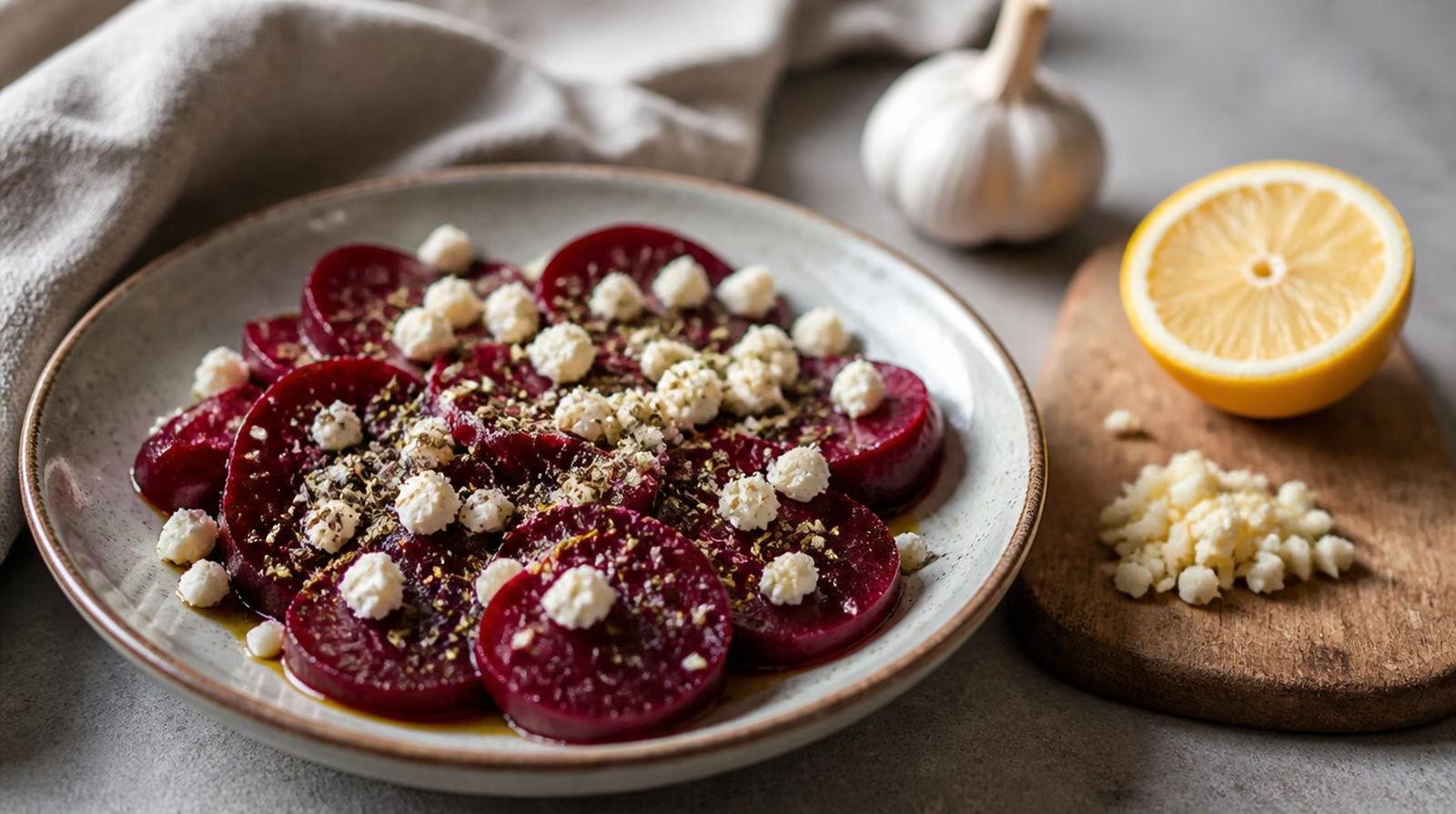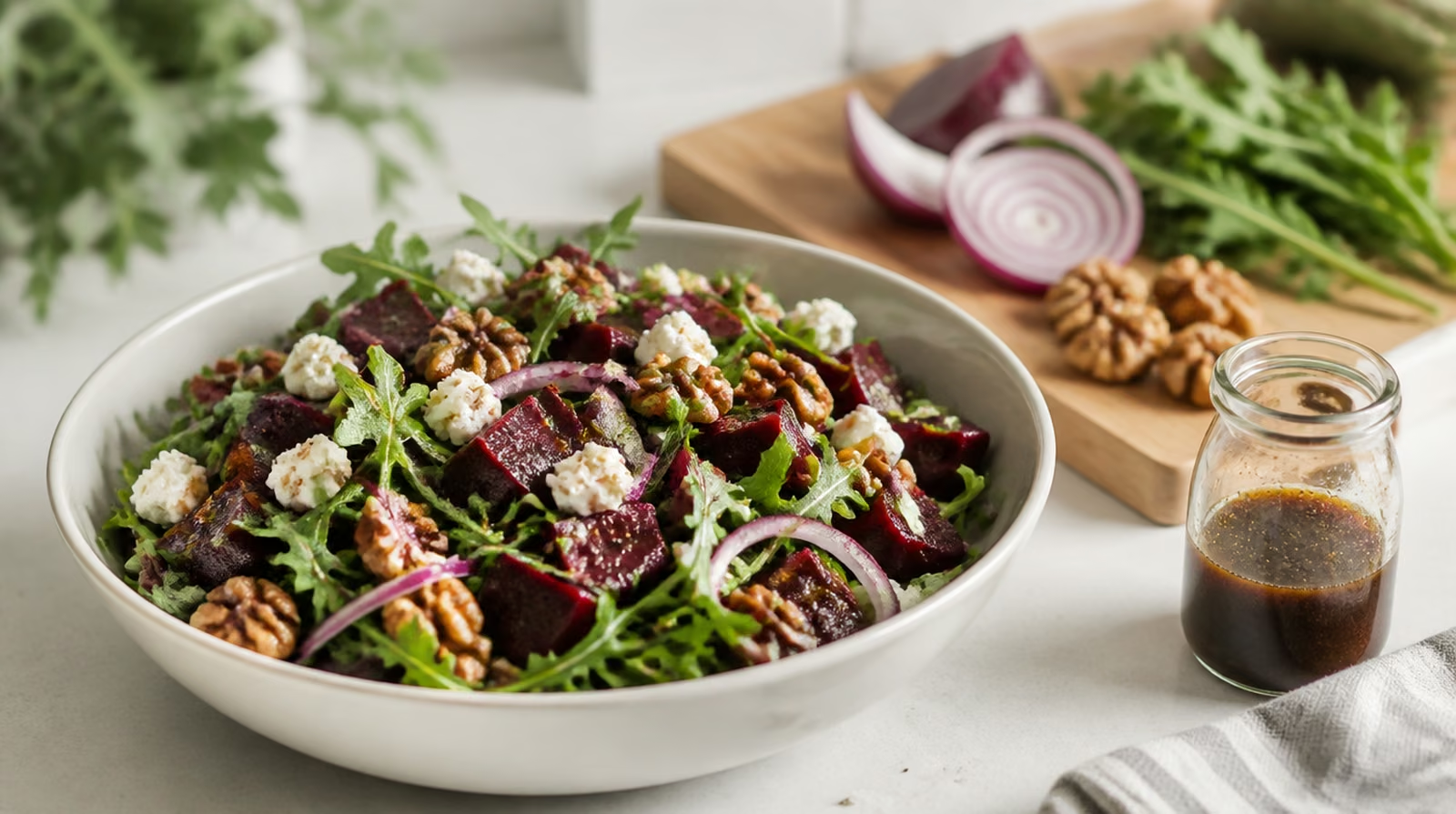
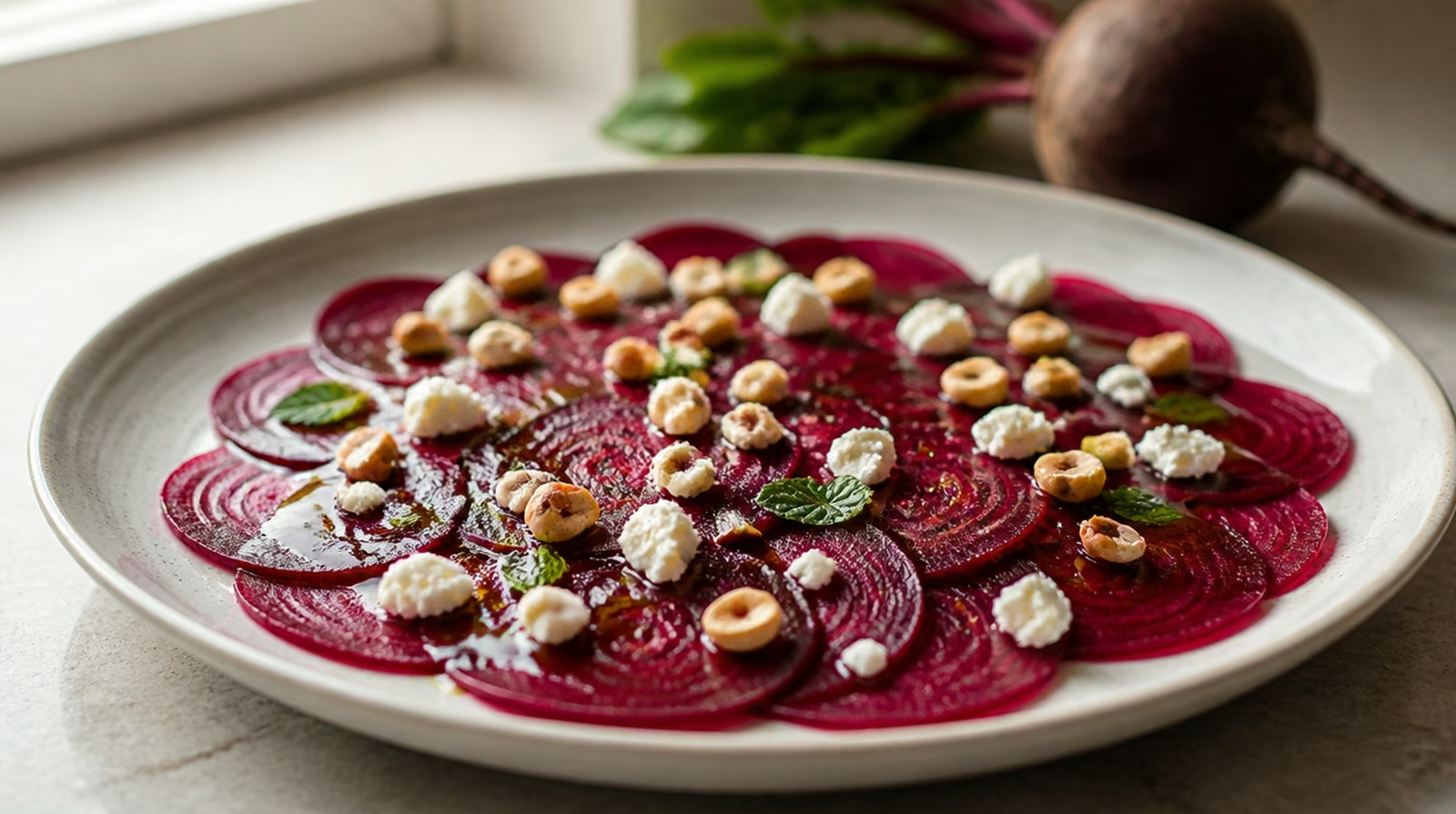
In Poland, they have carpaccio z buraka: paper-thin slices of raw beetroot arranged into a delicate fan, quickly marinated, and topped with crumbled feta. No oven, no saucepan required.
Eating raw beetroot is relatively uncommon in the UK – most of us know it pre-cooked in vacuum packs or pickled in vinegar. Yet when it comes to micronutrient absorption and overall nutritional density, the raw root offers distinct advantages. There is just one catch.
The benefits of eating raw beetroot: what heat degradation does to nutrients
Not every nutrient in beetroot responds to heat in the same way. The differences are striking:
| Nutrient | Behaviour during cooking |
|---|---|
| Folate (vitamin B9) | highly heat-sensitive, losses of up to 50% |
| Vitamin C | heat-sensitive, losses of 30–50% |
| Betalains (pigments) | break down significantly after approx. 60 minutes of heat |
| Dietary nitrate | heat-stable, but leaches into cooking water |
| Potassium, magnesium | heat-stable, water-soluble |
| Fibre | unchanged |
Of all these, folate is the most significant. Beetroot is among the richest vegetable sources of folate available – 100 grams of raw beetroot provide around 110 micrograms, a third of the daily adult requirement of 300 micrograms recommended by the NHS.
Folate is a nutrient where dietary intake in the UK frequently falls below recommended levels. It is essential for healthy cell division and red blood cell production, as well as the closure of the neural tube in early pregnancy. The name originates from folium, the Latin word for leaf – it was first discovered in spinach.
Eating raw beetroot delivers substantially more of this vital B vitamin than boiled versions. That alone is the strongest case for this recipe.
What about the taste?
Raw beetroot tastes earthier and punchier than cooked beetroot. The compound responsible is geosmin – the very same organic compound that creates the scent of damp earth after rain. Cooking partially degrades it, whereas raw beetroot retains it in full.
Some people are extraordinarily sensitive to geosmin; human noses can detect it at concentrations of mere parts per trillion. Anyone who feels beetroot “tastes like dirt” almost certainly has this heightened sensitivity.
What helps: Acid. Lemon juice or vinegar noticeably dampens the earthy notes. That is why raw beetroot should always be marinated and never served entirely plain.
Side effects of eating raw beets: oxalates and digestion
Two caveats should be kept in mind.
Oxalates remain fully intact. Boiling in water leaches out some oxalates, but eating raw beetroot preserves them completely. Anyone prone to calcium oxalate kidney stones should enjoy raw beetroot in moderation – read more details in our oxalate guide. The feta in this recipe serves as a natural dietary counterweight, as calcium binds to oxalates in the gut.
Raw beetroot is harder on digestion. The plant cell walls remain fully intact and the dietary fibre is unsoftened. For those with a delicate digestive tract, this can cause flatulence, bloating, or stomach cramps. If this sounds familiar, slice the root much thinner and leave it to marinate longer – the acidity and salt help break down the cell structure, much like curing fish in a ceviche.
Dietary nitrate content is highest when raw. While this provides excellent support for healthy blood pressure and cardiovascular function in adults, it makes raw beetroot unsuitable for babies under six months. Raw beetroot should never be introduced as early weaning food.
Raw beetroot carpaccio: the recipe
Serves 2 as a starter
- 1 medium raw beetroot (approx. 200 g)
- 80 g feta
- 30 g walnuts or hazelnuts
- 2 tbsp extra virgin olive oil
- Juice of half a lemon
- 1 tsp honey
- Sea salt, freshly cracked black pepper
- A few leaves of fresh basil or mint
Method:
- Peel the beetroot and use a mandoline to slice it as thinly as possible – one to two millimetres. A sharp chef’s knife works, but rarely achieves the necessary wafer-thin cut.
- Arrange the slices slightly overlapping across two plates to create a carpaccio fan.
- Whisk together the lemon juice, olive oil, honey, salt, and pepper, then drizzle evenly over the slices.
- Leave to marinate for at least 15 minutes, ideally 30. This is the crucial step that transforms raw root veg into a refined dish: the slices turn softer, glossier, and lose their harsh earthiness.
- Crumble the feta over the top, roughly chop the nuts, and scatter with fresh herbs.
Gloves
Raw beetroot stains fingers and worktops far more aggressively than cooked beetroot because the fresh juice bleeds freely. Wear disposable gloves or rub your hands immediately afterwards with lemon juice and salt. Plastic chopping boards absorb the colour permanently – wood or glass boards are a much better choice.
If eating raw beetroot feels too intense
There is a gentle middle ground that protects the majority of folate: flash steaming. Steaming for ten minutes rather than roasting for 60 minutes preserves considerably more heat-sensitive vitamins while making the bulb far easier on sensitive digestion.
Alternatively, grate instead of slicing: fine raw beetroot shreds, similar to a classic carrot salad, tossed with grated apple and lemon juice. This is noticeably easier to digest than slices because the tough cell walls are already broken down.
To learn the gentlest cooking techniques for supporting blood pressure and vascular health, see our beetroot nutrition guide.
Estimated nutritional values per serving
| Per serving | |
|---|---|
| Energy | approx. 300 kcal |
| Protein | approx. 9 g |
| Fat | approx. 24 g |
| Carbohydrates | approx. 12 g |
| Folate | approx. 110 µg (37% of daily recommended intake) |
| Vitamin C | approx. 15 mg |
For comparison: the same portion of cooked beetroot provides only around 55 to 70 micrograms of folate. Eating raw beetroot therefore delivers roughly double the amount.
References
- Scaglione F, Panzavolta G: Folate, folic acid and 5-methyltetrahydrofolate are not the same thing. Xenobiotica; the fate of foreign compounds in biological systems 2014. PubMed 24494987. DOI: 10.3109/00498254.2013.845705.
- Hoxha B, Hoxha M, Domi E et al.: Folic Acid and Autism: A Systematic Review of the Current State of Knowledge. Cells 2021. PubMed 34440744. DOI: 10.3390/cells10081976.
- Crider K, Williams J, Qi YP et al.: Folic acid supplementation and malaria susceptibility and severity among people taking antifolate antimalarial drugs in endemic areas. The Cochrane database of systematic reviews 2022. PubMed 36321557. DOI: 10.1002/14651858.CD014217.
- Castillo LF, Pelletier CM, Heyden KE et al.: New Insights into Folate-Vitamin B(12) Interactions. Annual review of nutrition 2025. PubMed 40315282. DOI: 10.1146/annurev-nutr-120524-043056.
- Shulpekova Y, Nechaev V, Kardasheva S et al.: The Concept of Folic Acid in Health and Disease. Molecules (Basel, Switzerland) 2021. PubMed 34207319. DOI: 10.3390/molecules26123731.
- Seyoum Tola F: The concept of folic acid supplementation and its role in prevention of neural tube defect among pregnant women: PRISMA. Medicine 2024. PubMed 38728462. DOI: 10.1097/MD.0000000000038154.
- Nawaz FZ, Kipreos ET: Emerging roles for folate receptor FOLR1 in signaling and cancer. Trends in endocrinology and metabolism: TEM 2022. PubMed 35094917. DOI: 10.1016/j.tem.2021.12.003.
- Wilson RD, O’Connor DL: Guideline No. 427: Folic Acid and Multivitamin Supplementation for Prevention of Folic Acid-Sensitive Congenital Anomalies. Journal of obstetrics and gynaecology Canada : JOGC = Journal d’obstetrique et gynecologie du Canada : JOGC 2022. PubMed 35691683. DOI: 10.1016/j.jogc.2022.04.004.
- Samaniego-Vaesken ML, Morais-Moreno C, Carretero-Krug A et al.: Supplementation with Folic Acid or 5-Methyltetrahydrofolate and Prevention of Neural Tube Defects: An Evidence-Based Narrative Review. Nutrients 2024. PubMed 39339754. DOI: 10.3390/nu16183154.
- De-Regil LM, Peña-Rosas JP, Fernández-Gaxiola AC et al.: Effects and safety of periconceptional oral folate supplementation for preventing birth defects. The Cochrane database of systematic reviews 2015. PubMed 26662928. DOI: 10.1002/14651858.CD007950.pub3.
- Fardous AM, Heydari AR: Uncovering the Hidden Dangers and Molecular Mechanisms of Excess Folate: A Narrative Review. Nutrients 2023. PubMed 37960352. DOI: 10.3390/nu15214699.
- Menezo Y, Elder K, Clement A et al.: Folic Acid, Folinic Acid, 5 Methyl TetraHydroFolate Supplementation for Mutations That Affect Epigenesis through the Folate and One-Carbon Cycles. Biomolecules 2022. PubMed 35204698. DOI: 10.3390/biom12020197.
- Pawlowska E, Szczepanska J, Derwich M et al.: DNA Methylation in Periodontal Disease: A Focus on Folate, Folic Acid, Mitochondria, and Dietary Intervention. 2025. PubMed 40244046. DOI: 10.3390/ijms26073225.
- Ling Y, Yuan S, Huang X et al.: Associations of Folate/Folic Acid Supplementation Alone and in Combination With Other B Vitamins on Dementia Risk and Brain Structure: Evidence From 466 224 UK Biobank Participants. 2024. PubMed 38029284. DOI: 10.1093/gerona/glad266.
- Sun Y, Fowke JH, Liang X et al.: Changes in Dietary Intake of Methionine, Folate/Folic Acid and Vitamin B12 and Survival in Postmenopausal Women with Breast Cancer: A Prospective Cohort Study. 2022. PubMed 36432434. DOI: 10.3390/nu14224747.
- Merrell BJ, Patel P.: Folic Acid. 2026. PubMed 32119374.
- Zheng Y, Xu Y, Wen X et al.: Folate as a Key Regulator of Animal Intestinal Homeostasis: From Metabolism to Microbiota and Barrier Function. 2026. PubMed 42278175. DOI: 10.3390/ani16111744.
- Westmark CJ.: Reassessing Mandatory Folic Acid Fortification for Neural Tube Defect Prevention: Evidence, Uncertainty, and Policy Implications. 2026. PubMed 42280401. DOI: 10.3390/nu18111758.
- Noel C, Lombardi N, Price M et al.: The relationship between vitamin B9 (folate) supplementation and suicidality: a scoping review. 2026. PubMed 42239831. DOI: 10.9740/mhc.2026.06.150.
- Holden F, Hughes R.: A Case of Neural Tube Defect in Early Pregnancy Following Sulfasalazine Exposure Without Folic Acid Supplementation. 2026. PubMed 42256378. DOI: 10.1155/crrh/8352167.
- Khanduja R, Frye RE.: A Systematic Review of Folate and the Human Enteric Microbiome: Biological Mechanisms and Clinical Implications. 2026. PubMed 42278572. DOI: 10.3390/ijms27115048.
- Rogulj M, Malić Tudor K, Bralić T et al.: Folic Acid Level of Children with Atopy/Asthma and Children Without Chronic Allergic Disease-Should We Consider Nutritional Fortification?. 2026. PubMed 42123969. DOI: 10.3390/nu18091368.