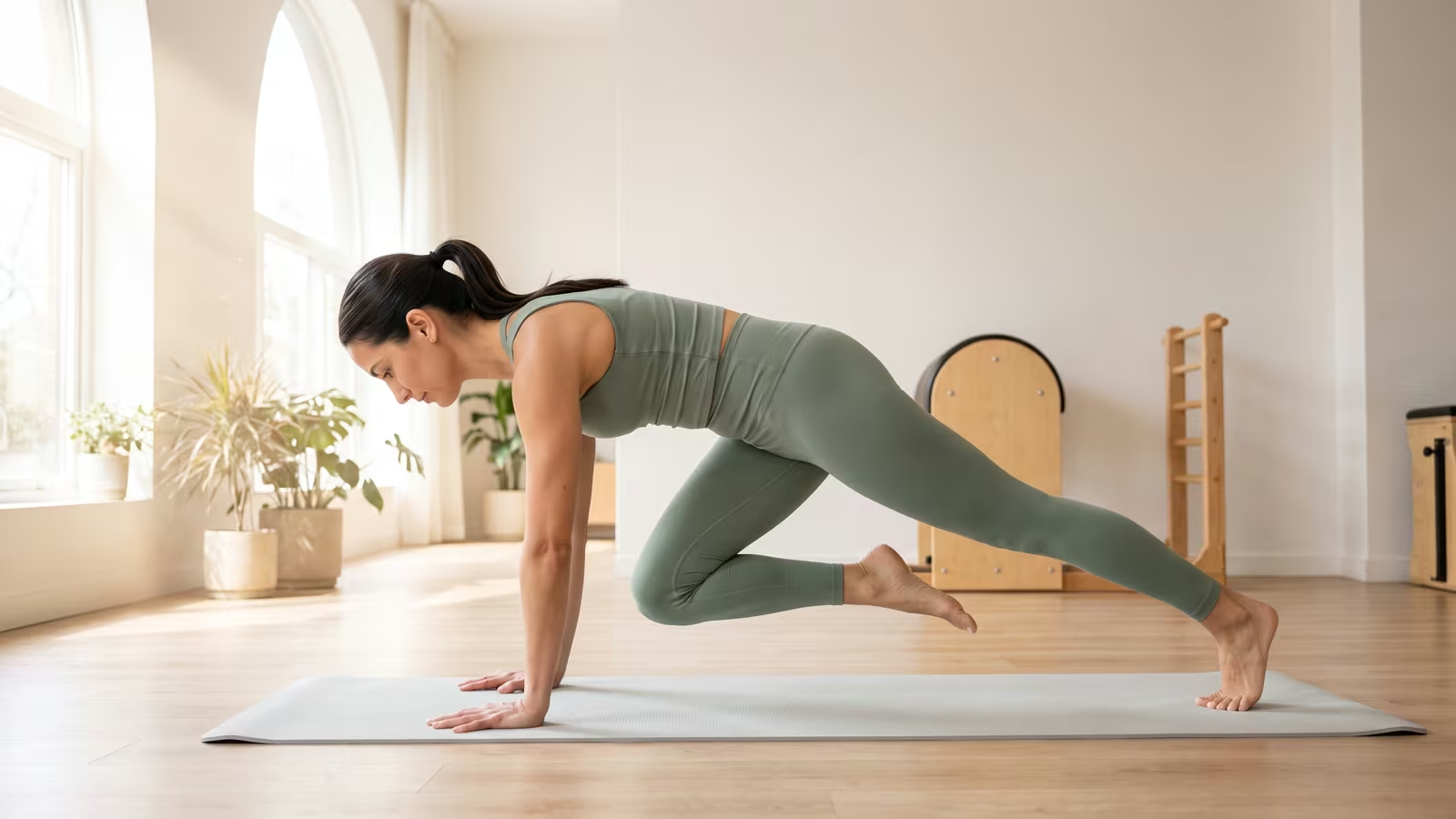
Mountain climbers are among the few exercises that combine effective abdominal training with cardiovascular endurance in a single bodyweight workout. Starting from a high plank position, you drive your knees alternately towards your chest as if scaling a steep slope. This movement challenges your entire core stability whilst elevating your heart rate. Here is how to perform the exercise with clean technique to maximise the benefits of every single repetition.
Key takeaways: mountain climbers exercise benefits
- Mountain climbers strengthen the abdominals, core, shoulders, and legs whilst significantly boosting cardiovascular fitness.
- The key is maintaining a stable high plank position: hips stay low, back remains straight, and the core stays braced.
- Pace is secondary to form – controlled knee drives deliver far greater training stimulus than rushed, frantic movements.
- Beginners can perform the exercise at a slower pace or with hands elevated against a sturdy bench or wall.
- Performed in short intervals (such as 30 seconds), they serve as a potent calorie-burner within circuit or HIIT training.
Mountain climber exercise target muscles
The mountain climber is a true full-body exercise with a primary focus on the midsection. The rectus abdominis and obliques work continuously to maintain pelvic alignment and spinal stability whilst the legs are in motion. In addition, the shoulders and chest provide crucial shoulder stability to support your body weight, whilst the glutes, quadriceps, and hip flexors engage dynamically with every knee drive. Because the movement engages multiple large muscle groups simultaneously, overall energy expenditure is significantly higher than with static core exercises.
How to do mountain climbers correctly: step by step
Set up in a high plank position: hands placed directly beneath your shoulders, with your body forming a straight line from head to heels. Draw your navel gently inwards and squeeze your glutes to maintain proper pelvic alignment and prevent your lower back from sagging. Drive your right knee smoothly towards your chest, return it to the starting position, and repeat with the left leg. Keep your shoulders stacked over your wrists and your neck neutral in line with your spine. Breathe steadily and choose a controlled tempo that prevents your hips from bouncing or rising into the air.
Common mistakes to avoid
The most frequent mistake is allowing the hips to rise too high: once the hips lift towards the ceiling, tension leaves the abdominals and core engagement is lost. Equally problematic is arching or sagging through the lower back, which indicates that core stability has lapsed. Take care not to place your hands too far forward of your shoulders, as this places unnecessary strain on the wrist joints. Remember that form always precedes speed; uncontrolled kicking of the legs delivers minimal muscular benefit and increases injury risk.
Variations: mountain climber for beginners and advanced progressions
For beginners, an elevated variation is ideal: place your hands on a sturdy gym bench, windowsill, or wall, where the shallower angle reduces the load on your shoulders and core. Those seeking a more demanding progression can increase their pace for HIIT training intervals or incorporate cross-body knee drives towards the opposite elbow to place greater emphasis on the obliques. A controlled, Pilates-style variation involves bringing each knee forward slowly on a deliberate exhalation to hone deep core stability. Mountain climbers pair exceptionally well with the plank and the bear plank.
How often and how long should you train?
In circuit or interval sessions, 3 to 4 sets of 30 to 40 seconds with short rest periods in between have proven highly effective. Focussing on strict form rather than chasing high repetition counts yields far superior results. Two to three sessions per week are sufficient to build noticeable core strength and stamina. Because the exercise places demands on the cardiovascular system, it works well as an active conditioning interval between slower abdominal movements. Only increase duration and speed once you can hold a solid plank throughout the entire set.
Summary
This versatile bodyweight exercise strengthens the midsection, challenges the whole body, and burns calories without requiring any equipment. The foundation of the movement is a firm high plank position with level hips and an engaged core. When performed with control and precision, it remains one of the most effective conditioning exercises for home workouts. Incorporate mountain climber exercises into your next routine—start with the elevated variation and progress steadily week by week.
Frequently asked questions
Which muscles do mountain climbers work?
They primarily target the rectus abdominis and obliques, supported by the hip flexors, shoulders, chest, glutes, and quadriceps. It is a full-body movement centred on core stability.
Are mountain climbers good for weight loss?
Due to their dynamic nature, they burn a substantial number of calories and fit seamlessly into circuit training. For sustainable fat loss, overall energy balance and balanced nutrition remain essential.
How many sets should you perform per workout?
Aim for 3 to 4 sets of 30 to 40 seconds, two to three times per week. Movement quality should always take priority over volume.
Why do my hips keep lifting up?
This typically occurs when core engagement drops or the movement is performed too quickly. Brace your abdominal muscles, squeeze your glutes, and slow down your knee drives to regain control.
Is this exercise suitable for beginners?
Yes, particularly when using an elevated surface such as a bench or wall. The higher angle decreases the gravitational load on the shoulders and abdominal wall.
Do they place excessive strain on the wrists?
If you have sensitive wrists, supporting your body weight can feel uncomfortable. Ensure your hands are aligned directly underneath your shoulders, or switch to the elevated variation against a wall.
Does the exercise build cardiovascular fitness?
Yes. The continuous, dynamic movement elevates your heart rate, providing an effective workout for your cardiovascular system and muscular endurance.
How quickly can you expect results?
Improvements in core strength and cardiovascular endurance typically become noticeable within two to four weeks of consistent training. Visible abdominal definition will also depend on overall body fat percentage.