The forearm plank is the definitive foundation for building a strong, resilient torso. Supporting your body in a straight line across your forearms and toes without moving might look effortless from the outside, but it requires an intensive isometric contraction across your entire midsection. Mastering solid technique and effective core bracing is crucial—because with this exercise, quality and form always matter far more than duration.
Key takeaways
- The plank trains the entire torso—abdominals, lower back, shoulders and glutes—in a static hold.
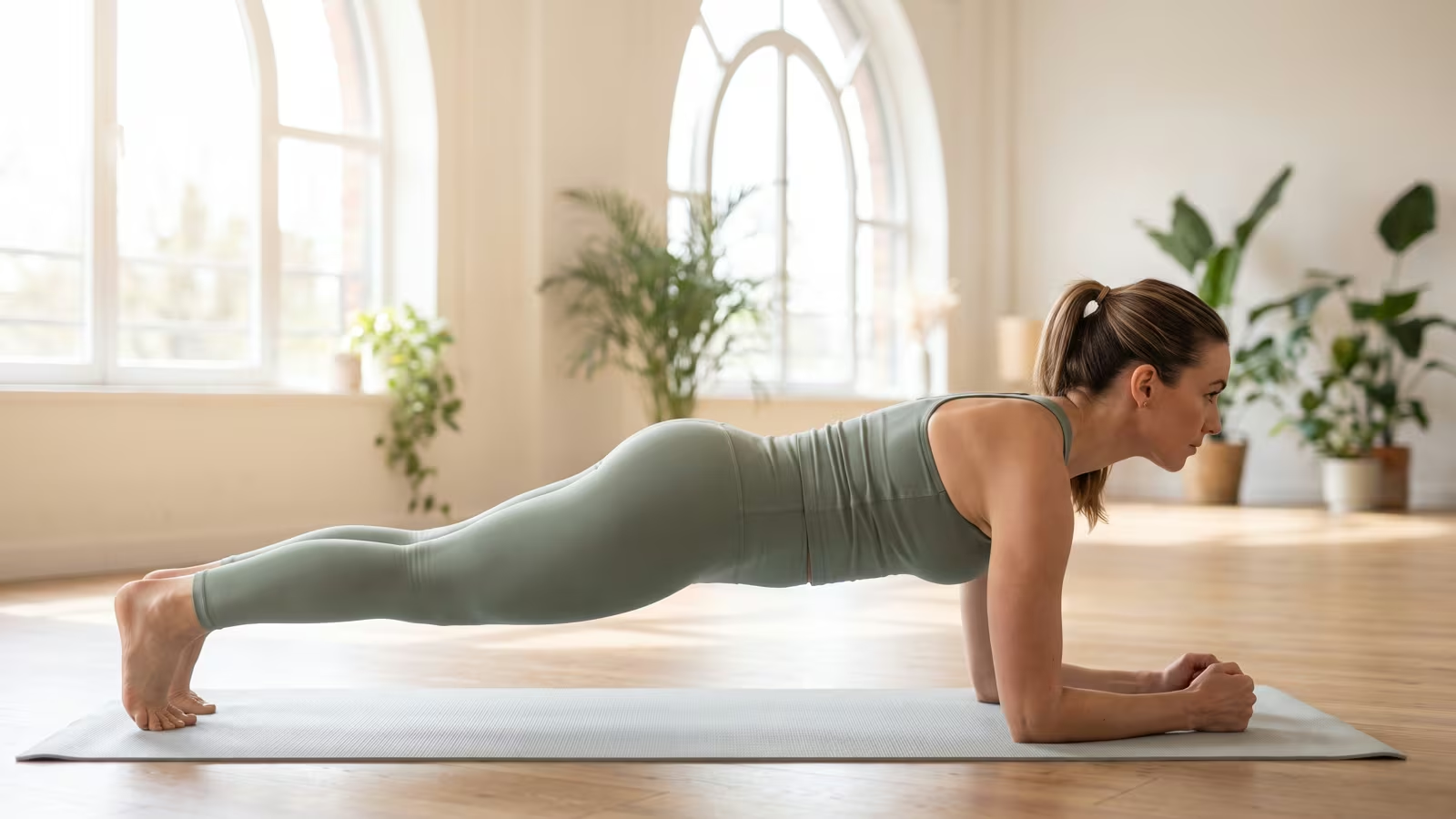
- The body maintains a neutral spine in a straight line: hips neither pike upwards nor sag towards the floor.
- Ensure correct elbow alignment directly under the shoulders, keeping the neck long and gaze fixed on the floor.
- Focus on muscular tension rather than the clock: 20 seconds with perfect form beats 60 seconds with a hollow back.
- Beginners can start on their knees or with forearms elevated on a sturdy bench.
Which muscles does the plank core exercise target?
The plank is a true full-body static hold. At its centre is the deep transverse abdominis, which stabilises the pelvis, alongside the rectus abdominis (the six-pack muscle) and the obliques. Simultaneously, the lower back, glutes and shoulders work continuously to secure a rigid line. Because so many muscle groups work together in an isometric hold, it enhances functional stability far more efficiently than many dynamic exercises—building the muscular endurance that safeguards your back during everyday movements.
How to hold a plank properly: Step by step
Adopt the forearm position: place your elbows directly beneath your shoulders with your forearms resting parallel on your mat. Extend your legs straight behind you, supporting your weight on the balls of your feet. Draw your navel gently inwards, ensure firm glute activation, and align your entire body in an unbroken line from head to heels. Keep your neck neutral and gaze slightly forward on the floor. Actively press the ground away through scapular protraction (spreading your shoulder blades) and breathe steadily. Maintain tension only for as long as your form remains flawless.
Common mistakes when holding a plank
The most frequent mistake is sagging hips: when the pelvis drops into an anterior pelvic tilt, the workload shifts straight to the lumbar spine rather than the abdominal wall. Just as counterproductive is piking the hips too high into the air, which makes the movement easier whilst stripping away its core-strengthening benefits. Other common errors include letting the head drop, straining the neck upwards, or holding your breath. Check your alignment in a mirror or record a short video clip, and stop the set as soon as your form falters rather than pushing through poor posture.
Forearm plank exercises and variations: Easier and harder
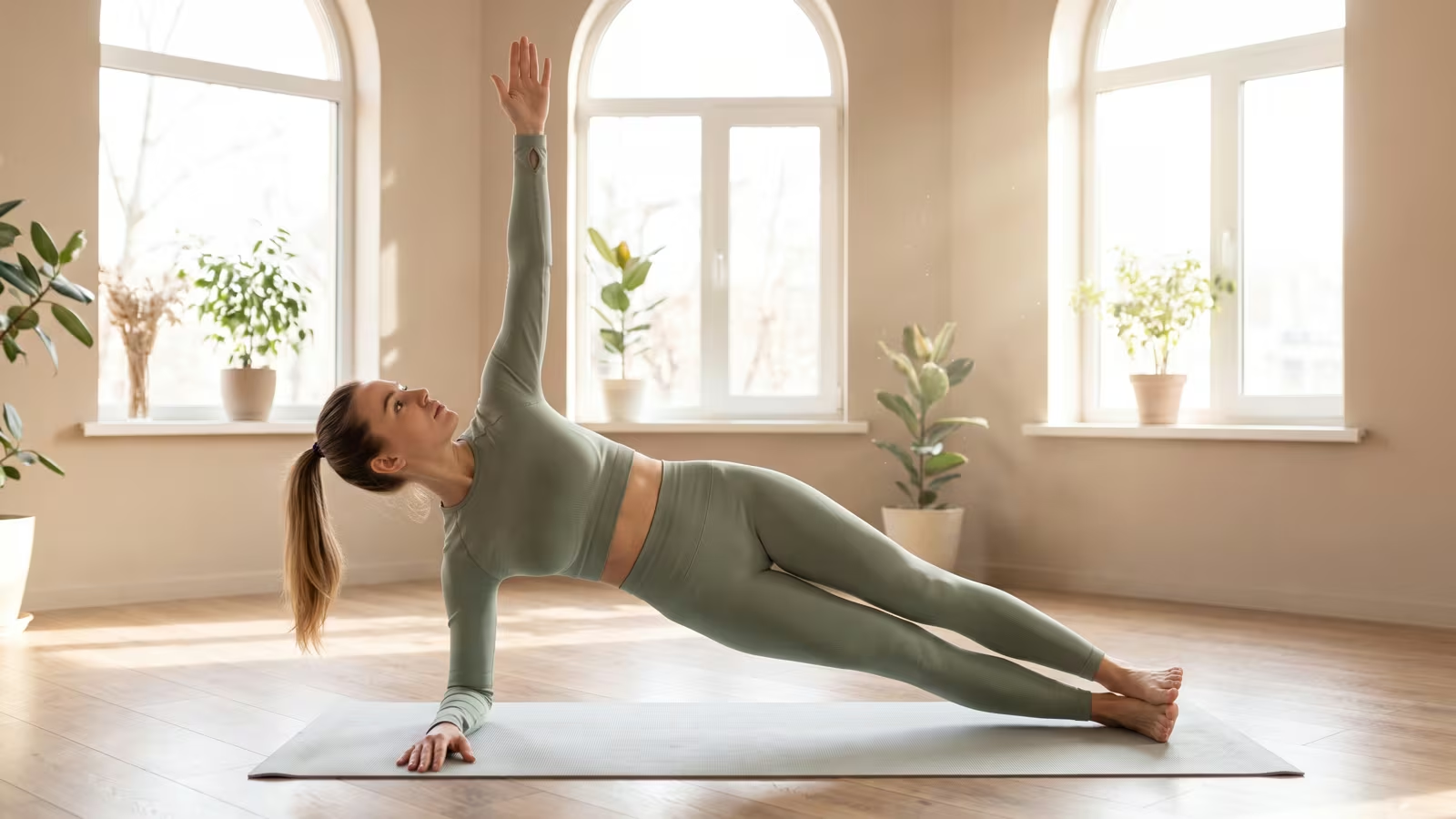
For beginners, two accessible modifications shorten the lever: resting on your knees (knee plank) or elevating your forearms onto a bench or sturdy box. Once a standard forearm plank feels comfortable, add dynamic progression by lifting one leg or arm, transitioning between forearms and hands (plank-to-push-ups), or incorporating subtle hip dips to target the obliques. Perfecting this hold provides an excellent foundation for dynamic movements such as mountain climbers and the bear plank.
Forearm plank hold: How long and how often?
Start with 2 to 3 sets of 20 to 30 seconds, gradually increasing your hold time only whilst maintaining strict alignment. Holding a plank indefinitely yields diminishing returns—past a certain point, fatigue sets in, core bracing fails and technique deteriorates. Multiple short, clean sets are far more productive. Two to three sessions per week are plenty to build notable core strength. When you want to progress, choose more challenging variations rather than simply extending the timer.
The bottom line
The forearm plank is a cornerstone of effective core training: it strengthens the whole midsection, requires zero equipment, and can be practised anywhere. The key is maintaining a straight line with engaged abdominals and active glutes, rather than chasing record times. Consistent, high-quality planks lay the groundwork for all advanced abdominal movements. Incorporate the plank into your next workout and focus on technical precision before adding extra seconds.
Frequently asked questions
Which muscles does the plank target?
The entire core: deep transverse abdominis, rectus abdominis, obliques, lower back, glutes and shoulder stabilisers. It serves as an effective full-body isometric exercise.
How long should your forearm plank hold last?
Holding for 20 to 30 seconds with perfect form is an ideal target. Several crisp, well-executed sets deliver significantly better results than one prolonged set with sagging hips.
Is the plank good for your back?
Yes, it reinforces the deep stabilising muscles that support the spine. Proper alignment without arching the lower back is essential. Anyone experiencing acute back pain should consult a GP or physiotherapist first.
Is the plank suitable for beginners?
Yes, particularly when modified by resting on the knees or elevating the forearms on a bench. Shortening the lever makes it much easier to maintain control and posture.
Why do my hips sag during a plank?
Hips drop when core bracing weakens, glutes disengage, or the hold is sustained past muscular fatigue. Actively squeeze your abdominals and glutes, and rest as soon as your hips start to dip.
How often should you practise the plank?
Two to three times a week is sufficient to develop solid core strength. You can also easily integrate a brief set into your daily morning mobility routine.
Does the plank help reduce belly fat?
It builds and tightens the abdominal musculature beneath, but as a static exercise, its calorie expenditure is modest. Fat loss requires a balanced diet alongside regular physical activity.
Forearm plank vs straight arm plank – which is better?
Both are highly effective. The forearm plank places greater demand on the abdominal wall, whilst a straight arm plank engages more shoulder and wrist stability. Alternating between both in plank-ups offers a great progression.