The bicycle crunch—often referred to as the bicycle exercise—is repeatedly highlighted in studies as one of the most effective abdominal workouts available. The reason: it combines curling the upper body with torso rotation and an alternating pedal motion of the legs. This engages both the rectus abdominis and the oblique abdominals in a single fluid movement. Here is how to execute bicycle crunches with proper form—whilst protecting your neck and lower back.
Key takeaways
- The bicycle crunch trains the rectus abdominis and oblique abdominals simultaneously—the secret behind its exceptional effectiveness.
- The twist originates from torso rotation, rather than simply dragging your elbow towards your knee.
- The lower back remains pressed firmly into the gym mat, ensuring crucial lumbar spine support.
- The neck stays elongated; the hands lightly cradle the head rather than pulling it, maintaining safe neck alignment.
- Slow, controlled repetitions deliver significantly higher abdominal activation than rapid pedalling.
Bicycle crunch abs: why the exercise is so effective
The bicycle crunch targets multiple abdominal muscle groups simultaneously. When curling up, the rectus abdominis is heavily engaged; during the twist, the oblique abdominals fire; and the alternating pedal motion additionally challenges the deep transverse abdominis and hip flexors. It is precisely this combination that builds functional rotational core strength, achieving in one fluid movement what would otherwise require several separate exercises. Consequently, the bicycle crunch consistently achieves top rankings in studies measuring peak abdominal activation.
How to do bicycle crunches properly: step-by-step
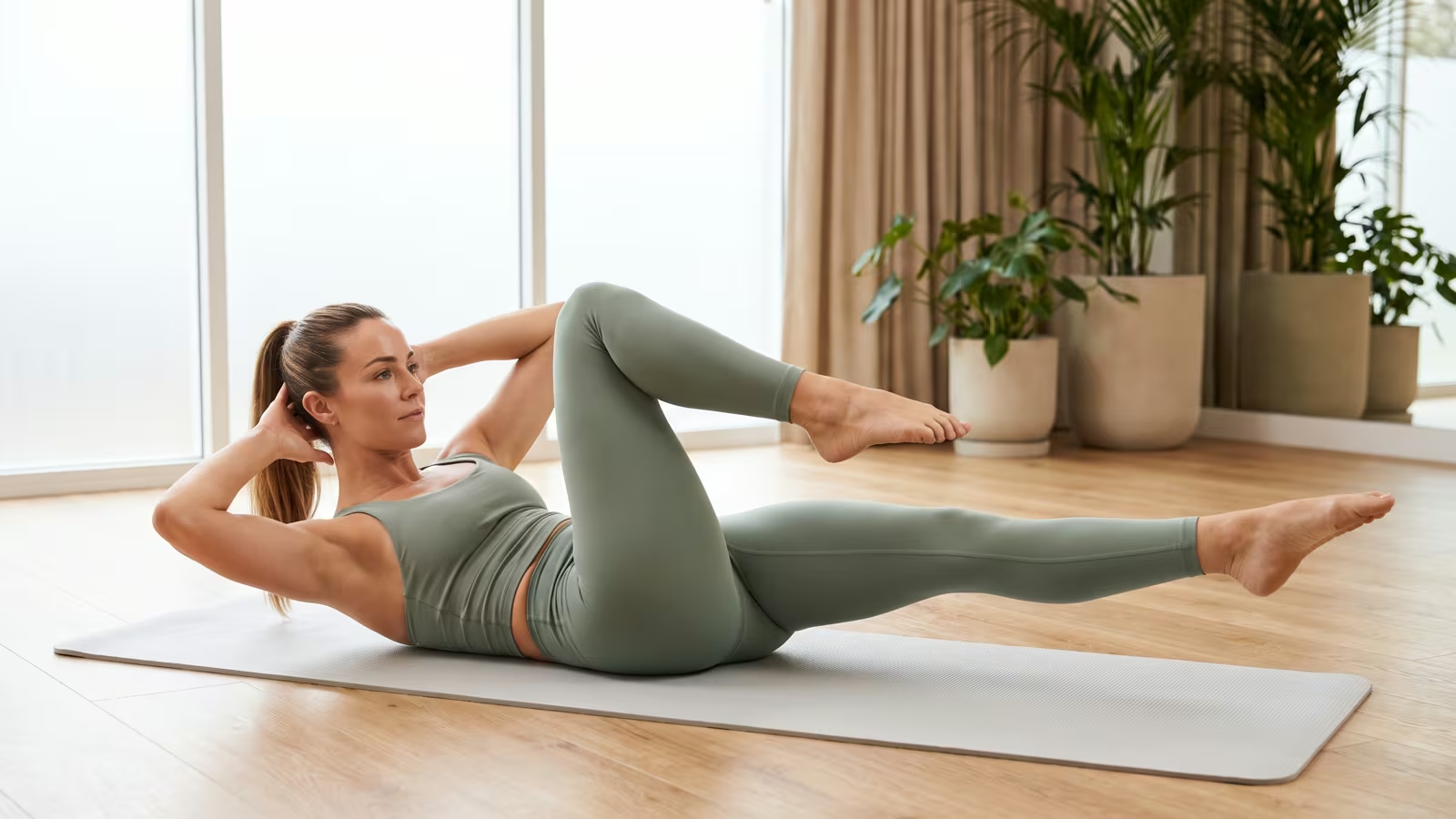
Lie flat on your back on a gym mat with your fingertips lightly supporting the back of your head and your legs in tabletop position (knees bent at 90 degrees above your hips). Raise your head and shoulders off the mat and draw your navel inwards. Now guide your right elbow towards your left knee whilst extending your right leg straight out in front of you. Next, transition smoothly to the opposite side. Crucially, the entire upper body rotates whilst your lower back stays pressed into the mat. Exhale with every rotation and keep your gaze angled diagonally upwards to maintain neutral neck alignment.
Common mistakes when performing the bicycle crunch
The most frequent mistake is pulling on the neck: interlocking your fingers tightly behind your head and hauling your neck upwards risks muscle strain. The hands should only provide light support. Another common error is an arching lower back, which typically happens when the legs are extended too low towards the floor. Simply extend your legs higher until your spine rests flat again. Finally, mind your tempo: pedalling rapidly might look exhausting, but it relies on momentum rather than muscular tension. Slow, deliberate control is always superior.
Variations for beginners and advanced training
If the standard movement is too demanding, keep your legs higher and more bent—this shortens the lever arm and eases the load on your spine. Lowering the resting foot onto the gym mat between repetitions also makes the exercise more accessible. For greater intensity, extend your legs closer to the floor and slow the tempo down so that each rotation takes two to three seconds. You can pair bicycle crunches with the Russian twist and the criss-cross for a comprehensive waist-toning workout.
How many bicycle crunches should I do (and how often)?
For beginners, 2 to 3 sets of 20 repetitions (10 per side) are ideal. Because the exercise is so intensive, you will feel the burn after only a few clean reps. Two to three training sessions per week are plenty—like any other muscle group, the abdominals need adequate recovery. Ensure your technique remains solid throughout each set; as soon as your lower back arches or you begin tugging on your neck, finish your set for the day.
Summary
The bicycle crunch is rightfully a staple of core training: it recruits multiple muscle groups in a single movement without requiring any equipment. The decisive factors are a flat lower back, proper neck alignment, and a slow, controlled cadence. Following these cues ensures you gain the maximum benefit from every repetition. Aim for three sets of bicycle crunches on your next core workout—choosing slow, clean form over rushed repetitions.
Frequently asked questions
Bicycle crunch exercise muscles worked: which areas are targeted?
It engages the rectus abdominis, the internal and external oblique abdominals, the deep transverse abdominis, and the hip flexors. This multi-muscle activation makes it exceptionally effective.
Is the bicycle crunch the best abdominal exercise?
It consistently scores at the very top of abdominal activation studies. However, there is no single “best” exercise—combining varied movements provides the most balanced core development.
Why does my neck hurt during the movement?
This usually happens because you are pulling your head upwards with your hands. Your hands should merely support your head. Keep your neck elongated and direct the muscular effort into your core.
How many bicycle crunches should I do a day?
Performing 2 to 3 sets of 20 repetitions two to three days per week is sufficient. Daily training of the exact same muscles is unnecessary as the fibres need time to recover.
Why is my lower back lifting off the mat?
This occurs when the legs are lowered too close to the ground. Extend your legs slightly higher until your spine rests flat against the gym mat—this ensures proper lumbar spine support.
Are bicycle crunches suitable for beginners?
Yes, by keeping the knees more bent and maintaining a slow tempo. This reduces the lever length and keeps the movement easily controllable.
Do bicycle crunches help lose belly fat?
They strengthen and define the underlying abdominal muscles. Visible muscle definition comes from pairing regular training with a balanced diet—targeted fat reduction in a specific area is not biologically possible.
How fast should I pedal?
Slowly. Each rotation should ideally take two to three seconds. Control beats speed every time because it forces the muscles to perform the work rather than momentum.