Hardly any abdominal workout move tones the waist quite as effectively as Russian twists – the rotating bodyweight movement performed from a seated V-position. It requires no equipment, can be done anywhere on an exercise mat, and targets the exact muscles responsible for a defined, sculpted midsection. Here is everything you need to know about how to perform the movement with proper technique, which form mistakes hold back your progress, and how to adapt the exercise to your fitness level.
Key Takeaways
- The Russian twist primarily trains the oblique muscles and builds rotational strength throughout your core.
- Maintaining a long, neutral spine is essential – prioritise control over speed. The torso rotation must come from the thoracic spine, not the arms.
- Beginners should keep their feet on the floor, whilst advanced trainees can raise their legs or add extra resistance.
- Engaging your deep core by drawing the navel inwards (the Pilates powerhouse) protects your lower back.
- Just 2 to 3 sets of 20 twists are enough to provide an effective training stimulus and boost core stability.
Russian Twist Benefits: What Is the Exercise and Which Muscles Does It Target?
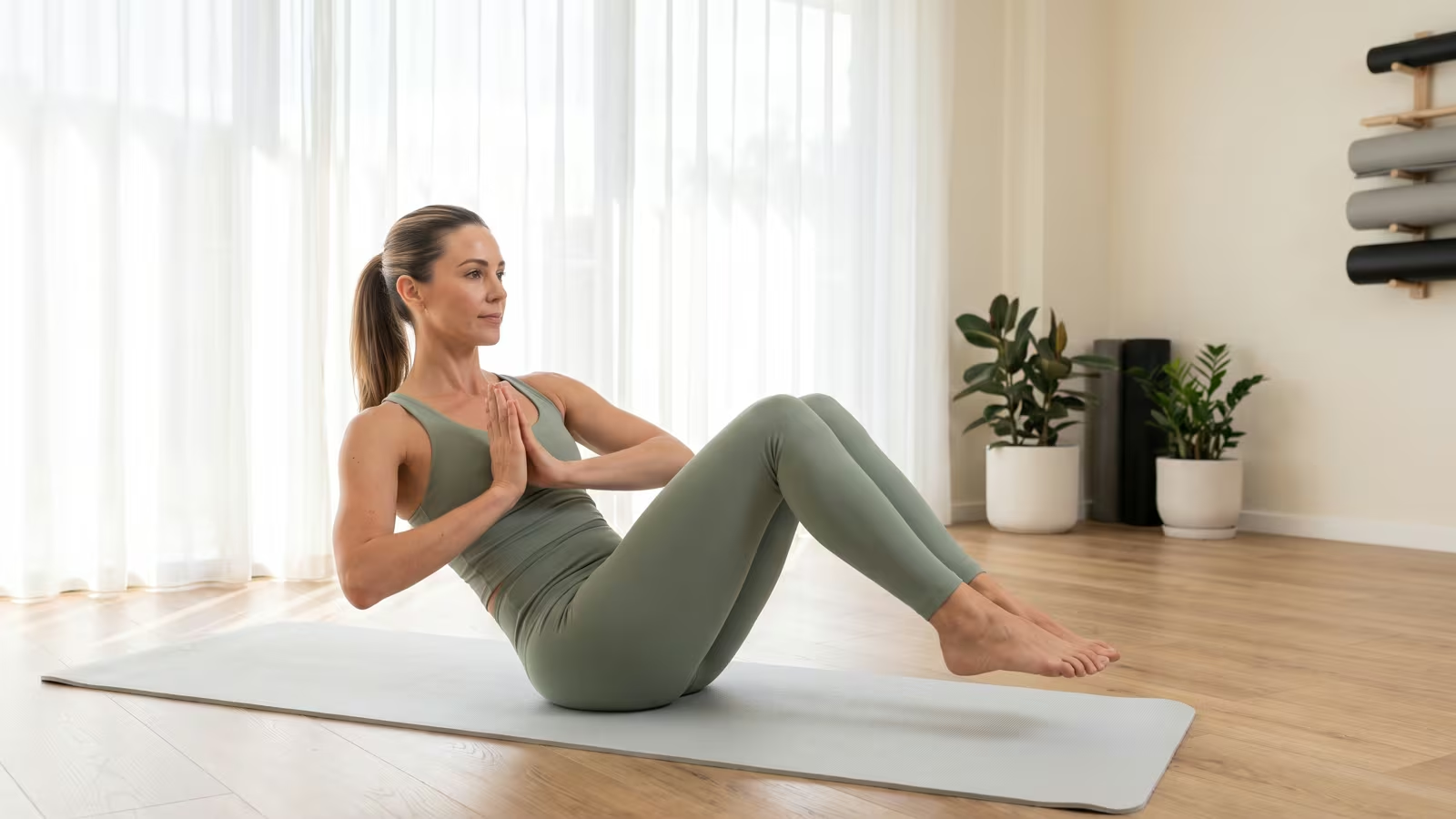
The Russian twist is a dynamic rotational core exercise. Seated in a slight V-sit position, you lean your torso back and rotate smoothly from left to right. This torso rotation primarily challenges the oblique muscles (both internal and external obliques), which shape and define the waistline. At the same time, the rectus abdominis (the six-pack muscle), deep stabilisers, and hip flexors work continuously to keep you balanced. Because so many muscle groups work in synergy, the Russian twist exercise is widely regarded as one of the most effective movements for developing rotational strength and core stability.
How to Do Russian Twists Properly: Step-by-Step
Sit on your exercise mat with your knees bent and feet flat on the floor. Lean your upper body back until you feel your abdominals engage, ensuring your spine stays long and straight. Draw your navel in firmly towards your spine and engage your pelvic floor. Clasp your hands in front of your chest or hold a small weight. Exhale and slowly rotate your torso to the right, taking care not to round your lower back. Return to the centre and twist to the opposite side. Crucially, rotation should occur through the thoracic spine – keep your hips and pelvis firmly grounded and still, as if you were strapped to the floor.
Common Russian Twist Form Mistakes to Avoid
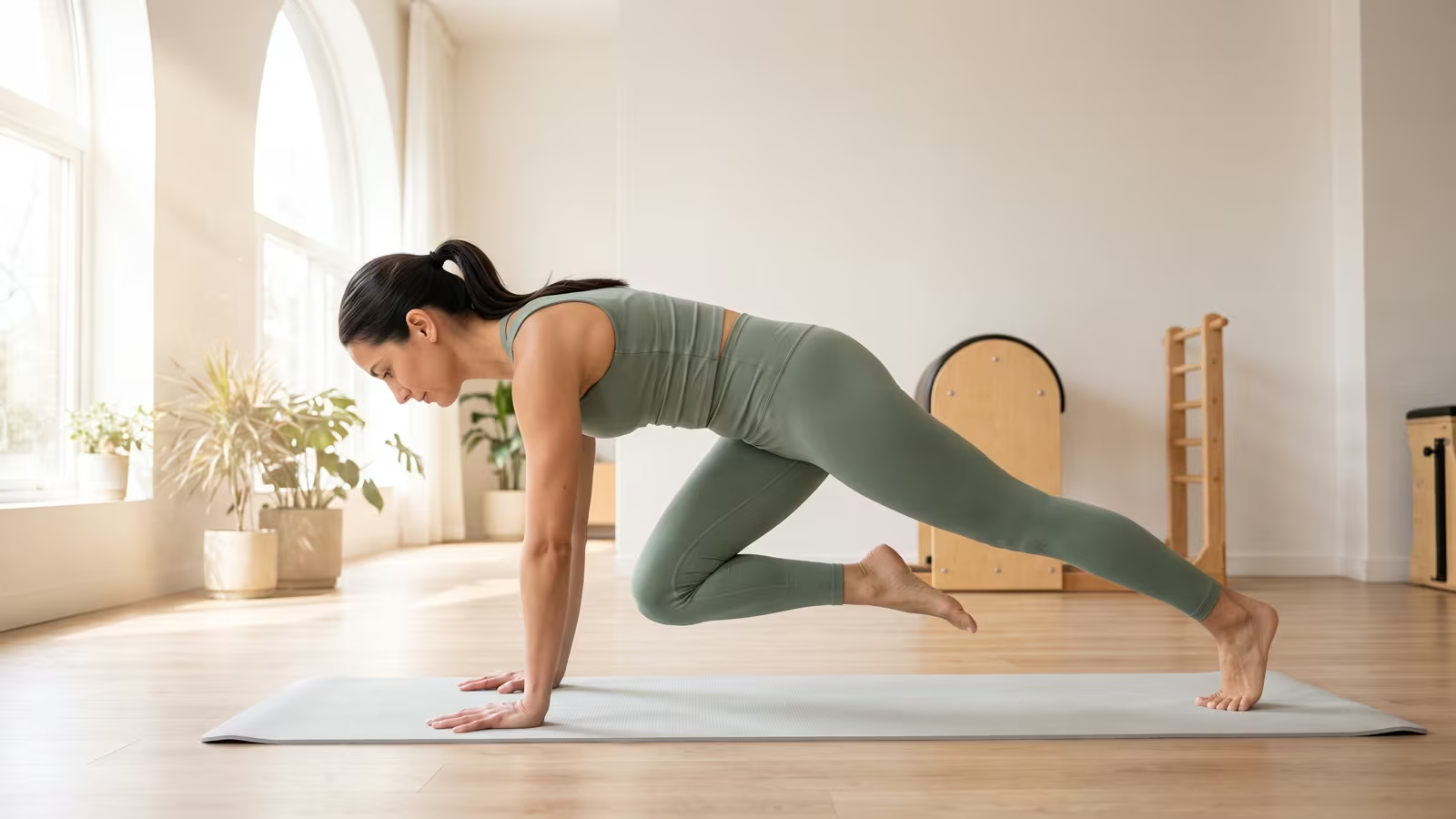
The most frequent error is a rounded back: if your spine hunches forward, the training load shifts away from your abdominal muscles and onto the spinal column. Another common error is merely swinging the arms side to side whilst the torso stays rigid, which barely recruits the oblique muscles. Moving too fast is equally counterproductive: flinging yourself from side to side allows momentum to take over. Keep the bodyweight movement slow, steady, and controlled, maintaining core tension so that every single twist counts.
Russian Twist Variations: Progressions and Weighted Options
As a modification for beginners, keep your feet flat on the floor and sit slightly more upright – this shortens the lever and reduces strain on the lower back. Once that feels comfortable, you can try the classic progression by lifting your feet off the floor into a balanced hover. To increase the difficulty further, perform the movement with straight legs or turn it into a weighted exercise using a water bottle, dumbbell, or medicine ball. For an extra oblique challenge, gently tap the weight on the floor beside your hip on each rep. Only progress to harder variations once you can maintain a straight spine throughout the entire set.
How Often and How Many Repetitions Should You Do?
To get started, 2 to 3 sets of 20 twists (10 per side) are ideal. Movement quality matters far more than high numbers: fewer repetitions with impeccable posture are much better than sloppy reps with a curved back. Incorporating the exercise into two to three workout sessions per week is plenty to build noticeable strength in your obliques. Combine it with other core movements – for example, alternating with bicycle crunches and the plank – to ensure all areas of your abdominals are thoroughly worked.
Who Is the Russian Twist Suitable For?
The Russian twist is suitable for most fitness levels because it is so easy to scale. Older adults or those returning to exercise can benefit greatly from the beginner version with feet grounded. However, caution is advised if you have acute back pain, disc issues, or lumbar spine problems: loaded rotation can aggravate these conditions. If in doubt, speak to a GP or physiotherapist and opt for non-rotational core stability exercises such as the dead bug. When executed cleanly and deliberately, it is an exceptionally safe and rewarding exercise.
Conclusion
The Russian twist is one of the most effective exercises for a strong, sculpted waist – provided you keep your spine lengthened and initiate the rotation from your thoracic spine. With simple modifications, it fits seamlessly into any workout routine, from novice to advanced athlete. Take your time with slow, deliberate repetitions, and you will feel your obliques working within just a few sets. Roll out your exercise mat and add this versatile movement to your next abdominal workout session.
Frequently Asked Questions
Which muscles do Russian twists work?
They primarily target the internal and external oblique muscles, alongside the rectus abdominis, deep transverse abdominis, and hip flexors. This combination makes them particularly effective for tightening and defining the waist.
Are Russian twists bad for your back?
Not when performed with good form and a long, straight spine. Issues only arise if you round your back or use jerky, momentum-driven movements. If you suffer from pre-existing lower back complaints, consult a medical professional before attempting rotational core exercises.
How many Russian twists should you do a day?
Aim for 2 to 3 sets of 20 repetitions, two to three times a week. Your abdominal muscles need recovery time to grow stronger, so daily training of the exact same movement is neither necessary nor optimal.
Should you do the Russian twist exercise with weight?
You do not need weights to see great results; bodyweight alone is very effective. Adding external resistance (such as a dumbbell, medicine ball, or weight plate) is simply an optional progression for more advanced trainees.
Do Russian twists burn belly fat?
Spot reduction of fat in a single area is biologically impossible. While the exercise strengthens, tones, and defines the underlying abdominal wall, visible definition requires a sensible caloric balance alongside regular training.
How do you adapt the Russian twist for beginners?
Keep your feet planted firmly on the floor, sit slightly more upright, and rotate at a gentle pace. This shortens the lever arm and substantially reduces pressure on the lower back.
Is the Russian twist a Pilates exercise?
The rotational movement from a seated balance shares core principles with Pilates – particularly the conscious engagement of the deep abdominal powerhouse. It is widely used in both Pilates classes and functional strength training.
How quickly do you see results?
Improvements in rotational core strength and stability are often noticeable within two to three weeks of consistent practice. Visible changes in waist definition will depend on overall body composition and nutritional habits.