The toe taps exercise – tapping the tips of your toes lightly against the floor – is the gentlest way to start strengthening your lower abdominal muscles. Starting from a supine position with raised legs, you alternately lower one foot towards the floor, tap briefly, and lift it back up. The movement is small, controlled, and exceptionally kind to your back. Here is how to do toe taps correctly – ideal for beginners, for postnatal recovery, and for anyone whose back gets irritated by traditional ab workouts.
Key Takeaways
- The toe taps exercise builds deep core strength and tones the lower abdominal muscles in an exceptionally gentle manner.
- Your lower back stays firmly on the mat, maintaining lumbar support and protecting the spine.
- Only the leg moves, whilst the pelvis and pelvic floor remain completely stable.
- Ideal for beginners, postnatal recovery, and sensitive backs, because no curling or crunching is required.
- Prioritise slow control over speed – your core keeps the pelvis steady throughout.
Toe Taps Exercise Abs: Which Muscles Are Worked?
Toe taps are primarily a stabilisation exercise: whilst one leg lowers, your deep core muscles must fire to prevent the pelvis from tilting forward and the lower back from arching. In addition, the lower section of the rectus abdominis works continuously, and hip flexion engages the hip flexors gently. Because you remain in a comfortable supine position without needing to raise your head, there is no strain placed on your neck or cervical spine. This makes it one of the safest movements for activating the often hard-to-reach lower abdominals.
How to Do Toe Taps Correctly: Step by Step
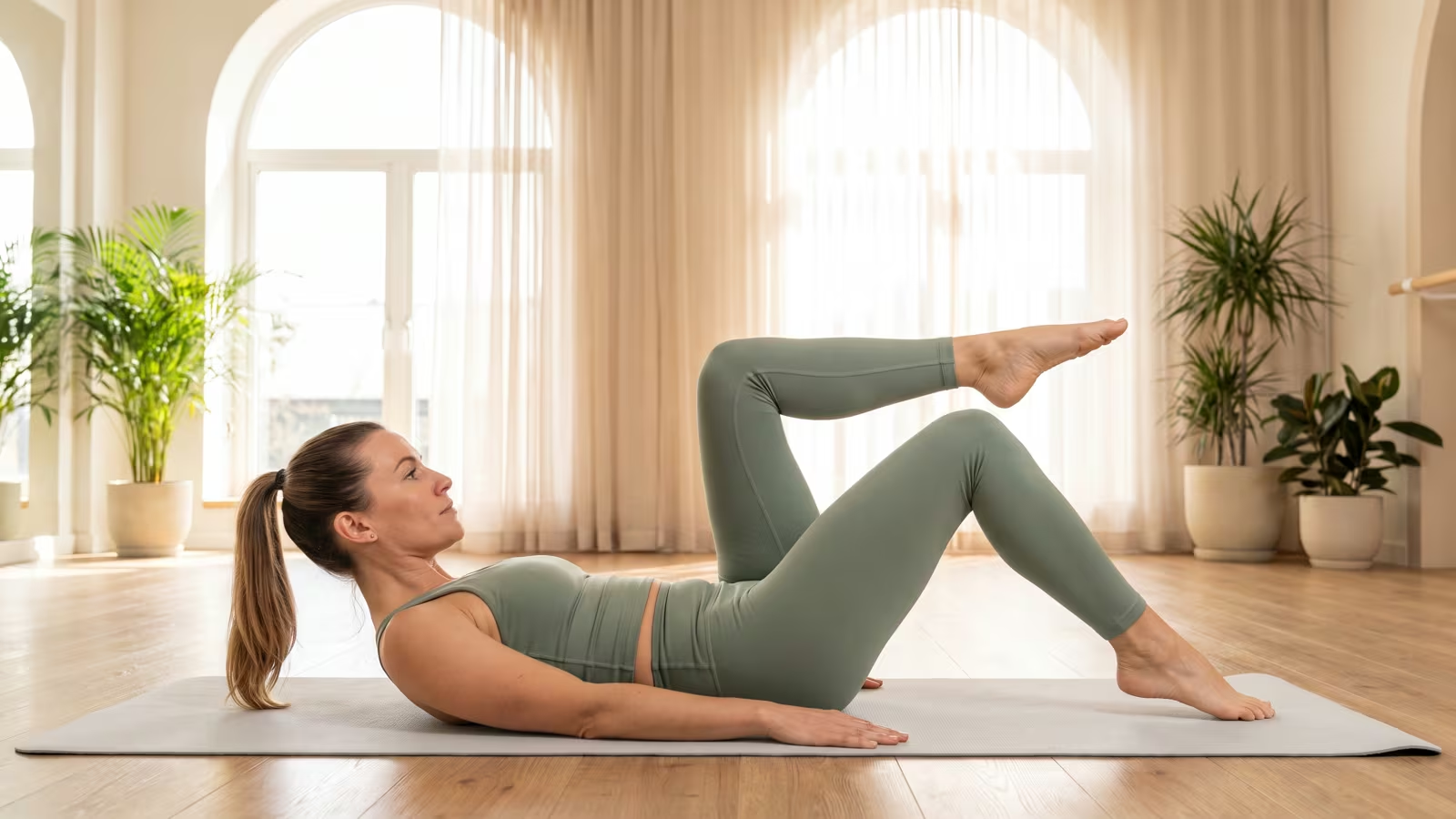
Lie flat on your back and bring your legs into a tabletop position: knees stacked directly over your hips, shins parallel to the floor. Draw your navel gently inwards towards your spine and maintain a stable, neutral spine with your lower back resting securely against the mat. Now slowly lower one foot towards the floor until your toes lightly tap the ground – or just hover above it. Keep your pelvis completely still throughout. Return the foot to the starting position and switch to the other leg. Exhale as you lower the leg. Keep the movement small and controlled; midsection stability is the key to performing the toe taps exercise effectively.
Common Mistakes During the Toe Taps Exercise
The most frequent mistake is arching the lower back: as soon as your lumbar spine lifts off the mat during the descent, your back muscles take over the work. Only lower your foot as far as you can whilst keeping your back flat. Another error is pelvic tilting – your pelvis and hips should remain locked in place as if anchored to the floor. Moving too quickly is also counterproductive, as momentum replaces genuine abdominal engagement. Finally, remember not to hold your breath; maintain steady, relaxed breathing throughout.
Variations: Making Pilates Toe Taps Easier or Harder
It is already a wonderfully gentle exercise, but if you need extra support, you can reduce the range of motion by lowering the foot only halfway, or place your hands underneath your glutes to provide additional lumbar support. For greater intensity, extend the lowering leg further away from your body (similar to scissor kicks) or lower both legs simultaneously, provided your lower back stays grounded. Classic Pilates toe taps are a natural partner to the dead bug and serve as an ideal stepping stone towards full leg raises.
What Are Toe Taps Good For and Who Should Do Them?
Toe taps are perfect for anyone seeking a gentle exercise to begin core training. Because they require no spinal flexion and place zero pressure on the neck whilst keeping the back supported, they are outstanding for beginners, for postnatal recovery (once cleared by your GP or midwife), and for individuals prone to lower back pain. Older adults will also find them an accessible and safe way to build deep core strength. Advanced exercisers frequently utilise toe taps as an effective warm-up and core activation drill.
Summary
Toe taps prove that abdominal training can be gentle yet highly effective. Controlled leg lowering with a stable pelvis activates the deep core and lower abdominals without stressing your neck or spine. Whether as a starting point, part of postnatal rehab, or a pre-workout activation, they are hard to beat. Incorporate toe taps as a gentle foundation for your ab routine and progress from there to more demanding exercises.
Frequently Asked Questions
Which muscles are targeted by toe taps?
Primarily the deep core stabilisers (transverse abdominis), the pelvic floor, and the lower region of the rectus abdominis. They work together to stabilise the pelvis as the leg lowers.
What are the main toe taps exercise benefits for your back?
They are exceptionally back-friendly because the lumbar spine remains supported against the mat and no spinal bending is required. Always consult a physiotherapist or doctor if you have acute spinal issues.
Can I do Pilates toe taps during postnatal recovery?
Yes, they are frequently recommended in postnatal rehabilitation because they gently re-engage the deep core and pelvic floor. Always ensure you have medical clearance before starting.
How many repetitions of toe taps should I do?
2 to 3 sets of 10 to 15 repetitions per leg are ideal. Maintaining a stable pelvis and a flat back is far more important than high rep numbers.
Why does my back arch during toe taps?
This happens when you lower your foot too close to the floor for your current core strength. Reduce your range of motion until your lower back can stay comfortably in contact with the mat throughout.
Are toe taps suitable for beginners?
Yes, exceptionally so. They are among the gentlest core exercises available and can easily be modified by reducing the movement range.
How can I make toe taps more challenging?
Straighten the lowering leg further out to create a longer lever, or lower both legs together – but only if you can prevent your lower back from lifting off the mat.
How should I breathe during toe taps?
Exhale as you lower your foot towards the floor, and inhale as you return to tabletop position. Controlled breathing helps maintain core tension and pelvic stability.