Beetroot has a reputation as the number one choice among nitrate rich vegetables. Athletes drink beetroot juice to support athletic performance, blood pressure guides champion the root, and marketing campaigns for beetroot shots thrive on this very claim.
However, the leaderboard is misleading. In the dietary nitrate tables, another vegetable ranks significantly higher—and in this salad, it sits right beside it.
The true ranking of nitrate rich vegetables
| Vegetable | Nitrate per 100 g |
|---|---|
| Rocket | 300–450 mg |
| Beetroot greens | 250–400 mg |
| Lamb’s lettuce | 200–350 mg |
| Beetroot (bulb) | 200–300 mg |
| Spinach | 150–300 mg |
| Round lettuce | 100–250 mg |
| Carrot | 20–40 mg |
| Tomato | 1–5 mg |
Rocket takes the top spot by a clear margin. A 40-gram handful of wild rocket delivers roughly as much nitrate as 60 grams of beetroot—at a fraction of the volume and calories.
There is a simple reason why this is not widely known: beetroot can easily be sold as juice, whereas rocket cannot. The body of research on beetroot juice is substantial because it allows researchers to administer standardised doses. This is what brought the root into the spotlight, rather than an extraordinarily high nitrate concentration.
How dietary nitrate is converted in the body into nitric oxide, promoting vasodilation and blood pressure regulation, is explained in detail in our foundation article. Here, we examine what happens when two nitrate rich vegetables end up on the same plate.
Do the nitrates add up?
Broadly speaking, yes. The conversion by oral bacteria is dose-dependent, and a single portion of this salad with 200 grams of beetroot and 50 grams of rocket provides roughly 600 to 700 milligrams of nitrate.
This exceeds the Acceptable Daily Intake (ADI) established by the EFSA of 3.7 milligrams per kilogram of body weight—which equals around 260 milligrams for a 70 kg adult.
Before treating this as a warning, it is essential to consider the context provided by the EFSA itself: this threshold was established for nitrate used as a food additive. When it comes to whole vegetables, the authority explicitly states that the established health benefits of eating vegetables outweigh any theoretical risks. Vegetarians and people with a high intake of leafy greens regularly exceed this value, with population studies showing no evidence of harm—quite the opposite.
However, there are two groups for whom different precautions apply:
- Infants under six months old. Their immature enzyme systems cannot efficiently detoxify the nitrite formed from nitrate. High-nitrate vegetables should not be included in early weaning foods and must never be reheated.
- People with nitrate intolerance or those taking certain heart medications. Anyone taking medicinal nitrates or PDE-5 inhibitors should discuss eating large amounts of nitrate rich vegetables with their GP or cardiologist—the blood pressure-lowering effect can be amplified.
For everyone else, this salad is simply what it appears to be: a generous serving of vegetables.
Is wild rocket good for you? What rocket offers beyond nitrates
Rocket is a brassica—botanically related to mustard, cress and cabbage, rather than lettuce. This explains its peppery, slightly bitter flavour, as well as its glucosinolate content.
These sulphur compounds are broken down enzymatically when chewed. In rocket, this process primarily yields erucin, a close relative of sulforaphane, the well-studied compound found in broccoli. This group of phytochemicals has long been a focus of cancer research because it activates the body’s own detoxification enzymes. However, science is still a long way from drawing definitive conclusions for everyday life—eating rocket is a nutritious choice, but it is not a clinically proven preventative treatment.
The bitter compounds produce a more immediate effect: by stimulating receptors on the tongue, they trigger saliva and bile production. This is why bitter leafy greens are traditionally eaten before a main meal rather than after.
Why wild rocket quickly turns peppery
The level of pungency varies considerably. Rocket grown in hot, dry conditions synthesises higher levels of glucosinolates as a defence mechanism against pests. Outdoor summer rocket can therefore be intensely sharp, whereas winter greenhouse crops tend to be much milder.
If your rocket is too peppery, mix it with mild salad leaves and add more healthy fats to the dressing. Fat dampens the perception of heat far more effectively than sweetness.
The recipe
Serves 2
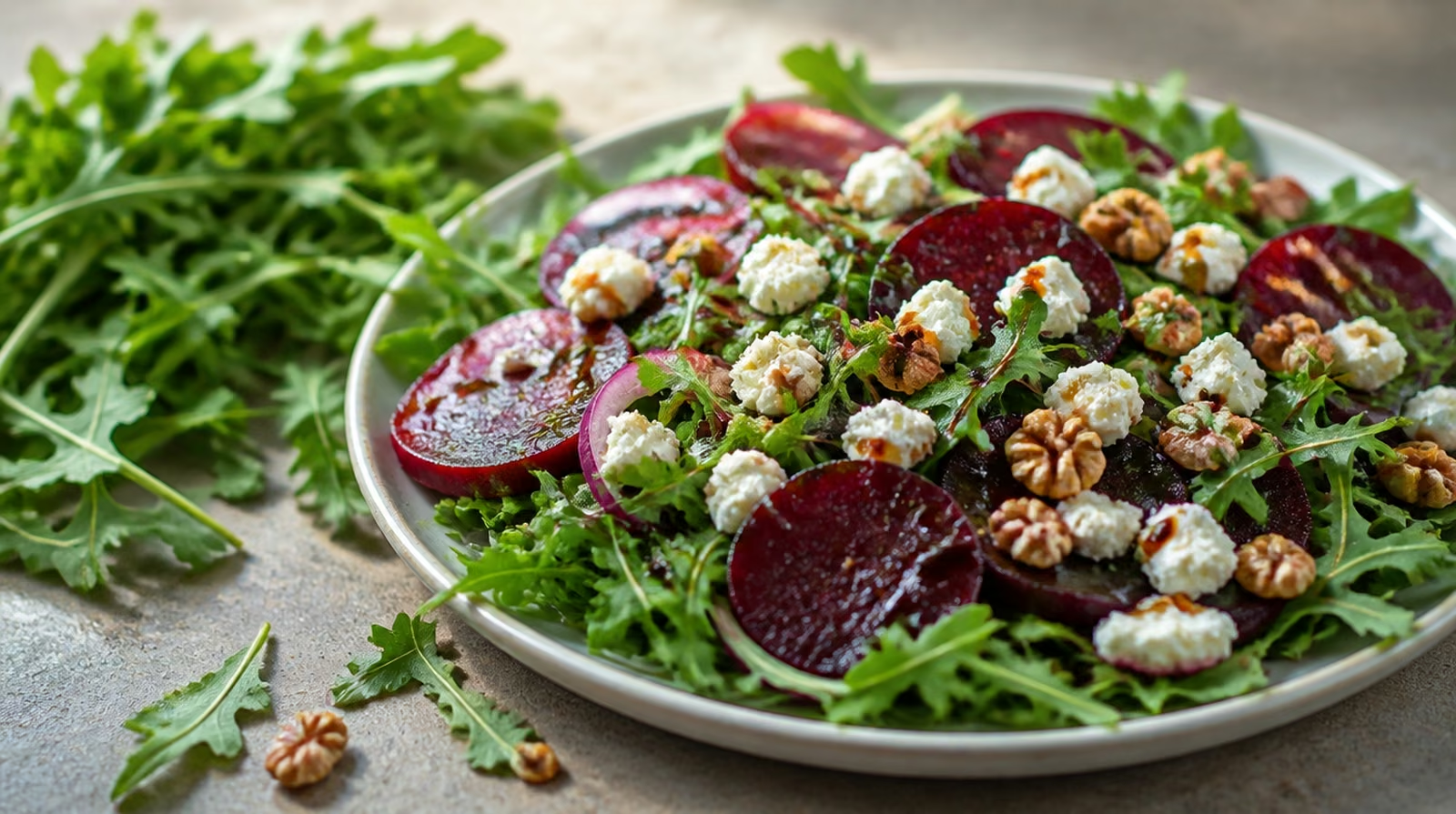
- 200 g cooked beetroot, thinly sliced
- 50 g rocket
- 100 g feta
- 1/2 red onion
- 30 g walnuts
- 2 tbsp olive oil
- 1 tbsp balsamic vinegar
- 1 tsp honey
- Black pepper
Method: Arrange the rocket as a bed across two shallow plates. Fan the beetroot slices over the top, scatter with onion rings and walnuts, and crumble over the feta. Whisk the dressing together and drizzle over immediately before serving.
Rocket wilts in dressing even faster than spinach leaves. Five minutes in an acidic vinaigrette and it loses its crispness. If you want to prepare the salad in advance, mix the beetroot, onion and dressing beforehand, and toss the rocket in right at the table.
A mistake almost everyone makes
Rocket is often washed roughly and chopped with a knife. Both do more harm than good: washing under heavy pressure bruises the delicate leaves, while chopping causes the cut edges to oxidise, leaving the leaves with brown edges within an hour.
Instead, gently swirl rocket in cold water, spin it dry in a salad spinner, and use the leaves whole. Tear oversized leaves by hand rather than cutting them.
Rocket nutrition facts per portion (estimated)
| Nutrient | Per portion |
|---|---|
| Energy | approx. 380 kcal |
| Protein | approx. 13 g |
| Fat | approx. 28 g |
| Carbohydrates | approx. 15 g |
| Nitrate | approx. 300–350 mg |
| Folate | approx. 130 µg |
The key takeaway for cardiovascular health
Anyone looking to harness the blood pressure benefits of nitrate rich vegetables does not need to buy expensive shots. A bag of rocket from the supermarket chill cabinet delivers more nitrate per gram than beetroot—simply in smaller serving sizes, as few people eat 200 grams of rocket in one sitting.
The most effective strategy is not chasing a single superfood, but consistency: the nitric oxide boost lasts only a few hours. Eating a daily portion of nitrate rich vegetables supports blood pressure regulation far better than having three times that amount once a week.
References
- Fanourakis D, Körner O, Makraki T et al.: Greenhouse climate shapes nitrate levels, nutritional quality, and shelf life in leafy vegetables: species-specific responses. 2026. PubMed 42179523. DOI: 10.3389/fpls.2026.1806482.
- Bachtiar BM, Rieuwpassa IE, Susilowati H et al.: Influence of nitrate-containing arugula juice on nitrate-reducing oral bacteria and periodontopathogens in smokers’ biofilm. 2025. PubMed 40416551. DOI: 10.3389/fdmed.2025.1545479.
- Ciriello M, Izzo L, Dopazo AN et al.: Differential Effects of Non-Microbial Biostimulants on Secondary Metabolites and Nitrate Content in Organic Arugula Leaves. 2025. PubMed 40724309. DOI: 10.3390/foods14142489.
- Khatri J, Mills CE, Maskell P et al.: It is rocket science – why dietary nitrate is hard to ‘beet’! Part I: twists and turns in the realization of the nitrate-nitrite-NO pathway. British journal of clinical pharmacology 2017. PubMed 26896747. DOI: 10.1111/bcp.12913.
- Cavaiuolo M, Ferrante A: Nitrates and glucosinolates as strong determinants of the nutritional quality in rocket leafy salads. Nutrients 2014. PubMed 24736897. DOI: 10.3390/nu6041519.