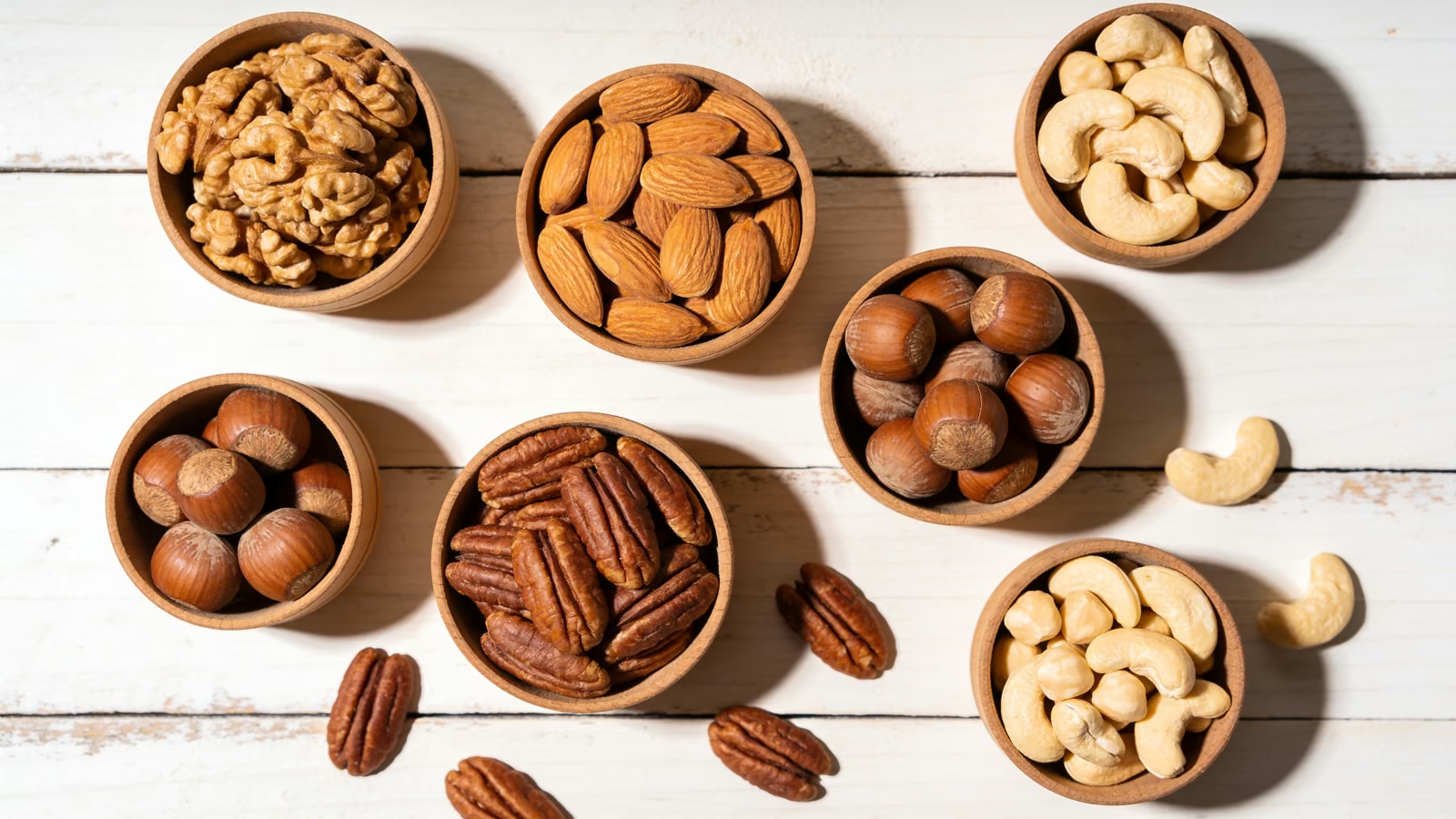
Nuts are among the healthiest and most nutrient-dense foods available: they provide protein, healthy fats, dietary fibre, vitamins and minerals. But not every nut is the same – whilst some are true nutritional powerhouses, others are little more than calorie bombs. Here is our ranking of the healthiest nuts along with relevant scientific studies, plus what you should look out for when buying them.
Key points at a glance
- Cashews are one of the best sources of magnesium and support muscles, nerves and sleep.
- Almonds improved blood glucose, long-term blood sugar and insulin resistance in a pre-diabetes study.
- Hazelnuts eaten with their skins reduced cellular DNA damage by nearly 30 per cent.
- Walnuts take the top spot: plant-based omega-3 fatty acids, beneficial for the heart, gut and brain.
- Steer clear of heavily salted or roasted nuts – trans fats can form during the roasting process.
Cashews: the best nuts for protein and relaxation
Cashews are one of the best dietary sources of magnesium – a single handful provides around 20 to 25 per cent of your daily requirement. Magnesium is vital for muscle and nerve function, energy production and restful sleep, whilst also helping to lower blood pressure and pulse rate. A large observational study from England with over 150,000 participants demonstrated that higher magnesium intake correlated with greater muscle strength, muscle mass and bone density. In addition, cashews supply copper and tryptophan, an amino acid precursor to serotonin and melatonin.
Almonds: the best nuts for health and blood sugar regulation
Almonds are rich in monounsaturated fats, protein and plenty of dietary fibre. In a study involving people with pre-diabetes who consumed a small portion of almonds daily before meals, marked improvements were observed after three months:
- Body fat percentage dropped significantly by around 6 per cent
- Fasting blood glucose fell by roughly 7 per cent
- Long-term blood glucose (HbA1c) decreased by 6.5 per cent
- Insulin resistance improved – with values returning to normal in approximately a quarter of participants
The dietary fibre also promotes satiety and curbs cravings. This makes almonds an ideal nut when managing blood sugar regulation and weight.
Hazelnuts and pistachios: which nuts are good for you to protect cells and eyes
Hazelnuts are rich in vitamin E, a potent antioxidant. In a study of individuals with elevated blood lipids, cellular DNA damage decreased by almost 30 per cent after eight weeks – but only when the nuts were eaten with their thin brown skins intact. These skins contain polyphenols and antioxidants that enhance the anti-inflammatory effect.
Pistachios contain the carotenoids lutein and zeaxanthin, acting like internal sunglasses to shield the retina from light damage. In one study, lutein levels rose by roughly 50 per cent after twelve weeks, significantly increasing the protective macular pigment density in the eye.
Brazil nuts and macadamias: selenium and cardiovascular health
Brazil nuts are the world’s richest natural source of selenium – essential for thyroid function, the immune system and the antioxidant enzyme glutathione peroxidase. Just a single Brazil nut covers your entire daily requirement, so moderation is key, as excessive selenium intake is undesirable.
Macadamia nuts consist of more than 80 per cent monounsaturated fats. In a study on participants with mildly elevated cholesterol, a daily serving lowered LDL cholesterol by nearly 15 per cent after five weeks. However, they are exceptionally calorie-dense – so enjoy them in moderation.
Walnuts: the undisputed number one of the healthiest nuts
Walnuts are among the few plant-based sources of omega-3 fatty acids (alpha-linolenic acid). Consuming around 56 grams per day increased blood omega-3 levels by 13 per cent and improved the ratio of omega-6 to omega-3 fatty acids. A German study showed that roughly 43 grams of walnuts daily reduced LDL cholesterol whilst maintaining stable levels of beneficial HDL.
Furthermore, walnuts nourish beneficial gut bacteria and support cognitive function in both younger and older adults. Thanks to their high omega-3 content and wide-ranging benefits for the heart, gut and brain, walnuts are the clear front-runner.
Buying nuts: what to look for
- Portion size: nuts are energy-dense – a small handful (around 25–30g) a day is plenty.
- Plain and natural: heavily salted or roasted nuts lose heat-sensitive vitamins, and trans fats can develop.
- With skins on: with hazelnuts and almonds, valuable polyphenols and antioxidants reside in the thin skin.
- Aflatoxins: opt for high quality, as mould toxins can develop during cultivation and storage.
Conclusion
Nuts are compact nutritional powerhouses delivering substantial health benefits – each with its own standout specialty: cashews for relaxation, almonds for blood sugar regulation, hazelnuts for cell defence, pistachios for eye health, Brazil nuts for selenium, and macadamias for heart protection. However, the crown among the healthiest nuts firmly belongs to the walnut, courtesy of its rich omega-3 fatty acids and proven benefits for heart, gut and brain. Remember to choose plain, unroasted varieties where possible, and stick to a small handful daily to keep calorie intake in check.
Frequently asked questions
What are the top 5 healthiest nuts?
Walnuts take the top spot thanks to their plant-based omega-3 fatty acids and proven benefits for heart, gut and cognitive health. Almonds, cashews, hazelnuts and pistachios complete the top five. Eating a diverse mix of nuts is the ideal approach for overall health.
How many nuts should you eat a day?
A small handful, roughly 25 to 30 grams, is recommended by health guidelines such as the NHS. Nuts are calorie-dense, so it is best not to overindulge.
Are almonds good for blood sugar regulation?
Yes. In a clinical study on individuals with pre-diabetes, eating a small portion of almonds before meals significantly reduced fasting blood glucose, long-term blood sugar (HbA1c) and insulin resistance.
Why should you eat hazelnuts with their skins on?
The thin brown skin contains high concentrations of protective polyphenols. In clinical research, cellular DNA damage fell by almost 30 per cent when hazelnuts were eaten with skins, compared to only 19 per cent without skins.
How many Brazil nuts a day is healthy?
Just one single Brazil nut provides your full daily requirement of selenium. You should avoid eating more, as excessive selenium intake can be harmful.
Are roasted or salted nuts worse for your health?
Yes. High-heat roasting degrades delicate nutrients and can create unhealthy trans fats, whilst added salt increases sodium intake. Plain, raw nuts are always the better choice.
What are aflatoxins?
Aflatoxins are naturally occurring toxins produced by certain moulds during the cultivation, transport and storage of nuts. Regular monitoring keeps this risk low in the UK, but choosing good quality produce remains important.
Do nuts cause weight gain?
Not when eaten in moderation. Despite their calorie density, studies consistently associate regular nut consumption with healthier body weight, provided you stick to a small daily handful.
Sources and scientific references
Review articles, meta-analyses and controlled clinical trials relating to this article. All links verified on 16.08.2026.
- Kulik K, Waszkiewicz-Robak B.: The Effect of Roasting on the Health-Promoting Components of Nuts Determined on the Basis of Fatty Acids, Polyphenol Compounds, and Antioxidant Capacity. 2025. PubMed 41375190. DOI: 10.3390/molecules30234594.
- Jarai D, Koller A.: Walnut Consumption May Contribute to Healthy Cardiovascular/Endothelial Function by Maintaining Membrane Integrity. 2024. PubMed 39598224. DOI: 10.3390/life14111426.
- Balakrishna R, Bjørnerud T, Bemanian M et al.: Consumption of Nuts and Seeds and Health Outcomes Including Cardiovascular Disease, Diabetes and Metabolic Disease, Cancer, and Mortality: An Umbrella Review. Advances in nutrition (Bethesda, Md.) 2022. PubMed 36041171. DOI: 10.1093/advances/nmac077.
- Lorenzon Dos Santos J, Quadros AS, Weschenfelder C et al.: Oxidative Stress Biomarkers, Nut-Related Antioxidants, and Cardiovascular Disease. Nutrients 2020. PubMed 32138220. DOI: 10.3390/nu12030682.
- Terzo S, Baldassano S, Caldara GF et al.: Health benefits of pistachios consumption. Natural product research 2019. PubMed 29241364. DOI: 10.1080/14786419.2017.1408093.
- Bitok E, Sabaté J: Nuts and Cardiovascular Disease. Progress in cardiovascular diseases 2018. PubMed 29800597. DOI: 10.1016/j.pcad.2018.05.003.
- Coates AM, Hill AM, Tan SY et al.: Nuts and Cardiovascular Disease Prevention. Current atherosclerosis reports 2018. PubMed 30094487. DOI: 10.1007/s11883-018-0749-3.
- Kalita S, Khandelwal S, Madan J et al.: Almonds and Cardiovascular Health: A Review. Nutrients 2018. PubMed 29641440. DOI: 10.3390/nu10040468.