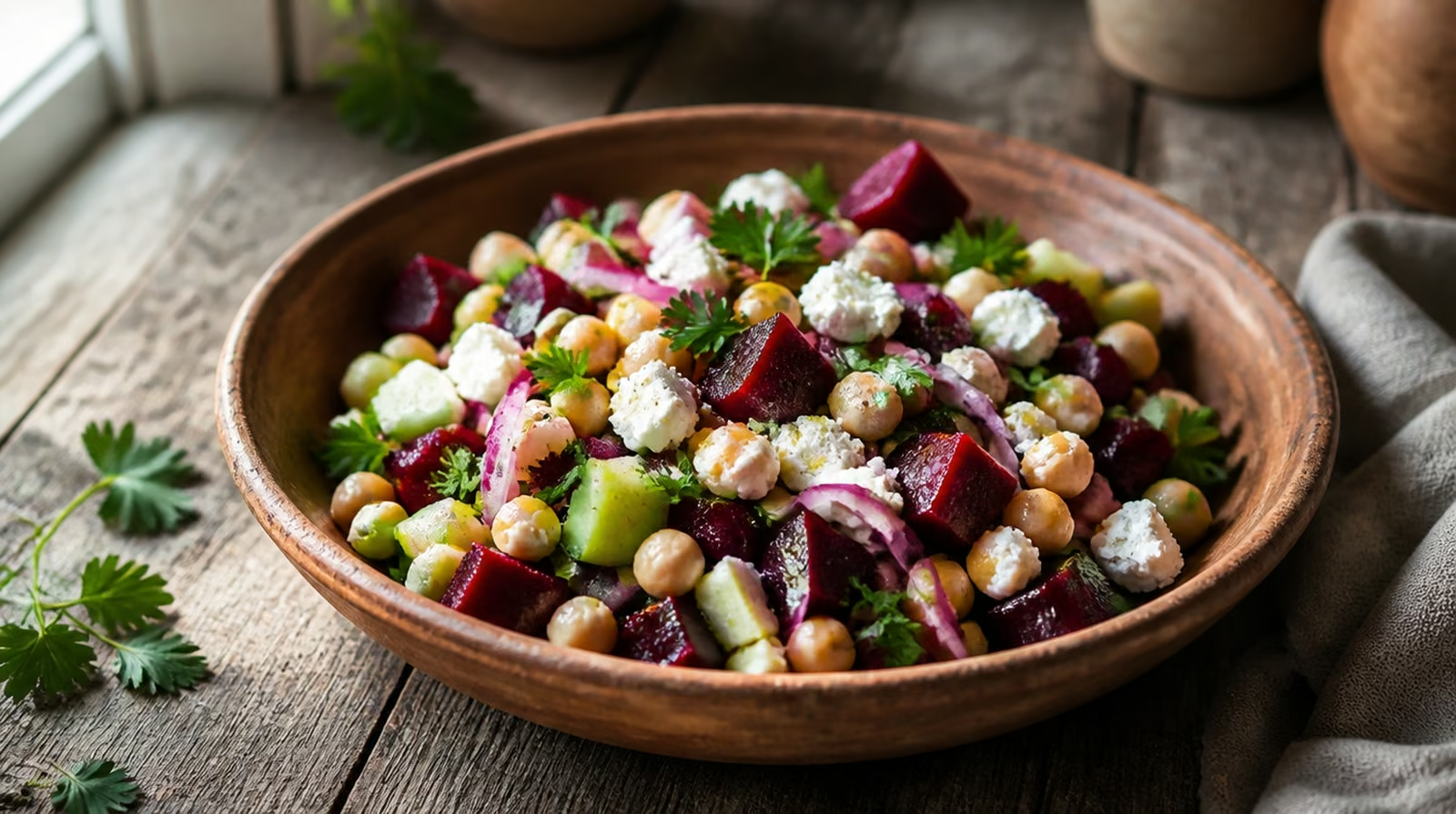
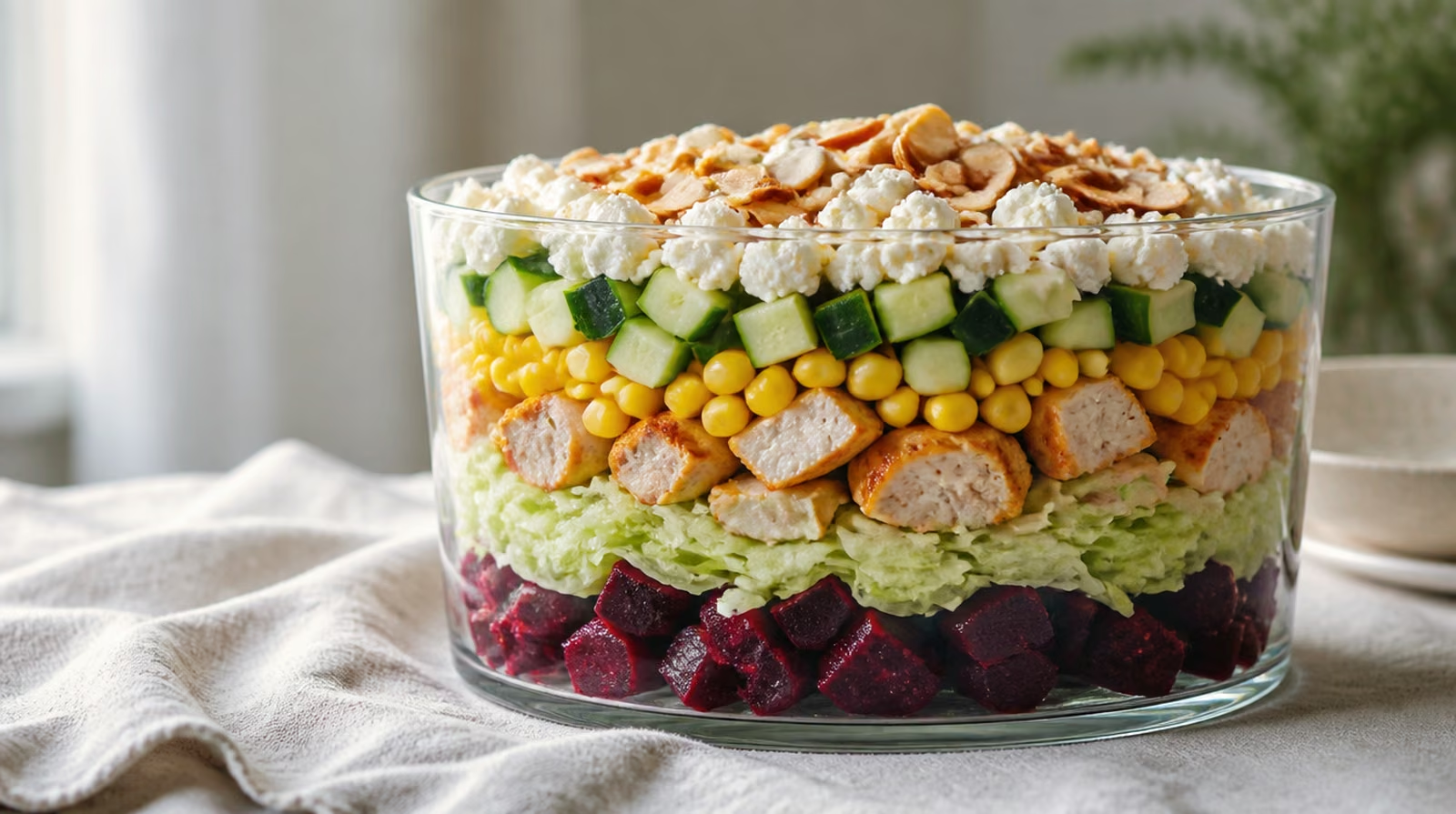
There are two ways to prepare beetroot for a dish. One is quicker. The other washes away a substantial portion of the reason why beetroot is prized for supporting healthy blood pressure in the first place. This recipe for a satisfying, layered roasted beetroot salad with seared chicken breast, feta cheese and a creamy garlic sauce takes the proper route—for a nutritional reason rarely mentioned in standard recipes.
Beetroot and blood pressure: why this root vegetable belongs on a health site
Beetroot is one of the richest dietary sources of nitrate in the plant kingdom. Depending on the soil and growing conditions, 100 grams contain roughly 200 to 300 milligrams of nitrate—significantly more than carrots or cabbage, and in the same league as rocket, watercress and beetroot greens.
Nitrate often has an unfair reputation, largely earned through processed cured meats rather than vegetables. In the human body, however, the process is beneficial: specialised bacteria on the back of the tongue convert part of the ingested nitrate into nitrite. Swallowing transports this to the stomach and into the bloodstream, where it converts into nitric oxide—a vital signalling molecule that relaxes the smooth muscles lining vascular walls. Blood vessels dilate, vascular resistance decreases, and blood pressure falls.
The measurable effects are modest yet clinically meaningful: in controlled trials using beetroot juice, systolic blood pressure typically drops by three to five mmHg. While this is not a substitute for prescribed antihypertensive medication, it is comparable to the reduction achieved by a significant cut in dietary salt—without having to eliminate anything from your plate.
The tongue trick that makes all the difference
This biological cascade has an Achilles’ heel: oral microbiome bacteria. Anyone who uses an antibacterial mouthwash immediately after eating eradicates the precise oral bacteria responsible for converting dietary nitrate—meaning the beneficial blood pressure effect is effectively wiped out in clinical trials. If you are eating beetroot specifically for cardiovascular support, skip the mouthwash on that day or switch to an antiseptic-free, non-chlorhexidine alternative.
How to roast beetroot for a salad: roasting vs boiling
This is where your cooking method becomes critical. Dietary nitrate is water-soluble. If you peel fresh beetroot and drop it into a pan of boiling water, a significant proportion leaches out into the cooking liquid—which is then poured straight down the sink. The same nutrient loss applies to folate and the vibrant red betalain pigments.
Our roasted beetroot salad method prevents this entirely: the beetroot bulbs are kept unpeeled, wrapped individually in tin foil and slowly oven-baked. With no water involved, there is zero leaching. The skin acts as a protective barrier and slips off effortlessly with your fingers once cool. As an added culinary bonus, the natural sugars caramelise, softening the earthy geosmin flavour that some find overpowering.
If you prefer not to use aluminium foil, an ovenproof casserole dish with a tight-fitting lid or a tightly folded parcel of baking parchment works just as well. The key requirement is that the beetroot cooks in its own trapped steam rather than boiling in water.
Time and temperature: 180°C (160°C fan / Gas Mark 4) for approximately one hour for medium-sized beetroot. They are done when a sharp knife slides into the centre with zero resistance.
The feta problem: balancing sodium against potassium and nitrate
Now for the nutritional trade-off that food blogs routinely ignore: feta cheese is matured in brine. A 100-gram portion delivers roughly 3 grams of salt. Using 200 grams across the salad introduces around 6 grams of salt—which matches the entire maximum daily allowance recommended for an adult by the NHS, shared across four servings.
Excess sodium counteracts the vasodilating benefits of dietary nitrate, meaning one ingredient risks undoing the physiological gains of another. This does not mean omitting feta from the recipe; it simply requires two practical adjustments:
Soaking feta: 20 minutes for noticeably less salt
Submerge your diced feta cheese in a bowl of cold fresh water for 15 to 20 minutes, then drain thoroughly. This draws out excess surface brine without compromising the cheese’s creamy, tangy texture. If you want to go further, reduce the quantity of feta and add a fresh squeeze of lemon juice or a light balsamic dressing; acidity mimics saltiness on the palate remarkably well.
Additionally, avoid adding table salt to the roasted beetroot itself. The feta provides more than enough seasoning for the whole dish.
The recipe: layered roasted beetroot salad with feta and chicken
Serves 4
For the salad:
- 3 medium beetroots (approx. 400 g)
- 2 skinless chicken breast fillets (approx. 350 g)
- 1/2 head iceberg lettuce (approx. 200 g)
- 1 cucumber
- 1 small tin sweetcorn (140 g drained weight)
- 200 g feta cheese
- 50 g flaked almonds (or chopped walnuts)
- Olive oil, freshly cracked black pepper, poultry seasoning
For the garlic sauce:
- 4–5 tbsp Greek yoghurt
- 2 tbsp mayonnaise
- 1 large garlic clove, crushed
- 1/2 tsp garlic granules
- 1/2 tsp fine sea salt
Method:
- Wash the beetroots thoroughly. Leave them unpeeled, drizzle with a little olive oil, and wrap each bulb individually in foil. Roast at 180°C for approximately one hour, then leave to cool completely. Peel away the skins with your fingers and cut the flesh into bite-sized cubes.
- Dice the chicken breast, toss with a little olive oil, pepper and poultry seasoning, then pan-fry over medium-high heat until golden brown and cooked through. Allow the chicken to cool fully before assembling—warm meat will wilt the crisp greens and soften the feta cheese.
- For the garlic sauce, whisk together the Greek yoghurt, mayonnaise, crushed garlic clove, garlic granules and salt until smooth.
- Peel the cucumber, slice it in half lengthways, and scrape out the watery seeds using a teaspoon. Dice the firm cucumber flesh. Removing the seeds is essential to prevent the salad from turning soggy.
- Toast the flaked almonds in a dry frying pan over medium heat until fragrant and pale golden, then set aside to cool.
Lightening up the dressing
Mayonnaise contributes the majority of calories in the sauce, but you can readily swap half of it for Icelandic skyr or an extra spoonful of thick Greek yoghurt without losing body. Adding a teaspoon of Dijon mustard restores the smooth mouthfeel and emulsion. If you prefer to skip mayonnaise entirely, stir in a tablespoon of extra virgin olive oil—fat-soluble carotenoids and betalains require dietary fat for optimal gut absorption.
Layering vs tossing: why the order matters
The roasted beetroot cubes must form the base layer of the bowl. This is not merely aesthetic; it prevents your crisp salad from turning into a uniform pink sludge within minutes. Betanin, the natural pigment in beetroot, immediately stains everything it touches—especially porous white feta cheese.
The assembly order from bottom to top:
- Diced roasted beetroot, covering the base completely
- Crisp shredded iceberg lettuce
- Half of the creamy garlic sauce
- Seared chicken breast
- Sweetcorn and diced cucumber
- Drained feta cheese cubes
- The remaining garlic sauce and toasted flaked almonds
Toss the salad only at the table immediately before serving. For meal prep, assemble up to step 5 and refrigerate; add the feta cheese and toasted almonds just before serving.
What goes well with roast beetroot: why each ingredient matters
Toasted flaked almonds supply dietary magnesium and vitamin E, while toasting ensures they retain a satisfying crunch against the dressing. A 50-gram serving contains roughly 290 calories and represents the second-largest fat contributor after the feta cheese; you can easily halve this portion or substitute with toasted walnuts for additional omega-3 fats.
Iceberg lettuce often receives unfair criticism for being low in micronutrients, but in a layered salad with sauce, its sturdy water content and crunch hold up where delicate leaves like rocket, watercress or lamb’s lettuce would collapse within twenty minutes.
Tinned sweetcorn provides natural sweetness and vibrant colour, though it contributes the majority of carbohydrates in the dish. For a lower-glycaemic, higher-protein alternative with more dietary fibre, substitute it with cooked chickpeas or finely diced red onion.
Deseeded cucumber—as outlined above, removing the central seed core prevents excess moisture from diluting your creamy garlic dressing.
Dietary considerations and who should exercise caution
Three health considerations worth noting:
Oxalates. Beetroot is naturally high in dietary oxalates. Those with a history of calcium oxalate kidney stones should moderate their intake rather than consuming large portions daily. Fortunately, pairing beetroot with calcium-rich feta cheese is beneficial: calcium binds to oxalates within the digestive tract, preventing them from entering the kidneys.
Beeturia. Roughly 10 to 15 per cent of individuals cannot break down betanin pigments fully, resulting in harmless pink or red-tinted urine and stools the following morning. While genetically benign, persistent beeturia can occasionally indicate low iron stores, as reduced ferritin levels impair pigment metabolism.
Nitrate intake. One generous portion of this roasted beetroot salad delivers an estimated 250 milligrams of dietary nitrate, roughly matching the acceptable daily intake derived by the European Food Safety Authority (EFSA). The EFSA explicitly notes that whole vegetable sources are safe and beneficial because protective antioxidants mitigate theoretical risks. However, high-nitrate vegetables should not be fed to infants under six months of age.
Estimated nutritional values per serving
| Nutrient | Per Serving |
|---|---|
| Energy | approx. 520 kcal |
| Protein | approx. 36 g |
| Fat | approx. 34 g |
| Carbohydrates | approx. 20 g |
| Fibre | approx. 6 g |
| Salt | approx. 2 g |
| Folate | approx. 100 µg (25% of recommended daily intake) |
These values are calculated from the listed ingredient quantities and will vary slightly depending on the size of the beetroots and the amount of oil used for pan-frying.
Frequently asked questions
Can I use vacuum-packed pre-cooked beetroot? Yes, although you will sacrifice flavour and texture. Vacuum-packed beetroot is steam-cooked or boiled rather than roasted, meaning it lacks caramelised depth. The nitrate retention depends on whether it was steamed or boiled in water, which manufacturers rarely state. If short on time, it remains a convenient alternative to skipping beetroot entirely.
How long will this salad keep in the fridge? Fully layered but unmixed, it will keep for up to two days in an airtight container in the fridge, provided the cucumber was thoroughly deseeded. Once mixed, consume within 24 hours to prevent the ingredients from turning soggy and pink.
Can I make this vegetarian? Yes. Simply replace the seared chicken breast with 250 grams of pan-fried halloumi cubes, roasted chickpeas, or extra walnuts. If using halloumi, reduce the feta cheese quantity to keep total salt levels in check.
Why does the feta turn pink when tossed? Betanin pigments from the beetroot bleed onto porous white surfaces instantly upon contact. This is completely harmless and cosmetic. If you prefer distinct white cubes, toss the beetroot and greens first, then scatter the feta cheese on top of individual plates, perhaps finished with a drizzle of balsamic dressing or classic beetroot and feta salad with balsamic styling.
References
- Alzahrani HS, McKenna HB, Hobbs DA et al.: Dietary Sources of Nitrate and Nitrite and Associations with Blood Pressure and Other Cardiovascular Disease Risk Factors in a Representative United Kingdom Population. 2026. PubMed 41297631. DOI: 10.1016/j.tjnut.2025.11.018.
- Grönroos R, Eggertsen R, Bernhardsson S et al.: Effects of beetroot juice on blood pressure in hypertension according to European Society of Hypertension Guidelines: A systematic review and meta-analysis. Nutrition, metabolism, and cardiovascular diseases : NMCD 2024. PubMed 39069465. DOI: 10.1016/j.numecd.2024.06.009.
- Carlström M, Lundberg JO, Weitzberg E et al.: Mechanisms underlying blood pressure reduction by dietary inorganic nitrate. Acta physiologica (Oxford, England) 2018. PubMed 29694703. DOI: 10.1111/apha.13080.
- Ashworth A, Bescos R: Dietary nitrate and blood pressure: evolution of a new nutrient?. Nutrition research reviews 2017. PubMed 28511731. DOI: 10.1017/S0954422417000063.
- Cai W, Wei P, Yang F et al.: The effect of dietary nitrate on weight management: a systematic review and meta-analysis. 2026. PubMed 42130877. DOI: 10.3389/fpubh.2026.1798811.
- Kurhaluk N, Kołodziejska R, Buyun L et al.: Dietary Nitrate-Rich Vegetables as Natural Modulators of Health: Mechanisms and Benefits in Ageing Populations. 2026. PubMed 42074104. DOI: 10.3390/ijms27083461.
- Mrakic-Sposta S, Vezzoli A, Parenza M et al.: Effect of Beetroot Nitrate Supplementation on Nitric Oxide Pathways and Oxy-Inflammatory Biomarkers in Amateur Triathletes: A Randomized Cross-Over Pilot Study. 2026. PubMed 42075028. DOI: 10.3390/nu18081215.
- Bondonno CP, Sundqvist ML, Shinde S et al.: A clinical study examining the effects of dietary nitrate on urinary N-nitrosamines. 2026. PubMed 41724486. DOI: 10.1016/j.ajcnut.2026.101239.
- Vanhatalo A, L’Heureux JE, Black MI et al.: Ageing modifies the oral microbiome, nitric oxide bioavailability and vascular responses to dietary nitrate supplementation. Free radical biology & medicine 2025. PubMed 40615058. DOI: 10.1016/j.freeradbiomed.2025.07.002.
- Raimundo RD, Laurindo LF, Gimenez FVM et al.: Beetroot Supplementation as a Nutritional Strategy to Support Post-Exercise Autonomic Recovery in Postmenopausal Women: A Systematic Review and Meta-Analysis. 2025. PubMed 41095582. DOI: 10.3390/healthcare13192496.
- Fejes R, Séneca J, Pjevac P et al.: Increased Nitrate Intake From Beetroot Juice Over 4 Weeks Changes the Composition of the Oral, But Not the Intestinal Microbiome. 2025. PubMed 40522148. DOI: 10.1002/mnfr.70156.
- Kimble R, Shannon OM.: Can Beetroot (<i>Beta vulgaris</i>) Support Brain Health? A Perspective Review on Alzheimer’s Disease. 2025. PubMed 41374080. DOI: 10.3390/nu17233790.
- Nowak A, Szymańska A, Kwaśniewska M et al.: Beetroot Juice Supplementation as a Healthy Aging Strategy Through Improving Physical Performance and Cognitive Functions: A Systematic Review. 2025. PubMed 41470898. DOI: 10.3390/nu17243954.
- Zamani H, de Joode MEJR, Hossein IJ et al.: The benefits and risks of beetroot juice consumption: a systematic review. Critical reviews in food science and nutrition 2021. PubMed 32292042. DOI: 10.1080/10408398.2020.1746629.
- Jones AM, Vanhatalo A, Seals DR et al.: Dietary Nitrate and Nitric Oxide Metabolism: Mouth, Circulation, Skeletal Muscle, and Exercise Performance. Medicine and science in sports and exercise 2021. PubMed 32735111. DOI: 10.1249/MSS.0000000000002470.
- Strilchuk L, Cincione RI, Fogacci F et al.: Dietary interventions in blood pressure lowering: current evidence in 2020. Kardiologia polska 2020. PubMed 32631027. DOI: 10.33963/KP.15468.
- Lundberg JO, Carlström M, Weitzberg E et al.: Metabolic Effects of Dietary Nitrate in Health and Disease. Cell metabolism 2018. PubMed 29972800. DOI: 10.1016/j.cmet.2018.06.007.
- Clifford T, Howatson G, West DJ et al.: The potential benefits of red beetroot supplementation in health and disease. Nutrients 2015. PubMed 25875121. DOI: 10.3390/nu7042801.
- Sirtori CR, Arnoldi A, Cicero AF et al.: Nutraceuticals for blood pressure control. Annals of medicine 2015. PubMed 26362125. DOI: 10.3109/07853890.2015.1078905.
- Jones AM: Dietary nitrate supplementation and exercise performance. Sports medicine (Auckland, N.Z.) 2014. PubMed 24791915. DOI: 10.1007/s40279-014-0149-y.
- Wylie LJ, Kelly J, Bailey SJ et al.: Beetroot juice and exercise: pharmacodynamic and dose-response relationships. Journal of applied physiology (Bethesda, Md. : 1985) 2013. PubMed 23640589. DOI: 10.1152/japplphysiol.00372.2013.