
Nordic walking is often recommended as an effective form of endurance training for slimming down. But what do scientific studies really reveal about its effects on slimming? Research paints a surprising picture: although Nordic walking burns 18 to 22 per cent more calories than regular walking, several studies have failed to demonstrate a significant advantage for body fat reduction compared to standard walking. In this article, we examine the scientific facts surrounding the key nordic walking benefits and what the evidence actually says about weight management.
Table of Contents
Key Takeaways
- Higher calorie expenditure: Nordic walking burns 18 to 22 per cent more calories than standard walking thanks to greater engagement of the upper body muscles.
- No weight loss advantage in trials: Four scientific studies over 8 to 13 weeks showed no significant difference in body fat reduction between Nordic walking and regular walking.
- Upper body muscle development: Nordic walking promotes greater upper body muscle mass, muscular endurance and strength, though to a lesser extent than targeted resistance training.
- Depression and sleep: Nordic walking outperforms regular walking in reducing depressive symptoms and improving sleep quality.
- Intensity comparable to jogging: At brisker paces, the exercise intensity of Nordic walking almost matches that of jogging.
- Overcoming physical inactivity: Only 2 per cent of overweight adults achieve the recommended 30 minutes of physical activity per day – Nordic walking offers an accessible alternative.
- Evolutionary inertia: Physical inactivity is rooted in our biology – our ancestors only exerted energy when strictly necessary or during playful activity.
- Enjoyment during exercise: Overweight individuals frequently find exercise uncomfortable – Nordic walking can be made far more enjoyable through music and social engagement.
- Scandinavian roots: Nordic walking was originally developed in Scandinavia to allow cross-country skiers to continue training through the summer.
- Bridging the intensity gap: Nordic walking bridges the gap between walking and running for those who are not yet ready to jog.
Calorie Expenditure and Nordic Walking Benefits
How many calories do you burn with Nordic walking?
Scientific research demonstrates that Nordic walking significantly increases calorie expenditure compared to regular walking. According to studies, energy expenditure rises by 18 to 22 per cent when upper body muscles are actively engaged using walking poles. This increase is down to the fact that Nordic walking recruits roughly 90 per cent of the body’s musculature – considerably more than standard walking.
Actual calorie burn during Nordic walking depends on several factors: exercise intensity, body weight, walking speed, and correct technique. At higher speeds, the exercise intensity can even reach levels comparable to jogging. This makes Nordic walking an attractive aerobic exercise option for individuals looking to boost their cardiovascular fitness who may not yet be ready for running.
Why is Nordic walking better than regular walking?
Nordic walking provides several physiological advantages over ordinary walking. Using walking poles additionally engages the muscles in the arms, shoulders, chest and back. This increased muscular effort leads not only to greater energy expenditure and a higher metabolic rate during exercise, but also delivers a far more effective whole-body workout.
Another major advantage is the higher training intensity achievable. While regular walking is often classed as moderate activity, Nordic walking – particularly at a brisk pace – raises the heart rate substantially more, thereby enhancing cardiovascular fitness. In addition, Nordic walking promotes posture improvement, as the poles naturally encourage a more upright walking posture.
What is the difference between Nordic walking and jogging?
Nordic walking and jogging differ in several key respects. Jogging is generally more strenuous and burns more calories per unit of time. However, Nordic walking involves significantly lower joint impact, as one foot always remains in contact with the ground, whereas jogging includes flight phases that create higher impact forces on joints.
For individuals carrying excess weight or those with joint concerns, Nordic walking can often be the superior choice. The walking poles provide extra stability and support, helping to cushion the joint impact on the knees, hips and spine. At the same time, Nordic walking offers an intermediate training intensity between regular walking and jogging – making it ideal for steadily building up endurance training and fitness.
What Studies Reveal: Nordic Walking Benefits Weight Loss
How effective is Nordic walking for weight loss?
The scientific evidence regarding weight loss through Nordic walking is sobering, yet essential to understand. Across four comparative trials evaluating Nordic walking against standard walking, body fat reduction was measured over periods ranging from 8 to 13 weeks. Training frequency was set at three sessions per week, lasting 40 to 60 minutes each.
The surprising finding: despite the demonstrably higher energy expenditure, all four studies revealed no statistically significant difference in body fat reduction between the Nordic walking and standard walking cohorts. A further trial combined Nordic walking with dietary changes and compared it against the same dietary regime plus regular walking – here too, no significant difference in body weight loss was observed.
However, this does not mean Nordic walking is ineffective for shedding weight. Rather, it highlights that the determining factor for weight loss remains an overall calorie deficit – irrespective of whether that deficit is generated via Nordic walking or conventional walking. Ultimately, exercise for weight reduction only works when maintained consistently over time.
How long does it take to see results from Nordic walking?
The evidence indicates that achieving weight loss with Nordic walking requires patience and hinges primarily on overall energy balance. The 8 to 13-week study durations were too brief to demonstrate noticeable differences between Nordic walking and regular walking – both groups lost comparable amounts of weight with consistent exercise.
Setting realistic expectations is paramount: physical activity alone rarely produces dramatic weight loss. Combining regular aerobic exercise with an appropriate diet is key. Nevertheless, the trials showed that participants in the Nordic walking groups tended to report greater enjoyment during training – a crucial factor in sustaining long-term exercise habits.
How quickly can you lose weight with Nordic walking?
The rate of weight loss depends fundamentally on your calorie deficit rather than the specific type of exercise chosen. If you complete 60 minutes of Nordic walking three times a week, you will burn extra calories – though the difference compared to regular walking is smaller than often assumed.
Maintaining realistic goals is vital: losing 0.5 to 1 kg per week is considered healthy and sustainable. This requires a daily deficit of approximately 500 to 1,000 calories, which is best achieved predominantly through dietary adjustments. Nordic walking can provide valuable support, but it cannot replace a balanced, calorie-controlled diet.
How often should you do Nordic walking for weight loss?
Based on clinical trial data, three sessions per week of 40 to 60 minutes each represent a practical starting point. This frequency was utilised across scientific studies and proved both feasible and safe.
Consistency, however, matters far more than frequency alone. Public health guidelines and health experts recommend at least one hour of physical activity per day for effective weight management – a target that very few overweight adults meet. Only 2 per cent manage 30 minutes daily, and the proportion exceeding an hour is close to zero.
Therefore, establishing an active routine that you can stick with over the long term is far more valuable than pursuing unrealistic ideals. If Nordic walking brings you more enjoyment than other forms of exercise, that is its greatest advantage.
Health Benefits Beyond Weight Loss
What are the greatest Nordic walking benefits?
While Nordic walking may not offer a distinct edge in body fat reduction over standard walking, it delivers other profound health benefits. Research highlights that Nordic walking outperforms regular walking in two vital areas: alleviating depressive symptoms and enhancing sleep quality.
These advantages are likely driven by the higher exercise intensity. The increased cardiovascular demand and the recruitment of additional muscle groups elicit stronger neurobiological responses, positively influencing both mood regulation and restorative sleep.
Which muscles does Nordic walking target?
Nordic walking is a genuine full-body workout. Utilising walking poles works not only the legs and glutes, but also the upper body muscles across the arms, shoulders, chest, upper back and core. Estimates suggest that up to 90 per cent of the body’s skeletal muscles are activated during Nordic walking.
Studies confirm that Nordic walking leads to measurable gains in upper body muscle tone, muscular endurance, and functional strength. However, this effect remains lower than that achieved through structured resistance training with bands or weights. For complete conditioning, Nordic walking should ideally be paired with dedicated strength work.
Why is Nordic walking gentle on the joints?
Low joint impact is one of the standout nordic walking benefits, particularly for individuals carrying extra weight or living with joint issues. Unlike jogging, where the full body weight impacts the joints with every stride, the load in walking is distributed far more evenly.
The walking poles offer supplementary support by offloading a proportion of body weight through the arms. This significantly relieves pressure on the knees, hips, and spine. For individuals with osteoarthritis, those recovering from injury, or older adults, Nordic walking provides an ideal, low-impact way to develop cardiovascular fitness and endurance training without overstressing vulnerable joints.
Correct Technique and Training Plan: Unlocking Nordic Walking Benefits
What is the most effective nordic walking technique?
Mastering the correct technique is crucial to unlocking the full nordic walking benefits. Studies show that proficiency in handling walking poles significantly influences training effectiveness in nordic walking for seniors and middle-aged adults alike. Different movement styles lead to distinct muscular activation and metabolic responses.
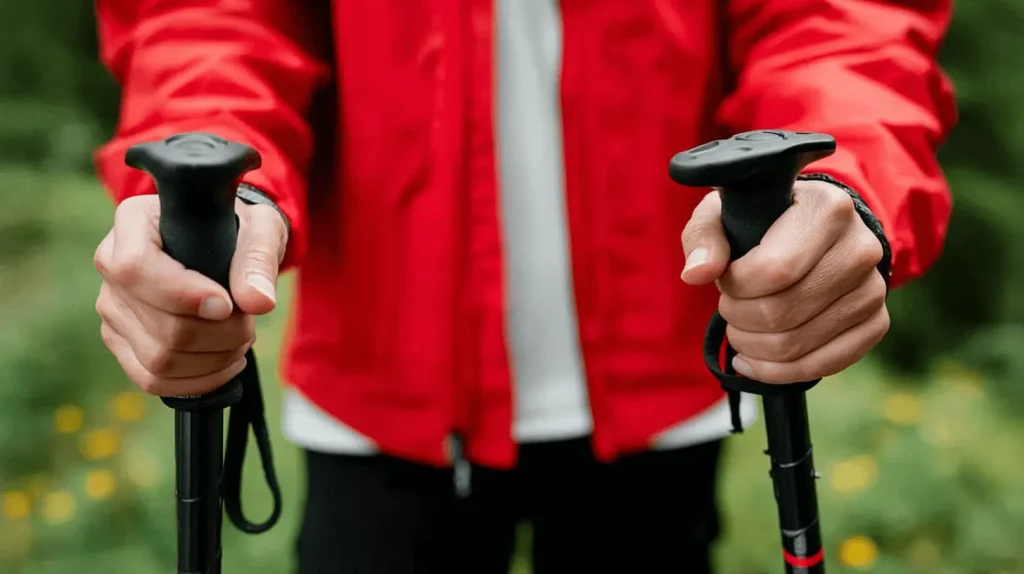
The core principles of an effective nordic walking technique include: a dynamic, rhythmic arm swing with walking poles planted diagonally; an upright posture with a slight lean forward from the ankles; a fluid, natural gait; and a firm yet relaxed grip. Your hands should comfortably wrap around the ergonomic grips, allowing the wrist straps to provide stability and leverage to engage your upper body muscles with every stride.
How do you find the right pole length for Nordic walking?
Selecting the correct pole length is fundamental for safe, effective exercise and noticeable posture improvement. A reliable rule of thumb is that the ideal pole length is approximately 68 per cent of your height. At this setting, your elbows should form a comfortable 90-degree angle when standing upright with the poles planted vertically on the ground.
For a precise calculation, multiply your height in centimetres by 0.68. For example, someone who is 170 cm tall requires walking poles measuring around 116 cm. Adjustable telescopic poles offer the added advantage of letting you fine-tune the length for varying terrain or adjust for different training intensities.
How do you create a training plan for weight loss?
An effective routine should be progressive and tailored to your current fitness level, demonstrating how nordic walking benefits weight loss when practised consistently. If you are exploring nordic walking for beginners, start with two to three 30-minute sessions per week. Over several weeks, gradually increase the duration to between 45 and 60 minutes per session.
Keep your effort at a moderate intensity — you should be slightly breathless but still able to hold a conversation comfortably. This corresponds to roughly 60 to 70 per cent of your maximum heart rate. For intermediate or advanced walkers looking to boost cardiovascular fitness, interval training and changes of pace can elevate the workout: alternate between 5 minutes of brisk walking and 2 minutes at a steady pace.
Incorporating rest days is vital. Avoid training on consecutive days; instead, allow your body at least one full day of recovery between workouts. This prevents overtraining, eases joint strain, and supports muscular adaptation.
How do you calculate your optimal training heart rate?
Monitoring your heart rate is an excellent way to regulate workout intensity during aerobic exercise. A straightforward formula for estimating your maximum heart rate is 220 minus your age. For instance, a 50-year-old would have an estimated maximum heart rate of 170 beats per minute (bpm).
For effective endurance training aimed at fat loss, aim to train within the aerobic “fat-burning” zone, which lies between 60 and 70 per cent of your maximum heart rate. For a 50-year-old, this translates to roughly 102 to 119 bpm. Using a heart rate monitor, smartwatch, or fitness tracker can help you remain consistently within this optimal training window.
Equipment and Practical Tips
How much does Nordic walking equipment cost?
Compared to many outdoor sports, Nordic walking is relatively inexpensive. The core piece of kit consists of specialised walking poles, which are available across a range of price points. Basic entry-level aluminium poles start from around £20 to £30, whereas premium, lightweight carbon fibre models generally cost between £80 and £150.
Alongside poles, you will need suitable footwear — supportive running trainers or dedicated walking shoes, which you may already own or can purchase for between £50 and £120. Breathable technical sportswear is recommended for comfort, though standard activewear works well. Overall, you can expect an initial investment of £70 to £200 to get fully kitted out.
What is the best clothing for Nordic walking?
Because Nordic walking involves sustained aerobic exercise outdoors in all seasons, dressing appropriately ensures both comfort and performance. A layered approach is best, allowing you to add or remove clothing as your temperature fluctuates.
Start with a breathable, moisture-wicking base layer that draws sweat away from the skin. Add an insulating mid-layer, such as a light fleece, followed by a windproof and water-resistant outer jacket for unpredictable British weather. During the summer months, a technical T-shirt and lightweight shorts are often sufficient. Remember to wear a sun hat in summer and a warm beanie and gloves during winter.
How do you avoid common Nordic walking mistakes?
Common technical errors can reduce the exercise’s effectiveness and lead to unnecessary strain. The most frequent mistake is using poles of the wrong height, so always verify your measurement against the 68 per cent guideline. Another common pitfall is dragging the poles passively rather than actively planting and pushing off behind you.
Excessive muscular tension is equally counterproductive. Keep your shoulders relaxed and low, and maintain an upright spine without stiffening. Plant the poles in a natural, opposing rhythm — left pole with the right heel strike, right pole with the left heel strike. Avoid planting the poles directly alongside your hips; angle them slightly backwards to propel yourself forward efficiently.
Who should NOT do Nordic walking?
Nordic walking is safe, accessible, and well-tolerated by the vast majority of people. However, a few precautions apply. If you have acute inflammation or pain in your shoulders, elbows, or wrists, rest until symptoms resolve. Caution is also advised if you have severe balance disorders or are recovering from recent upper-body injuries.
Individuals with serious cardiovascular conditions should consult their GP or an NHS healthcare professional before starting to establish an appropriate training intensity. Generally speaking, the minimal joint impact makes Nordic walking ideal for people carrying excess weight or managing conditions such as osteoarthritis — offering a far gentler alternative than running or other high-impact sports.
Frequently Asked Questions
How do you combine Nordic walking with a healthy diet?
To achieve sustainable weight loss, combining regular physical activity with dietary adjustments is essential. Walking alone rarely produces dramatic slimming without an overall energy deficit. Aim for a moderate, realistic deficit of 300 to 500 calories per day, achieved primarily through balanced nutrition.
Focus on nutrient-dense, satisfying wholefoods: plenty of vegetables, wholemeal carbohydrates, pulses, lean proteins, and healthy fats. Minimise ultra-processed foods, sugary drinks, and oversized portions. Nordic walking then supports fat loss by increasing daily calorie expenditure, supporting your metabolic rate, and promoting cardiovascular health.
What should you eat before and after Nordic walking?
Your nutrition around training sessions should fuel your workout without leaving you feeling sluggish. About one to two hours before heading out, opt for a light, easily digestible snack featuring complex carbohydrates and a little protein — such as wholemeal toast with a banana, or a small bowl of porridge oats topped with berries.
For sessions under 60 minutes, plain water is entirely sufficient during the walk itself. Afterwards, support muscle recovery and glycogen replenishment with a balanced snack combining carbohydrates and protein, such as a fruit and Greek yoghurt smoothie or wholemeal crispbread with cottage cheese.
How do you stay motivated with Nordic walking in the long term?
Maintaining consistency is key to long-term progress — and this highlights one of the major psychological nordic walking benefits. Research suggests that participants in group walking sessions consistently report higher levels of enjoyment and adherence compared to solo or conventional walking.
Several strategies can help keep your routine engaging: join a local walking group or exercise with friends — the timeless advice published in a 1925 medical journal to “take a dog… and a friend” remains just as relevant today. Listening to upbeat music or podcasts can also enhance stamina and workout pleasure. Set realistic, measurable goals, track your weekly distance, and explore varied routes to keep your workouts fresh.
Can Nordic walking help you lose belly fat?
The concept of “spot reduction” — losing fat from a specific area of the body through targeted exercise — has been thoroughly debunked by sports science. You cannot instruct your body to burn fat exclusively from your midsection; overall body fat reduction occurs across the entire body in accordance with individual genetics.
However, because the dynamic movement raises your energy expenditure, Nordic walking is an outstanding tool for full-body fat loss, which naturally reduces waist circumference over time. Furthermore, the active rotational core engagement strengthens the deep abdominal and lower back muscles, leading to improved posture and a firmer, more toned torso when paired with a healthy nutritional plan.
Scientific References
- Ekkekakis P, Vazou S, Bixby WR, Georgiadis E. (2016). The mysterious case of the public health guideline that is (almost) entirely ignored: call for a research agenda on the causes of the extreme avoidance of physical activity in obesity. Obesity Reviews, 17(4):313-29.
- Krueger A. (2007). Are we having more fun yet? Categorizing and evaluating changes in time allocation. Brookings Papers on Economic Activity, 2007(2):193-215.
- Tudor-Locke C, Brashear MM, Johnson WD, Katzmarzyk PT. (2010). Accelerometer profiles of physical activity and inactivity in normal weight, overweight, and obese U.S. men and women. International Journal of Behavioral Nutrition and Physical Activity, 7:60.
- Lieberman DE. (2015). Is exercise really medicine? An evolutionary perspective. Current Sports Medicine Reports, 14(4):313-9.
- Puterbaugh JS. (2009). The emperor’s tailors: the failure of the medical weight loss paradigm and its causal role in the obesity of America. Diabetes, Obesity and Metabolism, 11(6):557-70.
- Jarraya M, Chtourou H, Aloui A, et al. (2012). The effects of music on high-intensity short-term exercise in well trained athletes. Asian Journal of Sports Medicine, 3(4):233-8.
- Stork MJ, Kwan MY, Gibala MJ, Martin Ginis KA. (2015). Music enhances performance and perceived enjoyment of sprint interval exercise. Medicine & Science in Sports & Exercise, 47(5):1052-60.
- Tschentscher M, Niederseer D, Niebauer J. (2013). Health benefits of Nordic walking: a systematic review. American Journal of Preventive Medicine, 44(1):76-84.
- Fujita E, Yakushi K, Takeda M, et al. (2018). Proficiency in pole handling during Nordic walking influences exercise effectiveness in middle-aged and older adults. PLoS ONE, 13(11):e0208070.
- Pellegrini B, Boccia G, Zoppirolli C, et al. (2018). Muscular and metabolic responses to different Nordic walking techniques, when style matters. PLoS ONE, 13(4):e0195438.
- Park SD, Yu SH. (2015). The effects of Nordic and general walking on depression disorder patients’ depression, sleep, and body composition. Journal of Physical Therapy Science, 27(8):2481-5.
- Figard-fabre H, Fabre N, Leonardi A, Schena F. (2011). Efficacy of Nordic walking in obesity management. International Journal of Sports Medicine, 32(6):407-14.
- Takeshima N, Islam MM, Rogers ME, et al. (2013). Effects of nordic walking compared to conventional walking and band-based resistance exercise on fitness in older adults. Journal of Sports Science & Medicine, 12(3):422-30.
- Rossi AP, Muollo V, Fantin F, et al. (2019). Effects of diet combined with Nordic walking or walking programme on weight loss and arterial stiffness in postmenopausal overweight and obese women: The Walking and Aging Verona pilot study. European Journal of Preventive Cardiology.
- Schiffer T, Knicker A, Hoffman U, Harwig B, Hollmann W, Strüder HK. (2006). Physiological responses to nordic walking, walking and jogging. European Journal of Applied Physiology, 98(1):56-61.
References & Further Reading
Systematic reviews, meta-analyses, and controlled clinical trials relevant to this article. Every link was verified for accessibility on 16/08/2026.
- Knappova V, Dorota K, Anna W et al.: Influence of systematic standard and Nordic walking training on exercise tolerance and body weight components in women over 55 years of age. 2025. PubMed 40129521. DOI: 10.3389/fspor.2025.1568491.
- Rossi AP, Muollo V, Fantin F et al.: Effects of diet combined with Nordic walking or walking programme on weight loss and arterial stiffness in postmenopausal overweight and obese women: The Walking and Aging Verona pilot study. European journal of preventive cardiology 2020. PubMed 31581818. DOI: 10.1177/2047487319877712.
- Sanchez-Lastra MA, Miller KJ, Martínez-Lemos RI et al.: Nordic Walking for Overweight and Obese People: A Systematic Review and Meta-Analysis. Journal of physical activity & health 2020. PubMed 32502974. DOI: 10.1123/jpah.2019-0357.
- Muollo V, Rossi AP, Milanese C et al.: The effects of exercise and diet program in overweight people – Nordic walking versus walking. Clinical interventions in aging 2019. PubMed 31695344. DOI: 10.2147/CIA.S217570.