Have you ever wondered why you never find yourself creeping downstairs at midnight to binge on broccoli, yet doughnuts, cheese, or chocolate prove impossible to resist? The answer lies in our evolutionary biology and the clever ways the modern food industry exploits our innate biological vulnerabilities. In this article, you will discover everything you need to know about high calorie foods, why ultra-processed foods pose such a challenge to our energy balance, and how to choose healthy alternatives.
Human beings possess an evolutionary drive towards high calorie foods. Our ancestors had to forage efficiently to survive harsh environments, and that ancient programming remains active today. In our modern UK food environment, packed with refined carbohydrates and calorie-dense snacks, this ancient adaptation easily triggers overeating and unwanted weight gain.
Table of Contents
- Key Takeaways
- What Are High Calorie Foods?
- What Does Energy Density Mean in Food?
- Evolutionary Preferences for Calorie-Dense Food
- The Biggest Fattening Foods: Processed Products
- CRAP Foods and Why They Are Problematic
- Natural vs Processed High Calorie Foods
- Why Processed Foods Cause Weight Gain
- The Role of Calorie Density in Obesity
- Practical Everyday Tips
- Scientific Facts and Studies
- Frequently Asked Questions
- Scientific References
Key Takeaways
- Evolutionary preference for calories: Humans have an innate ability to distinguish foods by caloric density and instinctively favour the most calorie-rich options – a survival adaptation from the Stone Age.
- Natural limit of 500 calories: Almost all whole, unprocessed plant foods (fruits, vegetables, starchy roots) provide under 500 calories per pound. Bananas sit near the top of the fruit scale at approximately 400 calories per pound.
- Calorie sensors overwhelmed: Beyond 500 calories per pound, we lose our natural ability to gauge caloric differences – human neurobiology was never built to navigate bacon, cheddar, and milk chocolate.
- CRAP = concentrated calories: “Calorie Rich And Processed Foods” are manufactured by removing dietary fibre: brown rice turned into white rice loses 66% of its fibre, and wholemeal flour turned into white flour loses 75%.
- Concentrated like drugs: Calories are extracted from whole plants in the same manner addictive substances are refined – through concentration, crystallisation, distillation, and chemical extraction (pure sugar, refined oils, white flour).
- Brain activation comparable to cocaine: Functional MRI studies show that in people with addictive eating behaviours, pictures of milkshakes stimulate the exact same reward circuitry as videos of crack cocaine do in cocaine-dependent individuals.
- Zero cravings for carrots: Food addiction is selective: it applies almost exclusively to ultra-processed, calorie-dense foods (doughnuts, cheese, cured meats), never to whole fruits and vegetables. Caloric density explains nocturnal cravings.
- Baboons + refuse = 50% heavier: Troops of wild baboons that scavenged tourist rubbish weighed 50% more than their foraging peers – an evolutionary mismatch identical to modern humans consuming fast food.
- Millions of years plant-focused: Human physiology evolved over millions of years primarily on leaves, tubers, wild fruits, and nuts – not on industrialised, ultra-processed convenience items.
- Dietary fibre is crucial: The defining difference between wholesome options and damaging high calorie foods is fibre – providing meal volume, improving the satiety index, and reducing overall energy density without adding empty calories.
What Are High Calorie Foods?
High-Calorie Foods to Avoid: What Makes Certain Items Problematic?
High calorie foods are items with substantial energy density – delivering a high concentration of calories per gram or per portion. Whilst our foraging ancestors actively sought out calorie-dense nourishment to prevent starvation, today this primitive instinct frequently leads to obesity, metabolic disorders, and chronic health challenges.
The traditional medical perspective on obesity was articulated nearly a century ago: all individuals with obesity share one fundamental characteristic – they consume too much energy. Crucially, however, this refers to an excess of calories, not necessarily a greater physical mass of food. This distinction is precisely why modern, ultra-processed items disrupt our natural appetite regulation.
Why Do We Crave Calorie-Dense Foods?
Our primitive drive towards dietary overindulgence is remarkably selective. We do not experience intense cravings for raw greens or crisp salad leaves; humans have an innate, hardwired preference for sweet, starchy, and fatty foods because that is where calories are most densely packed.
Studies investigating fruit and vegetable consumption in four-year-old children show that their food preferences correlate directly with caloric density. They consistently prefer bananas over berries and carrots over cucumbers. Yet it is not solely about sweetness – they also favour potatoes over peaches and green beans over melon, just as primates choose avocados over bananas. We appear biologically programmed to maximise calories per mouthful.
What Does Energy Density Mean in Food?
What Is Energy Density or Caloric Density?
Energy density, or caloric density, describes the number of calories contained within a given unit weight of food. Imagine foraging during the Stone Age, gathering food at a steady rate of one pound per hour. If that forage provided only 250 calories per pound, you would need 10 full hours of gathering simply to meet your daily basal metabolic requirements. At 500 calories per pound, your foraging would be complete in five hours, leaving the rest of the day for cave painting and toolmaking.
The higher the energy density – the greater the calories per pound – the more efficient survival became. Consequently, humans developed a remarkable neurological ability to distinguish foods by their caloric density and instinctively select the most energy-dense option available.
Which Natural Foods Provide Concentrated Calories?
For millions of years before early humans developed hunting tools, our ancestral biology evolved predominantly around wild leaves, roots, tubers, fruits, and raw seeds. Virtually all of these unrefined foods contain fewer than 500 calories per pound, with bananas ranking amongst the richest fresh fruits at roughly 400 calories per pound.
Within this natural spectrum of caloric density, our palate and brain possess a fine-tuned sensitivity to subtle energy differences. We can intuitively distinguish between 250 and 400 calories per pound, instinctively prioritising the denser source of sustenance.
Evolutionary Preferences for Calorie-Dense Food
How Did Our Evolutionary Drive for Rich Foods Develop?
Consider the energy economics of ancestral hunting and gathering. In prehistoric environments, obtaining sustenance required significant physical exertion. Spending entire days collecting plants that failed to offset your energy expenditure made no survival sense; staying in the shelter of a cave would have preserved more vitality.
As a result, humans evolved strong neurological reward pathways for foods offering the highest caloric return for the least foraging effort. We developed an acute sensory system to identify caloric density and naturally gravitate towards energy-rich sustenance.
What Happens Beyond 500 Calories per Pound?
An interesting biological phenomenon occurs once food exceeds the natural threshold of 500 calories per pound: our internal calorie-sensing mechanisms fail. Within natural limits, we detect subtle energetic variations with great precision. However, when we enter the realm of streaky bacon, mature cheddar, and milk chocolate – which easily reach thousands of calories per pound – our sensory perception becomes practically numb to the differences.
This failure is unsurprising, as such hyper-concentrated products were entirely absent during human evolutionary history. It mirrors the dodo, which failed to develop predator-avoidance behaviours due to an absence of natural threats on its island, or newborn sea turtles scuttling towards bright streetlights instead of the moonlit ocean – maladaptive behaviours driven by an evolutionary mismatch.
The Biggest Fattening Foods: Processed Products
Which Items Have the Highest Caloric Density per 100 Grams?
The following list highlights some of the most energy-dense, refined items and high-calorie foods to avoid in large quantities when managing weight:
- Vegetable and seed oils: Virtually 100% pure fat, delivering up to 9,000 calories per pound (approx. 900 kcal per 100g)
- Refined sugar: Concentrated carbohydrates devoid of fibre, vitamins, or essential micronutrients
- White flour products: Refined carbohydrates stripped of wheat bran and germ
- Doughnuts and pastries: A hyper-palatable fusion of refined flour, industrial fats, and high sugar content
- Chocolate confectionery: Highly concentrated blends of cocoa butter, dairy fats, and refined sugar
- Hard cheeses: Concentrated dairy fats and proteins with minimal water content
- Processed meats and bacon: Cured meats carrying elevated saturated fat and salt levels
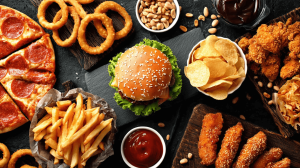
- Fast food burgers: Multiple layers of refined buns, fatty patties, sauces, and processed cheese
- Deep-fried foods: Ingredients heavily saturated in heated cooking oils
- Ultra-processed snacks and crisps: Industrially engineered combinations of fat, starch, and sodium
Why Are Manufactured Foods So High in Calories?
The modern food manufacturing sector capitalises on our hardwired evolutionary vulnerabilities by breaking whole plants down into isolated, pure calorie streams: refined sugar, extracted vegetable oils (which are 100% liquid fat), and refined white flour (pure starch devoid of its original structure).
To achieve this, food processing systematically strips away dietary fibre, which provides natural volume and satiety with zero caloric load. Refining brown rice into white rice eliminates approximately two-thirds of its original fibre. Processing wholemeal wheat into white flour removes roughly 75% of the fibre. Alternatively, feeding plant crops to livestock to produce commercial cuts of meat, eggs, and dairy eliminates 100% of that plant fibre, concentrating fat and caloric density whilst reducing overall nutritional value.
CRAP Foods and Why They Are Problematic
What Are CRAP Foods and Why Do They Undermine Health?
What remains after extensive industrial processing is what renowned dietitian Jeff Novick termed CRAP: an acronym for “Calorie Rich And Processed Foods”.
Calories are concentrated in commercial food production using the exact same methods employed to transform raw botanicals into addictive substances like opiates and cocaine: physical concentration, chemical crystallisation, distillation, and solvent extraction. Ultra-processed CRAP foods appear to activate the same dopamine reward pathways in the human brain as illicit substances.
What Is the Link Between Calorie Density and Addictive Eating?
The phrase “food addiction” can be somewhat misleading. People do not develop compulsive, out-of-control bingeing behaviours towards food in general. There are no clinical reports of individuals losing control over raw carrots or steamed courgettes.
Commercial milkshakes, by contrast, combine high sugar content with dense dairy fats – two primary biological signals indicating concentrated calories. When individuals with disordered or addictive eating patterns undergo functional MRI brain scans, viewing an image of a chocolate milkshake illuminates the exact same neural reward centres as footage of crack cocaine use does in cocaine-dependent subjects.
When research participants are asked to rate different dietary items based on cravings and loss of control, ultra-processed items like doughnuts, alongside fatty cheeses and processed meats, top the list. The foods least associated with problematic eating patterns are fresh fruits and vegetables.
Caloric density explains why no one wakes up in the middle of the night with an uncontrollable urge to feast on steamed broccoli.
Natural vs Processed High Calorie Foods
What is the difference between natural and processed high calorie foods?
Not all high calorie foods are equally problematic. The crucial difference lies in the level of industrial processing and dietary fibre content:
Natural high calorie foods:
- Nuts (almonds, walnuts, cashews): High in calories, but also rich in fibre, protein, and healthy fats
- Avocados: High caloric density from healthy fats, but packed with nutritional value and essential micronutrients
- Whole grains: Moderate caloric density with intact dietary fibre
- Dried fruit: Concentrated calories, but containing natural fibre and vitamins
Processed high-calorie foods:
- Devoid of dietary fibre
- Extremely high caloric density (often exceeding 2,000 calories per pound)
- Little to no nutritional value
- Engineered combinations of sugar, fat, and salt that can trigger addictive-like eating behaviours
How many calories are in nuts, and are they healthy or unhealthy?
Nuts contain roughly 2,500–3,000 calories per pound, making them energy-dense. Nevertheless, they are widely recognised as healthy because they:
- Are rich in fibre (approximately 10–15% fibre content)
- Provide high-quality plant-based protein
- Contain heart-healthy unsaturated fatty acids
- Deliver abundant vitamins, minerals, and antioxidants
- Score favourably on the satiety index, keeping you fuller for longer
The key contrast with ultra-processed calorie bombs: nuts are a nutrient-dense whole food with intact fibre, whereas doughnuts or crisps merely provide empty calories.
What role does dietary fibre play in caloric density?
Fibre is the decisive factor. It provides virtually zero calories whilst adding bulk and promoting satiety. When fibre is industrially removed, the following occurs:
- Brown rice → White rice: -66% fibre
- Wholemeal flour → White flour: -75% fibre
- Plant-based foods → Animal products: -100% fibre
Without dietary fibre, we can consume far greater volumes of food without feeling satisfied. This triggers passive overeating and disrupts energy balance—we take in excess calories long before our physiological fullness cues take effect.
What are the healthiest high calorie foods for weight loss and energy?
When you need nutritious, healthy alternatives with higher energy density (for example, during heavy training, muscle building, or managing underweight), choose whole foods:
- Nuts and seeds: Almonds, walnuts, chia seeds, and linseeds
- Avocados: Healthy monounsaturated fats paired with fibre
- Whole grains: Porridge oats, wholemeal bread, and brown rice
- Oily fish: Salmon, mackerel, and sardines (packed with omega-3 fatty acids)
- Dried fruit: Eaten in moderation, providing energy with intact fibre
- Pulses and legumes: Chickpeas, lentils, and beans—an ideal combination of energy and protein
Why Ultra-Processed, Fattening Foods Cause Weight Gain
Why do ultra-processed and fattening foods lead to weight gain?
Ultra-processed foods drive weight gain through several scientifically proven mechanisms:
- Lack of dietary fibre: Without fibre, meals lack the physical volume needed to trigger fullness receptors
- Overwhelmed calorie sensors: Above 500 calories per pound, our bodies lose the evolutionary ability to gauge calorie intake accurately
- Addictive activation: They stimulate the exact same reward centres in the brain as cocaine
- Passive overeating: We consume far more energy before natural satiety signals register
- Evolutionary mismatch: Human evolutionary biology never adapted to manage such hyper-concentrated caloric density
Why do ultra-processed foods drive obesity?
Scientific research shows that humans do not overeat food indiscriminately; overeating is specifically driven by calorie-dense, processed items combining high sugar content and refined carbohydrates.
In the wild, animals consuming their natural evolutionary diet do not become obese. However, there is a documented case of wild primates developing obesity: a troop of baboons that gained access to refuse bins at a tourist lodge. The troop feeding on processed human rubbish weighed 50% more than their wild-foraging counterparts.
Tragically, humans suffer the identical outcome when subsisting on modern junk food. Reconnecting with our biological roots and removing CRAP foods from our plates is the most effective way forward.
The Role of Caloric Density in Weight Gain and Obesity
What impact do processed high-calorie foods have on the body?
Processed high-calorie foods exert extensive negative effects on long-term health:
- Weight gain: Passive overeating caused by low satiety and absent fibre
- Metabolic dysfunction: Insulin resistance and type 2 diabetes driven by refined carbohydrates and rapid sugar absorption
- Cardiovascular disease: Heightened risk from industrial trans fats and excessive saturated fats
- Chronic inflammation: Ultra-processed foods actively promote systemic inflammatory pathways
- Gut microbiome disruption: A lack of prebiotic fibre starves beneficial gut bacteria
- Compulsive eating behaviours: Hyper-stimulation of dopamine reward pathways leads to cravings and loss of appetite control
High-Calorie Foods to Avoid: Which Fast Foods Have the Most Calories?
Fast food items represent some of the most calorie-dense, fattening foods on the market:
- Double bacon cheeseburger: 800–1,200 calories
- Large portion of takeaway chips: 500–600 calories
- Milkshakes: 600–1,000 calories
- Deep-fried chicken nuggets (10 pieces): 400–600 calories
- Pizza slices: 250–400 calories per slice
A standard fast-food meal (burger, chips, and a fizzy drink) can easily supply 1,500–2,000 calories—almost an adult’s entire daily energy requirement in a single sitting, whilst offering negligible nutritional value and leaving you hungry again soon after.
Practical Tips for Managing High Calorie Foods in Daily Life
How can you reduce high-calorie foods in your diet?
Here are evidence-based strategies to cut down on processed, high-calorie foods:
- Return to whole foods: Focus on nutrient-rich foods with a caloric density below 500 calories per pound
- Prioritise dietary fibre: Ensure meals contain plenty of fibre to trigger natural satiety mechanisms
- Minimise ultra-processed foods: The closer a food is to its natural state, the easier it is to maintain energy balance
- Build a plant-rich plate: Emphasise vegetables, fruit, whole grains, pulses, and modest portions of nuts
- Cut back on sugar, refined carbohydrates, and extracted oils: The primary components of CRAP
- Avoid takeaways and fast food: Prepare meals at home using fresh, whole ingredients
How to spot hidden calories in high calorie foods UK consumers buy
Hidden calories are frequently found across everyday supermarket items:
- Sauces and salad dressings: Often heavily based on refined vegetable oils and mayonnaise
- Beverages: Sugary soft drinks, fruit juices, and flavoured coffee shop drinks
- “Healthy” snack bars: Cereal bars and flapjacks loaded with high sugar content and syrup
- Ready meals: Ultra-processed convenience foods concealing added sugars, starches, and fats
- Restaurant and pub dishes: Generous additions of butter, cooking oils, and double cream
Top tip: Check the back-of-pack nutrition panel to assess caloric density. Divide total calories by the weight in grams—if the value exceeds 2.5 kcal/g (roughly 1,130 kcal per pound), the food is exceptionally high in caloric density.
Which foods provide lasting satiety despite higher calorie counts?
Fullness depends far less on total calories and far more on dietary fibre, protein, and physical food volume:
- Porridge oats: Moderate caloric density, scoring high on the satiety index thanks to soluble beta-glucan fibre
- Boiled or baked potatoes: Exceptionally satiating despite their carbohydrate content (when not prepared as fried chips or crisps)
- Pulses and beans: The combination of plant protein and prebiotic fibre sustains fullness for hours
- Nuts: Energy-dense, yet small portions effectively suppress appetite and support metabolic health
- Wholemeal bread: Intact grains and fibre digest slowly, providing stable, long-lasting satiety
Scientific Research on Ultra-Processed and High Calorie Foods
What does scientific research say about ultra-processed foods?
The clinical evidence is unequivocal: ultra-processed foods are a primary driving factor in the global obesity crisis. Research identifies several distinct mechanisms:
- Ultra-processed items bypass our innate biological satiety mechanisms
- They stimulate dopamine reward pathways in patterns comparable to addictive substances
- Removing dietary fibre dramatically increases passive calorie overconsumption
- Our evolutionary biology is exploited by industrial formulations high in fat, sugar, and salt
What are the differences between healthy and unhealthy fats?
Not all dietary fats have the same effect on cardiovascular and metabolic health:
Healthy fats (in moderation):
- Nuts and seeds: Unsaturated fatty acids delivered alongside fibre and minerals
- Avocados: Monounsaturated fats that support heart health
- Oily fish: Essential omega-3 fatty acids (EPA and DHA)
- Intact within whole-food matrices
Unhealthy fats (to minimise or avoid):
- Refined industrial oils: 100% pure extracted fat stripped of all fibre and nutrients
- Trans fats: Present in commercial fried goods, margarine, and ultra-processed baked products
- Excess saturated fats: Found predominantly in fatty meats, butter, and processed dairy
- Isolated and unnaturally concentrated
The key principle: fats consumed in their natural, whole-food state (alongside fibre and micronutrients) support a balanced diet. Extracted, refined fats devoid of nutritional value are what drive health complications.
Frequently Asked Questions
What are high calorie foods and why should certain types be avoided?
High calorie foods are items with high caloric density, delivering substantial energy per gram. Whilst our ancestors evolved to seek out energy-dense foods to survive famine, this hardwired evolutionary biology now contributes to widespread obesity. The primary danger lies in ultra-processed foods stripped of fibre (such as pure oils reaching up to 9,000 kcal per pound). They override our natural fullness signals and over-activate dopamine reward centres in the brain.
Which foods have the highest caloric density?
The most calorie-dense foods include: vegetable oils (nearly 100% fat, up to 9,000 kcal per pound), pure refined sugar, white flour, doughnuts, chocolate, hard cheeses, bacon, fast-food burgers, deep-fried snacks, and confectionery. These processed items far exceed the natural benchmark of 500 kcal per pound. In contrast, whole plant foods (such as vegetables, fruits, and pulses) remain comfortably below this threshold.
Why do ultra-processed, fattening foods cause weight gain?
Ultra-processed, fattening foods cause weight gain primarily because they lack dietary fibre (milling wholemeal grain into white flour removes 75% of fibre). Above 500 kcal per pound, our bodies cannot accurately gauge energy intake. Brain MRI studies demonstrate that these products stimulate the same reward centres as addictive drugs, encouraging passive overeating before satiety occurs. This evolutionary mismatch means our biology was never adapted to regulate modern combinations of bacon, cheese, and refined sugar.
What is the difference between natural and processed high calorie foods?
Natural high calorie foods (such as nuts, avocados, and whole grains) contain dietary fibre, protein, and essential micronutrients that foster lasting fullness. In contrast, ultra-processed products lack fibre, possess extreme caloric density (often exceeding 2,000 kcal per pound), and offer negligible nutritional value. They combine refined carbohydrates, sugars, fats, and salt to trigger cravings. Whole nuts (2,500–3,000 kcal per pound) remain thoroughly nutritious because their 10–15% fibre structure slows digestion and promotes satiety.
What are CRAP foods and why are they so harmful?
CRAP stands for “Calorie-Rich And Processed Foods”. They are manufactured by removing dietary fibre to leave isolated sugar, extracted oil (pure fat), or white flour (refined carbohydrates). Much like refining drugs, calories are hyper-concentrated through industrial crystallisation, distillation, and extraction. They trigger neural reward centres identically to addictive substances. Food addiction behaviours consistently involve CRAP products (such as doughnuts, processed meats, and crisps)—never whole carrots or broccoli.
How can you reduce high-calorie foods in your diet to avoid weight gain?
Evidence-based strategies include: 1) Base meals on whole foods with a caloric density under 500 kcal per pound, 2) Prioritise high-fibre options to support satiety, 3) Minimise ultra-processed foods, 4) Adopt a plant-rich diet (vegetables, fruit, whole grains, pulses, and nuts), 5) Minimise sugar content, refined carbohydrates, and extracted oils (the core CRAP ingredients), 6) Avoid takeaways and fast food by cooking with fresh, whole ingredients. This restores alignment with human evolutionary biology through unrefined plants, roots, fruits, and seeds.
Scientific References
- Newburgh LH, Johnston MW (1930). The nature of obesity. J Clin Invest.
- Swinburn BA (2008). Obesity prevention: the role of policies, laws and regulations. Aust New Zealand Health Policy.
- Brunstrom JM, et al (2018). Are humans poorly adapted to energy-dense foods? Appetite.
- Gibson EL, Wardle J (2003). Energy density predicts preferences for fruit and vegetables in 4-year-old children. Appetite.
- Ifland J, et al (2015). Clearing the confusion around processed food addiction. J Am Coll Nutr.
- Gearhardt AN, et al (2011). Neural correlates of food addiction. Arch Gen Psychiatry.
- Schulte EM, et al (2017). Foods are differentially associated with subjective effect report questions of abuse liability. PLoS ONE.
- Altmann J, et al (1993). Body size and fatness of free-living baboons reflect food availability and activity levels. Am J Primatol.
- Rubio-Ruiz ME, et al (2015). An evolutionary perspective of nutrition and inflammation as mechanisms of cardiovascular disease. Int J Evol Biol.
References and Further Reading
Systematic reviews, meta-analyses, and controlled trials relating to the topics discussed in this article. All links were verified for accessibility on 16/08/2026.
- Oosterlinck F, Segers Y.: From scarcity to ultra-processed foods: a conceptual analysis of how their properties interact with characteristics of food intake regulation mechanism. 2026. PubMed 42039894. DOI: 10.3389/fnut.2026.1803885.
- Monteiro CA, Louzada ML, Steele-Martinez E et al.: Ultra-processed foods and human health: the main thesis and the evidence. Lancet (London, England) 2025. PubMed 41270766. DOI: 10.1016/S0140-6736(25)01565-X.
- Juul F, Martinez-Steele E, Parekh N et al.: The role of ultra-processed food in obesity. Nature reviews. Endocrinology 2025. PubMed 40659796. DOI: 10.1038/s41574-025-01143-7.
- Godsey TJ, Eden T, Emerson SR. et al.: Ultra-Processed Foods and Metabolic Dysfunction: A Narrative Review of Dietary Processing, Behavioral Drivers and Chronic Disease Risk. 2025. PubMed 41441026. DOI: 10.3390/metabo15120784.
- Mambrini SP, Menichetti F, Ravella S et al.: Ultra-Processed Food Consumption and Incidence of Obesity and Cardiometabolic Risk Factors in Adults: A Systematic Review of Prospective Studies. Nutrients 2023. PubMed 37299546. DOI: 10.3390/nu15112583.
- Crimarco A, Landry MJ, Gardner CD et al.: Ultra-processed Foods, Weight Gain, and Co-morbidity Risk. Current obesity reports 2022. PubMed 34677812. DOI: 10.1007/s13679-021-00460-y.
- Hall KD, Ayuketah A, Brychta R et al.: Ultra-Processed Diets Cause Excess Calorie Intake and Weight Gain: An Inpatient Randomized Controlled Trial of Ad Libitum Food Intake. Cell metabolism 2019. PubMed 31105044. DOI: 10.1016/j.cmet.2019.05.008.