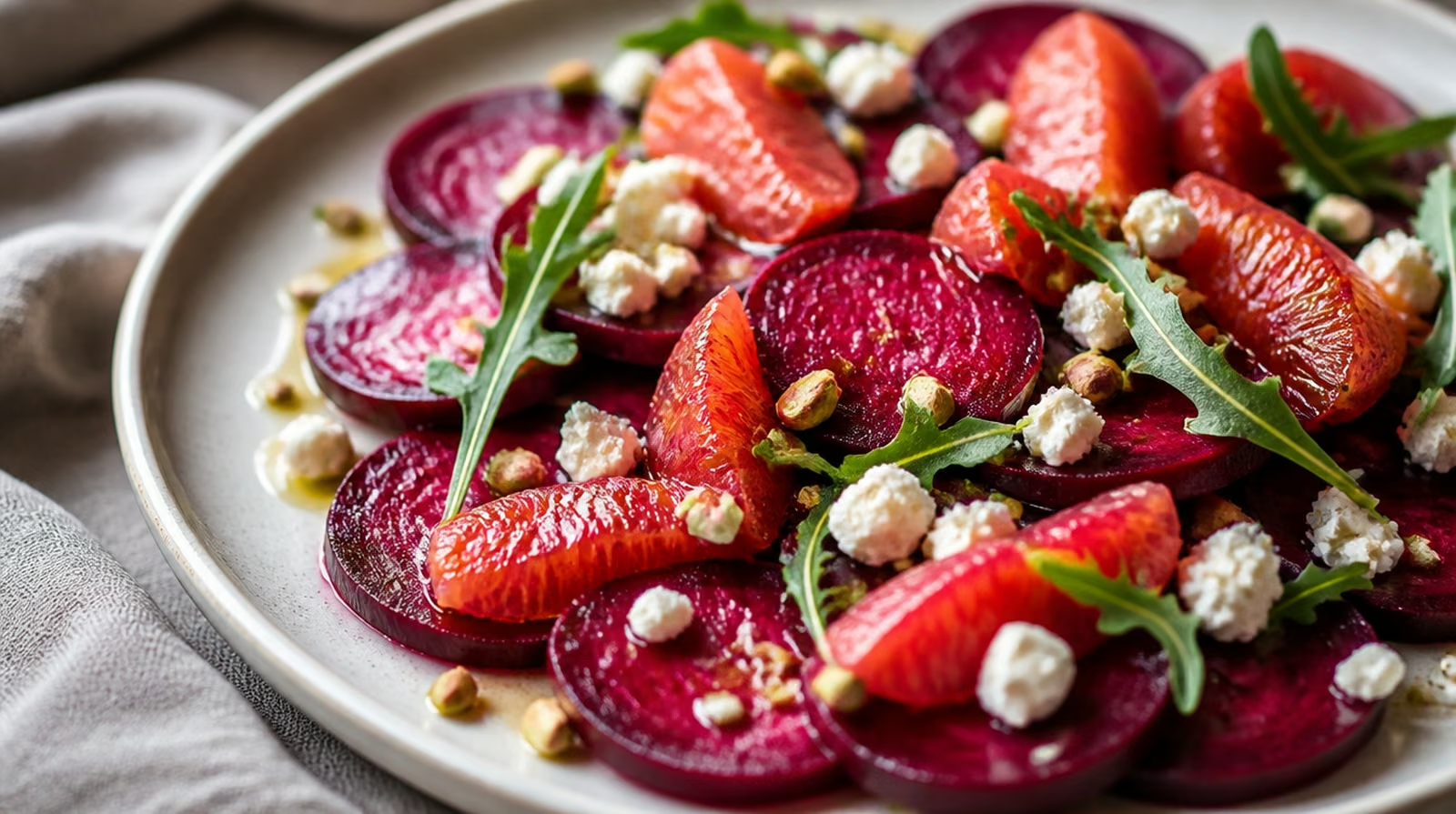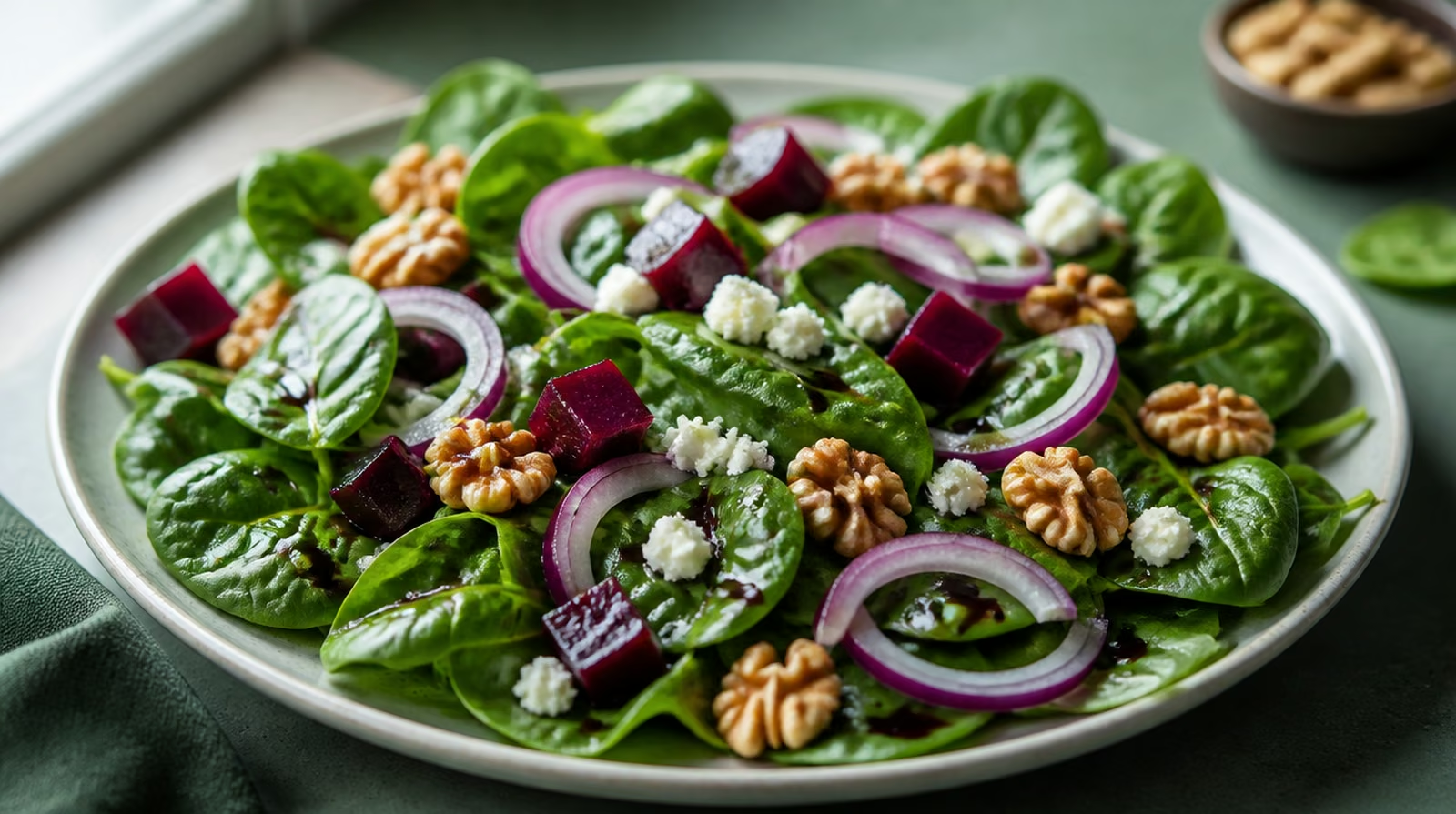
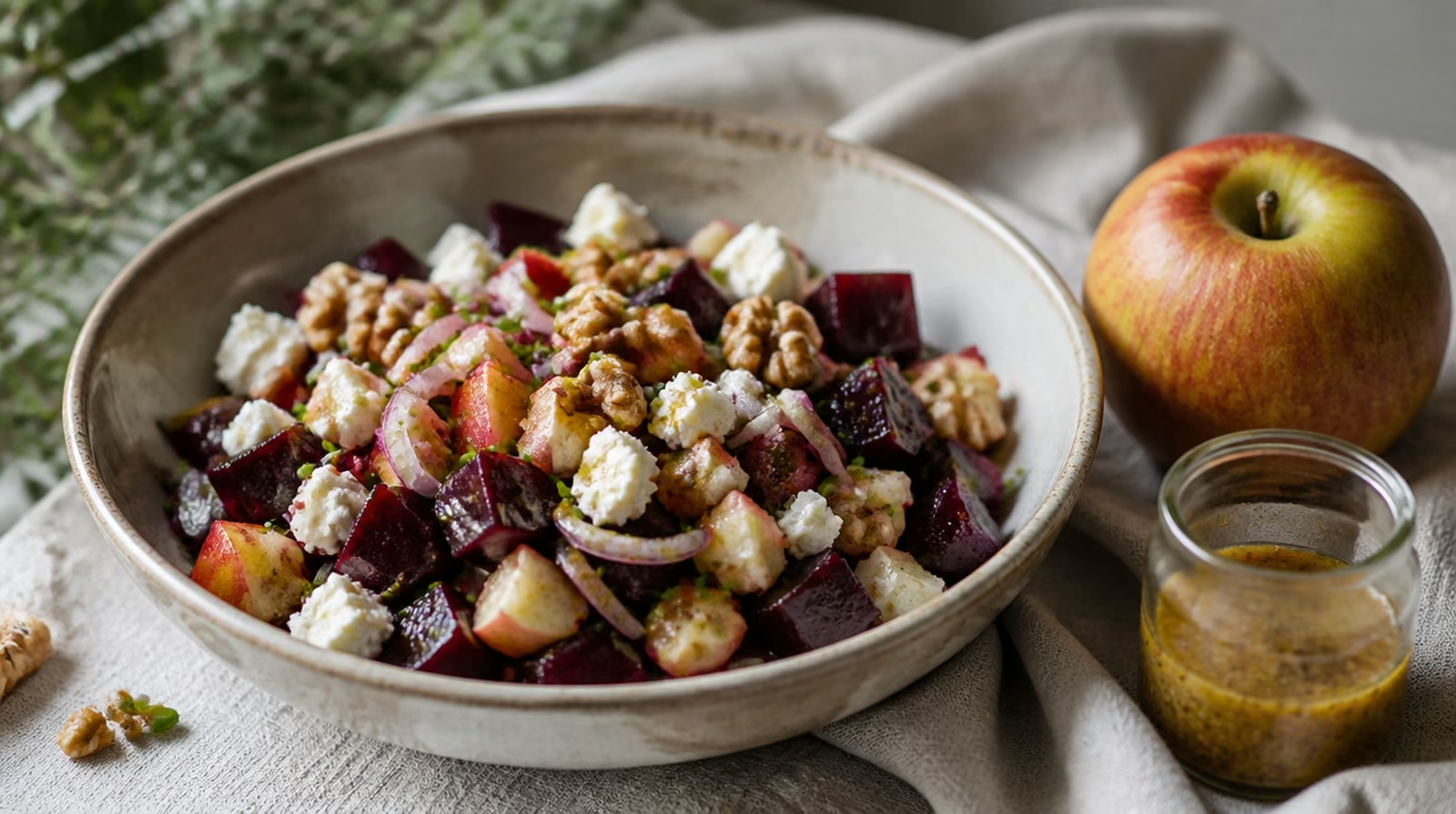
In French rustic cooking, combining beetroot and apple is a classic pairing – sucré-salé, sweet and savoury, with feta cheese providing the third note. A crisp beetroot apple salad simply tastes great, which is the obvious part. The more interesting story begins long after you have finished eating.
How much fibre per day? Daily fibre intake and digestion
Adults are advised to aim for a daily fibre intake of around 25 to 30 grams (with the NHS recommending 30g), yet the average UK intake sits at barely 20g. This fibre gap is no small matter, because fibre is far more than mere roughage – it is precisely what fuels the gut bacteria in your large intestine.
Beetroot brings around 2.5 grams of beetroot fibre per 100 grams, while an unpeeled apple provides roughly 2 grams. While not spectacular in sheer quantity, the real benefit lies in the variety.
Soluble fibre – such as the pectin in apples and a proportion of the fibre in beetroot – dissolves in water to form a gel. It slows stomach emptying, binds bile acids, and acts as a prebiotic fermented by gut bacteria in the colon. Insoluble fibre simply absorbs water, adding bulk to support healthy digestion and bowel transit.
Combining both types in a single meal is far more effective than doubling down on just one. That is exactly what this beetroot apple salad delivers.
Which organ is beetroot good for? Butyrate and colon health
When gut bacteria ferment pectin and similar soluble fibres, they produce short-chain fatty acids. The most crucial of these is butyrate.
Butyrate is the primary fuel source for the epithelial cells lining the gut, making it vital for colon health. These cells do not draw their nourishment directly from the bloodstream, but from the metabolic by-products of your own microbiome. A well-nourished gut lining maintains a tighter barrier – and an intact gut barrier prevents bacterial fragments from leaking into the bloodstream and triggering low-grade, systemic inflammation.
This is far from a niche topic. The link between a low-fibre diet, increased intestinal permeability, and low-grade inflammation has been one of the most rigorously researched areas in nutritional science over the last fifteen years.
The practical takeaway is straightforward: regularly eat a diverse range of plant foods, alongside wholegrains and pulses. A salad like this is a solid building block, not a miracle cure.
Keep the skin on
The majority of an apple’s pectin resides in and directly beneath the skin, alongside its protective polyphenols. Depending on the variety, peeling an apple strips away up to half of its total dietary fibre.
With beetroot, the reverse applies: while the skin is peeled after cooking because of its tough texture, leaving it intact during boiling or roasting prevents valuable nutrients from leaching out. You can find full step-by-step instructions in our guide to preparing beetroot.
The classic beetroot apple salad recipe
Serves 4
- 400g cooked beetroot
- 2 tart apples (such as Cox, Braeburn, or Bramley)
- 150g feta cheese
- 1 red onion
- 50g walnut halves
- 1 small bunch of fresh chives
Dressing:
- 3 tbsp olive oil
- 1 tbsp cider vinegar
- 1 tsp medium Dijon or English mustard
- 1 tsp honey
- Salt and freshly ground black pepper
Method: Cut the cooked beetroot and unpeeled apples into uniform cubes of about one centimetre. Finely dice the red onion. Shake the dressing ingredients together in a clean jam jar with a lid rather than whisking – the mustard creates a more stable emulsion that won’t separate.
Toss the diced apples in the dressing first before gently folding in the beetroot. The acid in the cider vinegar stops the apples from discolouring, while this order of assembly keeps them from turning instantly pink.
Lightly toast the walnuts in a dry frying pan. Finish the beetroot apple salad by crumbling over the feta cheese and scattering with freshly snipped chives.
Which apple variety to choose
Selecting the right apple is not merely a matter of taste. Overly sweet varieties like Gala or Golden Delicious tip the salad into cloying territory, as beetroot is already naturally sweet. You need crisp acidity to counterbalance it.
Boskoop, Cox, and Braeburn are ideal choices: pronounced acidity, firm bite, and they stay wonderfully crisp in the dressing. Elstar also works very well. Tart, traditional varieties also boast significantly higher polyphenol levels than sweeter dessert apples.
Why honey in the dressing makes nutritional sense
One teaspoon of honey across four servings amounts to just 1.5 grams of sugar per person. It achieves something mustard alone cannot: it rounds off the sharp acidity of the vinegar, allowing you to use far less added salt. That is a worthwhile trade-off, as keeping salt intake in check is the trickier balance in any recipe containing salty feta cheese.
If you prefer to omit the honey entirely, simply substitute it with a small piece of finely grated apple stirred directly into the dressing.
Estimated nutritional values per serving
| Per serving | |
|---|---|
| Energy | approx. 340 kcal |
| Protein | approx. 8 g |
| Fat | approx. 24 g |
| Carbohydrate | approx. 20 g |
| Fibre | approx. 6 g |
| Salt | approx. 1.2 g |
Providing six grams of dietary fibre, a single side serving covers roughly a fifth of your daily fibre intake. This is where the true beetroot and apple salad benefits lie.
What to do if your digestion is sensitive
A practical note rarely mentioned in recipe articles: if you suddenly ramp up your daily fibre intake, you may experience mild bloating or gas. This is not an intolerance; it is simply the adaptation phase as your gut bacteria adjust, typically settling within two to three weeks.
For those with irritable bowel syndrome (IBS), however, precautions are sensible. Apples are high in sorbitol and fructose, beetroot in larger quantities contains moderate FODMAPs, and raw onions are among the most common digestive triggers. Combining all three in one bowl can challenge a sensitive gut. In this case: omit the onion, halve the apple, and keep your portion size modest while enjoying your beetroot apple salad.
References
- Fotschki B, Napiórkowska D, Fotschki J et al.: Dietary Fibre Modulates Gut Microbiota Responses to Copper Nanoparticles. 2026. PubMed 41829998. DOI: 10.3390/nu18050828.
- Asayesh M, Nazarzadeh A, Jamshidi S et al.: Modulation of Gut Microbiota Through Dietary Fibers to Enhance Regulatory T Cell-Based Immunotherapy in GVHD Following Hematopoietic Stem Cell Transplantation. 2026. PubMed 42075029. DOI: 10.3390/nu18081216.
- Lai H, Li Y, He Y et al.: Effects of dietary fibers or probiotics on functional constipation symptoms and roles of gut microbiota: a double-blinded randomized placebo trial. Gut microbes 2023. PubMed 37078654. DOI: 10.1080/19490976.2023.2197837.
- Cronin P, Joyce SA, O’Toole PW et al.: Dietary Fibre Modulates the Gut Microbiota. Nutrients 2021. PubMed 34068353. DOI: 10.3390/nu13051655.
- Makki K, Deehan EC, Walter J et al.: The Impact of Dietary Fiber on Gut Microbiota in Host Health and Disease. Cell host & microbe 2018. PubMed 29902436. DOI: 10.1016/j.chom.2018.05.012.
- Holscher HD: Dietary fiber and prebiotics and the gastrointestinal microbiota. Gut microbes 2017. PubMed 28165863. DOI: 10.1080/19490976.2017.1290756.
- Koh A, De Vadder F,丢失 Kovatcheva-Datchary P et al.: From Dietary Fiber to Host Physiology: Short-Chain Fatty Acids as Key Bacterial Metabolites. Cell 2016. PubMed 27259147. DOI: 10.1016/j.cell.2016.05.041.