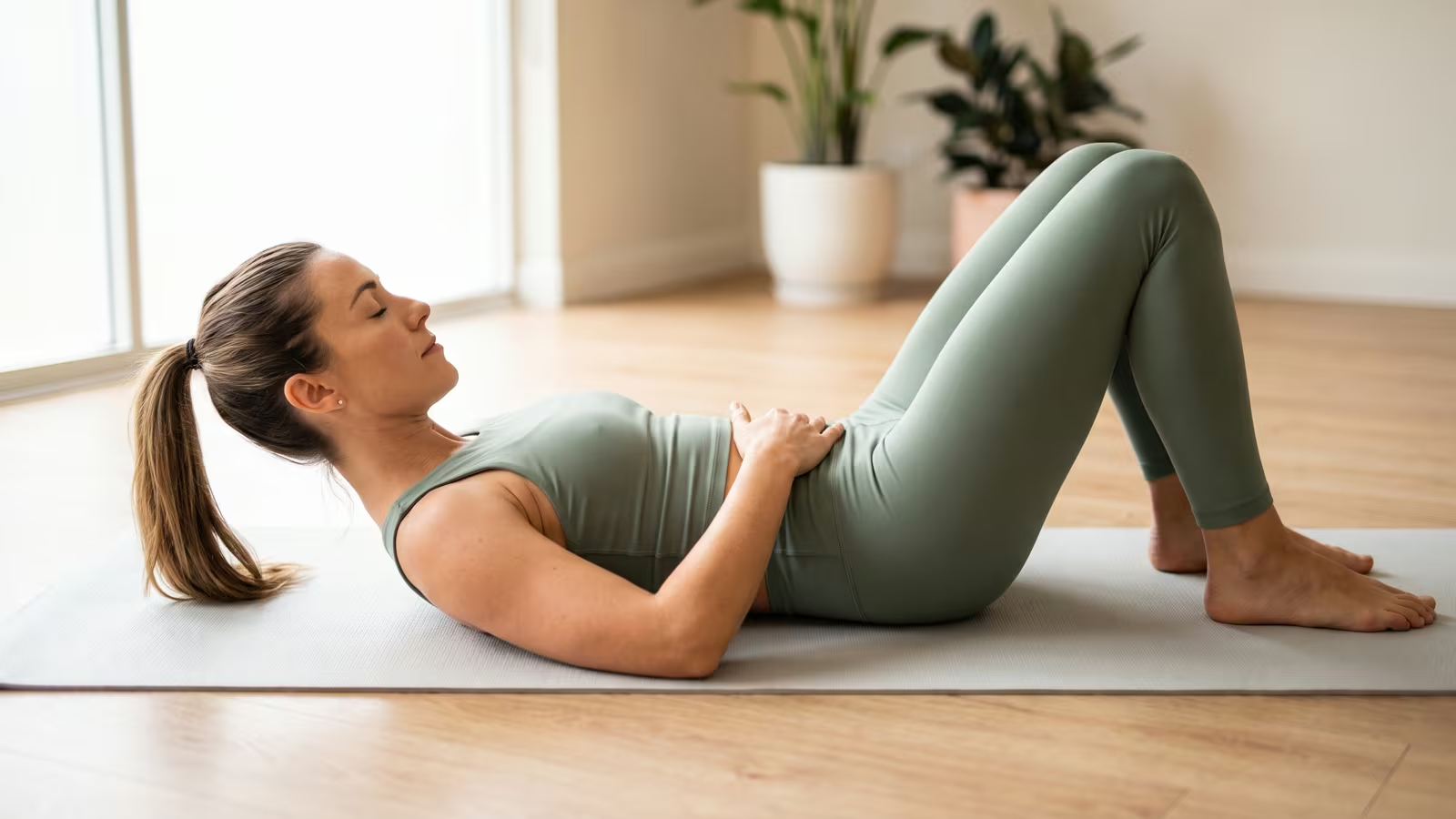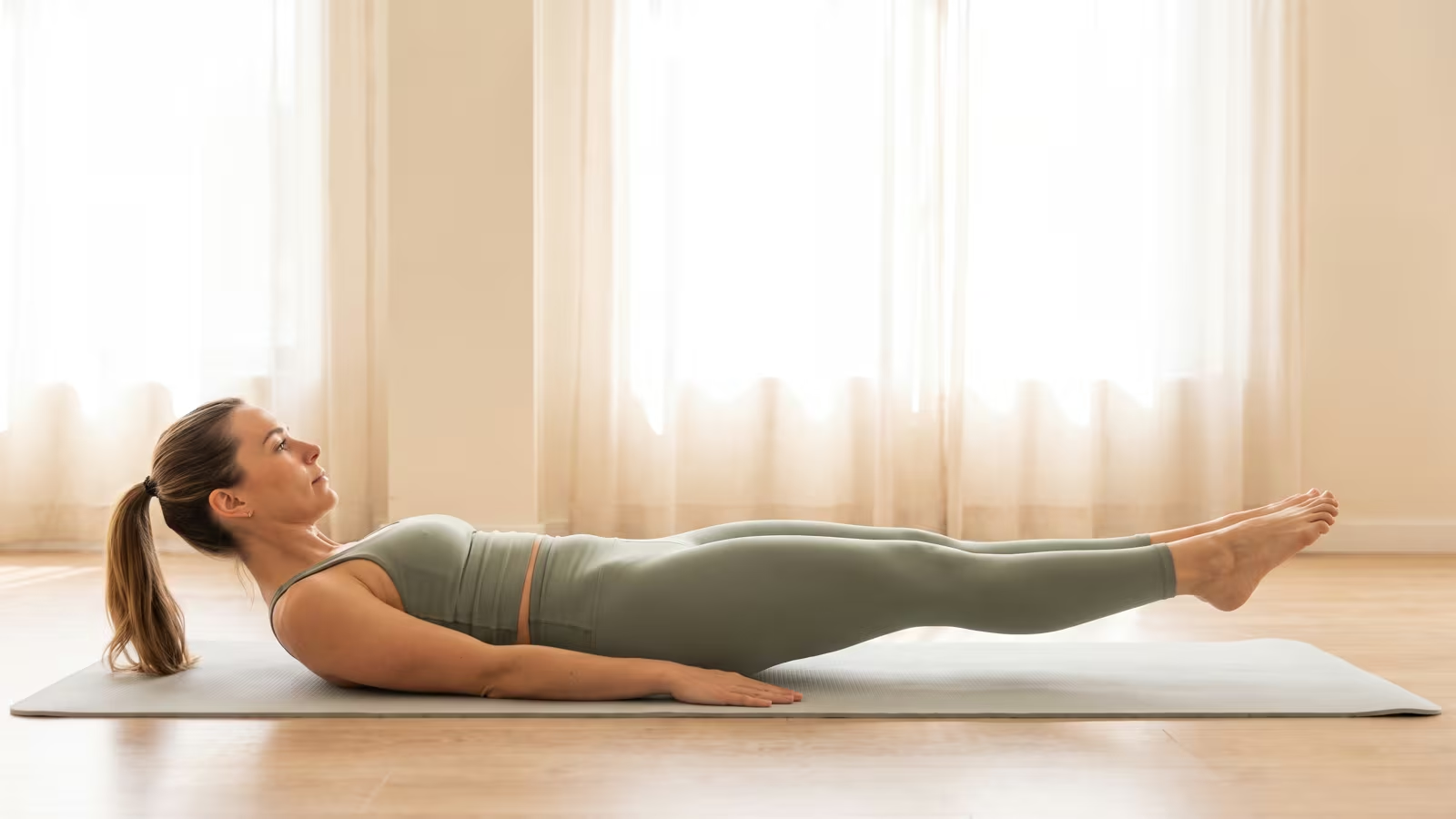
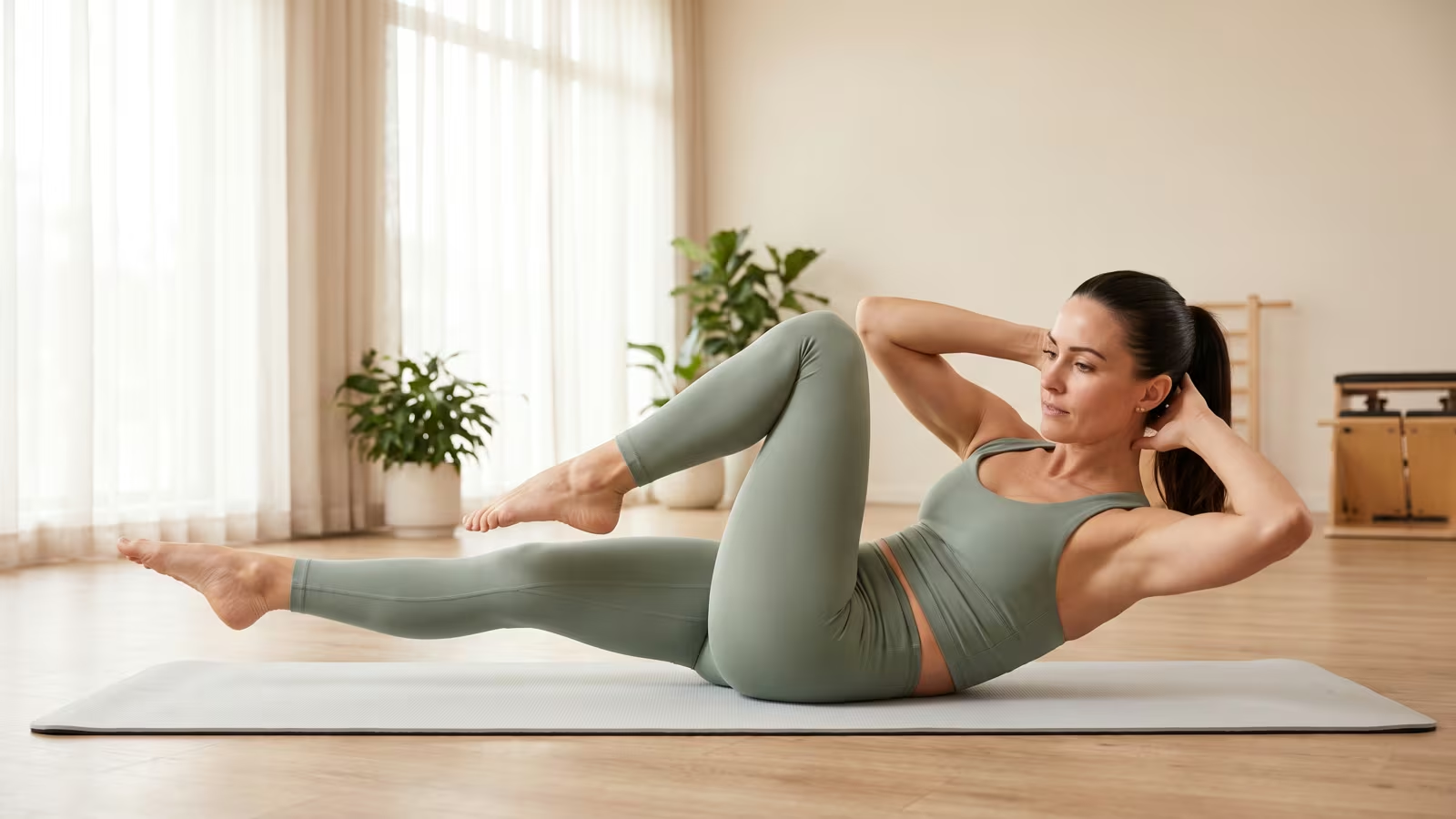
The criss cross pilates exercise is the classical answer to the bicycle crunch – far more controlled, deliberate, and with a precise focus on the oblique muscles. From a supine position on your mat workout, you rotate your upper body alternately towards the opposite knee whilst extending the other leg long and forwards. The emphasis lies on precision and breath coordination rather than momentum or speed. Here is how to perform the movement properly for effective waist sculpting and core strength.
Criss cross pilates benefits at a glance
- The criss cross exercise primarily strengthens the oblique muscles – the key muscles that shape and define the waistline.
- The rotation originates strictly from thoracic spine rotation whilst maintaining complete pelvic stability.
- The lower back remains firmly grounded on the mat – the lower the extended leg, the greater the demand on core control.
- A focused exhalation accompanies each rotation, reinforcing powerhouse engagement.
- Slow and controlled movement triumphs over rapid momentum – the quintessential Pilates difference.
What is a criss-cross in pilates compared to the bicycle crunch?
At first glance, both exercises appear very similar, yet their underlying focus is entirely distinct. The traditional bicycle crunch is frequently performed at high speed using momentum. In contrast, criss cross pilates prioritises foundational Pilates principles: measured core control, conscious breath coordination, and an unmoving, stable pelvis. Only the thoracic spine rotates whilst optimal lower back alignment against the mat is maintained throughout. As a result, the oblique muscles work far more effectively whilst safeguarding the spine. This makes the criss-cross a much more controlled, joint-friendly alternative.
How to do pilates criss cross: Step by step
Lie flat on your back, bring your legs into tabletop position, and place your hands lightly behind your head. Lift your head, neck, and shoulders off the mat and draw your navel towards your spine to initiate powerhouse engagement. Exhale and rotate your upper torso to the right whilst extending your left leg long and forwards – your right shoulder points towards the left knee. Inhale as you return through centre, then switch smoothly to the other side. Key points: your gaze follows the rotation, your lower back stays grounded, and your pelvis does not wobble or shift.
Common mistakes in the criss cross exercise
The most frequent mistake is rotating from the elbows: simply pulling an elbow across towards the knee fails to rotate the trunk properly. The movement must originate from thoracic spine rotation. Another common error is an arching lower back, particularly when extending the leg too low towards the floor – in this case, keep the leg elevated higher towards the ceiling. Moving with excessive speed and pulling on the neck are equally typical. With criss cross pilates, the essential rule is: slow, controlled precision with an active exhalation on every single turn.
Variations for beginners and advanced practitioners
For beginners, keep the extended leg angled higher towards the ceiling with a slightly softer bend in the knee – this protects lower back alignment. As your core strength improves, lower the extended leg closer towards the floor, which substantially increases the lever length and abdominal tension. For a deeper challenge, pause and hold each rotation for two to three seconds. The criss-cross pairs seamlessly with the Russian twist and the side plank to deliver a comprehensive waist sculpting routine.
How often and how many repetitions?
Aim for 2 to 3 sets of 16 to 20 rotations (8 to 10 per side). Because the exercise is performed with strict core control, it is remarkably effective despite the manageable repetition count. Training two to three days per week is ideal for strengthening the oblique muscles. Pay close attention to breath coordination: ensure each exhalation coincides with a rotation and pulls the navel inwards. This ensures your workout remains authentic Pilates rather than frantic, rushed cycling.
Summary
The criss-cross is the mindful Pilates evolution of the bicycle crunch and a superb tool for achieving a toned, sculpted waist. The secret lies in thoracic spine rotation, grounded pelvic stability, and conscious breath coordination. When you move slowly and with precision, you will feel the oblique muscles engaging on every repetition. Include two to three sets of criss cross pilates in your next session – move slowly, exhale with each rotation, and feel the difference.
Frequently asked questions
Which muscles does the criss cross exercise target?
It primarily strengthens the oblique muscles, alongside the rectus abdominis and deep core stabilisers, delivering targeted waist sculpting.
What is the difference between the criss cross and the bicycle crunch?
The criss cross reinforces core Pilates principles: deliberate core control, breath coordination, and a stable pelvis. The bicycle crunch is typically executed much faster using momentum.
How do I breathe correctly during the criss cross?
Exhale with each rotation whilst drawing your navel towards your spine to reinforce powerhouse engagement. Inhale as you transition back through centre. Your breathing dictates the rhythm.
Why does my lower back arch away from the mat?
This occurs when the extended leg is lowered too close to the floor. Keep the leg angled higher towards the ceiling until your lower back rests completely flat on the mat again.
Is the criss cross suitable for beginners?
Yes, by holding the extended leg higher with a soft knee bend and maintaining a measured pace. This protects the lower back and keeps the movement fully controlled.
How many criss-cross repetitions should I perform per session?
2 to 3 sets of 16 to 20 rotations on two to three days per week is a reliable guide. Movement quality always takes priority over quantity.
Does the criss cross help get rid of love handles?
It strengthens and firms the oblique muscles underneath. However, visible definition requires a balanced diet alongside training, as targeted spot fat reduction is not physiologically possible.
Does the criss cross strain the neck?
Only if you pull on your head with your hands. Your fingertips should merely support the head. Keep the back of your neck long and channel all effort into your abdominal muscles.