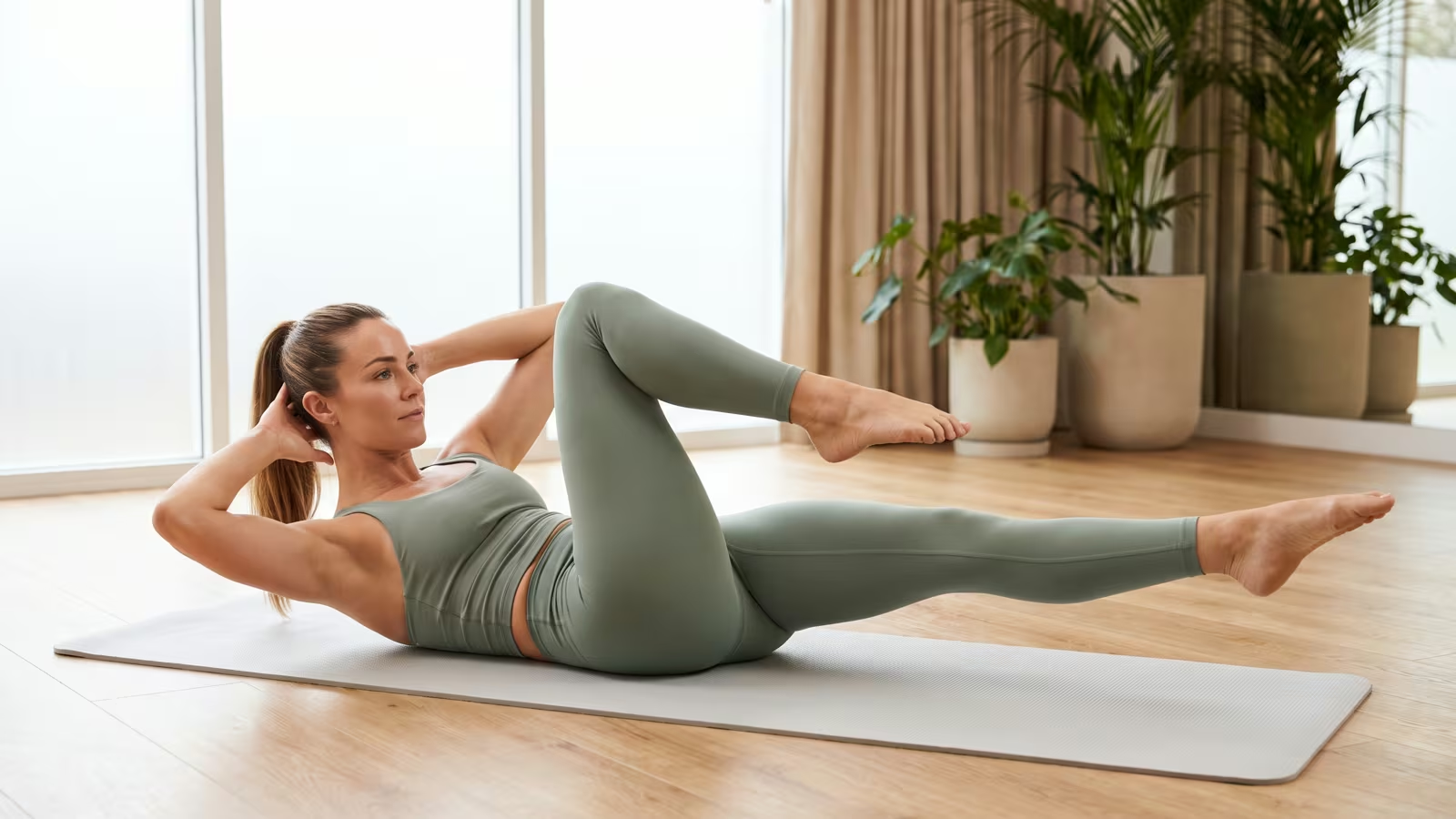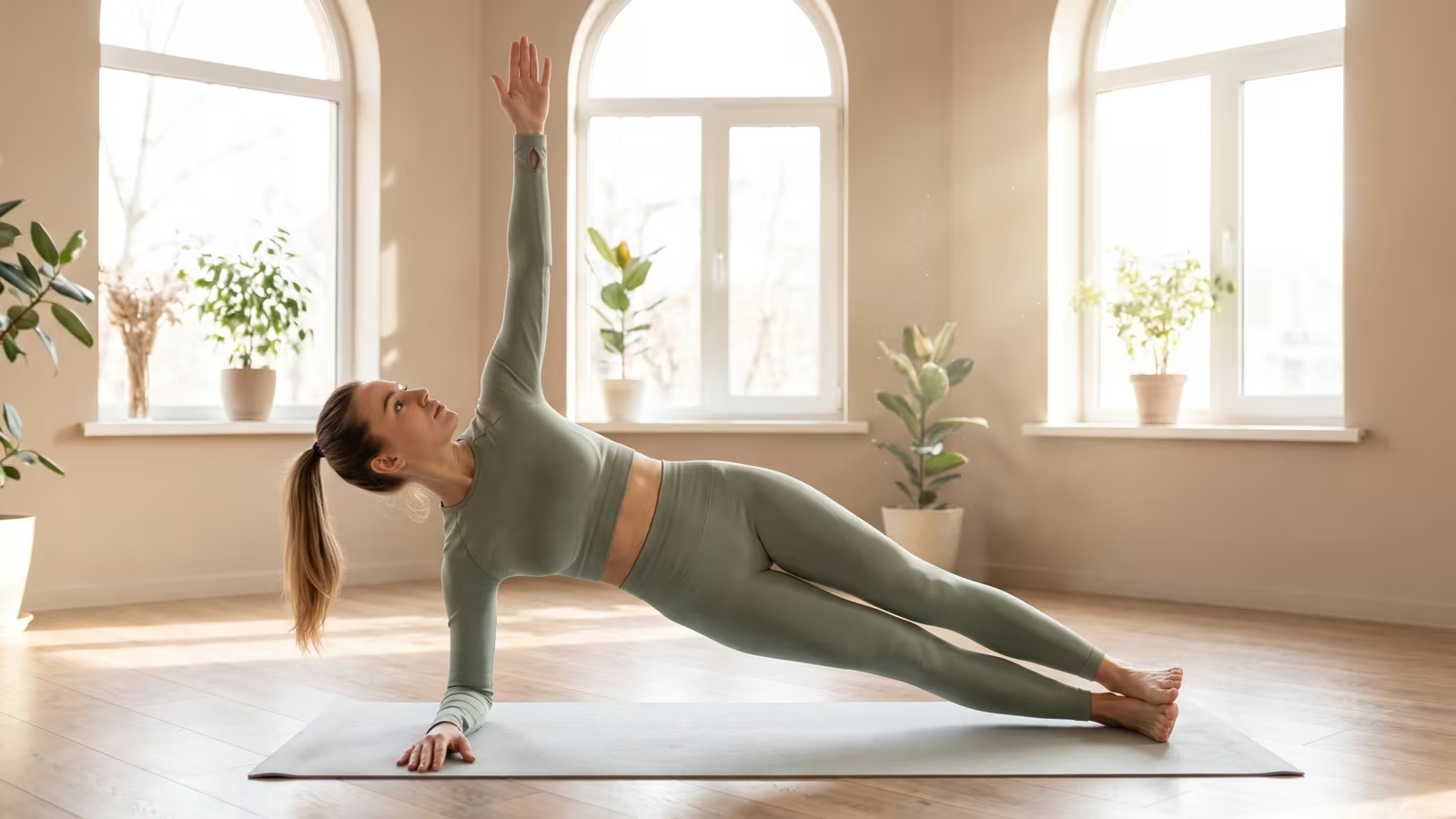
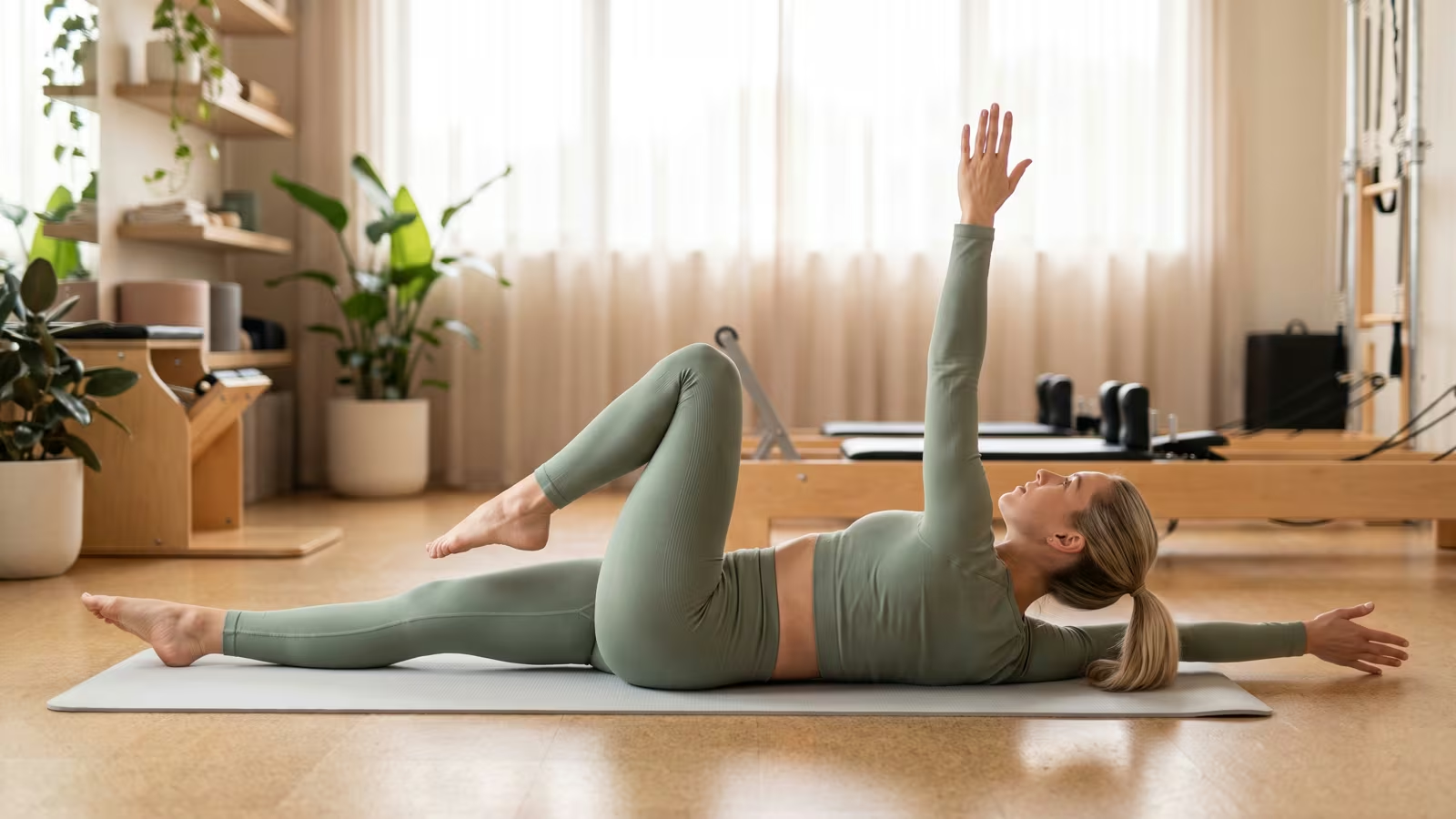
The dead bug exercise looks harmless, yet it is one of the most effective movements for building a strong, stable core. Lying flat on your back, you move your opposite arm and leg in a controlled contralateral movement whilst keeping your midsection completely still. It is precisely this core stability and control that makes the exercise so valuable: it strengthens the deep abdominal muscles and supports the pelvic floor without placing excessive strain on the lumbar spine. Consequently, it is ideal for beginners, those managing lower back pain, and women undergoing postnatal rehabilitation.
Key Takeaways
- The dead bug exercise targets the deep abdominal and core stabilisers whilst remaining exceptionally gentle on the back.
- Maintaining a neutral spine with your lower back pressed firmly against the mat is the single most crucial element of the movement.
- Arms and legs move slowly in opposite pairs, keeping the trunk perfectly still and preventing anterior pelvic tilt.
- Ideal for beginners, individuals with lower back pain, and postnatal recovery, as it requires no spinal flexion or crunching.
- Quality over speed: perform fewer, controlled repetitions rather than rushing and allowing your back to arch.
Dead Bug Exercise Muscles Worked: What Is It and How Does It Work?
The dead bug is an anti-extension exercise: your primary goal is not to create movement, but to resist it. As your opposite arm and leg lower towards the floor, your deep core musculature—particularly the transverse abdominis—must actively brace to keep the pelvis and lumbar spine stable. This trains the exact muscles responsible for maintaining a neutral spine and promoting healthy posture in everyday life. Because your head remains supported on the floor without curling upwards, your neck stays relaxed and your intervertebral discs are protected from undue pressure.
How to Do Dead Bug Exercise: Step by Step
Lie flat on your back on an exercise mat and bring your legs into a tabletop position: knees stacked directly above your hips with your shins parallel to the floor. Extend your arms straight up towards the ceiling, perpendicular to your torso. Gently draw your navel towards your spine and actively press your lower back into the mat—maintain this core engagement throughout the entire set. Now, slowly lower your right arm back overhead whilst extending your left leg forward until both limbs are hovering just above the floor. Return smoothly to the starting position, then repeat on the opposite side. Exhale as you lower your limbs, ensuring your lower back does not lift by even a millimetre.
How to Do Dead Bugs Correctly: Common Mistakes to Avoid
The most critical error is allowing your lower back to arch away from the floor: the moment your lumbar spine loses contact with the mat, your back muscles take over and you lose the recruitment of the transverse abdominis. Always limit your range of motion to the point where your back remains completely flat. Another common mistake is moving too quickly—this movement relies entirely on slow, deliberate control. Holding your breath is also frequent; breathe continuously, exhaling as you extend your limbs and inhaling as you return to centre. Paying attention to these cues ensures your deep abdominals work to their full potential.
Variations: Regressions and Progressions
If you are a beginner, you can simplify the movement by keeping your arms resting beside your body and moving only your legs—or by lowering just one arm or one leg at a time. Once the standard version feels comfortable, you can increase the challenge by moving even more slowly, pausing for two seconds in the extended position, or holding light dumbbells in your hands. Fully extending the knees throughout the movement also lengthens the lever arm and increases the demand on your core. The movement pairs brilliantly with toe taps and the standard plank.
Dead Bug Exercise Benefits: Who Is It Suitable For?
Very few core movements offer such versatility. Because it involves no spinal flexion or neck strain, it is exceptionally well suited to beginners, people experiencing lower back pain, and women in postnatal rehabilitation recovering from diastasis recti (once cleared by a GP or physiotherapist). It also offers a safe, low-impact route to core strength for adults over 50. Even advanced athletes routinely utilise the movement as an activation drill to prime the deep stabilisers before heavy lifting or high-intensity training.
Summary
The dead bug demonstrates that an effective abdominal exercise does not need to involve aggressive movement. Contralateral limb extension paired with a stable torso engages the precise musculature needed to safeguard the spine and improve overall posture, all without stressing the joints. The secret lies in maintaining a flat lower back and moving with slow, deliberate precision. Incorporate this movement into your routine as a gentle foundation for your core training—it provides the ideal base for more demanding exercises.
Frequently Asked Questions
Which muscles are targeted by the dead bug?
It primarily recruits the deep abdominal wall (especially the transverse abdominis), the pelvic floor, and the spinal stabilisers. These muscles work synergistically to stabilise the pelvis and lumbar spine whilst the limbs move.
Is the dead bug good for lower back pain?
Yes, it is widely regarded as one of the most spine-friendly core exercises because it maintains a supported, neutral lumbar spine without crunching. If you have acute pain, consult a GP or physiotherapist before starting.
How many repetitions should I do?
Aim for 2 to 3 sets of 8 to 12 repetitions per side. Maintaining continuous contact between your lower back and the mat is far more important than hitting a specific repetition count.
Can I use the dead bug exercise for diastasis recti during postnatal recovery?
It is frequently recommended during postnatal rehabilitation because it strengthens the deep core without placing outward intra-abdominal pressure on the midline. Obtain medical clearance first and begin with supported regressions.
Why does my lower back arch off the mat?
This usually happens when you lower your arm and leg too far for your current core strength. Reduce your range of motion so your lower back remains anchored to the floor throughout the entire movement.
Is this exercise suitable for beginners?
Yes, it is an excellent starting point. Begin by moving only the legs or only the arms, and progress to the full contralateral movement once you can maintain proper form.
How often should I perform it?
Two to three sessions per week are sufficient to see notable improvements in core stability. You can also use it as a brief warm-up drill before workouts.
How should I breathe during the exercise?
Exhale as you extend your opposite arm and leg away from your centre, and inhale as you return to tabletop. Avoid holding your breath, as steady breathing helps maintain deep abdominal bracing.