The side plank is one of the most effective bodyweight exercise movements for sculpting the waist and building lateral core stability. By resting on your forearm support and lifting your hips until your body forms a straight line, what sounds simple actively challenges the entire lateral muscle chain. Here is how to master the side plank exercise with clean technique – from gentle modifications to challenging advanced variations.
Key takeaways
- The side plank primarily strengthens the oblique muscles and lateral core musculature.
- The body maintains proper hip alignment in a straight line from head to heels – without the pelvis sagging or twisting.
- Keep your shoulder away from your ear, with the supporting elbow positioned directly beneath the shoulder girdle.
- Beginners can start supported on their knees, whilst advanced athletes can lift the top leg or arm.
- Quality over duration: 20 to 30 seconds of pristine form delivers far more value than a minute with sagging hips.
Side plank benefits: which muscles are worked?
This core exercise targets the oblique muscles and the quadratus lumborum, which plays a pivotal role in lateral core stability. In addition, the shoulder girdle and gluteus medius work continuously to maintain balance and proper hip alignment. Crucially, the side plank relies on an isometric hold rather than dynamic movement. This fosters deep spine stabilisation to support twisting and lifting in daily life, whilst helping to prevent uneven muscular tension across the lower back.
How to do a side plank: step-by-step guide
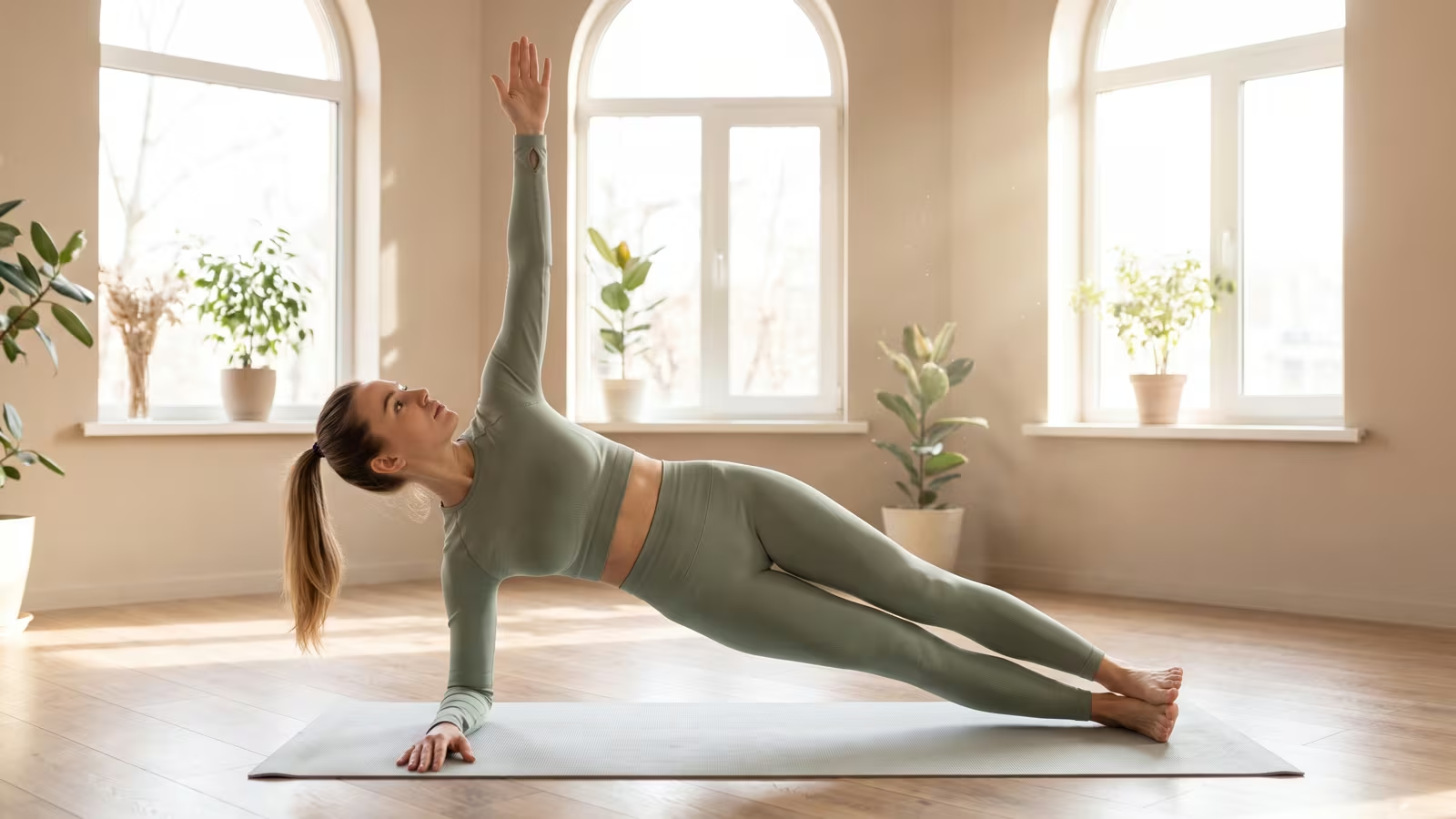
Lie on your side with your weight rested on your lower forearm, positioning the elbow directly beneath your shoulder. Keep your legs extended and stacked. Draw your navel gently inwards, brace your core, and lift your hips off the floor until your head, pelvis, and feet form a straight line. Consciously keep your shoulder away from your ear and maintain a long neck. Breathe steadily and hold the position. Switch sides afterwards, ensuring you train both sides for the exact same duration.
Common side plank mistakes to avoid
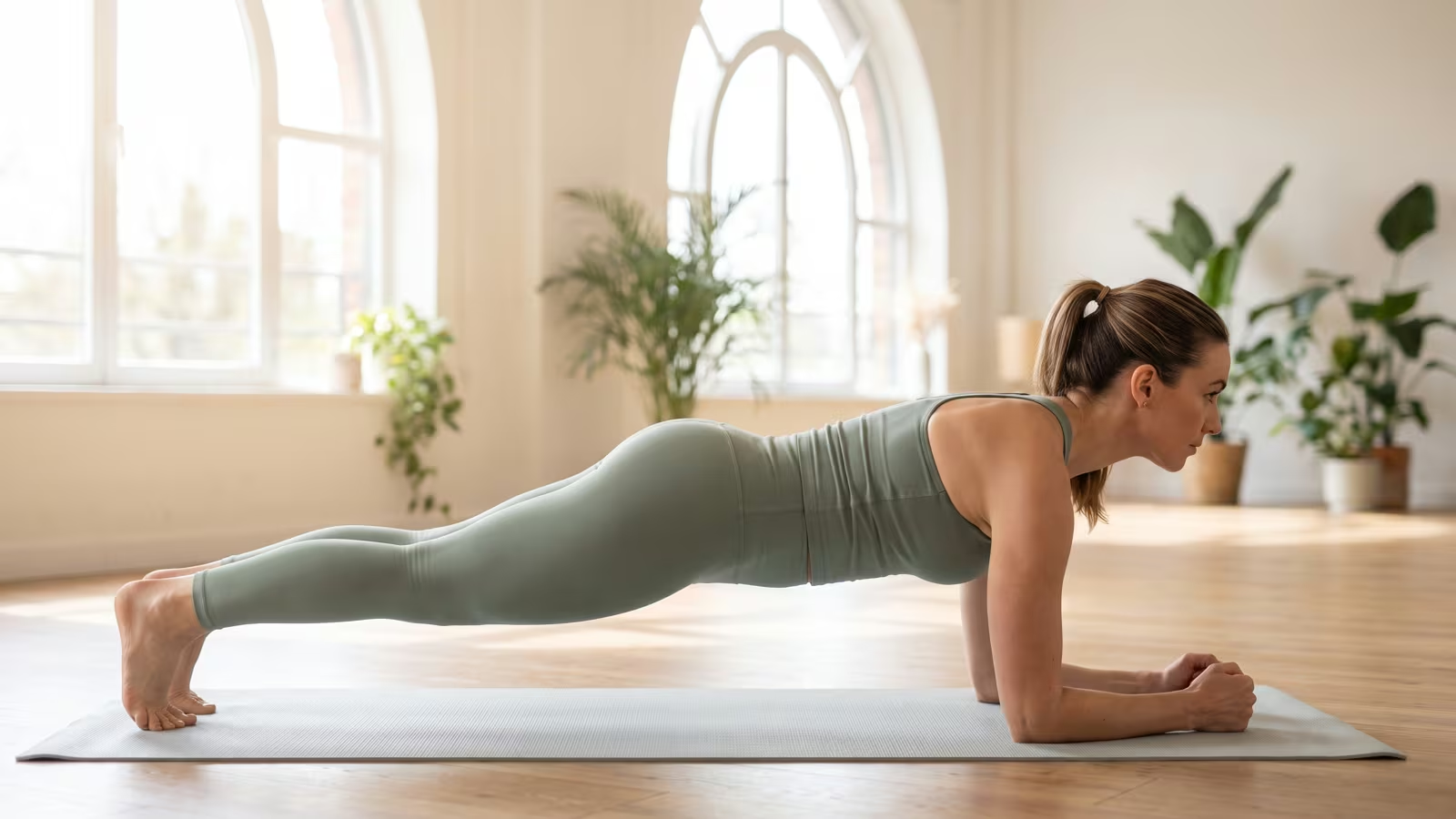
The most frequent mistake is sagging hips: when the pelvis drops towards the floor, the oblique muscles lose tension. Equally detrimental is a pelvis tilted forwards or backwards – your body should remain aligned in a single vertical plane. A hunched shoulder is also common and places unnecessary strain on the neck; actively press the floor away and keep the shoulder blade down. Finally, it is far better to end the hold as soon as your alignment breaks down than to grind through poor form.
Side plank exercise for beginners and advanced variations
As a side plank exercise for beginners, the modified knee version is ideal: bend your knees on the floor so you only lift your torso, significantly shortening the lever. Once the standard version feels comfortable, you can raise your top leg, extend your top arm towards the ceiling, or combine the hold with dynamic hip dips. Gently lowering and raising the pelvis adds a powerful dynamic element. The side plank pairs brilliantly with the standard plank and the Russian twist.
How long should you hold it and how often should you practise?
To start, aim for 2 to 3 sets of 20 to 30 seconds per side. Only increase the duration once you can maintain a flawless straight line throughout the entire hold. Two to three sessions per week are plenty to build noticeable lateral core strength. Always train both sides equally to prevent muscular imbalances. To progress, extend the hold time in small increments or switch to dynamic variations.
Summary
The side plank is unmatched when it comes to waistline definition and robust core strength. The key lies in maintaining a clean, straight line with elevated hips and a stable shoulder. Because the movement is so adaptable, it suits every fitness level – from a gentle knee modification to an advanced star plank. Aim for two to three sets per side in your next workout, and gradually build up your holding time week by week.
Frequently asked questions
Which muscles does the side plank exercise target?
Primarily the oblique muscles and lateral core stabilisers, alongside the shoulder girdle and gluteus medius. It delivers essential lateral core stability.
How long should you hold a side plank?
Holding for 20 to 30 seconds per side with pristine form is a solid benchmark. A shorter, well-executed hold is far more beneficial than a longer one with sagging hips.
Is the side plank suitable for beginners?
Yes, particularly using the knee variation. Keeping the knees on the floor supports the lower body and shortens the lever, making it much more manageable.
Why does my shoulder hurt during a side plank?
This usually happens when the shoulder is hunched towards the ear or the elbow is not aligned directly beneath the shoulder joint. Stack your elbow under your shoulder and actively push the floor away.
How often should I do side planks?
Two to three times a week is sufficient. Always train both sides for equal durations to prevent muscular imbalances.
Do side planks help get rid of love handles?
They strengthen and tone the underlying oblique muscles. However, visible definition requires a calorie deficit through a balanced diet, as targeted spot fat reduction is not possible.
What should I do if my hips keep sagging?
Shorten your holding time or switch to the knee variation. Consciously engage your oblique muscles and actively drive your pelvis upwards.
Are side planks good for lower back pain?
They are widely considered back-friendly because they promote spine stabilisation with minimal spinal compression. If you have acute pain, consult a doctor or physiotherapist before trying them, and start with the knee modification.