
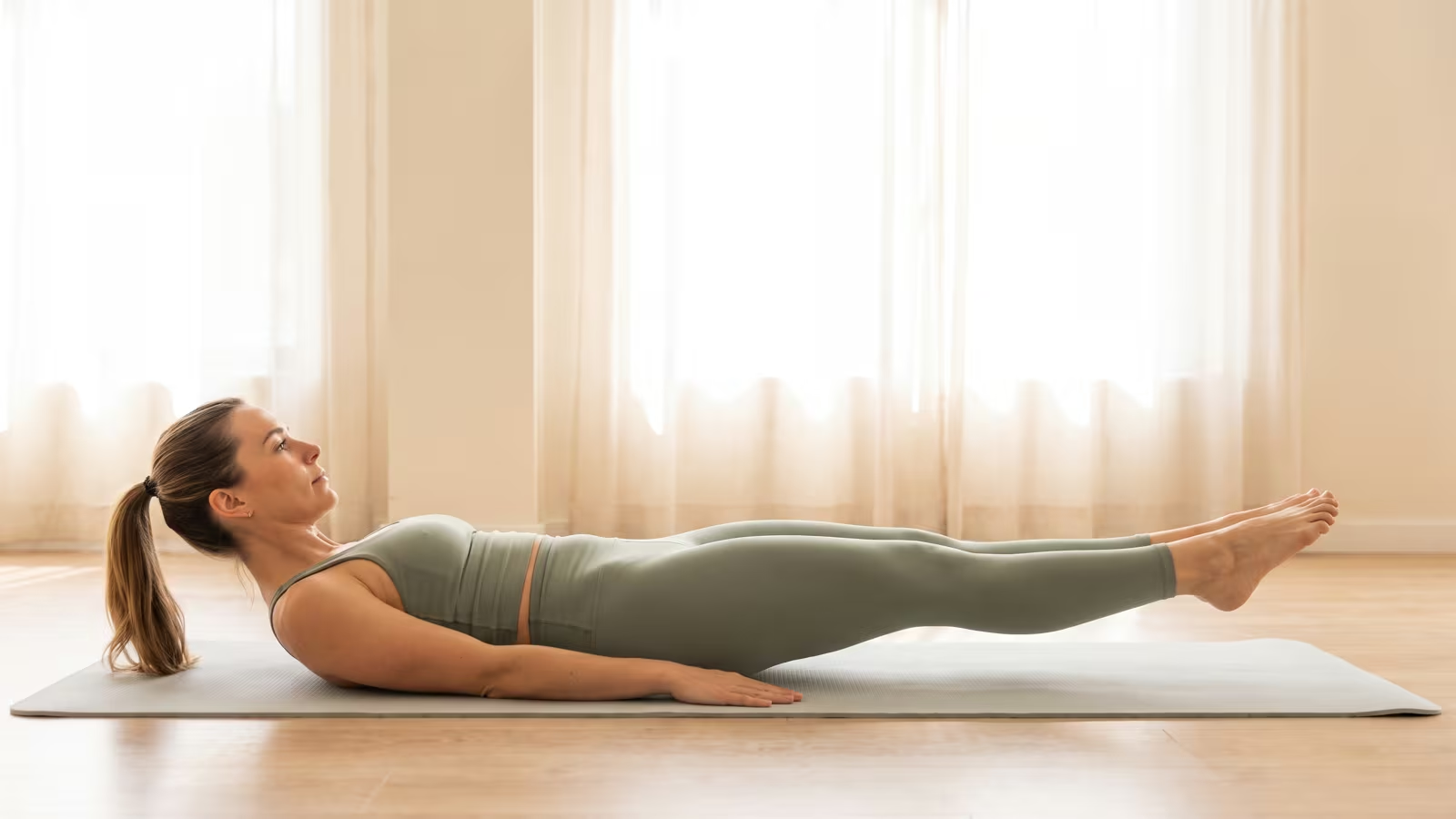
The lower stomach is often considered the most stubborn area – and one that many core exercises barely reach. This is precisely where lying leg raises come into their own. Lying flat on your back, you lower and raise your extended or bent legs whilst your core controls the movement. This targets the lower portion of the rectus abdominis like few other exercises can. Here is how to perform this mat exercise without arching your back and compromising spinal neutral – complete with variations for every fitness level.
Key takeaways
- Leg raises specifically target the lower abdominals whilst recruiting the hip flexors.
- Keeping your lower back pressed into the mat is the single most crucial factor in avoiding spinal strain.
- The straighter your legs and the lower they descend, the more demanding the exercise becomes.
- Beginners can raise one leg at a time or use a bent-knee variation.
- Lowering the legs slowly is essential – that eccentric phase is where the true muscular work happens.
Lying leg raises muscles worked
Leg raises primarily target the lower section of the rectus abdominis – an area rarely stimulated effectively by standard crunches. Because an anatomically distinct “lower abdominal muscle” does not exist, the movement focuses on the lower neuromuscular activation of the rectus abdominis. In addition, the hip flexors work dynamically, whilst the deep abdominal muscles must contract to stabilise the pelvis against anterior pelvic tilt. It is this intense stabilising demand that builds genuine core strength: it strengthens the exact muscles responsible for a firm lower abdomen and a well-supported pelvis.
How to do leg raises properly: step by step
Lie flat on your back with your arms alongside your body and your palms facing down. Extend your legs towards the ceiling so they are perpendicular to the floor. Draw your navel towards your spine and consciously press your lower back into the mat to find spinal neutral. Now, lower your straight legs in a slow, controlled manner towards the floor – only going as low as you can whilst maintaining hollow body tension and keeping your back firmly flat. Just before your heels touch the floor, raise your legs back up to the starting position. Exhale as you lower down, ensuring you maintain pelvic stability throughout the entire movement.
Common mistakes when performing leg raises
The most hazardous mistake is arching the lower back: as soon as the lumbar spine lifts off the floor during the descent, the hip flexors pull directly on the lumbar vertebrae – which can lead to strain and discomfort. The rule of thumb is simple: only lower your legs as far as your back remains completely flat. Another common fault is relying on momentum by swinging the legs upwards; the movement should always be slow and strictly controlled. Holding your breath is equally widespread. If you feel unsteady, placing your hands beneath your glutes will help stabilise the pelvis.
Variations: easier and harder progressions
For beginners, raising and lowering one leg at a time or opting for a bent-knee variation significantly reduces the lever length. Lowering your legs only halfway is another effective option for novices. Once the exercise feels too easy, straighten your legs fully and lower them closer to the floor. Advanced exercisers can pause briefly at the bottom or incorporate a slight pelvic lift at the top. Leg raises pair brilliantly with toe taps and scissor kicks for a well-rounded lower-ab workout.
Sets and reps: how often should you train?
For beginners, 2 to 3 sets of 8 to 12 repetitions are ideal. Because leg raises are demanding and place high demands on pelvic control, movement quality is paramount. The moment your lower back arches off the mat, that set is finished. Training two to three times a week is plenty. Keeping your lower back flat on the floor throughout the entire movement is far more important than rapid progression – only lower your legs deeper or straighten them further once you can do so with flawless technique.
Lying leg raises benefits: final verdict
Lying leg raises are the definitive exercise for targeting the frequently neglected lower abdominals. The decisive element is pelvic control: as long as your lower back stays flush against the mat, you train safely and effectively. With the right progressions, the exercise is suitable for complete beginners and advanced athletes alike. Incorporate leg raises into your core routine – start with bent knees and advance once your pelvis remains rock solid.
Frequently asked questions
Which muscles do leg raises work?
Primarily the lower region of the rectus abdominis alongside the hip flexors. The deep core musculature works continuously to stabilise the pelvis.
Are lying leg raises bad for your back?
Only if performed with poor technique. As soon as the lower back lifts off the mat, excessive stress is placed on the lumbar spine. Provided your back stays flat, the exercise is safe. If you have pre-existing back issues, consult a GP or physiotherapist beforehand.
Is there a distinct lower abdominal muscle?
Not as an anatomically separate muscle. The rectus abdominis is a single continuous muscle, but leg raises place greater neuromuscular demand on its lower section.
How many reps should I do for leg raises?
2 to 3 sets of 8 to 12 reps are sufficient. Maintaining a flat back throughout the full movement is far more important than chasing high numbers.
How can I make leg raises easier?
Raise one leg at a time, use a bent-knee variation, or only lower your legs halfway. Placing your hands under your glutes provides additional pelvic stability.
Why does my lower back arch during leg raises?
This happens when you lower your legs beyond what your abdominal strength can support, causing anterior pelvic tilt. Shorten your range of motion until you can keep your back firmly on the floor.
Are lying leg raises for abs effective for losing belly fat?
They strengthen and develop the lower abdominal muscles. However, losing lower belly fat also requires a balanced diet and an overall calorie deficit – exercises alone cannot spot-reduce fat.
How should I breathe during leg raises?
Exhale as you lower your legs and inhale as you raise them back up. Rhythmic breathing helps maintain intra-abdominal pressure and pelvic control.