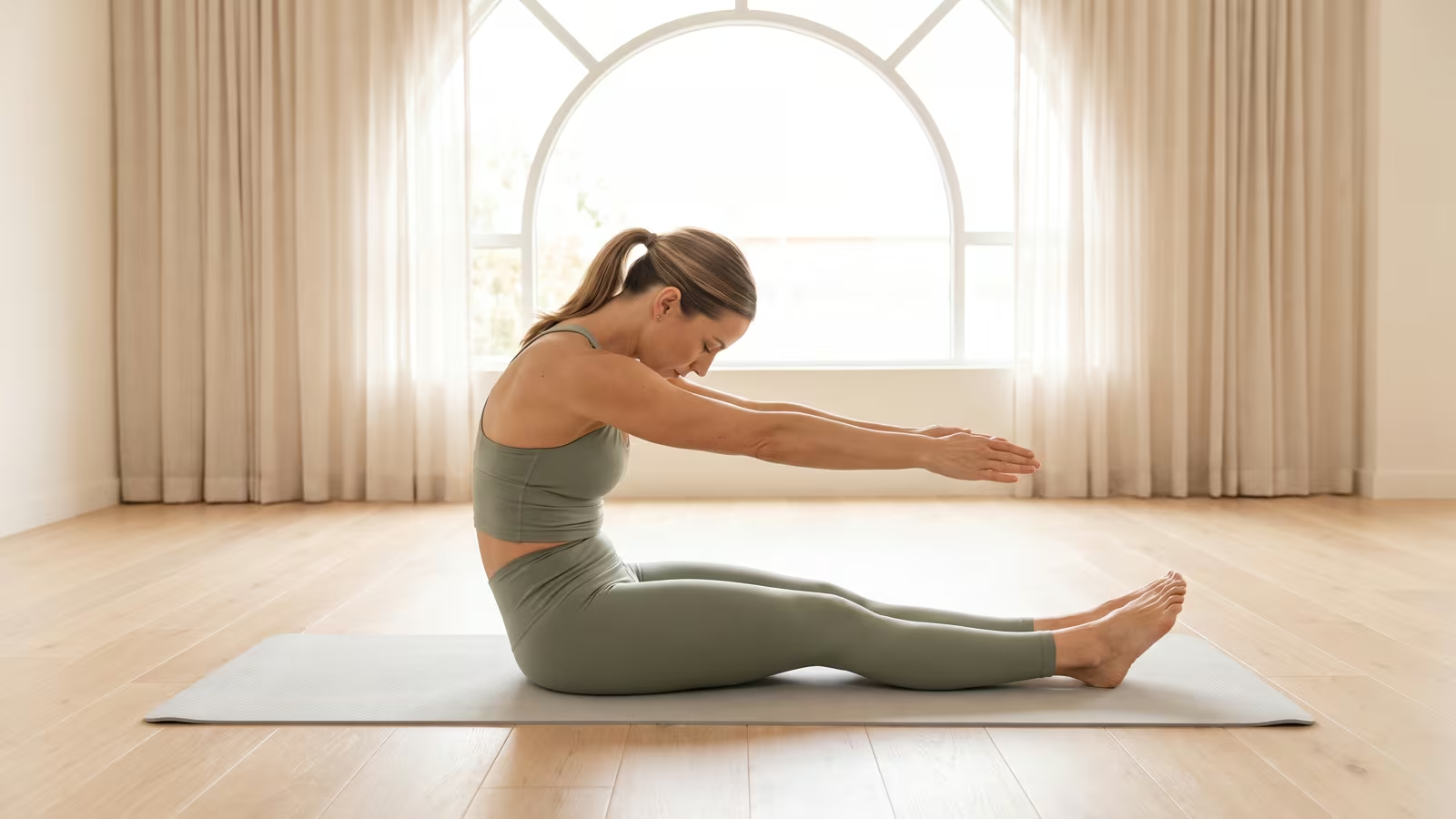
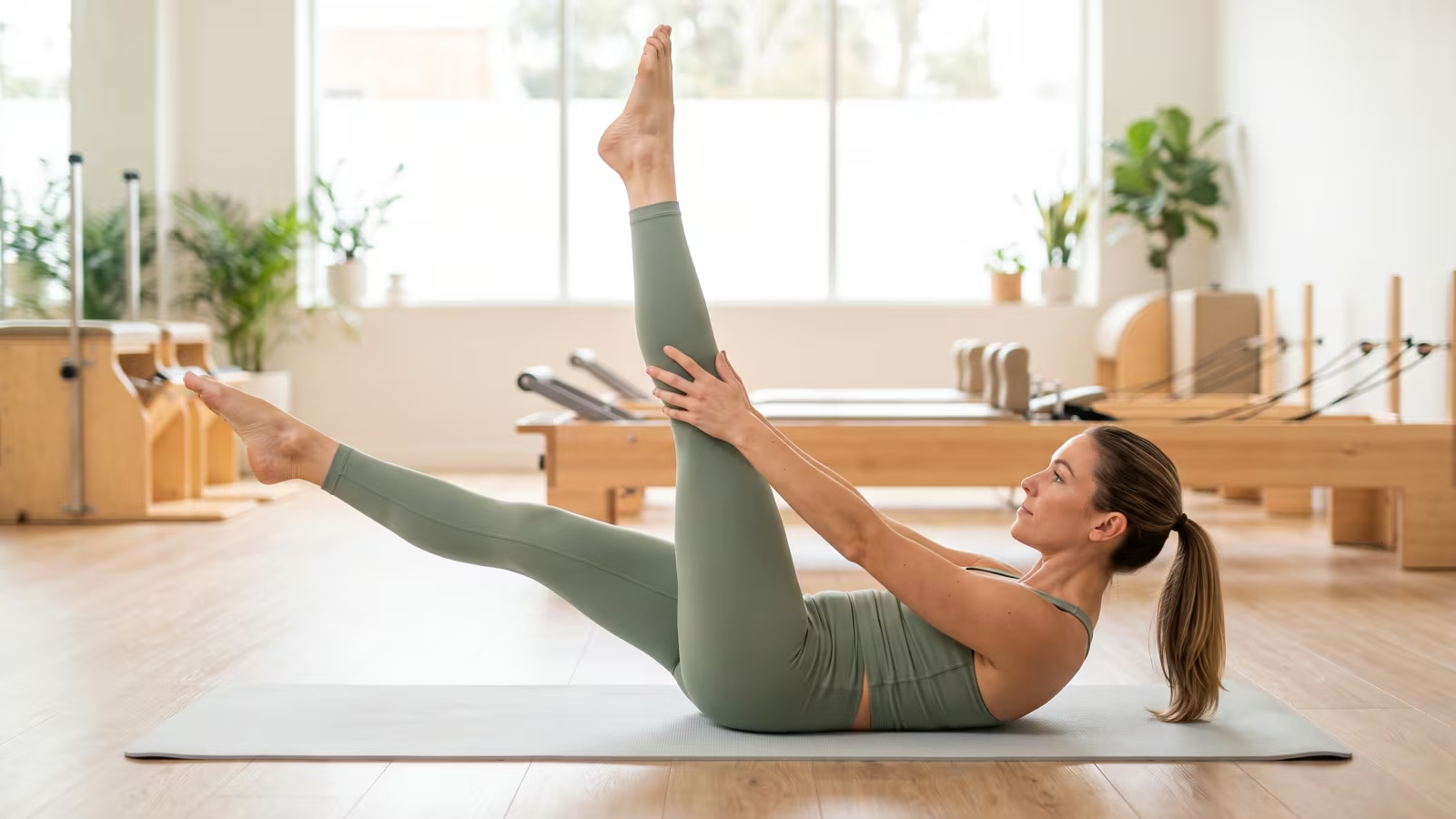
The scissor exercise – widely known as pilates scissors – strengthens the lower abdominal muscles and stretches the back of the legs in one fluid movement. Starting in a supine position, you extend both legs towards the ceiling and open them alternately in a scissor-like motion, gently drawing the upper leg towards you. This builds core stability whilst simultaneously improving hamstring flexibility. Here is how to perform the scissor exercise correctly – maintaining spinal alignment and a strong, stable core.
Key Takeaways in Brief
- The scissor exercise targets the lower abdominal muscles whilst actively stretching the hamstrings.
- The lower back stays flat on the mat – the lower the bottom leg goes, the more demanding the movement becomes.
- The legs switch in a controlled scissor motion, never using momentum.
- Beginners should keep their legs higher and slightly bent, leaving the head resting on the mat.
- Movement originates from the core to ensure optimal pelvic stability.
Scissor Kicks Muscles Worked: What Does the Exercise Target?
The exercise primarily challenges the lower section of the rectus abdominis and the deep core stabilisers, which maintain pelvic stability whilst the legs alternate. Because the legs remain extended, you also gain a hamstring stretch each time you gently draw the upper leg towards your chest. This dual action combines strength training and mobility in a single drill. The continuous core activation makes the movement especially effective for toning the lower abdomen and developing pelvic control.
How to Do the Scissor Exercise: Step-by-Step
Lie flat on your back in a supine position and extend both legs towards the ceiling. Draw your navel towards your spine and press your lower back into the mat for reliable lumbar support. Now perform a controlled leg lowering with one leg towards the floor whilst the other points towards you – lightly hold the thigh or calf of the top leg and gently pulse it twice towards your chest. Smoothly switch legs in a scissor action. Optionally, curl your head, neck and shoulders slightly off the mat. Keep your pelvis steady, initiate each movement from your core, and maintain smooth, even breathing.
Common Mistakes to Avoid
The most frequent mistake is arching the lower back: if you drop the lower leg too far, the back lifts away from the mat and the hip flexors pull excessively on the lumbar spine. Only lower your leg as far as you can whilst keeping your back flat. Another error is relying on momentum during the leg switch – the movement should be controlled steadily from the abdominal wall. Pulling too aggressively on the upper leg or straining the neck are also common faults. Keep the movement gentle, maintain length through your body, and let your core do the work.
Variations: Modifying the Scissor Kicks Exercise
For beginners, keep the legs higher towards the ceiling with a soft bend at the knees, resting your head flat on the mat. This protects the lower back and neck from unnecessary strain. For greater intensity, lower the bottom leg closer to the floor and lift your head and shoulders. To challenge your core further, slow down the tempo of each leg switch. The movement pairs brilliantly with toe taps and leg raises for a complete lower-ab workout.
How Often and How Many Repetitions?
Aim for 2 to 3 sets of 16 to 20 leg switches (8 to 10 repetitions per side). Because this drill combines strengthening with flexibility, it serves as a seamless component in any mat pilates routine. Two to three sessions per week are plenty. Ensure your lower back remains flush against the mat and your pelvis stays still throughout the entire set – as soon as your form begins to slip, raise your legs higher or take a short break. Controlled execution is far more important than a large range of motion.
Summary
The scissor exercise is an elegant combination of lower abdominal strengthening and hamstring stretching. The secret to success lies in maintaining core stability and keeping the lower back anchored to the mat. With accessible modifications for every fitness level, it is a rewarding addition to any core training programme. Incorporate the scissor exercise into your next workout – keeping it slow, controlled, and with steady pelvic alignment.
Frequently Asked Questions
Which muscles does the scissor exercise work?
It mainly targets the lower abdominal muscles and the deep stabilising core muscles, whilst also stretching the hamstrings.
Is the scissor exercise bad for your back?
Only if performed incorrectly. If the lower leg drops too close to the floor and the back arches, it puts excess strain on the lumbar spine. As long as your lower back remains flat on the mat, the exercise is completely safe.
What is the difference between the scissor exercise and the single leg stretch?
In the single leg stretch, you draw a bent knee into your chest. In the scissor exercise, both legs remain straight and move in an alternating scissor motion.
How do I make the exercise easier?
Keep your legs pointing higher towards the ceiling, introduce a slight bend at the knees, and rest your head on the floor. This relieves pressure on your back and neck.
Why is my lower back arching?
Your back arches when you lower the bottom leg beyond what your abdominal strength can support. Lower the leg less until you can keep your lumbar spine firmly against the mat.
How many repetitions should I do?
Perform 2 to 3 sets of 16 to 20 leg switches, two to three times a week. Precision and control are much more important than a wide range of movement.
Is the scissor exercise suitable for beginners?
Yes, provided you keep your legs higher, bend your knees slightly, and keep your head resting on the mat. This makes the exercise gentle and easily manageable.
Does the exercise really stretch the hamstrings?
Yes. Each time you gently draw the straight upper leg towards your chest, you actively stretch the hamstring muscles alongside strengthening your core.