In Spanish and Mexican cuisine, the vinaigrette served with a beetroot salad often receives more attention than the salad itself. That might seem disproportionate at first – until you look at the science behind the vinegar blood sugar connection and what acid actually does during a meal.
This guide is therefore less of a standard recipe and more of a practical user manual. It applies to every salad across this website.
The Vinegar Blood Sugar Effect: What Happens to the Glucose Spike
The physiological effect is thoroughly documented and surprisingly robust: when acetic acid is consumed alongside a carbohydrate-rich meal, it blunts the subsequent rise in blood glucose. Depending on the study design, clinical trials measure reductions in postprandial glycaemia of around 20 to 30 per cent.
Three primary physiological mechanisms in carbohydrate metabolism are held responsible:
- Delayed gastric emptying. Acid in the stomach slows the passage of chyme into the small intestine, ensuring carbohydrates are broken down and released more gradually into the bloodstream.
- Digestive enzyme inhibition. Acetic acid inhibits disaccharidases in the small intestine – the enzymes responsible for breaking down double sugars. What cannot be cleaved cannot be absorbed.
- Enhanced glucose uptake in skeletal muscle. This pathway points towards improved insulin sensitivity, although clinical evidence here remains the most limited and the precise mechanism is still being investigated.
The dosage required for this vinegar blood sugar benefit is entirely practical for everyday eating: one to two tablespoons of vinegar with a meal. That is precisely the volume found in a standard portion of dressing.
What this is not: a medical cure or standalone treatment. The effect specifically targets the acute spike following an individual meal. In clinical trials, the impact on long-term HbA1c levels is modest and inconsistent. Having vinegar before or with a meal does not replace prescribed diabetes medication or broader dietary adjustments – it is simply a helpful, zero-cost lever on top.
Which Vinegar to Choose?
It makes little difference, provided it contains acetic acid. Apple cider vinegar enjoys widespread popularity because it features in the majority of published trials, but white wine vinegar, red wine vinegar and balsamic vinegar all operate via the exact same biochemical mechanism.
There is, however, one key distinction: balsamic vinegar contains sugar. A traditional Aceto Balsamico di Modena contains 15 to 20 grams of sugar per 100 millilitres, and cheaper commercial versions with added caramel colour contain even more. In a single tablespoon, that equates to roughly 2 grams – not catastrophic, but it works directly against the vinegar blood sugar control you are trying to achieve. For naturally sweet vegetables like beetroot, white wine vinegar or apple cider vinegar is the far better choice anyway.
The Basic Vinaigrette Ratio: Finding the Ideal Oil and Vinegar Dressing Ratio
The classic French salad dressing ratio sits at 3:1 – three parts oil to one part acid. While this serves as a traditional baseline, many palates find it overly oily.
| Oil to Acid Ratio | Profile | Best Paired With |
|---|---|---|
| 4:1 | Mild, rich and smooth | Bitter leaves, radicchio, chicory |
| 3:1 | Classic | Mixed green salads, everyday standard |
| 2:1 | Acid-forward, zesty | Sweet vegetables – beetroot, carrot, sweetcorn |
| 1:1 | Sharp, marinade-style | Pickling and marinades, not general dressing |
For beetroot, a 2:1 ratio works best. The natural sweetness of the root vegetable can easily handle – and genuinely benefits from – more acidity than you would instinctively pour freehand.
Building Easy Salad Dressing Recipes with Few Ingredients
A great vinaigrette relies on just four core components. Once you understand the underlying formula, you will never need to follow a rigid recipe again.
1. Acid – vinegar, lemon juice, lime juice, or reserved citrus juice.
2. Fat – extra virgin olive oil for cold preparations. Why this is far from a waste of calories is explained in our article on fat-soluble nutrients.
3. Emulsifier – the essential component most home cooks skip. Mustard is the best option: it contains natural mucilage and lecithin that bind oil and acid together. Without an emulsifier, your dressing will split within sixty seconds. Alternatives: a spoonful of plain yogurt, an egg yolk, or a spoonful of pureed garlic.
4. Flavourings – shallot, garlic, fresh herbs, cracked black pepper, or a subtle touch of sweetness.
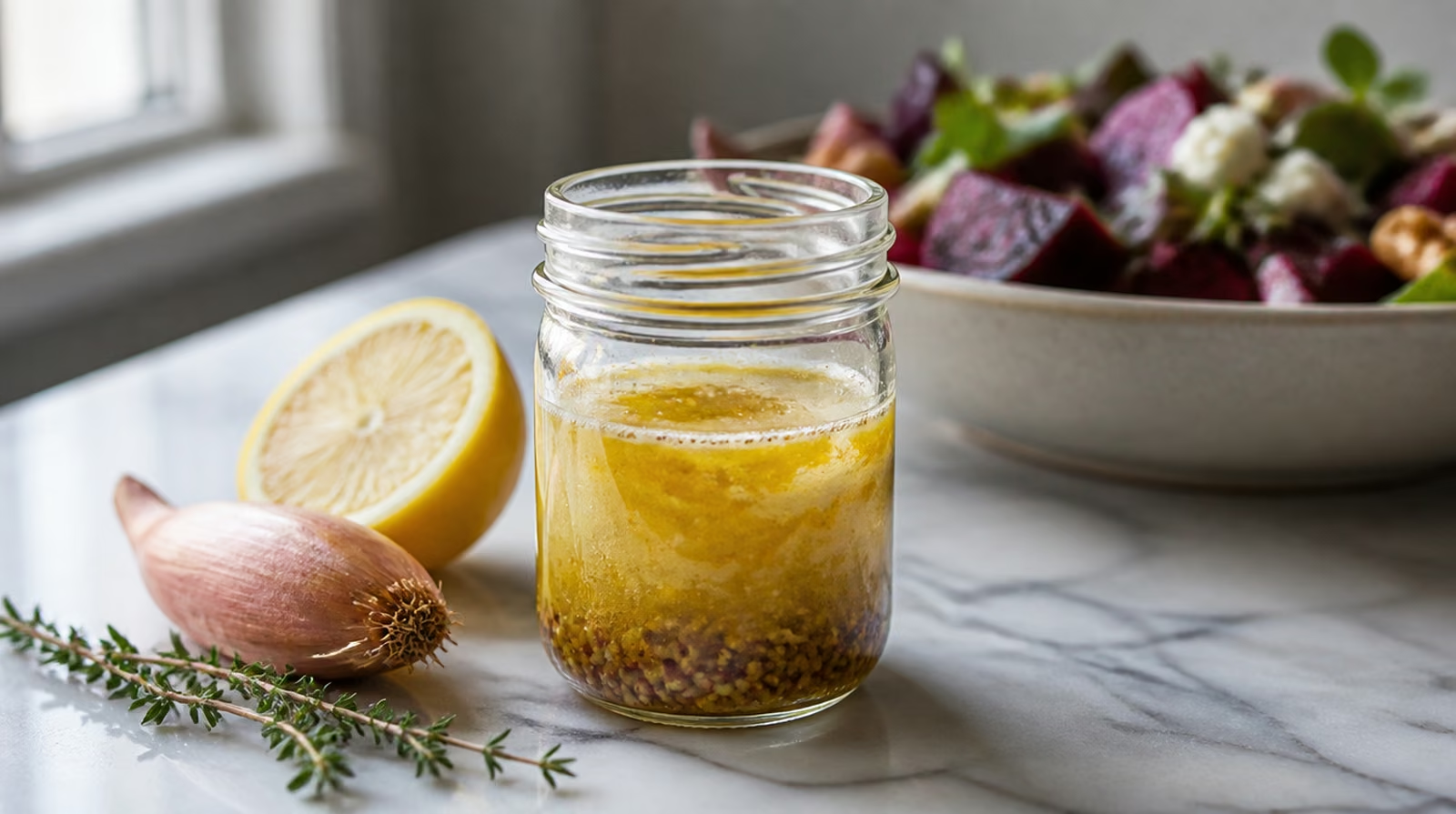
Technique: Place all ingredients into a screw-top jam jar and shake vigorously for thirty seconds. This produces a significantly more stable emulsion than whisking, as the mechanical force shears the oil into much smaller droplets.
A Classic Beetroot Vinaigrette Recipe (UK)
- 2 tbsp extra virgin olive oil
- 1 tbsp white wine vinegar
- 1 tsp medium-hot Dijon or English mustard
- 1 small shallot, very finely diced
- Black pepper, pinch of salt
Serves four. Keeps in a sealed jar in the fridge for up to three days – simply give it another shake before serving.
Why Shop-Bought Dressings Fall Short
A glance at the ingredients list of commercial supermarket dressings explains why they are not recommended here. Typical formulations lead with water as the primary ingredient, followed by refined rapeseed oil, sugar or glucose-fructose syrup, acidity regulators, thickeners such as xanthan gum, preservatives, and artificial flavourings.
This creates two fundamental issues:
The hidden sugars. Many ready-made dressings contain between 8 and 15 grams of sugar per 100 millilitres. For a standard 30 ml salad serving, that adds up to 4.5 grams of free sugars – completely undoing the vinegar blood sugar benefits outlined in this article.
The missing healthy fats in “low-fat” options. Reduced-fat dressings replace cold-pressed oils with water, starches, and thickening agents. While they trim a few calories, they prevent your body from absorbing the fat-soluble vitamins and antioxidants across the entire salad – comfortably the worst nutritional trade-off on the supermarket chilled aisle.
A homemade vinaigrette takes just 90 seconds to assemble and costs a fraction of the price.
The Accompanying Salad
Serves 4
- 400 g cooked beetroot, diced
- 1 head of cos or iceberg lettuce
- 150 g feta cheese
- 1/2 red onion, finely sliced
- 50 g toasted pumpkin seeds
- The basic vinaigrette from above
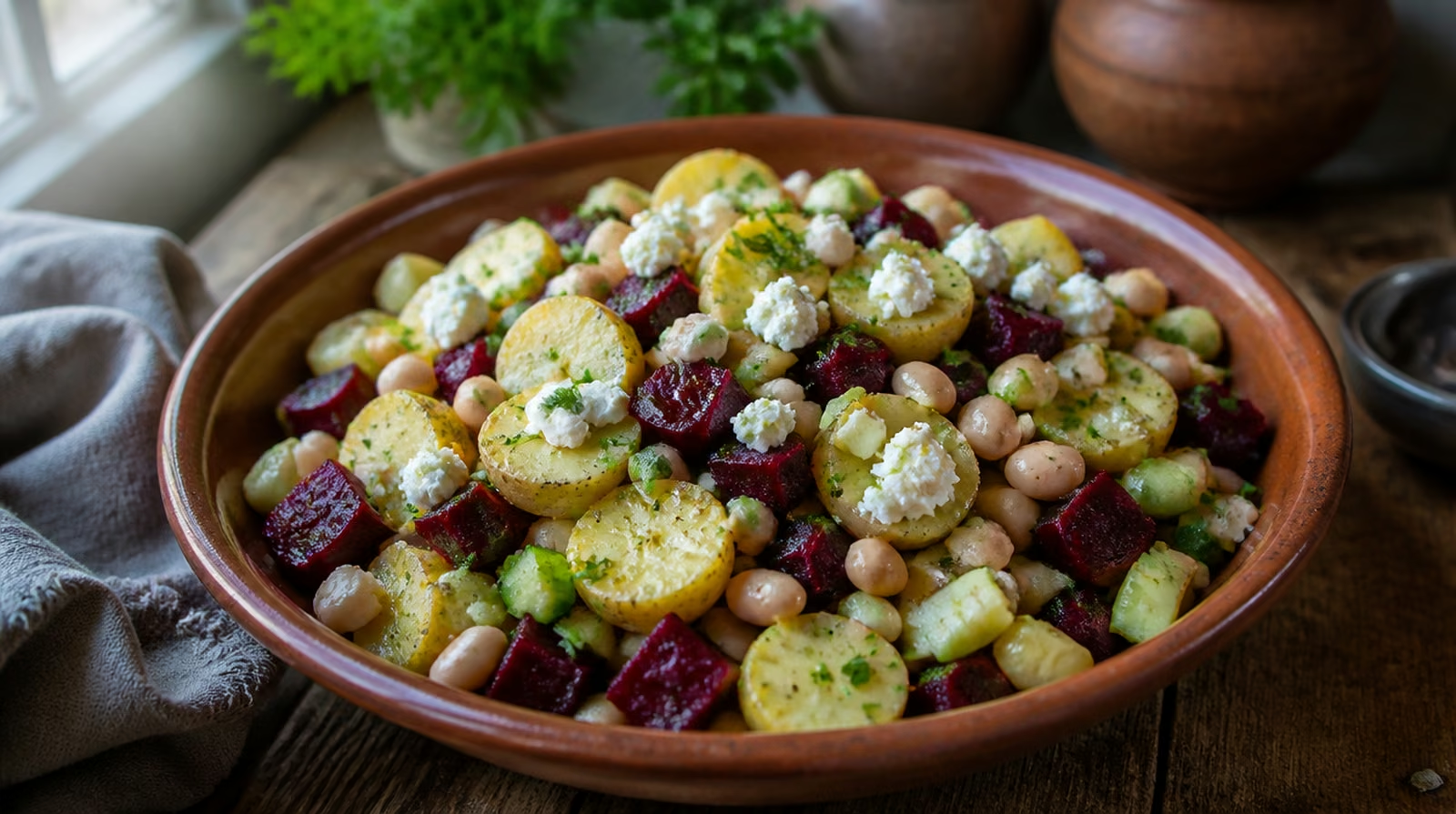
Shred the lettuce, arrange the diced beetroot on top, scatter over the red onion and crumbled feta, and finish with the toasted pumpkin seeds. Dress with the vinaigrette at the table.
Estimated Nutritional Values per Serving
| Per Serving | |
|---|---|
| Energy | approx. 310 kcal |
| Protein | approx. 10 g |
| Fat | approx. 24 g |
| Carbohydrates | approx. 12 g |
| Sugar | approx. 8 g (exclusively from vegetables) |
Side Effects and Precautions to Keep in Mind
Vinegar is acidic and can erode dental enamel over time. Drinking neat vinegar – a habit frequently promoted on weight-loss forums – risks permanent enamel erosion. When consumed as part of a vinaigrette, properly diluted with oil and mixed with leafy greens, this is not a concern.
If you suffer from acid reflux or a sensitive stomach, vinegar may exacerbate symptoms. In such cases, try fresh lemon juice instead – the citric acid is gentler on the gastric lining while still offering a moderating effect on gastric emptying.
Quellen
- Shishehbor F, Mansoori A, Shirani F et al.: Vinegar consumption can attenuate postprandial glucose and insulin responses; a systematic review and meta-analysis of clinical trials. Diabetes research and clinical practice 2017. PubMed 28292654. DOI: 10.1016/j.diabres.2017.01.021.
- Lim J, Henry CJ, Haldar S et al.: Vinegar as a functional ingredient to improve postprandial glycemic control-human intervention findings and molecular mechanisms. Molecular nutrition & food research 2016. PubMed 27213723. DOI: 10.1002/mnfr.201600121.
- Shahmohammadi F, Khosroshahi RA, Derakhshanian H et al.: Vinegar Consumption and Health: An Umbrella Review of Meta-Analyses of Randomized Controlled Trials. 2026. PubMed 42110393. DOI: 10.1002/fsn3.71849.
- Wan N, Wang M, Wang L et al.: Improvement of the quality and flavor profiles of persimmon vinegar by bioaugmented inoculation with <i>Lactobacillus acidophilus, Lactiplantibacillus plantarum</i> and <i>Wickerhamomyces anomalus</i>. 2026. PubMed 41853602. DOI: 10.1016/j.fochx.2026.103725.
- Yamamoto-Wada R, Yoshimoto J, Kodaira Y et al.: Inverse Associations of Acetic Acid Intake with Carbohydrate, Sugar, and Saturated Fat Intakes Among Japanese Adults Aged 20 to 69 Years. 2026. PubMed 41599930. DOI: 10.3390/nu18020318.
- Akhan M, Türkol M, Açıkgözoğlu E et al.: Thermosonication of traditional poppy vinegar: modulation of biomolecules, phenolic profile, and antidiabetic potential in a functional fermented food. 2026. PubMed 42146088. DOI: 10.3389/fnut.2026.1828372.
- Tehrani SD, Keshani M, Rouhani MH et al.: The Effects of Apple Cider Vinegar on Cardiometabolic Risk Factors: A Systematic Review and Meta-analysis of Clinical Trials. Current medicinal chemistry 2025. PubMed 37608660. DOI: 10.2174/0929867331666230822102021.
- Ijaz R, Haward R.: Role of vinegar in cardiovascular health: A narrative review. 2025. PubMed 41415882. DOI: 10.14440/jbm0033.
- Lee CM, Jeong OY, Park HS et al.: Evaluation of glycemic response and starch digestibility in Korean rice toward the development of low GI rice. 2025. PubMed 41459461. DOI: 10.3389/fpls.2025.1724565.
- Barrong H, Coven H, Lish A et al.: Daily Vinegar Ingestion Improves Depression and Enhances Niacin Metabolism in Overweight Adults: A Randomized Controlled Trial. Nutrients 2024. PubMed 39064748. DOI: 10.3390/nu16142305.
- Papakonstantinou E, Oikonomou C, Nychas G et al.: Effects of Diet, Lifestyle, Chrononutrition and Alternative Dietary Interventions on Postprandial Glycemia and Insulin Resistance. Nutrients 2022. PubMed 35215472. DOI: 10.3390/nu14040823.
- Hadi A, Pourmasoumi M, Najafgholizadeh A et al.: The effect of apple cider vinegar on lipid profiles and glycemic parameters: a systematic review and meta-analysis of randomized clinical trials. BMC complementary medicine and therapies 2021. PubMed 34187442. DOI: 10.1186/s12906-021-03351-w.
- Launholt TL, Kristiansen CB, Hjorth P et al.: Safety and side effects of apple vinegar intake and its effect on metabolic parameters and body weight: a systematic review. European journal of nutrition 2020. PubMed 32170375. DOI: 10.1007/s00394-020-02214-3.
- Santos HO, de Moraes WMAM, da Silva GAR et al.: Vinegar (acetic acid) intake on glucose metabolism: A narrative review. Clinical nutrition ESPEN 2019. PubMed 31221273. DOI: 10.1016/j.clnesp.2019.05.008.
- Gheflati A, Bashiri R, Ghadiri-Anari A et al.: The effect of apple vinegar consumption on glycemic indices, blood pressure, oxidative stress, and homocysteine in patients with type 2 diabetes and dyslipidemia: A randomized controlled clinical trial. Clinical nutrition ESPEN 2019. PubMed 31451249. DOI: 10.1016/j.clnesp.2019.06.006.
- Russell WR, Baka A, Björck I et al.: Impact of Diet Composition on Blood Glucose Regulation. Critical reviews in food science and nutrition 2016. PubMed 24219323. DOI: 10.1080/10408398.2013.792772.