‘High protein’ is plastered across half the products on supermarket shelves today, and fitness influencers regularly recommend 2 grams of protein per kilogram or more. But does consuming excessive amounts actually increase all-cause mortality? The truth lies somewhere in the middle – and is far more intriguing than any headline. In this article, we examine why protein is essential for life, how much genuinely benefits you, how much protein is too much, and what the scientific evidence on kidney function, cancer risk, and longevity actually tells us.
Side effects of too much protein: can it really make you ill?
When it comes to protein, opinion is divided into two distinct camps: some view it as the ultimate panacea for muscle growth and fat loss, whilst others warn of high protein risks involving kidney damage and cancer. Both perspectives hold a grain of truth – and both tend to exaggerate. The scientific literature presents a nuanced picture: protein is vital, consuming more than the bare minimum is frequently beneficial, but extreme intakes offer virtually no additional advantage and may carry drawbacks. It is precisely these nuances that get drowned out in loud ‘high-protein’ marketing campaigns.
Why too LITTLE protein is a real problem
Before we discuss how much protein is too much, it is worth noting that too little protein represents a far greater risk for most individuals. A protein deficiency can manifest as muscle wasting, increased susceptibility to infection, and even hair loss. The human body requires protein for countless structural components – from muscle tissue and enzymes to transport molecules within the bloodstream. If your daily protein intake is chronically inadequate, multiple physiological systems are undermined simultaneously. The fundamental question is therefore not ‘is protein good or bad’, but rather: how much is optimal?
Protein transports iron – and much more
An often overlooked aspect of nutrition is that many blood proteins serve as transporters. Transferrin shuttles iron to red blood cells so they can bind oxygen. Albumin maintains oncotic pressure within blood vessels and transports thyroid hormones, among other substances. Globulins carry various other hormones. If protein intake is insufficient, these transport mechanisms falter – compromising the delivery of iron, zinc, copper, and other vital micronutrients. Low total serum protein can therefore explain a wide array of diffuse symptoms. Protein is clearly far more than just a ‘muscle-building nutrient’.
Why the body cannot store protein
Unlike dietary fat or carbohydrates, the human body possesses no dedicated protein storage depot. There is only a small amino acid pool in the blood and limited reserves in the liver. If the body receives insufficient replenishment from food, it inevitably breaks down skeletal muscle tissue to harvest the required building blocks. This is a primary reason why distributing adequate protein intake across the day matters – and why protein is one macronutrient you should never skimp on over the long term.
UK dietary guidelines: 0.8 grams per kilogram
The NHS and British Dietetic Association guidelines recommend approximately 0.8 grams of protein per kilogram of body weight per day for healthy adults aged 19 to 65. This represents a safe baseline threshold to prevent nutritional deficiency – not necessarily the optimum target for every personal objective. This is where debate arises: for individuals aiming to lose weight, build muscle, or manage the ageing process, a slightly higher intake can be beneficial. The 0.8g baseline is a foundation, not an inflexible ceiling.
Why this figure does not suit everyone
One-size-fits-all figures provide only a rough reference point. Your specific protein requirements depend on body composition, muscle mass, age, and physical goals. A highly muscular individual undergoing rigorous resistance training has entirely different requirements from someone with a sedentary routine and lower lean mass. Your stage of life is equally significant. The pertinent question is not simply ‘is 0.8 grams enough?’, but ‘what intake aligns with my physiology and goals?’. We explore this in detail below across weight loss, hypertrophy, and healthy ageing.
Protein and weight loss: the satiety advantage
In the context of weight loss, the scientific consensus is clear: a moderately higher protein intake supports fat reduction. Protein promotes robust, sustained satiety – making it considerably easier to maintain a calorie deficit without battling constant hunger cues. Furthermore, consuming adequate protein during a diet preserves lean muscle mass whilst shedding body fat. Preserving metabolic tissue is crucial, making dietary protein one of the most effective and straightforward levers for sustainable weight management.
Why protein burns ‘inefficiently’ – and why that is a good thing
An additional metabolic benefit during dieting sounds paradoxical: dietary protein is converted into energy relatively inefficiently. The body can only utilise a proportion of the gross energy in protein; the remainder is dissipated as heat – a phenomenon known as the thermic effect of food (TEF). In straightforward terms: the body expends significantly more calories metabolising protein than it does processing dietary fats or carbohydrates. During weight loss, this metabolic cost serves as a welcome bonus, providing another compelling reason to maintain sufficient protein intake on a diet.
How much protein for muscle growth?
When it comes to muscle hypertrophy, robust clinical data is available. A widely cited systematic review and meta-analysis published in the British Journal of Sports Medicine identified an optimal intake range of roughly 1.2 to 1.6 grams per kilogram of body weight for active adults looking to build muscle. Consuming amounts substantially higher than this yielded no additional hypertrophic gains in the analysis. This provides a crucial counterweight to prevailing fitness trends: beyond a certain threshold, the adaptive response plateaus because skeletal muscle can only process a finite amount of substrate.
The sweet spot: around 1.3 grams
A more recent meta-analysis encompassing over 5,000 participants refined these findings: up to approximately 1.3 grams per kilogram, increasing protein intake yields marked benefits for both muscle accretion and retention. Beyond this threshold, the marginal return diminishes steeply. It can be visualised as a curve that rises sharply before flattening out. The true ‘sweet spot’ for most people is noticeably lower than commonly assumed – situated comfortably around 1.3 to 1.6 grams per kilogram, rather than extreme targets of two or three grams.
Why more is not necessarily better
Why does the physiological benefit plateau? Because the cellular machinery governing muscle protein synthesis has a finite capacity per meal and per day. Consuming excess amino acids does not magically translate into additional muscle tissue; instead, the surplus is oxidised for energy or degraded and excreted. Extra structural blocks are only useful if they can be incorporated into tissue. Once biological capacity is saturated, the remainder is surplus to requirements. This explains why studies consistently demonstrate a plateauing response curve – and why consuming extreme quantities is largely redundant.
Protein intake in younger and older adults
Nutritional requirements shift noticeably with age. In younger individuals undergoing resistance training, several analyses have shown that additional protein above moderate amounts resulted in only minor, occasionally non-significant increases in fat-free mass. In older adults, the findings appear mixed at first glance – but for an insightful reason, as the next section demonstrates. The blanket assumption that ‘younger people need vast amounts whilst older adults need very little’ does not withstand scientific scrutiny.
Why older adults need more protein
Certain studies appeared to find no supplemental benefit from increased protein in older cohorts. The underlying caveat: participants were frequently already consuming 1.0 to 1.2 grams per kilogram – well above the standard baseline. Consequently, they could not demonstrate ‘additional’ gains because their functional requirements were already fully met. Interpreted correctly, this demonstrates that older adults genuinely require higher intakes than the 0.8g baseline to maintain muscle integrity and counteract age-related muscle loss (sarcopenia).
Protein for weight loss: what the meta-analyses show
To evaluate weight management, researchers analysed data from 24 randomised controlled trials – the gold standard in clinical research. When comparing diets with identical caloric deficits, a higher protein intake within the range of 1.1 to 1.6 grams per kilogram was consistently associated with superior weight and fat loss, along with more favourable blood lipid profiles. Here too, an inflection point emerged at around 1.3 grams per kilogram. Beyond that level, further protein consumption provided no meaningful extra slimming effect, reinforcing the consistent physiological pattern.
How much protein is too much? The 2-gram myth
Where does the ubiquitous recommendation of 2 grams and above originate? Primarily from supplement marketing and bodybuilding subcultures – not from well-controlled clinical trials. Large-scale meta-analyses involving thousands of participants simply show no convincing physiological advantage beyond roughly 1.3 to 1.6 grams per kilogram. That does not mean consuming 2 grams causes immediate harm to a healthy person, but the supposed extra gains remain unsupported by evidence. Pushing past these numbers with expensive protein powders often amounts to little more than buying peace of mind.
Too much protein side effects: kidney damage risks explored
This brings us to a major health concern: renal health. It is frequently asserted that there is no evidence whatsoever that high protein intake harms healthy kidneys. That statement is not entirely accurate. Observational studies exist that indicate a potential adverse association. It is vital to interpret these findings in context: they illustrate epidemiological correlations, not direct causation. Nevertheless, they provide a legitimate reason not to consume extreme amounts indiscriminately over decades – particularly when that protein is derived predominantly from animal sources.
What the kidney study actually found
In a long-term observational study tracking approximately 9,300 individuals over a 13-year period, researchers monitored clinical markers of kidney function. In the cohort with the highest protein consumption, the risk of developing renal hyperfiltration was significantly higher than in the lowest intake group. The authors concluded that a very high-protein dietary pattern may be associated with an accelerated decline in long-term renal function. This serves as a cautionary signal, albeit derived from observational data that cannot definitively isolate cause from effect.
Hyperfiltration: when the kidneys work in overdrive
The proposed biological mechanism is renal hyperfiltration. A high dietary protein load increases intraglomerular pressure and the overall filtration rate of the kidneys, placing extra strain on delicate nephrons. In the short term, this adaptive response is entirely benign. Over prolonged periods, however, sustained intraglomerular hypertension could theoretically contribute to structural micro-damage. For healthy individuals consuming moderate amounts, this is rarely an issue. However, when consuming excessive quantities for years, or in those with pre-existing renal vulnerability, vigilance and medical oversight are sensible precautions.
Nitrogen waste: the byproduct of amino acid metabolism
During normal amino acid metabolism, the breakdown of dietary protein generates nitrogenous waste products, primarily urea, with ammonia acting as an intermediate compound. Ammonia is toxic in elevated concentrations, requiring the body to process and excrete these byproducts via the renal system. The higher your protein intake, the greater the volume of nitrogenous waste that must be filtered, and the more work the kidneys must perform to maintain balanced nitrogen balance. In healthy individuals, the kidneys handle this filtration seamlessly; nevertheless, it explains why an excessively high-protein diet places considerably higher demands on excretory pathways than a balanced intake.
Why eGFR readings can be misleading in athletes
A critical caveat must be kept in mind: the standard clinical marker for kidney function, estimated glomerular filtration rate (eGFR), can be deceptive in athletic populations. The standard calculation relies heavily on serum creatinine levels – which are directly influenced by overall muscle mass, hydration status, and dietary creatine supplementation. Muscular individuals naturally produce higher baseline levels of creatinine, which can artificially depress calculated eGFR scores without any underlying pathology. In resistance-trained individuals, an altered eGFR reading often reflects muscle mass rather than actual renal impairment.
Observation does not equal causation
A fundamental principle applies across nutritional science: observational studies identify correlations, not direct cause and effect. People who consume exceptionally large quantities of protein often differ in other significant lifestyle variables – such as total processed meat consumption, overall dietary fibre intake, smoking status, or body mass index. These confounding factors can heavily influence health outcomes. One must not automatically extrapolate ‘higher protein is correlated with risk’ into ‘protein directly causes chronic disease’. The trends warrant attention, but they represent hypotheses rather than definitive proof.
Dangers of a high protein diet: the mTOR and cancer link
Another area of scientific inquiry centres on cancer risk. Digesting large quantities of dietary protein floods the circulation with amino acids such as leucine, which potently stimulate cellular growth via the mTOR (mechanistic target of rapamycin) signalling pathway. The theoretical concern is that the same molecular pathways that promote muscle protein synthesis could potentially encourage the proliferation of nascent, abnormal cells that the immune system would otherwise clear. Whilst this biological mechanism is plausible, real-world risk is heavily modulated by age and, most importantly, the specific dietary source of the protein.
The Levine study: a 75% increase in mortality?
A widely publicised study led by researcher Morgan Levine generated significant headlines: individuals aged 50 to 65 who reported a high protein intake exhibited a markedly higher rate of all-cause mortality and cancer incidence during the follow-up period. While alarming at first glance, two contextual factors are paramount: it was an observational cohort study, and the elevated risk was linked almost exclusively to animal-derived protein. Furthermore, the outcome inverted entirely in older demographics – a nuance that dispels simplistic panic.
The ageing twist: how the picture flips after 65
This is where the data becomes particularly compelling: within the very same study cohort, high protein intake among participants aged 65 and older was not detrimental, but rather distinctly protective. This aligns with our clinical understanding of muscle preservation in later life: older adults require higher relative protein intakes to prevent frailty and retain functional independence. The exact same dietary intake can have contrasting physiological effects depending on biological life stage, highlighting why sweeping claims that ‘protein is dangerous’ are overly simplistic.
Plant versus animal protein: the crucial difference
Perhaps the most significant takeaway relates to the source of protein. Comprehensive epidemiological evaluations – including a prominent US prospective cohort following approximately 500,000 individuals over 15 years – found that elevated risks of cancer and cardiovascular mortality were primarily associated with high intakes of animal protein, particularly processed and red meats. Conversely, when animal sources were substituted with plant protein, overall health risks decreased substantially. Clearly, not all protein is created equal: whether your daily intake comes from lentils, beans, and whole grains or processed sausages makes a tangible difference to long-term health.
Why plant protein acts differently: plant versus animal protein
Plant-based protein sources such as pulses, tofu, nuts, and wholemeal grains provide plenty of fibre, antioxidants, and phytochemicals alongside protein – with far fewer unfavourable compounds than heavily processed red meat. This likely explains why plant protein consistently performs better in clinical trials when evaluating how much protein is too much. A Japanese long-term study also found that individuals who replaced animal protein with plant protein had a lower risk of cancer. Adding more plants to your plate is therefore one of the simplest dietary adjustments you can make.
What the latest meta-analyses say on high protein risks
Current data provides some reassurance regarding potential dangers of a high protein diet: a 2024 meta-analysis concluded that a higher total protein intake does not appear to be linked with an increased risk of bowel or breast cancer. For other cancer types, the evidence remains too weak or inconsistent to show clear side effects of too much protein. This puts sensationalist headlines into perspective. The takeaway: panic over protein is unfounded – taking a nuanced look at quantity, age, and source is the far wiser approach.
The middle ground: how much protein is too much?
Putting the evidence together reveals a sensible middle ground. Consuming more than the baseline dietary guidelines from the NHS is beneficial for most people – roughly in the range of 1.2 to 1.6 grams per kilogram of body weight, depending on your goals and age. Consistently consuming significantly more offers negligible extra benefit and, according to observational studies, could pose high protein risks, particularly when sourced heavily from animal products. At the same time, eating too little poses a genuine risk to muscle maintenance, nitrogen balance, and overall nutrient supply. Total quantity and amino acid metabolism are what count – not swinging to either extreme.
How to distribute your daily protein intake across the day
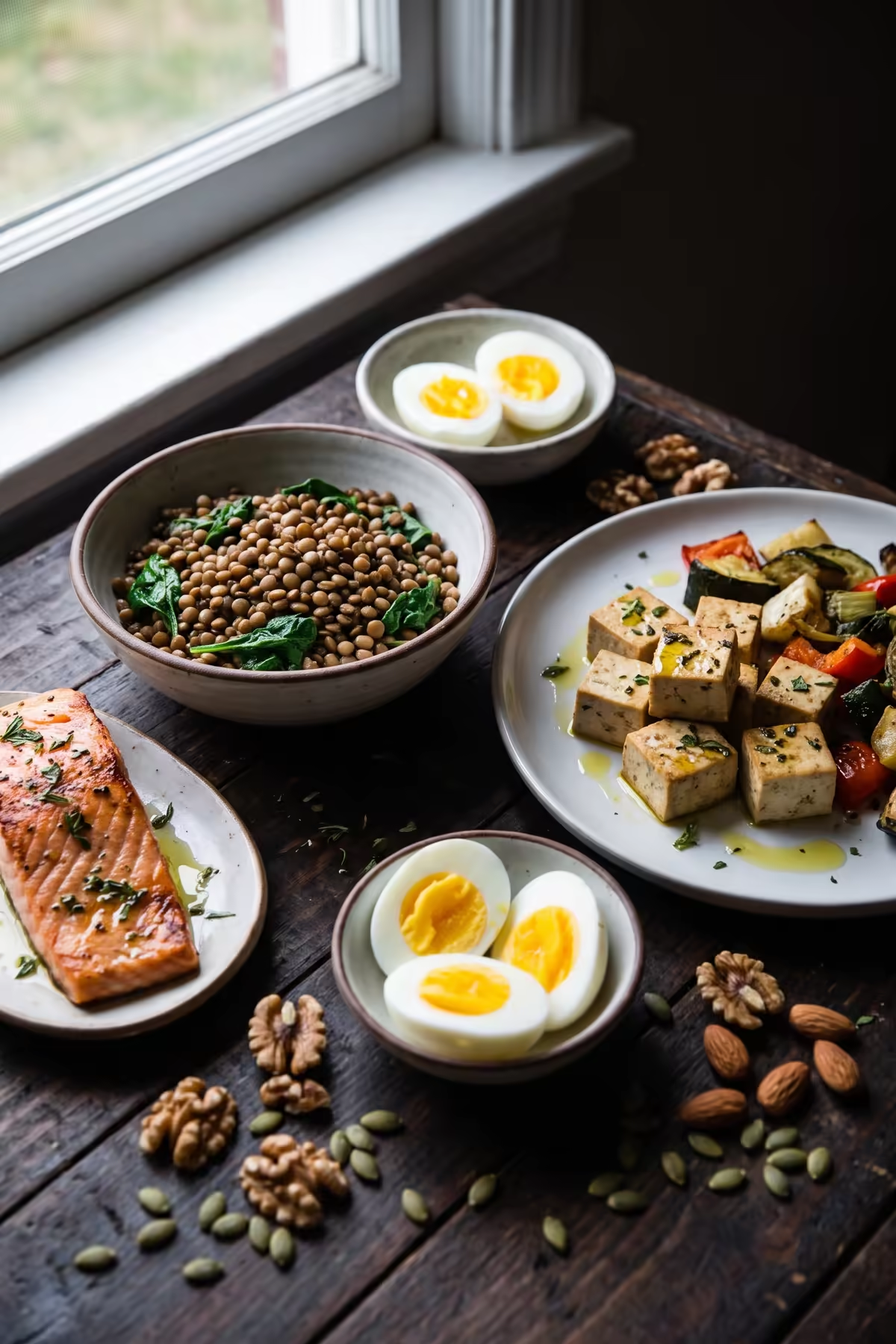
Because the body does not store excess protein, it pays to distribute your intake evenly across the day rather than consuming it all in one large sitting. Eating several protein-rich meals – incorporating pulses, eggs, dairy, fish, or lean meat – supports muscle protein synthesis and supplies your muscles far more steadily. A practical approach is moderate portions with main meals, prioritising plant-based sources. This allows you to meet your daily protein intake comfortably without tracking shakes or resorting to extremes.
Conclusion: protein is essential – but how much protein is too much?
Does a high protein intake increase all-cause mortality? Broadly speaking, no. Too little protein impairs muscle mass and nutrient transport, whilst too much offers diminishing returns and may carry long-term health disadvantages – especially when derived predominantly from animal sources over many years. The proven benefits lie in eating moderately above the official minimum, with an emphasis on plant sources. Eat enough, avoid excess, prioritise quality sources, and if you have pre-existing conditions or concerns about kidney function and renal health, consult your GP or a registered dietitian.
Frequently asked questions
How much protein should I eat each day?
For most adults, roughly 1.2 to 1.6 grams per kilogram of body weight is ideal, depending on activity levels and age. This is higher than the standard NHS dietary guidelines of 0.75–0.8 grams per kilogram, but well below the excessive 2 grams plus often promoted in fitness circles.
Too much protein side effects: kidney health and function?
In individuals with healthy kidney function and normal glomerular filtration rate, moderate to high protein intakes do not cause damage. However, observational research suggests that prolonged, excessively high intakes – especially from animal sources – may burden renal health. Anyone with pre-existing renal disease should seek personalised medical advice.
Does protein increase cancer risk?
Recent meta-analyses find no clear association between total protein intake and overall cancer risk. Where risks do emerge in studies, they are linked primarily to high intakes of processed and red meat, whereas plant-based protein shows a protective association.
Does eating over 2 grams per kilogram build more muscle?
There is no convincing evidence to support this. The stimulation of muscle protein synthesis plateaus between 1.3 and 1.6 grams per kilogram – the body simply cannot utilise extra amino acids for additional muscle growth beyond this point.
Is plant or animal protein better?
Both effectively meet human requirements. Plant protein performs better in epidemiological studies regarding cancer risk and cardiovascular health while providing essential dietary fibre. A balanced intake with a strong focus on plant-based sources is ideal.
Why is too little protein dangerous?
A shortfall forces the body to break down muscle tissue. It also reduces essential transport proteins in the bloodstream – such as those responsible for moving iron, zinc, and thyroid hormones – which can trigger fatigue, weakness, and other too much protein symptoms in reverse.
Do older adults need more protein?
Yes. To counteract age-related muscle loss (sarcopenia) and preserve physical independence, older adults generally benefit from higher amounts – the baseline 0.75–0.8 grams per kilogram is often insufficient for healthy ageing.
Does protein help with weight loss?
Yes. Protein promotes satiety, preserves lean muscle tissue during a calorie deficit, and requires more energy to metabolise (diet-induced thermogenesis). Studies consistently show that higher protein diets during weight loss lead to better fat reduction.
Further reading on muscle health: Muscle strength from gut bacteria · HMB: stronger than creatine? · Ecdysterone fact check.
Sources and references
Systematic reviews, meta-analyses, and controlled studies on the topic of this article. Every link was verified for accessibility on 16.08.2026.
- Kokura Y, Ueshima J, Saino Y et al.: Enhanced protein intake on maintaining muscle mass, strength, and physical function in adults with overweight/obesity: A systematic review and meta-analysis. Clinical nutrition ESPEN 2024. PubMed 39002131. DOI: 10.1016/j.clnesp.2024.06.030.
- Morton RW, Murphy KT, McKellar SR et al.: A systematic review, meta-analysis and meta-regression of the effect of protein supplementation on resistance training-induced gains in muscle mass and strength in healthy adults. British journal of sports medicine 2018. PubMed 28698222. DOI: 10.1136/bjsports-2017-097608.
- Ko GJ, Obi Y, Tortorici AR et al.: Dietary protein intake and chronic kidney disease. Current opinion in clinical nutrition and metabolic care 2017. PubMed 27801685. DOI: 10.1097/MCO.0000000000000342.
- Wu G: Dietary protein intake and human health. Food & function 2016. PubMed 26797090. DOI: 10.1039/c5fo01530h.