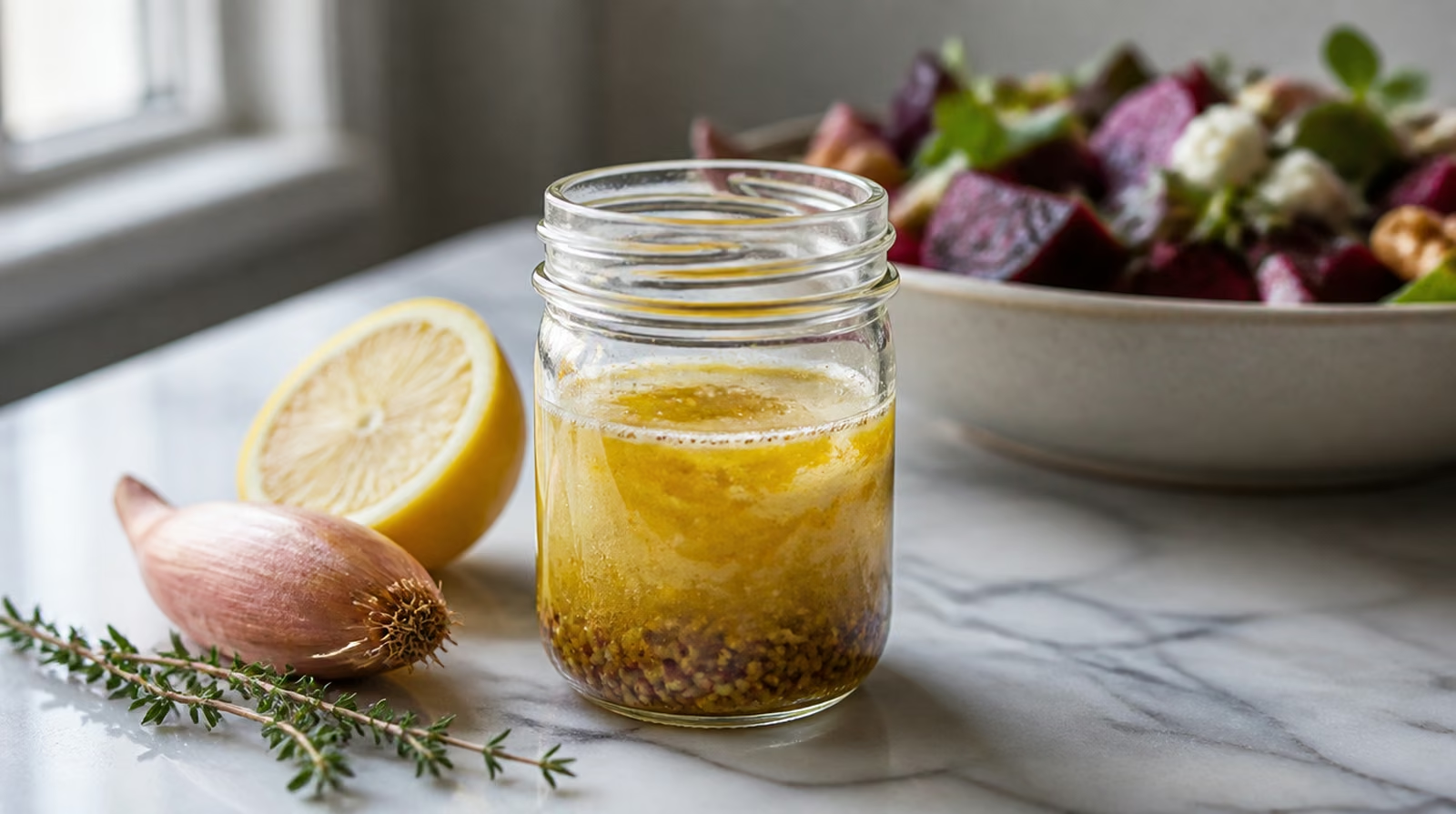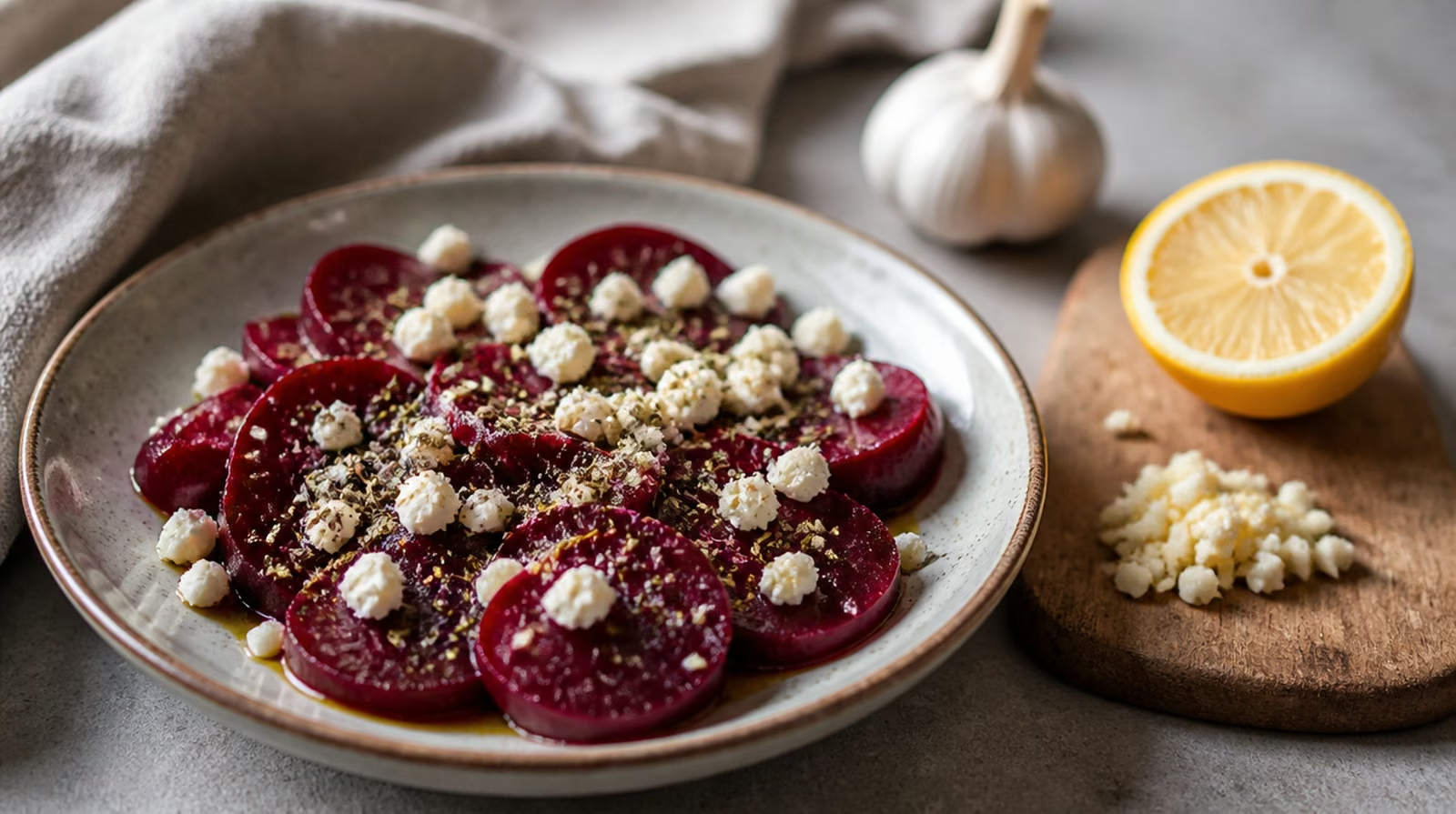
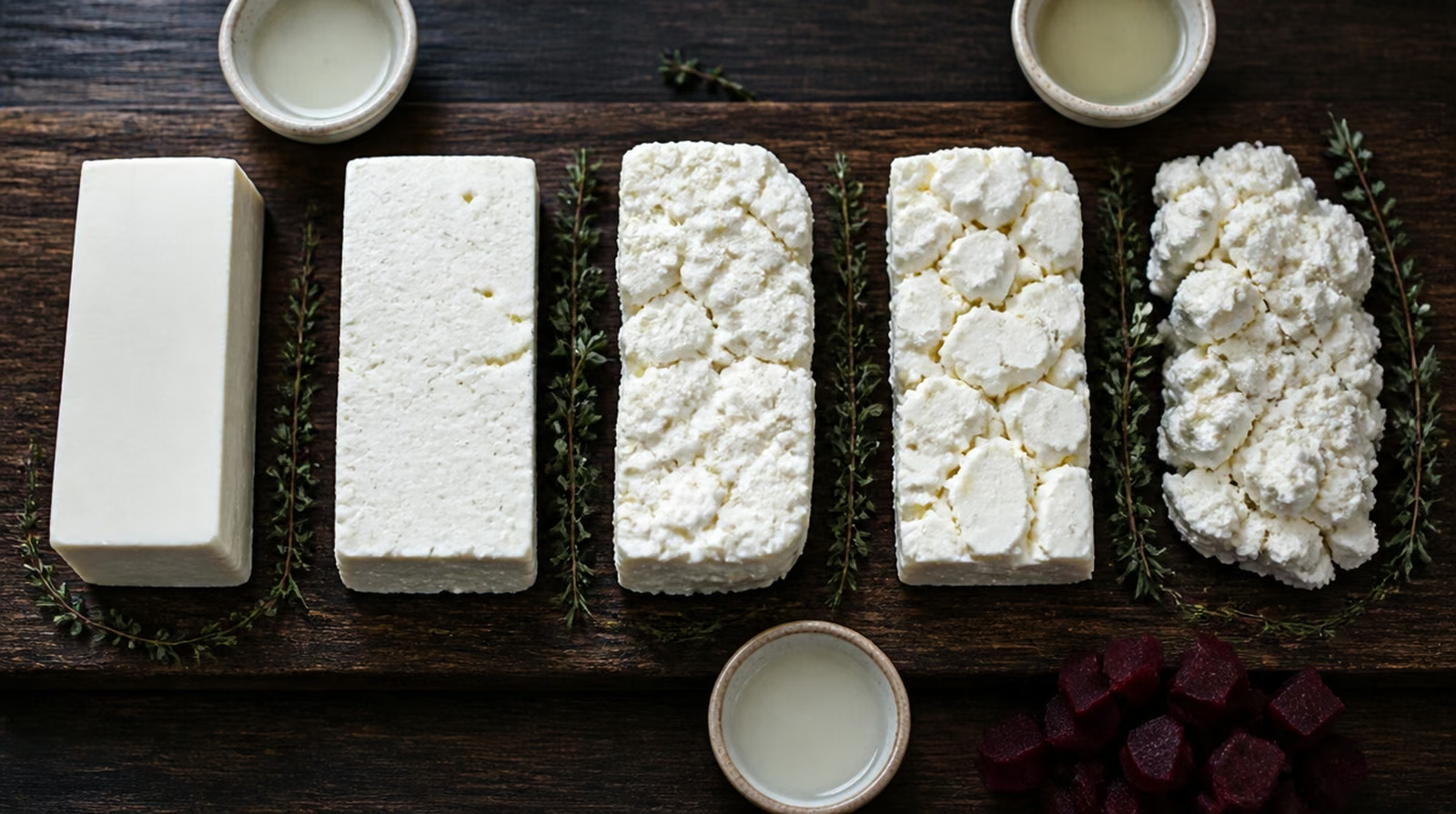
In the traditional Turkish recipe for pancar salatası, you will not find feta. It calls for Beyaz Peynir – and that is not just a minor translation detail, but an entirely different cheese with different nutritional numbers.
Because keeping track of sodium intake is critical across every beetroot recipe on this site, taking a closer look at feta salt content and comparing it against alternatives is well worth the effort.
What Feta Actually Is: PDO Status and Composition
Since 2002, “feta” has held Protected Designation of Origin (PDO status) within the EU and UK law. Cheese can only legally be called feta if it
- has been produced in specific mainland regions of Greece or the prefecture of Lesbos,
- is made from sheep’s milk, with a maximum of 30 per cent goat’s milk,
- has been ripened in brine.
Legally, anything else is not feta – even if it looks identical on the plate. The white cubed cheese made from cow’s milk in the supermarket is therefore labelled as “shepherd’s cheese”, “salad cheese”, or sold under brand names like Salakis or Patros.
This is not merely a labelling technicality. Sheep’s milk contains almost twice as much fat and substantially more protein than cow’s milk, altering the texture, flavour profile, and overall feta salt content.
Feta Cheese Nutritional Value per 100g: The Comparison Table
Values per 100 grams, rounded, commercial products:
| Cheese | Milk | Fat | Protein | Salt | Calcium |
|---|---|---|---|---|---|
| Feta PDO (Greece) | Sheep/goat | 21 g | 17 g | 3.0 g | 400 mg |
| Beyaz Peynir (Turkey) | Cow or sheep | 18 g | 17 g | 2.0–2.5 g | 450 mg |
| Ezine Peyniri (Turkey) | Sheep/goat/cow | 24 g | 18 g | 2.5 g | 420 mg |
| Shepherd’s cheese (cow’s milk) | Cow | 20 g | 14 g | 2.5–3.5 g | 350 mg |
| Salakis / sheep’s cheese brands | Sheep | 22 g | 15 g | 2.8 g | 400 mg |
| Halloumi (Cyprus) | Sheep/goat/cow | 25 g | 22 g | 2.5–3.0 g | 750 mg |
| Ricotta salata | Sheep | 24 g | 20 g | 2.5 g | 500 mg |
| Cottage cheese | Cow | 3 g | 12 g | 0.8 g | 80 mg |
Values fluctuate considerably depending on the producer – in some shepherd’s cheeses, levels exceeding 4 grams have been measured. The nutritional table on the packaging is the only reliable guide.
Which Cheese Is Lowest in Salt? Three Key Takeaways on Low Salt Cheese
Beyaz Peynir is the lower-salt choice. Turkish white cheese is generally aged for a shorter period in brine and averages around 0.5 to 1 gram less salt than Greek feta. When using 150 grams in a salad, that equals roughly a 1-gram difference – a full sixth of the 6 g NHS daily salt limit, achieved simply through your choice of cheese to protect blood pressure.
Shepherd’s cheese is not automatically milder. Its reputation as a lighter alternative holds true for fat, but not for salt. In fact, some cow’s milk salad cheese products are saltier than authentic feta, as the brine must compensate for the missing depth of flavour found in sheep’s milk.
Cottage cheese is the clear outlier. If you genuinely want a low salt cheese and are willing to compromise on classic texture, cottage cheese delivers a quarter of the salt and a seventh of the fat. It pairs surprisingly well in a beetroot salad, as the earthy vegetable provides plenty of natural sweetness and body.
Soaking in Water: Can You Make Low Sodium Feta Cheese at Home?
A standard culinary tip is to soak feta in water before eating. The effect is genuine, but limited – salt does not sit only on the surface; it penetrates the entire block.
Techniques that provide a measurable reduction:
- Soak in cubes, not as a whole block. Greater surface area means greater osmosis.
- Submerge for 20 to 30 minutes in cold water, changing the water once halfway through.
- Drain thoroughly afterwards, otherwise excess water will dilute your salad dressing.
In practice, this method removes around 15 to 25 per cent of the salt, bringing roughly 3 grams down to 2.4 grams. It is not an instant miracle for creating true low sodium feta cheese, but combined with thoughtful cheese selection, the reduction adds up.
The cheese will lose some of its punchy flavour in the process. A squeeze of fresh lemon juice easily compensates – acidity naturally enhances our perception of saltiness, making a lower-sodium dish taste just as savoury.
Beyond Feta Salt Content: Where White Brined Cheese Scores Points
After highlighting the high sodium figures, it is only fair to look at the positive nutritional assets.
Calcium. 100 grams of feta provides approximately 400 milligrams of calcium, supplying roughly 40 per cent of an adult’s daily requirement. In a salad containing oxalate-rich vegetables, this provides an extra protective mechanism – see our article on oxalates.
Protein. Providing 15 to 17 grams per 100 grams with a complete amino acid profile, turning a light vegetable salad into a filling, sustained meal.
Lower in fat than many realise. Feta contains around 21 grams of fat per 100 grams – whereas mature Cheddar, Gouda, and Emmental sit between 28 and 34 grams. Among traditional cheeses, feta is relatively moderate.
Fermentation benefits. Cheeses made from unpasteurised milk with extended brine ageing contain beneficial live cultures, although most standard supermarket varieties are pasteurised.
The Turkish Recipe
Beyaz peynirli pancar salatası, serves 2:
- 250 g cooked beetroot, diced
- 120 g Beyaz Peynir
- 1/2 red onion
- 1 handful fresh thyme, or dried oregano
- 2 tbsp olive oil
- Juice of 1/2 lemon
- Black pepper, no added salt
Toss the diced beetroot with the finely sliced onion, olive oil, and lemon juice. Leave to marinate for ten minutes, then crumble the cheese over the top and scatter with fresh thyme.
Why Thyme Instead of Parsley
Fresh thyme contains thymol and carvacrol, two phenolic compounds with well-documented antimicrobial activity – the reason why thyme was historically paired with meat cookery and used in traditional herbal medicine for coughs.
For this salad, its primary culinary asset is practical: the resinous, aromatic bite of thyme cuts straight through the earthy sweetness of beetroot in a way flat-leaf parsley simply cannot match. In Turkish cooking, this pairing is a time-tested classic.
Estimated Nutritional Values per Portion
| Per portion | |
|---|---|
| Energy | approx. 290 kcal |
| Protein | approx. 12 g |
| Fat | approx. 20 g |
| Carbohydrates | approx. 11 g |
| Salt | approx. 1.4 g |
| Calcium | approx. 280 mg |
You get 1.4 grams of salt rather than the roughly 2 grams expected from standard feta salt content in Greek feta – with all the flavour intact. That is the real benefit of making an informed cheese swap.
Quellen
- Bordoni A, Danesi F, Dardevet D et al.: Dairy products and inflammation: A review of the clinical evidence. Critical reviews in food science and nutrition 2017. PubMed 26287637. DOI: 10.1080/10408398.2014.967385.
- Arafat HM, Omar J, Shafii N et al.: The association between breast cancer and consumption of dairy products: a systematic review. Annals of medicine 2023. PubMed 37078247. DOI: 10.1080/07853890.2023.2198256.
- Arslan BN, Döndaş NY, Koçhan S et al.: Functional fermented dairy products: a review of mechanisms, health potential, and technological challenges. 2026. PubMed 42221754. DOI: 10.3389/fnut.2026.1779688.
- Nelon JN, Eltaher SS, Abdelhamid AG. et al.: Shotgun metagenomic and phenotypic characterization of indigenous lactic acid bacteria from raw milk artisanal cheeses: metagenomic functional insight and starter culture traits. 2026. PubMed 42326426. DOI: 10.3389/fmicb.2026.1820264.
- Kaplan DN, Sanlier N.: Breast Cancer in Relation to Dairy Product Consumption: A Review of Current Findings and Potential Mechanisms. 2026. PubMed 41886028. DOI: 10.1007/s13668-026-00753-5.
- Prandi I, Pezzuto A, Massaro A et al.: A Fourteen-Year Surveillance Study on the Microbiological Status of Raw Milk Dairy Products from Alpine Dairies in Northeastern Italy. 2026. PubMed 42121423. DOI: 10.3390/foods15091479.
- Mogut D, Goli M, Reyes CDG et al.: Qualitative Characterization of Neu5Gc-Containing N-Glycans in Commercial Cheddar Cheese Products Using Nano-UHPLC-ESI-MS/MS-A Pilot Study. 2026. PubMed 42196183. DOI: 10.3390/ijms27104200.
- Ljubojević Pelić D, Vidaković Knežević S, Popov N et al.: Incorporating Pooled Donkey Milk from Autochthonous Balkan and Banat Donkey Breeds into Traditional Dairy Products: Effects on Technological Properties, Nutritional Profile, and Sensory Acceptability of <i>Podliveni</i> Cheese. 2026. PubMed 42193740. DOI: 10.3390/ani16101449.
- Dapkevicius MLE, de Sousa T, Silveira MDG et al.: Cheese and Its Microbes Under the Light of One Health-A Comprehensive Review. 2026. PubMed 42279722. DOI: 10.3390/foods15111935.
- Bodenrader A, Sotres-Alvarez D, Dao MC et al.: Dairy Products Are Not Adversely Associated with Depressive Symptoms over 6 Years in the Hispanic Community Health Study/Study of Latinos. 2026. PubMed 42280448. DOI: 10.3390/nu18111805.